



Caution! Due to the high voltage generated in the ignition system, use extreme caution when servicing or testing components of this system. This applies not only to coils and spark plugs, but also to testing equipment.
1. Relieve the pressure in the fuel system (see chapter 4). When performing checks of the ignition system, the fuel system must be disconnected.
2. If the engine cranks but does not start, disconnect each ignition coil from its corresponding spark plug (see paragraph 7) and connect a calibrated ignition system tester to it (Fig. 6.2). Such testers can be purchased at many auto parts stores.
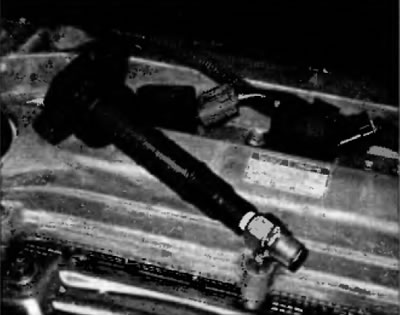
Fig. 6.2. Unscrew the bolts and remove the ignition coil (do not disconnect the electrical connector), insert the tester into the sheath at each end of the coil, connect the tester to a convenient ground point, and turn on the starter. If there is enough power to activate the spark plug, a spark will be visible between the electrode ring and the tester body
3. Turn the engine over while watching the tester to see if there are bright blue, clearly visible sparks.
4. If sparks occur, then the spark plugs are receiving enough voltage to fire them. Repeat this test for each spark plug to ensure that all ignition coils are working properly. If a spark does not occur at a plug, the ignition coils for that plug are most likely faulty. However, the cause may also be fouling of the plug itself. Therefore, remove the plug and inspect it as described in chapter 1. If several spark plugs are dirty, it is recommended to install a set of new spark plugs. This ensures that the interelectrode gaps in them are the same, and the electrodes are in the same condition.
5. If all spark plugs do not generate sparks at all or are generated irregularly, check the battery voltage applied to the ignition coils. If there is no battery voltage, check the ignition system fuse. The ignition system fuse is located in the fuse box and relay in the engine compartment. It can be marked with the abbreviation "IGN", "AM", or some other acronym. For information on the name and number of the ignition system fuse, refer to the fuse table provided in the operating instructions provided with the vehicle.
6.To check for stored diagnostic trouble codes (DTCs) related to the ignition system, camshaft position sensor (CMP), crankshaft position sensor (CKP), other sensors, and/or the powertrain Control module (PSM), use the appropriate fault code reader or tester.