



Checking the steering
Application: For detailed illustrations of steering and suspension system components, refer to chapter 10.
1. With the vehicle on its wheels, point the front wheels straight ahead. Gently rock the steering wheel in both directions. If the play is excessive, the front wheel bearings, main steering yoke, intermediate shaft yoke, lower arm ball joints, or steering shaft joint are worn, or the steering gear is out of adjustment or broken. Steering wheel play is the amount of movement (smeared on the steering wheel rim) between the start of steering wheel movement and the moment at which the front wheels begin to turn (you can feel it by the slight resistance). For a description of the appropriate repair procedure, please refer to chapter 10.
2. Other signs of malfunction, such as increased body movement when the vehicle is driven on an uneven road, lateral vibrations and sticking of the steering wheel when turning it, may indicate a malfunction of the steering and/or suspension components.
Checking the suspension
3. Check the shock absorbers by pushing and releasing each corner of the car several times. If the car does not return to a horizontal position in one or two "bounces", the shock absorbers/struts are worn and need to be replaced. As the car body moves up and down, listen for squeaks and noises coming from the suspension components. Additional information on suspension components can be found in chapter 10.
4. Raise the vehicle with a jack and place reliable supports under it. The correct steps for installing the jack are specified in paragraph "Lifting, installing the vehicle on supports and towing" at the beginning of this Guide.
5. Check your tires for normal wear and measure tire pressure. For tread wear information, refer to paragraph 5 in this chapter, and for a description of the procedures for replacing wheel bearings, see chapter 10.
6. Inspect the universal joint between the steering shaft and the steering gear housing. Check the steering gear housing for fluid leaks. Make sure the dust seals and boots are not damaged and that the boot clamps are not loose. Inspect the steering gear for loose components or damage. Inspect the tie rod ends for excessive play. Look for loose bolts, broken or disconnected components, and substandard rubber bushings on all suspension and steering components. Have an assistant turn the steering wheel from lock to lock and check the steering components for free movement, rubbing, and binding. If the steering components do not seem to respond properly to the steering wheel, try to determine where the weakness is.
7. Check the ball joints for wear by trying to move each lower control arm up and down with a pry bar (Fig. 13.7) to see if there is any abnormal play in the ball joint. If there is play in the ball joint, replace it. For the procedure for replacing the front ball joint, refer to chapter 10.
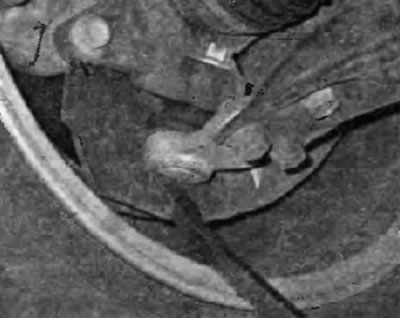
Fig. 13.7. To check the ball joints, try using a crowbar to move the lower arm forward and down to make sure there is no play in the ball joint (if there is a gap, replace it)
8. Inspect the ball joint boots for damage and grease leakage (Fig. 13.8). If the ball joints are damaged, replace them with new ones (see chapter 10).
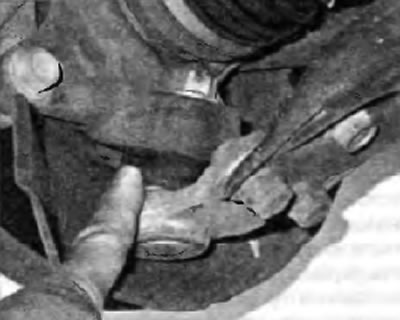
13.8 Press the ball joint boot to check for grease leaks and tears
Checking the axle shaft boot
9. Covers play a very important role in preventing dirt, water or foreign material from entering and damaging the constant velocity joints. Oil and grease can cause premature deterioration of the cover material, so it is recommended to wash the covers with soap and water.
10. Inspect the covers for tears and cracks, as well as for loose clamps (fig. 13.10). If there are any signs of cracks or grease leakage, the boots should be replaced as described in Chapter 8.
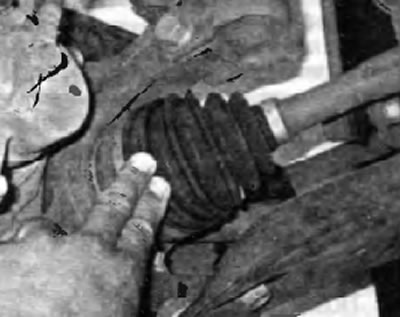
Fig. 13.10. Spread the bellows of the boot to check for ruptures, cracks or grease leaks