



Warning! Dust generated by the brake system is harmful to your health. Never blow it out with compressed air or inhale it. When working on the brakes, use a suitable filter mask. Do not use non-petroleum-based solvents to clean the brakes under any circumstances. Use brake cleaner only!
Note: For illustrations of the brake system, refer to chapter 9.
1. In addition to the prescribed intervals, the brakes should be inspected whenever wheels are removed or whenever a fault is suspected.
2. Any of the following signs may indicate a possible malfunction of the brake system: the car pulls to the side when you press the brake pedal; brakes squeal or creak when braking; brake pedal travel is too great; the pedal vibrates; there is a brake fluid leak, usually on the inside of the wheel.
3. Loosen the wheel mounting nuts.
4. Raise the vehicle and place secure supports underneath it.
Caution: If the vehicle is equipped with electronically controlled air suspension, turn off the ride height control switch.
5. Remove the wheels (if necessary, see. "Lifting, installing the vehicle on supports and towing" or refer to the owner's manual provided with the vehicle).
Disc brakes
6. Each caliper has two pads (external and internal). The pads become visible after the wheels are removed. The vehicles covered by this manual have disc brakes at the front and rear, and the parking brake mechanisms are of the drum type located inside the rear discs.
7. Check the thickness of the pads by looking at each end of the caliper and through the inspection window in the caliper body (fig. 12.7, a, b). If the thickness of the friction material is less than the value specified in "Technical data" at the beginning of this chapter, replace the brake pads.
Note: Please note that the friction linings are riveted or glued to the backing metal plate, the thickness of which is not included in this dimension.
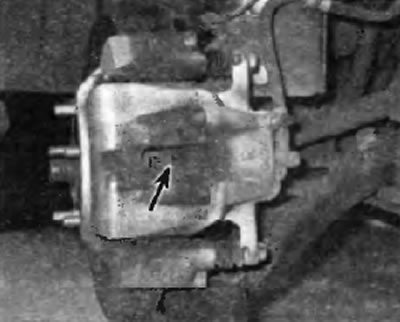
Fig. 12.7,a. Each caliper has an inspection hole through which you can inspect the friction lining of the inner brake shoe
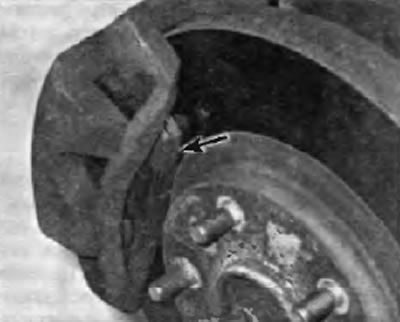
Fig. 12.7,6. It is easier to tilt the outer block towards the edge of the court
8. If it is difficult to determine the exact thickness of the remaining friction material using the above method, or if you are unsure about the condition of the pads, remove the caliper, then remove the pads from the caliper for further inspection (refer to chapter 9).
9. After removing the pads from the caliper, clean them with brake cleaner and measure their thickness again with a ruler or calipers.
10. Measure the disc thickness with a micrometer to ensure that it is still usable. If any disc is less than the specified minimum thickness, replace that disc (refer to chapter 9). Even if the disc is still usable, check its condition. Inspect for nicks, dents, and burn marks. If these defects are present, remove the disc and regrind it (see chapter 9).
11. Before installing the wheels, inspect all brake lines and hoses for damage, wear, deformation, cracks, corrosion, leaks, kinks and twists, especially near the rubber hoses on the calipers. Check clamps for tightness and connections for leaks. Make sure all hoses and lines are routed away from sharp edges, moving parts and the exhaust system. If any of the above conditions are present, make the necessary repairs, adjust the routing or replace lines and/or fittings as necessary (see chapter 9).
Checking the brake booster
12. Sit in the driver's seat and perform the following sequence of checks.
13. Fully depress the brake pedal and start the engine. When the engine starts, the pedal should move down slightly.
14. With the engine running, press the brake pedal several times. The pedal travel should not change.
(View the full text on the portal: «ToyotaMAN»)
15. Depress the brake pedal, stop the engine and keep the pedal depressed for approximately 30 seconds - the pedal should neither move up nor down.
16. Start the engine again, let it run for a few minutes, and turn it off. Then press the brake pedal firmly several times. The pedal travel should decrease with each press.
17. If the brakes do not operate as described, the brake booster is faulty. For replacement procedures, refer to chapter 9.
Parking brake
18. One method of checking the parking brake is to park the car on a slope with the parking brake applied and the transmission in neutral (do not leave the vehicle while performing this test). If the parking brake cannot keep the vehicle from rolling, it needs attention (see chapter 9).