
Typical bottom view of the front of a 4WD car
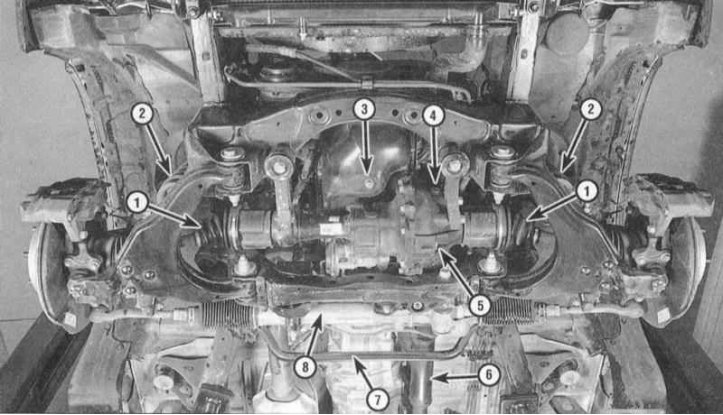
1 - Drive shafts; 2 - Helical spring; 3 - Drain plug of the oil pan; 4 - Filler plug of the front differential; 5 - Drain plug of the front differential; 6 - Front propeller shaft; 7 - Bar stabilizer bar; 8 - Steering gear
Layout of components in the engine compartment of models 1999-2000, equipped with a 2UZ-FE engine
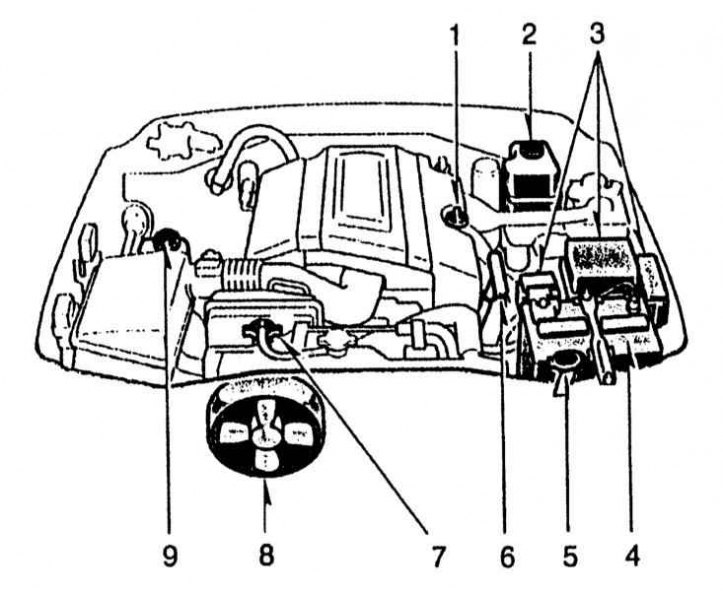
1 - Engine oil filler cap; 2 - GTZ tank; 3 - Fuse mounting block; 4 - Battery; 5 - Windshield washer fluid reservoir; 6 - Dipstick for measuring the level of impellent oil; 7 - Expansion tank of the cooling system; 8 - Fan of the cooling system; 9 - Power steering system reservoir
Layout of components in the engine compartment of a vehicle equipped with a 1HD-FTE engine
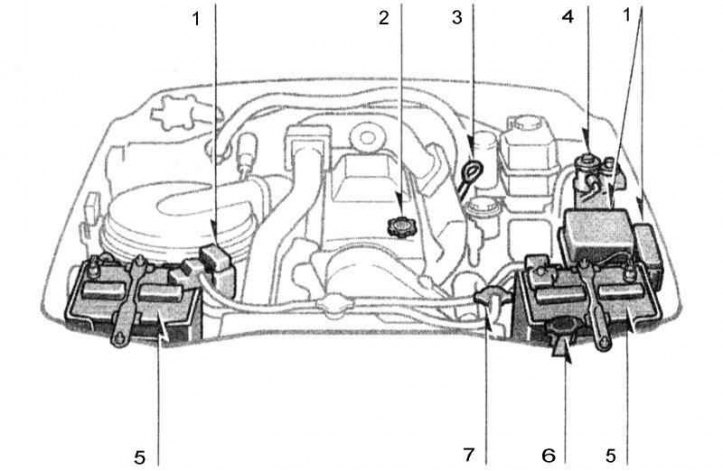
1 - Fuse mounting block; 2 - Engine oil filler cap; 3 - Dipstick for measuring the level of impellent oil; 4 - Fuel filter; 5 - Battery; 6 - Reservoir for washer fluid for the windshield, rear window and headlight cleaner; 7 - Expansion tank of the cooling system
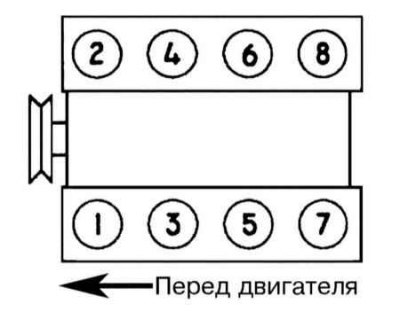
Layout of cylinders on 2UZ-FE engines
This Chapter has been compiled to help the car owner keep his vehicle in a state of maximum readiness for operation, getting from it an effective return in compliance with the requirements for economy and safety.
At the beginning of the Chapter the schedule of current service of the car is resulted. Below, we offer Sections devoted to a detailed description of the procedure for performing each of the maintenance procedures separately. The Sections material includes descriptions of visual inspections, adjustments, removal and installation procedures for components, as well as various useful tips and tricks. The above illustrations showing views of the engine compartment, suspensions and steering gear will help the reader to understand the placement of serviceable components on the vehicle.
By servicing the car in accordance with the agreed mileage-time schedule and following the detailed recommendations below, the reader will receive a clear program of actions, the implementation of which will ensure the long-term and reliability of the service of his vehicle. Remember that this program is compiled on a comprehensive basis and the implementation of only some of its points with neglect of others will not lead to the desired result.
In the process of servicing his car, the reader will soon be convinced that many procedures can, and should, be combined into general groups due to the similarity of their nature or the proximity of the nodes. For example, if the car is lifted off the ground for any reason, you should take the opportunity and at the same time check the condition of the components of the exhaust system, suspension and steering. Also, when renting a torque wrench, check the tightening torque of all available threaded fasteners. When rotating the wheels, at the same time evaluate the condition of the brakes and wheel bearings.
The first step in vehicle maintenance is always self-preparation of the performer. Carefully read the material in this Chapter, then make a list of components that need attention, prepare the necessary tools and outline a brief plan for the work ahead. In the event of unresolved problems, seek help from car service specialists.