



Share information:
Overhaul of 6-cylinder engine Toyota Camry 3 (XV30)

Maintenance of the mechanical part of the engine
Data for servicing the mechanical part of the engine are presented in Table 2.31. For servicing intervals, see Table 2.32. Table 2.31. Data for servicing the mechanical part of the 1MZ-FE engine Table 2.32. Maintenance...
Data for servicing the mechanical part of the engine are presented in Table 2.31. For servicing intervals, see Table 2.32. Table 2.31. Data for servicing the mechanical part of the 1MZ-FE engine Table 2.32. Maintenance...

Valve Clearances — Getting Started
Note: Checking and adjusting thermal clearances in valves is performed only on a cold engine. Using a 5mm socket wrench, remove the two nuts and remove the engine protective cover. Fig. 2.221. Removing the upper part of...
Note: Checking and adjusting thermal clearances in valves is performed only on a cold engine. Using a 5mm socket wrench, remove the two nuts and remove the engine protective cover. Fig. 2.221. Removing the upper part of...

Removal the cylinder head cover
Fig. 2.222. Removing the electrical wiring protection Disconnect the two PCV hoses from the cylinder head cover. Disconnect the two harness protection clamps from the timing belt cover #2 mounting bolts. Remove the four...
Fig. 2.222. Removing the electrical wiring protection Disconnect the two PCV hoses from the cylinder head cover. Disconnect the two harness protection clamps from the timing belt cover #2 mounting bolts. Remove the four...

Setting the piston of the 1st cylinder to TDC of the compression stroke
Fig. 2.223. Alignment of the crankshaft pulley mark with the "0" marking on the timing belt cover Rotate the crankshaft pulley and align the mark on the pulley with the "0" installation mark on the timing belt cover...
Fig. 2.223. Alignment of the crankshaft pulley mark with the "0" marking on the timing belt cover Rotate the crankshaft pulley and align the mark on the pulley with the "0" installation mark on the timing belt cover...
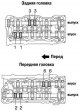
Checking thermal clearances in valves
Fig. 2.224. Checking thermal clearances in valves Check the thermal clearances in the valves shown in Figure 2.224. Using a feeler gauge, measure the clearance between the cam and the valve lifter. Record the results....
Fig. 2.224. Checking thermal clearances in valves Check the thermal clearances in the valves shown in Figure 2.224. Using a feeler gauge, measure the clearance between the cam and the valve lifter. Record the results....

Adjusting thermal clearances in valves
If necessary, adjust the valve clearance. To do this, remove the adjusting washer. Fig. 2.227. Correct positioning of the valve tappet Turn the camshaft so that the cam lobe tip points upward. Position the valve tappet...
If necessary, adjust the valve clearance. To do this, remove the adjusting washer. Fig. 2.227. Correct positioning of the valve tappet Turn the camshaft so that the cam lobe tip points upward. Position the valve tappet...
Removal the timing belt
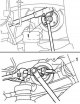
Loosen the generator mounting bolt, unscrew the nut and remove generator bracket No.2. Fig. 2.233. Removing the timing drive pulley: 1 – special tools Holding the crankshaft pulley with special tools 09213-54015 and...
Loosen the generator mounting bolt, unscrew the nut and remove generator bracket No.2. Fig. 2.233. Removing the timing drive pulley: 1 – special tools Holding the crankshaft pulley with special tools 09213-54015 and...

Checking the timing belt
Fig. 2.238. Checking the timing belt Fig. 2.239. Sequence of installation of the timing belt on the mechanism elements Do not bend or twist the timing belt. Do not allow the timing belt to come into contact with oil or...
Fig. 2.238. Checking the timing belt Fig. 2.239. Sequence of installation of the timing belt on the mechanism elements Do not bend or twist the timing belt. Do not allow the timing belt to come into contact with oil or...

Installing the timing belt
Set the piston of the 1st cylinder to TDC of the compression stroke. Fig. 2.235. Alignment of timing marks on the crankshaft toothed pulley and oil pump housing Temporarily install the crankshaft pulley bolt and, while...
Set the piston of the 1st cylinder to TDC of the compression stroke. Fig. 2.235. Alignment of timing marks on the crankshaft toothed pulley and oil pump housing Temporarily install the crankshaft pulley bolt and, while...

Removal the cylinder head — preparatory operations
Drain the coolant from the cylinder block and radiator. Fig. 2.242. Removing the engine protective cover: 1 – socket wrench; 2 – clips Using a 5mm socket wrench, remove the two nuts and remove the top protective cover...
Drain the coolant from the cylinder block and radiator. Fig. 2.242. Removing the engine protective cover: 1 – socket wrench; 2 – clips Using a 5mm socket wrench, remove the two nuts and remove the top protective cover...

Removal the intake and exhaust valve shafts
Since the axial clearance of the camshaft is very small, to prevent jamming and/or damage to the shaft during its removal, it is necessary to hold the shaft in a horizontal position; to do this, it is necessary to...
Since the axial clearance of the camshaft is very small, to prevent jamming and/or damage to the shaft during its removal, it is necessary to hold the shaft in a horizontal position; to do this, it is necessary to...

Disassembling the exhaust camshafts
Fig. 2.257. Installing the camshaft in a vice Place the camshaft by the hexagonal section in a vice as shown in Figure 2.257. Note: Be careful not to damage the camshaft Fig. 2.258. Turning the auxiliary gear: 1 -...
Fig. 2.257. Installing the camshaft in a vice Place the camshaft by the hexagonal section in a vice as shown in Figure 2.257. Note: Be careful not to damage the camshaft Fig. 2.258. Turning the auxiliary gear: 1 -...

Removal the cylinder heads
Fig. 2.260. The order of unscrewing the bolts with an internal hexagon on each cylinder head Using an 8mm socket wrench, remove the Allen bolts on each cylinder head (fig. 2.260). Fig. 2.261. The order of unscrewing the...
Fig. 2.260. The order of unscrewing the bolts with an internal hexagon on each cylinder head Using an 8mm socket wrench, remove the Allen bolts on each cylinder head (fig. 2.260). Fig. 2.261. The order of unscrewing the...
Removal valves
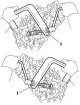
Before removing the valves, remove the tappets and shims. Store the tappets and shims in the order they were installed. Fig. 2.262. Removing crackers: 1 - special tool Using a special tool, compress the valve spring and...
Before removing the valves, remove the tappets and shims. Store the tappets and shims in the order they were installed. Fig. 2.262. Removing crackers: 1 - special tool Using a special tool, compress the valve spring and...

Cleaning the cylinder head
Clean the piston bottoms and the cylinder block surface mating with the cylinder head. Rotate the crankshaft and set the pistons to TDC one after the other. Use a scraper to clean the piston bottom surfaces from carbon...
Clean the piston bottoms and the cylinder block surface mating with the cylinder head. Rotate the crankshaft and set the pistons to TDC one after the other. Use a scraper to clean the piston bottom surfaces from carbon...
Checking the cylinder head for warpage
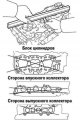
Fig. 2.263. Checking the cylinder head Using a precision ruler and a flat feeler gauge, as shown in Figure 2.263, check the warpage of the working surfaces of the cylinder head mating with the surface of the cylinder...
Fig. 2.263. Checking the cylinder head Using a precision ruler and a flat feeler gauge, as shown in Figure 2.263, check the warpage of the working surfaces of the cylinder head mating with the surface of the cylinder...

Replacing the valve and guide bushing
Fig. 2.267. Heating the cylinder head in a water bath Gradually heat the cylinder head in a water bath to a temperature of 80–100°C (fig. 2.267). Fig. 2.268. Pressing out the guide bushing: 1 - punch Using a punch and...
Fig. 2.267. Heating the cylinder head in a water bath Gradually heat the cylinder head in a water bath to a temperature of 80–100°C (fig. 2.267). Fig. 2.268. Pressing out the guide bushing: 1 - punch Using a punch and...

Checking and grinding valves
Fig. 2.273. Valve plate thickness Grind the valves until traces of carbon and scratches are removed. Make sure that the lapped chamfer of the valve forms an angle of 44.5° relative to the plane perpendicular to the axis...
Fig. 2.273. Valve plate thickness Grind the valves until traces of carbon and scratches are removed. Make sure that the lapped chamfer of the valve forms an angle of 44.5° relative to the plane perpendicular to the axis...

Checking the valve spring
Fig. 2.277. Checking the valve spring non-perpendicularity Using a metal square (90°), check the non-perpendicularity of the valve spring as shown in Figure 2.277. The maximum permissible non-perpendicularity is 2.0 mm....
Fig. 2.277. Checking the valve spring non-perpendicularity Using a metal square (90°), check the non-perpendicularity of the valve spring as shown in Figure 2.277. The maximum permissible non-perpendicularity is 2.0 mm....

Checking the valve tappet
Fig. 2.280. Measuring the valve tappet diameter Use a micrometer to measure the valve tappet diameter (fig. 2.280). Pusher diameter: 30.968–30.976 mm. Calculate the oil clearance. Subtract the tappet diameter from the...
Fig. 2.280. Measuring the valve tappet diameter Use a micrometer to measure the valve tappet diameter (fig. 2.280). Pusher diameter: 30.968–30.976 mm. Calculate the oil clearance. Subtract the tappet diameter from the...

Checking the axial play of the camshaft
Fig. 2.281. Checking the axial play of the camshaft Install the camshaft in the cylinder head bed. Use a dial indicator to measure the axial clearance while moving the camshafts back and forth (fig. 2.281). Axial...
Fig. 2.281. Checking the axial play of the camshaft Install the camshaft in the cylinder head bed. Use a dial indicator to measure the axial clearance while moving the camshafts back and forth (fig. 2.281). Axial...

Measuring the clearance in the gear engagement of camshafts
Fig. 2.282. Measuring the clearance in the gear engagement of the camshafts Install both camshafts into the cylinder head without installing the exhaust camshaft drive auxiliary gear. Use a dial indicator to measure the...
Fig. 2.282. Measuring the clearance in the gear engagement of the camshafts Install both camshafts into the cylinder head without installing the exhaust camshaft drive auxiliary gear. Use a dial indicator to measure the...

Checking the bore for the tappets in the cylinder head housing
Fig. 2.283. Checking the bore for the tappets in the cylinder head housing Use a bore gauge to measure the diameters of the tappet bores in the cylinder head (fig. 2.283). The diameter of the bore for the tappet in the...
Fig. 2.283. Checking the bore for the tappets in the cylinder head housing Use a bore gauge to measure the diameters of the tappet bores in the cylinder head (fig. 2.283). The diameter of the bore for the tappet in the...

Checking the oil clearance in the camshaft bearings
Fig. 2.284. Placing a plastic gauge on each camshaft journal: 1 – plastic gauge Clean the running surfaces of the camshaft journals and bearing caps. Lay the camshafts in the cylinder head beds. Place a piece of plastic...
Fig. 2.284. Placing a plastic gauge on each camshaft journal: 1 – plastic gauge Clean the running surfaces of the camshaft journals and bearing caps. Lay the camshafts in the cylinder head beds. Place a piece of plastic...
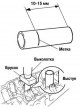
Cylinder head assembly
Note: Before assembly, clean all parts that will be assembled. Apply fresh engine oil to all rubbing surfaces. Replace all gaskets and seals. Fig. 2.286. Pressing in a new spark plug tube Install new spark plug tubes....
Note: Before assembly, clean all parts that will be assembled. Apply fresh engine oil to all rubbing surfaces. Replace all gaskets and seals. Fig. 2.286. Pressing in a new spark plug tube Install new spark plug tubes....

Installing the cylinder head
Install the cylinder heads onto the cylinder block, having first installed new head gaskets onto it. Install the cylinder head bolts. Note: Cylinder head bolts are tightened in two stages. If any cylinder head bolt is...
Install the cylinder heads onto the cylinder block, having first installed new head gaskets onto it. Install the cylinder head bolts. Note: Cylinder head bolts are tightened in two stages. If any cylinder head bolt is...

Assembly of exhaust camshafts
Clamp the camshaft by the hexagonal section in a vice. Install the following parts: 1 - camshaft gear spring ring; 2 - auxiliary gear of the camshaft drive; 3 - spring washer. Note: Align the guide pins on the gears...
Clamp the camshaft by the hexagonal section in a vice. Install the following parts: 1 - camshaft gear spring ring; 2 - auxiliary gear of the camshaft drive; 3 - spring washer. Note: Align the guide pins on the gears...

Installing exhaust camshafts
Install the camshafts. Note: When installing the camshafts, keep in mind that the axial clearance is very small, so the shafts must be placed in the bearing beds strictly horizontally, without distortions, to avoid...
Install the camshafts. Note: When installing the camshafts, keep in mind that the axial clearance is very small, so the shafts must be placed in the bearing beds strictly horizontally, without distortions, to avoid...

Installing the intake camshaft of the rear cylinder head
Fig. 2.297. Alignment of camshaft drive gear marks Apply a layer of engine oil to the end bearing surfaces of the camshaft. Engage the gears of the exhaust and intake camshaft drives, aligning the timing marks (two...
Fig. 2.297. Alignment of camshaft drive gear marks Apply a layer of engine oil to the end bearing surfaces of the camshaft. Engage the gears of the exhaust and intake camshaft drives, aligning the timing marks (two...

Installing the exhaust camshaft of the rear cylinder head
Fig. 2.300. Alignment of camshaft drive gear marks Apply a coat of engine oil to the end bearing surfaces of the camshaft. Set the exhaust camshaft 90° from the position where the timing marks (1 point) on the cylinder...
Fig. 2.300. Alignment of camshaft drive gear marks Apply a coat of engine oil to the end bearing surfaces of the camshaft. Set the exhaust camshaft 90° from the position where the timing marks (1 point) on the cylinder...

Installing the intake camshaft of the front cylinder head
Fig. 2.304. Alignment of camshaft drive gear marks Apply a layer of engine oil to the end bearing surfaces of the camshaft. Engage the gears of the exhaust and intake camshaft drives, aligning the timing marks (two...
Fig. 2.304. Alignment of camshaft drive gear marks Apply a layer of engine oil to the end bearing surfaces of the camshaft. Engage the gears of the exhaust and intake camshaft drives, aligning the timing marks (two...
Installing the cylinder head cover
Remove the remains of the old gaskets. Apply sealant to the cylinder heads. Install the gaskets on the cylinder head covers. Install the cylinder head covers and tighten the eight mounting bolts. Tighten the bolts...
Remove the remains of the old gaskets. Apply sealant to the cylinder heads. Install the gaskets on the cylinder head covers. Install the cylinder head covers and tighten the eight mounting bolts. Tighten the bolts...

Installing the remaining cylinder head components
Install the new gasket and exhaust manifold and tighten the six mounting nuts evenly in several passes to a tightening torque of 49 Nm. Install the power steering pump bracket and tighten the mounting bolts to a...
Install the new gasket and exhaust manifold and tighten the six mounting nuts evenly in several passes to a tightening torque of 49 Nm. Install the power steering pump bracket and tighten the mounting bolts to a...

Disassembling the cylinder block — preliminary operations
Place the engine on a disassembly stand. Remove the timing belt and its pulleys. Remove the cylinder heads. Remove the alternator, alternator belt adjusting bracket and bracket assembly. Remove the oil pressure sensor....
Place the engine on a disassembly stand. Remove the timing belt and its pulleys. Remove the cylinder heads. Remove the alternator, alternator belt adjusting bracket and bracket assembly. Remove the oil pressure sensor....

Checking the axial play of the connecting rod bearing
Fig. 2.318. Checking the axial play of the connecting rod bearing Using a dial indicator, move the connecting rod back and forth along the crankpin of the crankshaft to check the axial play of the connecting rod bearing...
Fig. 2.318. Checking the axial play of the connecting rod bearing Using a dial indicator, move the connecting rod back and forth along the crankpin of the crankshaft to check the axial play of the connecting rod bearing...

Checking the radial clearance of the connecting rod bearing
Fig. 2.319. Unscrewing the connecting rod lower cover mounting bolts Check the alignment of the marks on the connecting rod and connecting rod cap to ensure correct assembly later. If there are no marks, use a center...
Fig. 2.319. Unscrewing the connecting rod lower cover mounting bolts Check the alignment of the marks on the connecting rod and connecting rod cap to ensure correct assembly later. If there are no marks, use a center...

Removal the piston and connecting rod assembly
Fig. 2.323. Removing carbon deposits from the top of the cylinder using a reamer Use a reamer to remove carbon deposits from the top of the cylinder, as shown in Figure 2.323. Remove the piston assembly with the...
Fig. 2.323. Removing carbon deposits from the top of the cylinder using a reamer Use a reamer to remove carbon deposits from the top of the cylinder, as shown in Figure 2.323. Remove the piston assembly with the...

Measuring the axial clearance of the crankshaft
Fig. 2.324. Measuring the axial clearance of the crankshaft Using a dial indicator, measure the axial play of the crankshaft by moving the latter back and forth with a screwdriver (fig. 2.324). Standard axial play is...
Fig. 2.324. Measuring the axial clearance of the crankshaft Using a dial indicator, measure the axial play of the crankshaft by moving the latter back and forth with a screwdriver (fig. 2.324). Standard axial play is...

Checking oil radial clearances
Remove the main bearing caps and check the radial oil clearances. Fig. 2.325. Removing the main bearing cap tie bolts Loosen and remove the eight main bearing cap tightening bolts evenly in several passes, as shown in...
Remove the main bearing caps and check the radial oil clearances. Fig. 2.325. Removing the main bearing cap tie bolts Loosen and remove the eight main bearing cap tightening bolts evenly in several passes, as shown in...
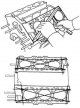
Checking the cylinder block
Remove the remains of the gaskets from the working surfaces of the block with a scraper, scraper, metal brush. Use a solvent and a soft brush to finally clean the cylinder block. Fig. 2.329. Checking the cylinder block...
Remove the remains of the gaskets from the working surfaces of the block with a scraper, scraper, metal brush. Use a solvent and a soft brush to finally clean the cylinder block. Fig. 2.329. Checking the cylinder block...
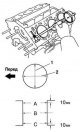
Measuring the diameter of cylinders
Fig. 2.330. Measuring the cylinder diameter Using a bore gauge, measure the cylinder diameter at three levels A, B and C in the transverse 1 and longitudinal 2 directions, as shown in Figure 2.330. Standard diameter:...
Fig. 2.330. Measuring the cylinder diameter Using a bore gauge, measure the cylinder diameter at three levels A, B and C in the transverse 1 and longitudinal 2 directions, as shown in Figure 2.330. Standard diameter:...

Disassembling the connecting rod and piston group
Check the fit of the connecting rod-piston group connection by trying to move the piston "back and forth" on the piston pin in a direction perpendicular to the axis of the piston pin. If there is noticeable play,...
Check the fit of the connecting rod-piston group connection by trying to move the piston "back and forth" on the piston pin in a direction perpendicular to the axis of the piston pin. If there is noticeable play,...

Checking the clearance between the piston and the cylinder
Fig. 2.333. Measuring the piston skirt diameter Using a micrometer, measure the piston skirt diameter at a distance of 23.2 mm (fig. 2.333). Nominal piston diameter: 87.406–87.416 mm. Measure the cylinder diameters in...
Fig. 2.333. Measuring the piston skirt diameter Using a micrometer, measure the piston skirt diameter at a distance of 23.2 mm (fig. 2.333). Nominal piston diameter: 87.406–87.416 mm. Measure the cylinder diameters in...
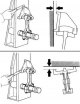
Checking the alignment of the connecting rod heads
Fig. 2.334. Checking the bending and twisting of the connecting rod Using a special device and a flat feeler gauge, check the connecting rod bend. In a similar way, check the connecting rod twist, as shown in Figure...
Fig. 2.334. Checking the bending and twisting of the connecting rod Using a special device and a flat feeler gauge, check the connecting rod bend. In a similar way, check the connecting rod twist, as shown in Figure...

Checking the piston pin oil clearance
Fig. 2.335. Checking the piston pin oil clearance Use a bore gauge to measure the inner diameter of the connecting rod upper head bushing (fig. 2.335). The inner diameter of the sleeve is 22.005–22.014 mm.
Fig. 2.335. Checking the piston pin oil clearance Use a bore gauge to measure the inner diameter of the connecting rod upper head bushing (fig. 2.335). The inner diameter of the sleeve is 22.005–22.014 mm.

Measuring the piston pin diameter
Fig. 2.336. Measuring the piston pin diameter Using a micrometer, measure the piston pin diameter (fig. 2.336). Piston pin diameter: 21.997–22.006 mm. Subtract the piston pin diameter from the bushing inside diameter....
Fig. 2.336. Measuring the piston pin diameter Using a micrometer, measure the piston pin diameter (fig. 2.336). Piston pin diameter: 21.997–22.006 mm. Subtract the piston pin diameter from the bushing inside diameter....
Pressing out and pressing in the connecting rod upper head bushing
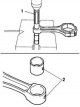
Fig. 2.337. Pressing out the bushing from the upper head of the connecting rod: 1 - special tool; 2 – oil hole Using a mandrel and press, press the bushing out of the connecting rod upper head. Align the oil holes of...
Fig. 2.337. Pressing out the bushing from the upper head of the connecting rod: 1 - special tool; 2 – oil hole Using a mandrel and press, press the bushing out of the connecting rod upper head. Align the oil holes of...

Checking the end clearance of the compression ring
Fig. 2.341. Checking the end clearance of the compression ring Check the end clearance "compression ring - piston groove" by measuring it with a flat feeler gauge, as shown in Figure 2.341. Nominal clearance:...
Fig. 2.341. Checking the end clearance of the compression ring Check the end clearance "compression ring - piston groove" by measuring it with a flat feeler gauge, as shown in Figure 2.341. Nominal clearance:...

Checking the gap in the piston ring lock
Fig. 2.342. Checking the gap in the piston ring lock To check the piston ring gap, insert the piston ring into the cylinder. Use the piston to push the ring 105 mm from the cylinder block surface, as shown in Figure...
Fig. 2.342. Checking the gap in the piston ring lock To check the piston ring gap, insert the piston ring into the cylinder. Use the piston to push the ring 105 mm from the cylinder block surface, as shown in Figure...

Checking the crankshaft runout
Fig. 2.344. Measuring crankshaft runout Place the crankshaft on the prisms. Use a dial indicator to check the crankshaft runout on the central main journal (fig. 2.344). Maximum runout – 0.06 mm. If the runout is...
Fig. 2.344. Measuring crankshaft runout Place the crankshaft on the prisms. Use a dial indicator to check the crankshaft runout on the central main journal (fig. 2.344). Maximum runout – 0.06 mm. If the runout is...

Checking the connecting rod and main journals
Fig. 2.345. Measuring planes of connecting rod and main journals Using a micrometer, measure the diameter of each connecting rod and main journal in two mutually perpendicular planes, as shown in Figure 2.345. Main...
Fig. 2.345. Measuring planes of connecting rod and main journals Using a micrometer, measure the diameter of each connecting rod and main journal in two mutually perpendicular planes, as shown in Figure 2.345. Main...

Selection of studs and plugs
Fig. 2.356. Cylinder block stud selection table Select the studs and plugs for the cylinder block, using illustrations 2.356 and 2.357 as a guide. Fig. 2.357. Table for selecting plugs for the cylinder block
Fig. 2.356. Cylinder block stud selection table Select the studs and plugs for the cylinder block, using illustrations 2.356 and 2.357 as a guide. Fig. 2.357. Table for selecting plugs for the cylinder block

Assembly of the connecting rod and piston group
Fig. 2.358. Installing a new retaining ring Using a screwdriver, install a new snap ring on one side into the groove of the piston cylinder (fig. 2.358). Fig. 2.359. Heating pistons in a special box Gradually heat the...
Fig. 2.358. Installing a new retaining ring Using a screwdriver, install a new snap ring on one side into the groove of the piston cylinder (fig. 2.358). Fig. 2.359. Heating pistons in a special box Gradually heat the...

Installing piston rings
Fig. 2.361. Compression ring installation diagram Install the expander and two oil scraper ring expanders. Use the piston ring expander to install the two compression rings; and the ring marks should be facing upwards...
Fig. 2.361. Compression ring installation diagram Install the expander and two oil scraper ring expanders. Use the piston ring expander to install the two compression rings; and the ring marks should be facing upwards...

Installing connecting rod bearing shells
Fig. 2.363. Installing the liner in the lower connecting rod head Align the bearing tab with the groove in the connecting rod small head and with its cap. Insert the bearings into the connecting rod small head and into...
Fig. 2.363. Installing the liner in the lower connecting rod head Align the bearing tab with the groove in the connecting rod small head and with its cap. Insert the bearings into the connecting rod small head and into...

Cylinder block assembly
Fig. 2.364. Main bearing shells Install the main bearing shells. The main bearing shells vary in width, and the upper main bearing shells have an oil channel and oil holes (fig. 2.364). Fig. 2.365. Number marking of the...
Fig. 2.364. Main bearing shells Install the main bearing shells. The main bearing shells vary in width, and the upper main bearing shells have an oil channel and oil holes (fig. 2.364). Fig. 2.365. Number marking of the...

Installing the coolant drain plug
Fig. 2.370. Places where sealant is applied to the cooling system plug Remove the remains of the old gasket, wash the cooling system plug, clean the plug and block surfaces with a volatile solvent and do not allow oil...
Fig. 2.370. Places where sealant is applied to the cooling system plug Remove the remains of the old gasket, wash the cooling system plug, clean the plug and block surfaces with a volatile solvent and do not allow oil...
Installing an oil pump
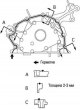
Fig. 2.373. Places of application of sealant on the contact surface of the oil pump Remove any remaining sealant from the oil pump contact surfaces. Using a solvent, clean the contact and seal surfaces. Apply new...
Fig. 2.373. Places of application of sealant on the contact surface of the oil pump Remove any remaining sealant from the oil pump contact surfaces. Using a solvent, clean the contact and seal surfaces. Apply new...
Installing the oil pan
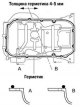
Install the oil baffle on top of the oil pan. Using solvent, clean the contact and sealing surfaces. Note: Do not use solvent that will attack painted surfaces. Fig. 2.375. Places of application of sealant on the...
Install the oil baffle on top of the oil pan. Using solvent, clean the contact and sealing surfaces. Note: Do not use solvent that will attack painted surfaces. Fig. 2.375. Places of application of sealant on the...
Installing the lower part of the oil pan
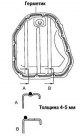
Fig. 2.376. Places of application of sealant on the contact surface of the lower part of the oil pan Remove any remaining sealant and clean the contact and seal surfaces with solvent. Apply sealant to the contact...
Fig. 2.376. Places of application of sealant on the contact surface of the lower part of the oil pan Remove any remaining sealant and clean the contact and seal surfaces with solvent. Apply sealant to the contact...

Installing the thermostat housing
Fig. 2.377. Places where sealant is applied to the contact surface of the thermostat housing Remove the remains of the old gasket, wash the housing, clean the housing and block surfaces with a volatile solvent and do...
Fig. 2.377. Places where sealant is applied to the contact surface of the thermostat housing Remove the remains of the old gasket, wash the housing, clean the housing and block surfaces with a volatile solvent and do...
This section is available on: russian, bulgarian, belarusian, ukrainian, serbian, croatian, romanian, polish, slovak, hungarian
Similar sections for other Toyota models
➥ Engine overhaul Toyota RAV 4 XA20 (2000-2005)
➥ Engine overhaul Toyota Corona T190 (1992-1997)
➥ Engine overhaul Toyota 4Runner N120 (1989-1995)
➥ Engine repair Toyota Carina T190 (1992-1996)
➥ Engine repair Toyota Dyna Y50/Y60 (1984-1995)
➥ Overhaul of engines Toyota Highlander 1 (2000-2007, petrol)
Link in different formats to this article
TEXTHTMLBB Code
- User manual
- Vehicle description
- Keys, locks and alarms
- Governing bodies
- Salon equipment
- Driving and operation
- Maintenance
- Power unit
- 4-cylinder engine
- Control system (I4)
- Engine overhaul (I4)
- 6-cylinder engine
- Control system (V6)
- Engine overhaul (V6)
- Transmission
- Clutch
- Mechanical gearbox
- Automatic gearbox
- Drive mechanism
- Chassis, running gear
- Wheels and tires
- Car suspension
- Steering
- Brake system
- Body and interior
- Exterior (external elements)
- Doors, locks and windows
- Air conditioning and heater
- Electrical equipment
- Equipment and devices
- Power devices
- Electrical circuits
- General information
- Controls and instruments
- Driving and operation
- Daily care
- Maintenance
- Power unit
- 4-cylinder engine
- 6-cylinder engine
- Engine overhaul
- Engine electrical equipment
- Cooling system
- Heating and ventilation
- Fuel system
- Exhaust system
- Transmission
- Mechanical gearbox
- Automatic gearbox
- Clutch
- Chassis, running gear
- Suspension and axle shafts
- Steering
- Brake system
- Body and interior
- Exterior (external elements)
- Interior (internal elements)
- Doors, locks and windows
- Electrical equipment
- Equipment and devices
- Electrical circuits
- General information
- User manual
- Maintenance
- Power unit
- 4-cylinder engine
- 6-cylinder engine
- Overhaul of engines
- Cooling and heating
- Fuel system
- Engine electrical equipment
- Control system
- Transmission
- Mechanical gearbox
- Automatic gearbox
- Clutch and drive shafts
- Chassis, running gear
- Brake system
- Car suspension
- Steering
- Body and interior
- Exterior (external elements)
- Interior (internal elements)
- Doors, locks and windows
- Electrical equipment
- Equipment and devices
- Headlights and lighting
- Electrical circuits
- General information
- User manual
- Maintenance
- Power unit
- Petrol engines
- Diesel engines
- Engine overhaul
- Cooling and lubrication system
- Fuel system (diesel)
- Fuel injection (petrol)
- Engine electrical equipment
- Transmission
- Clutch and cardan
- Automatic gearbox
- Chassis, running gear
- Front suspension
- Rear suspension
- Steering
- Brake system
- Body and interior
- Body elements
- Air conditioning and heater
- SRS security system
- Electrical equipment
- Equipment and devices
- Electrical circuits