



Contents: Purge valve ↓ All other elements (under the bottom…↓ Vacuum Switching Valve (VSV) for…↓ Air release valve ↓ Pressure switching valve ↓ EVAP adsorber ↓
Warning! Gasoline is highly flammable. Therefore, when working on any part of the fuel system or EVAP system, extra precautions should be taken. Do not smoke or allow open flames or unshielded lights near the work area. Do not work in areas where gas-powered appliances are present (for example, water heaters or clothes dryers). Because gasoline is a carcinogen (contributes to the development of cancer), try to avoid contact of fuel with exposed areas of the body. Wear gloves resistant to fuel. If fuel gets on the skin, wash the affected area immediately with soap and water. Wipe up spilled fuel immediately and do not store rags soaked in fuel in places where it can catch fire. Wear safety glasses when performing any work on the fuel system. Always keep a class B fire extinguisher on hand.
Purge valve
Note: On four-cylinder models, the purge valve is mounted on the bulkhead behind the throttle body. On V6 models, the purge valve is located on a support bracket bolted to the front end of the intake manifold. The accompanying illustration in this paragraph shows the purge valve used on V6 models, but the purge valve used on four-cylinder models is similar except for its location.
11. Disconnect the ground cable from the battery (see paragraph 1 of chapter 5).
12. Remove the engine cover (if available) (see paragraph "Intake manifold - removal and installation" in chapter 2).
13. Disconnect the purge valve electrical connector (fig. 19.13, a, b).
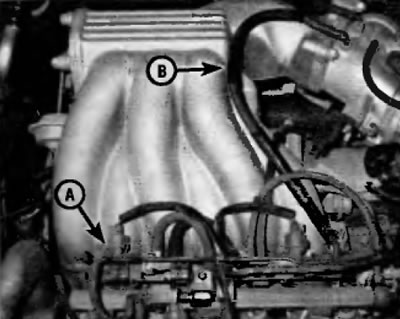
Fig. 19.13, a. On V6 models, the purge valve (A) for the evaporative emission (EVAP) system is located on a support bracket on the front side of the intake manifold. The EVAP purge hose (B) connects a metal line on the bracket to the throttle body
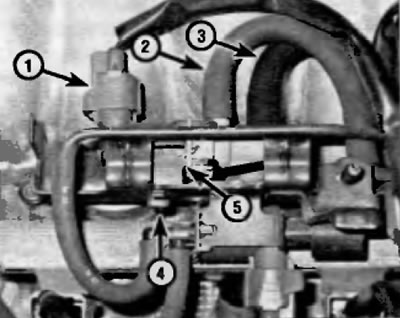
Fig. 19.13, b. Typical EVAP purge valve (model with V6 engine shown). To shine the purge valve:
1 - Disconnect the electrical connector
2 - Disconnect the EVAP hose (coming from the EVAP canister)
3 - Disconnect the EVAP purge hose (leading to a metal pipe on a support bracket, which is connected to the throttle body by a purge hose, shown in Fig. 19.13.a)
4 - Remove the purge valve mounting element
5 - Remove the purge valve from the support bracket (on four-cylinder models, the bracket, which is part of the purge valve, is bolted to the bulkhead)
14. Disconnect the vacuum hoses from the purge valve.
15. Remove the screw (models with V6 engine) or bolt (models with four-cylinder engine) purge valve mounts and remove the valve.
16. Installation is performed in the reverse order of removal.
All other elements (under the bottom of the car)
17. Disconnect the ground cable from the battery (see paragraph 1 of chapter 5).
18. Raise the rear of the car and place reliable supports underneath it.
19. Remove the protective cover from the EVAP canister (fig. 19.19).
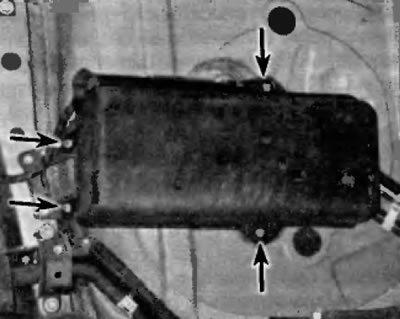
Fig. 19.19. To detach the protective cover from the EVAP canister, unscrew the nuts
Vacuum Switching Valve (VSV) for Pressure Switching Valve
Note: The VSV for the pressure switching valve is located in the EVAP canister.
20. Disconnect the electrical connector from the vacuum switching valve (VSV) to the pressure switching valve (fig. 19.20).
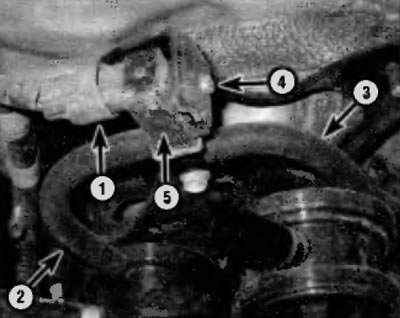
Fig. 19.20. Removing and installing the vacuum switching valve (VSV) for the pressure switching valve
21. Clearly label the two EVAP hoses that connect the VSV to the pressure switching valve and to the EVAP canister, and then disconnect both from the VSV.
22. Unscrew the screw and remove the valve.
23. Installation is performed in the reverse order of removal.
Air release valve
Note: The air bleed valve is located on the EVAP canister.
24. Disconnect the EVAP hoses from the air bleed valve (fig. 19.24).
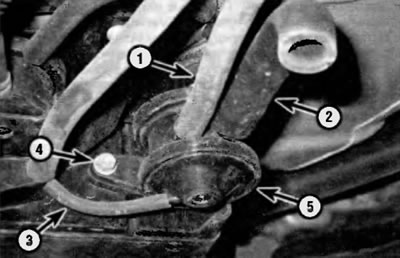
Fig. 19.24. Removing and installing the air release valve
1 - Disconnect the EVAP inlet hose (going to the adsorber shut-off valve on the air filter housing)
2 — Air release hose (you don't need to remove this hose to remove the air bleed valve, but you should inspect it)
3 - EVAP connection hose (between the EVAP canister and the air release valve)
4 — Air release valve mounting bolt
5 — Air release valve
25. Loosen the air release valve mounting bolt and remove the valve.
26. Installation is performed in the reverse order of removal.
Pressure switching valve
Note: The pressure switching valve is located on the EVAP canister.
27. Disconnect the VSV valve wiring from the pressure switching valve support bracket (fig. 19.27).
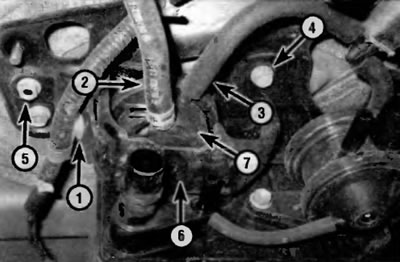
Fig. 19.27. Removing and installing the pressure switching valve
1 - Using a small screwdriver, release the VSV wiring harness clamp from the pressure switch valve support bracket
2 — EVAP hose (to the fuel tank)
3 - EVAP connection hose (between VSV valve and pressure switching valve)
4 - Bolt
5 - Nut
6 - Support bracket
6 — Pressure switching valve
28. Disconnect the EVAP hoses from the pressure switching valve.
29. Remove the bolt and nut securing the pressure switching valve support bracket and remove the pressure switching valve and support bracket.
30. Installation is performed in the reverse order of removal.
EVAP adsorber
Note: The EVAP canister is located under the rear of the vehicle, behind the rear suspension crossmember.
31. Disconnect the VSV valve electrical connector (fig. 19.20).
32. Disconnect the VSV valve wiring harness from the pressure switching valve support bracket and disconnect the EVAP hoses from the canister (fig. 19.32. a, b).
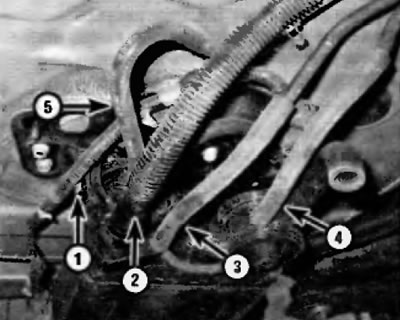
Fig. 19.32, a. Before removing the EVAP canister:
1 - Disconnect the VSV valve wiring harness from the pressure switching valve support bracket
2 - Disconnect the EVAP vent hose (going to the fuel tank) (for installation information, see Fig. 19.32, b)
3 - Disconnect the EVAP purge hose (going to the purge valve in the engine compartment)
4 - Disconnect the EVAP air intake hose (going to the adsorber shut-off valve on the air filter housing)
5 - Disconnect the EVAP hose (going to the fuel tank)
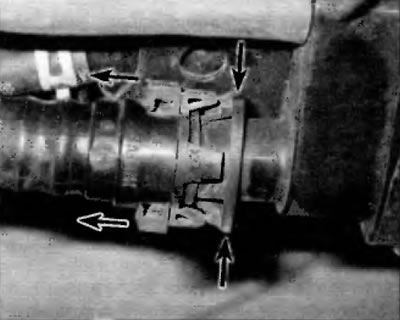
Fig. 19.32, b. To disconnect the EVAP vent hose fitting, press the locking tabs and then disconnect the connector in the line at the EVAP canister
33. Unscrew the bolts securing the canister support bracket (Fig. 19.33) and remove the canister and the corresponding support bracket as a single unit.
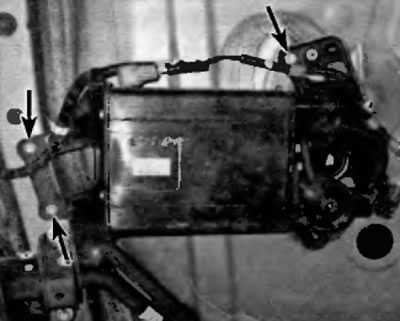
Fig. 19.33. To disconnect the EVAP canister, remove the three bolts
34. If the EVAP canister is being replaced, remove the VSV valve, air bleed valve and pressure switch valve from the canister (see pp. 20-30), then disconnect the canister from its support bracket.
35. Installation is performed in the reverse order of removal.