



Removal
Remove the chain on a cold engine in the following order:
- turn off the ignition and disconnect the ground wire from the battery;
- remove the accessory drive belt;
- remove the generator;
- remove the cylinder head cover;
- if present, remove the ABS unit;
- apply the parking brake and block the rear wheels with chocks;
- loosen the right front wheel mounting nuts. Raise the front of the vehicle and support it on stands. Remove the right front wheel and the right front wheel arch mudguard;
- drain the coolant;
- unscrew the bolts, remove and set aside the power steering pump with the hoses connected to it. Use soft wire to secure the pump to the body;
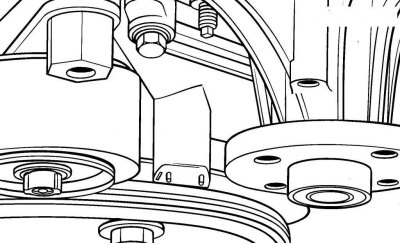
Figure 3.52. Aligning the mark on the vibration damper with the TDC or 0 mark on the front chain cover
- set the piston of the first cylinder to TDC in the compression stroke, while the mark on the vibration damper should be aligned with the TDC or 0 sign on the front chain cover (see Figure 3.52), and the marks on the camshaft sprockets must be aligned with the marks on the camshaft bearing caps (figure 3.55);
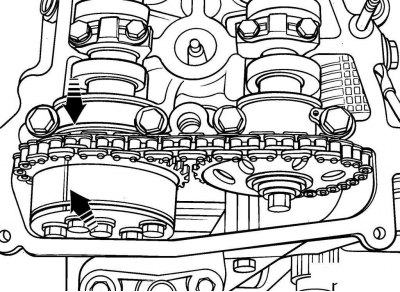
Figure 3.55. Alignment of marks on camshaft sprockets with marks on camshaft bearing caps (the VVT pulley/drive assembly is visible on the intake camshaft)
- remove the pulley/vibration damper from the crankshaft without turning the crankshaft. If the crankshaft has turned, return it to the position corresponding to the installation of the piston of the first cylinder at TDC in the compression stroke;
- using a jack and a wooden block placed under the oil pan, lift the engine so that its weight is supported by the jack.
- remove the left engine mount;
(The material is republished from an online website: TOYOTAMAN.ru)
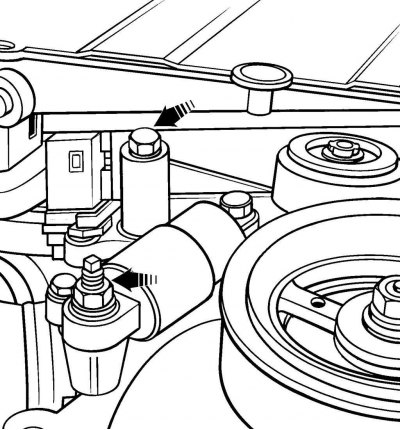
Figure 3.56. Location of chain tensioner mounting bolts
- remove the chain tensioner mechanism (figure 3.56) and the crankshaft angle sensor from the front chain cover. Remove the bolt securing the crankshaft angle sensor wiring harness to the timing chain cover;
- remove the oil pan;
- remove the bolts and the wiring harness holder from the timing chain cover;
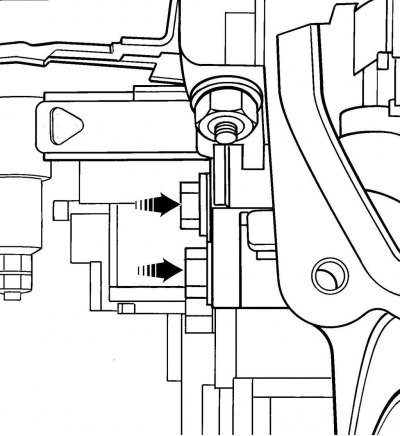
Figure 3.57. Location of chain tensioner mounting nuts
- unscrew the nuts (figure 3.57) and remove the chain tensioner from the back of the cover;
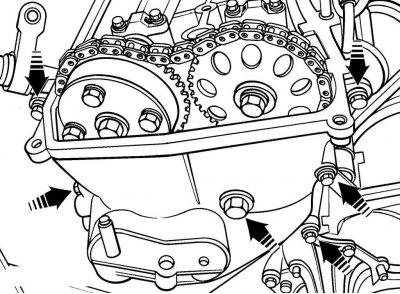
Figure 3.58. Location of the upper chain cover mounting bolts
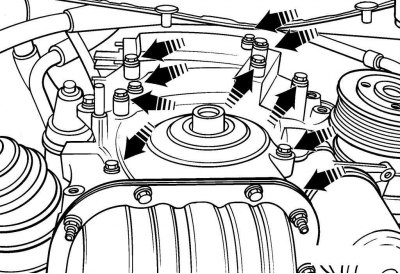
Figure 3.59. Location of the lower chain cover mounting bolts
- unscrew the bolts (figure 3.58, 3.59) and use a pry bar to separate and remove the chain cover from the cylinder block. Mark the location of the bolts as they are different lengths;
- remove the crankshaft angle sensor;
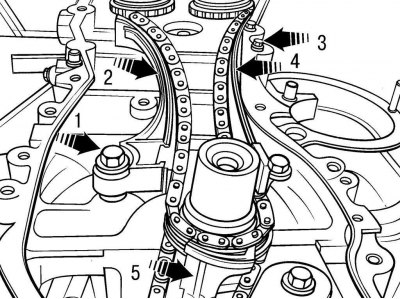
Figure 3.60. Chain guides and tensioner: 1 – hinge bolt; 2 – chain tensioner; 3 – chain guide mounting bolts; 4 – fixed chain guide; 5 – lower chain guide
- unscrew bolts 1.3 (figure 3.60) and remove tensioner 2 and lower chain guide 5;
- remove the chain from the camshaft sprockets and the sprocket together with the chain from the crankshaft. If the chain is to be reinstalled, mark the front of the chain with chalk, marker, or paint. If the chain rotates in the opposite direction during installation, due to the existing wear of the chain, the wear of the valve timing mechanism elements will increase and the noise generated by the chain will increase;
- remove the fixed chain guide 4;
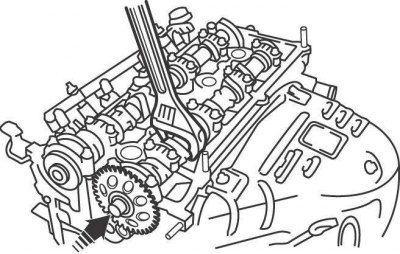
Figure 3.61. Using wrenches to hold the camshaft from turning and loosen the sprocket mounting bolt
- holding the camshaft with a wrench to prevent it from turning by the hexagon, unscrew the mounting bolt and remove the sprocket from the camshaft (figure 3.61).
Important! In addition to the intake camshaft sprocket, the variable valve timing (VVT) pulley/drive assembly is mounted on the intake camshaft. When removing the intake camshaft sprocket, remove only the center VVT pulley/drive mounting bolt. Do not remove the 4 bolts securing the variable valve timing pulley/drive to the sprocket.
Examination
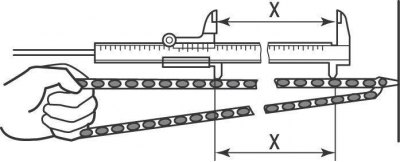
Figure 3.62. Measuring the distance between chain links: X = 122.6 mm for timing chain between 16 rollers or 8 chain links; X = 52.4 mm for oil pump drive chain between 8 rollers or 4 chain links
Visually inspect the parts to ensure they are not worn or damaged. Check the chain links for cracks, wear on the rollers and side plates. Check the condition of the sprocket teeth, which should be symmetrical. Tighten the chain and measure the distance between 8 chain links, which should be 122.6 mm (figure 3.62). Perform this test on several sections of the circuit. If the chain has lengthened, replace the chain and sprockets as a set.
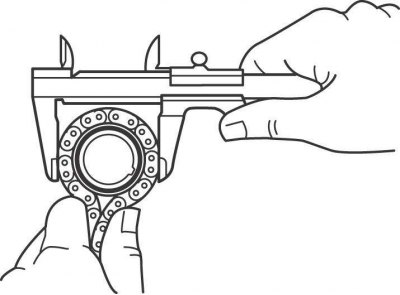
Figure 3.63. Measuring the sprocket diameter by the chain rollers
Wrap each sprocket with chain and measure the sprocket diameter against the chain rollers (figure 3.63). If the resulting dimension exceeds the minimum chain diameter, replace the chain and sprockets as a set.
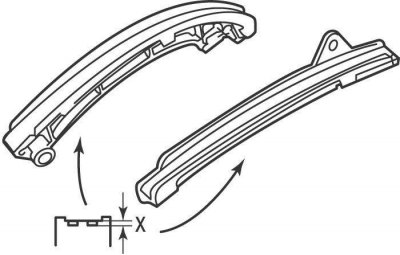
Figure 3.64. Locations for measuring the depth of the notches on the chain guides: X = no more than 1.0 mm
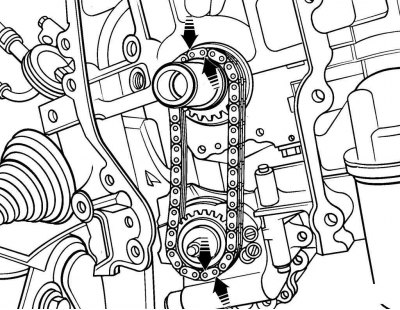
Figure 3.95. Alignment of color marks on the chain with marks on the sprockets
Check the chain guides for excessive wear. Please note that minor wear on the guides is normal. The depth of the grooves on the chain guides should be no more than 1.0 mm (figure 3.64). If excessive wear is present, check the chain guide oil hole on the front of the cylinder block for dirt or clogging (see Figure 3.95).
Installation
Perform installation in the following order:
1) Use a scraper to remove any remaining old sealant from the mating surfaces of the chain cover and the cylinder head and block;
2) Make sure the camshafts are facing up with the dowel pins in the 12 o'clock position, then install both sprockets, aligning the dowel hole on the back of the sprocket with the camshaft dowel pin. Apply a locking compound to the threads of the sprocket mounting bolts to prevent them from loosening, and tighten the bolts by hand. While holding the camshaft by the hexagon with a wrench, tighten the sprocket mounting bolt to a torque of 54 N·m (see Figure 3.61);
3) if necessary, turn the camshafts to a position where the marks on the camshaft sprockets are aligned with the marks on the camshaft bearing caps (see Figure 3.55);
4) if the crankshaft was rotated from the TDC position, turn it to the position where the keyway does not point up, to the "12 h" position;
5) Install the fixed chain guide 4 (see Figure 3.60);
6) Place the chain on the crankshaft sprocket, aligning the color mark No. 1 on the chain with the mark on the sprocket. Install the sprocket with the chain installed on it onto the crankshaft, then install the lower chain guide;
Please note: There are three color markings on the chain. Mark #1 is located at a greater distance from the other two marks, which are located close to each other.
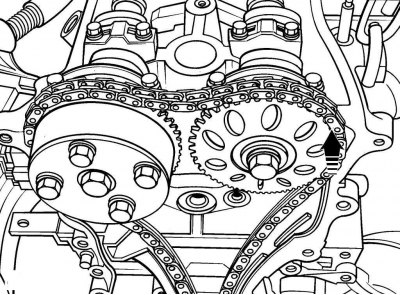
Figure 3.65. Aligning the color marks on the chain with the marks on the camshaft sprockets when installing the chain
7) Install the chain onto the fixed chain guide shoe, then onto the exhaust camshaft sprocket, and finally onto the intake camshaft sprocket. Check that the color marks on the chain are aligned with the marks on the sprockets (figure 3.65). When installing the chain, make sure that the right chain branch is not slack;
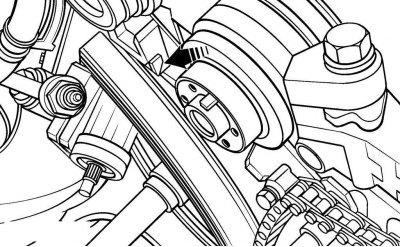
Figure 3.66. Location of the protrusion on the tensioning mechanism
8) Remove the slack from the left chain branch, install the chain tensioner, screw in the pivot bolt and tighten it to 19 N·m. After installation, make sure that the protrusion on the tensioning mechanism (figure 3.66) does not pass the stop to the cylinder head;
9) re-check that the piston of the first cylinder is at TDC in the compression stroke, while the mark on the vibration damper should be aligned with the TDC or 0 sign on the front chain cover (see Figure 3.52), and the marks on the camshaft sprockets must be aligned with the marks on the camshaft bearing caps (see Figure 3.55);
10) Install the crankshaft angle sensor and ring, the F mark on which should be facing outward;
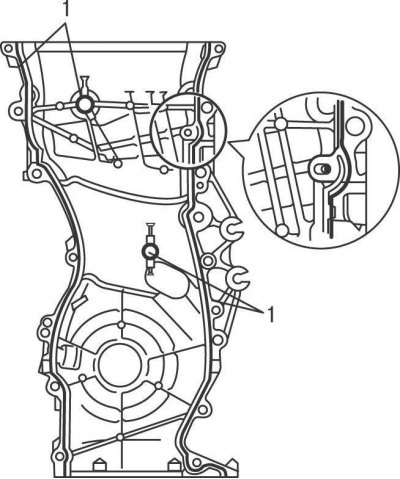
Figure 3.67. Places (1) for applying a layer of sealant to the mating surfaces of the chain cover
11) Apply a 3-4 mm diameter layer of RTV sealant to the mating surfaces of the chain cover 1 (figure 3.67). Also apply a small amount of sealant to the joints between the head and the cylinder block. Place the cover on the engine and secure it with bolts, returning them to their original positions. Gradually, in several passes, tighten the bolts to the required torque;
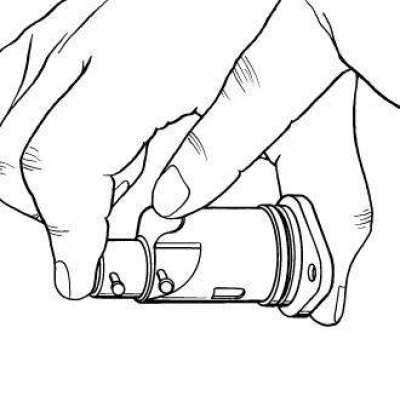
Figure 3.68. Raising the ratchet pawl and moving the chain tensioner plunger to its original position (inward)
12) Set the plunger of the chain tensioning mechanism to its original position as follows:
- lift the ratchet pawl and push the plunger in until it reaches the bottom limit (figure 3.68);
- hook the hook on the tensioner body onto the pin on the plunger, which will lock the plunger in its original position;
13) Lubricate the tensioner plunger sealing rings with engine oil and install it into the chain cover;
14) Install the pulley/vibration damper on the crankshaft;
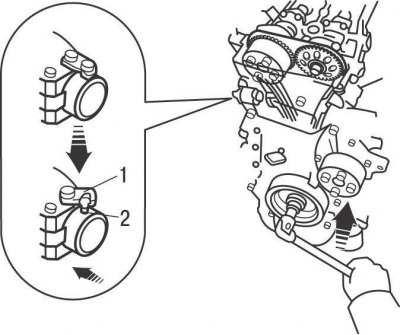
Figure 3.69. To release the hook on the mechanism body from the pin on the plunger, it is necessary to slightly turn the engine crankshaft counterclockwise: 1 – hook; 2 – pin
15) Turn the engine crankshaft slightly counterclockwise to set the chain tension. In this case, hook 1 (figure 3.69) on the tensioning mechanism body should be released from pin 2 on the plunger, as a result of which the plunger will tension the chain. If the plunger does not release on its own, press the chain tensioner and release the pin on the plunger with a screwdriver blade;
16) Turn the engine crankshaft clockwise a few revolutions and set the piston of the first cylinder to TDC in the compression stroke. Check that the mark on the vibration damper is aligned with the TDC or 0 mark on the front chain cover (see Figure 3.52), and the marks on the camshaft sprockets are aligned with the marks on the camshaft bearing caps (see Figure 3.55).
Further installation is carried out in the reverse order of removal.