



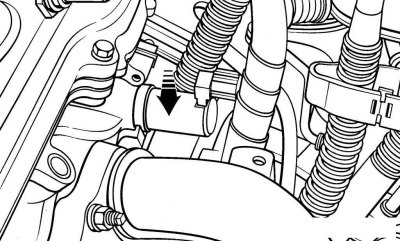
Figure 3.54. Location of the oil control valve (OCV) at the rear of the cylinder head
The system includes a powertrain control module (PCM), an oil control valve (OCV) (figure 3.54) and the intake camshaft pulley/drive assembly.
The powertrain control module (PCM) controls the operation of the oil control valve (OCV) based on information from the following sensors:
- vehicle speed sensor (VSS);
- throttle position sensor (TPS);
- mass Air Flow (MAP) sensor;
- coolant temperature sensor (ECT).
The oil control valve (OCV), actuated by the power control module (PCM), increases or decreases the oil pressure supplied to the intake camshaft pulley/driver.
The intake camshaft sprocket is equipped with an internal sleeve that is attached to the camshaft. The inner sleeve consists of a series of blades fixed in such a way that pressure is used as a wedge to turn them and, accordingly, turn the camshaft. As the oil pressure increases, the camshaft rotation angle increases.
When oil is supplied to the vanes from the advance side, the drive can rotate the camshaft by up to 21° clockwise. When oil is supplied from the retard side, the drive will begin to rotate the shaft counterclockwise to the 0° advance position, which is the normal position when the engine is running at idle speed. The PCM can also send a signal to the oil control valve to stop the flow of oil and hold the camshaft in its current position.
When the engine is operating under light loads, the VVT system will reduce the camshaft advance angle, resulting in a shorter valve overlap period and stabilizing engine power.
When the engine is operating under medium load, the VVT system will advance the camshaft to increase the valve overlap period, resulting in increased engine power and reduced emissions.
When the engine is operating under heavy loads at low engine speeds, the VVT system will advance the camshaft to close the intake valves faster, resulting in increased engine power at low and mid-range engine speeds.
When the engine is operating under heavy loads at high engine speeds, the VVT system will reduce the camshaft advance angle to delay the closing timing of the intake valves, resulting in increased engine power.