



Contents: Removal and installation ↓ Examination ↓
Removal and installation
1. When removing and installing, refer to the assembly drawings "Rear brakes".
2. Installation is carried out in the reverse order of removal.
3. After installation, fill the reservoir with brake fluid, bleed the brake system and check for leaks.
- Brake fluid type - SAE J 1703 or FMVSS 116 DOT3 or DOT4
Examination
1. Check the removed parts for wear, rust or damage.
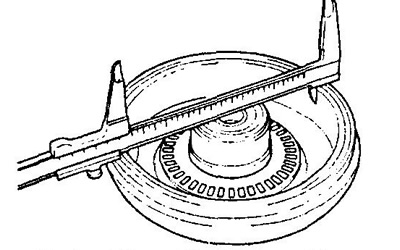
2. Measure the inner diameter of the brake drum.
- Nominal diameter - 180 mm
- Maximum diameter - 181 mm
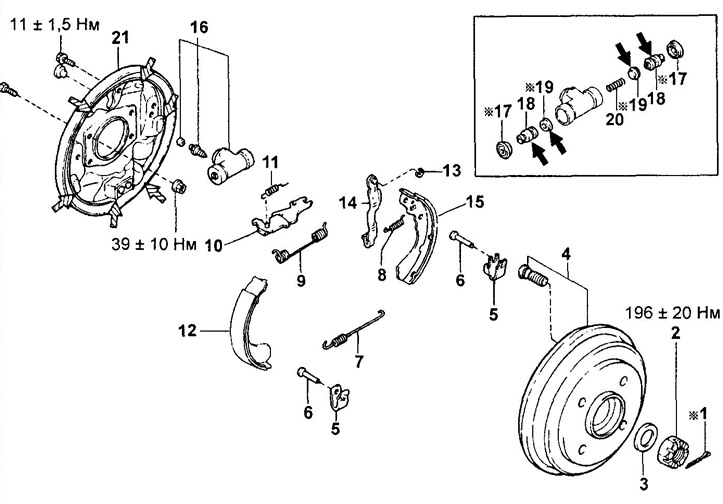
Rear brakes (4WD).
1 - cotter pin,
2 - nut,
3 - washer,
4 - brake drum and hub bolt,
5 - brake shoe holder spring,
6 - shoe holder,
7 - tension spring,
8 - spring,
9 - return spring,
10 - automatic regulator,
11 - regulator spring,
12 - front brake shoe,
13 - retaining ring,
14 - automatic regulator lever,
15 - rear brake shoe,
16 - brake cylinder assembly with bleed nipple,
17 - anther,
18 - piston,
19 - piston seal,
20 - spring,
21 - brake shield.
Note: When assembling, apply the following to the parts indicated by the arrows:
- a special consistent lubricant that does not damage rubber,
- special consistent lubricant for brake mechanisms.
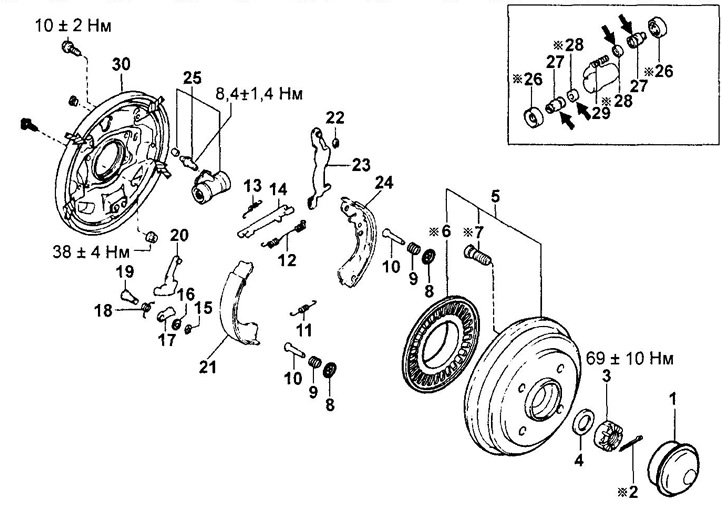
Rear brakes (2WD).
1 - cap,
2 - cotter pin,
3 - nut,
4 - washer,
5 - brake drum,
6 - spring seat,
7 - shoe spring,
8 - shoe holder,
9 - tension spring,
10 - automatic regulator spring,
11 - return spring,
12 - automatic regulator,
13 - retaining ring,
14 - washer,
15 - automatic regulator bracket,
16 - spring,
17 - support pin,
18 - additional parking brake lever,
19 - front brake shoe,
20 - lock washer,
21 - parking brake lever,
22 - rear brake shoe,
23 - brake cylinder assembly with bleed nipple,
24 - anther,
25 - piston,
26 - piston seal,
27 - spring,
28 - brake shield.
Note: When assembling, apply the following to the parts indicated by the arrows:
- a special consistent lubricant that does not damage rubber,
- special consistent lubricant for brake mechanisms.
If the drum has deep scratches or is worn out, it can be turned to the maximum internal diameter.
3. Measure the thickness of the brake shoe linings.
Nominal thickness:
- up to 2000 g - 5.0 mm
- since 2000 - 4.0 mm
Minimum thickness - 1.0 mm
If the lining thickness is less than the minimum or the lining is worn unevenly, replace the brake pads.
4. Check the fit of the lining to the drum. If there is incomplete contact between the brake shoe lining and the drum, file the lining or replace the brake shoe.