



Contents: Raindrop recognition function ↓ Washer jets ↓ Automatic windshield wiper system1 ↓ Rain sensor design ↓ Operating principle ↓ Maintenance recommendation ↓
Raindrop recognition function
Models in the "SOL" grade are equipped with windscreen wipers with a rain sensor.
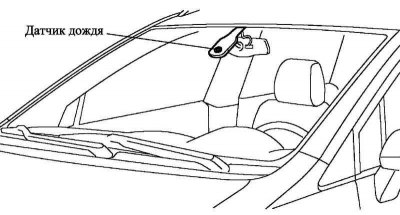
Fig. 1.48. Rain sensor
Raindrop recognition function: When the automatic windshield wiper mode is on, the rain sensor built into the windshield will detect raindrops and activate the windshield wipers at a speed that corresponds to the intensity of the rain (Fig. 1.48).
Washer jets
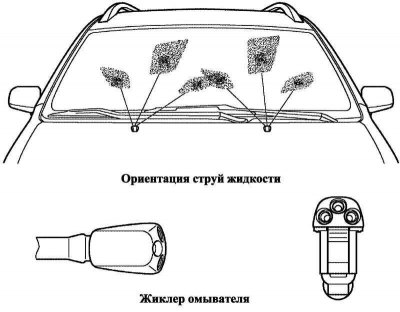
Fig. 1.49. Direction of liquid jets and washer nozzles
The windshield washer jets in the new models are no longer located in four places, as in previous models, but in six. The washer fluid is sprayed onto the windshield and helps the windshield wipers work (Fig. 1.49).
Automatic windshield wiper system1
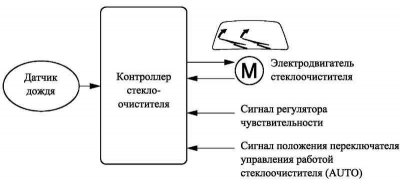
Fig. 1.50. Block diagram of the system
The automatic windshield wiper system sets the windshield wiper mode depending on the rain intensity if the windshield wiper control switch is set to the "AUTO" position. Control is performed by a signal from the rain sensor, which determines the intensity of wetting of the windshield, and input signals from the windshield wiper controller.
Rain sensor design
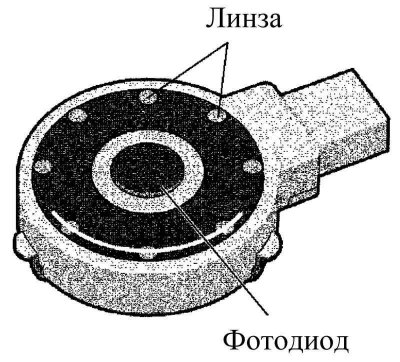
Fig. 1.51. Rain sensor design
The publication is taken from the website [ToyotaMan]
The rain sensor consists of the following main components: eight infrared LEDs, a photodiode that receives infrared radiation, and a sensor strip. The eight LEDs are divided into two groups. Each group contains four LEDs (Fig. 1.51).
Operating principle
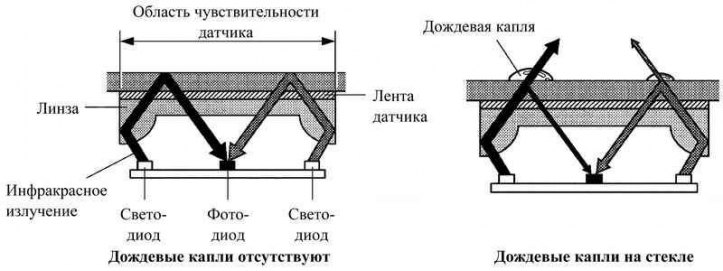
Fig. 1.52. Operating principle of the rain sensor
If there are no raindrops in the sensor's sensitivity zone, all eight beams of infrared radiation from the LEDs are reflected from the windshield and fall on the photodiode.
If there are raindrops in the sensor's sensitivity zone, part of the infrared radiation goes through the raindrops beyond the windshield due to a change in the refractive index, and the amount of infrared radiation falling on the photodiode decreases. The intensity of the rain is determined by this decrease. This system controls the windshield wiper, including intermittent mode, high frequency mode and low frequency mode, selecting the optimal frequency of the windshield wiper blades.
Maintenance recommendation
The rain sensor bracket is supplied assembled with the windshield.
Since it is necessary to ensure the tightness of the installed windshield, the rain sensor is a single-use part.
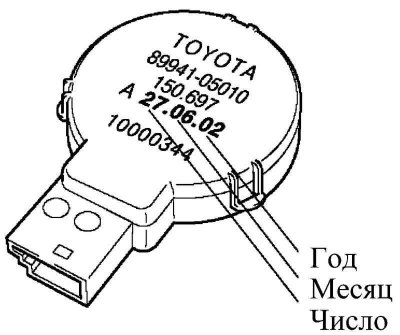
Fig. 1.53. Rain sensor release time marking
Before replacing the rain sensor, check its production date. If more than a year has passed since its production, do not install the sensor, as its tightness may be compromised (Fig. 1.53).