



Contents: Table 1.26. Power modes activated by…↓ Table 1.27. Engine starting…↓ Table 1.28. Conditions under which…↓ Main differences ↓ Table 1.29. Main differences of the…↓ Operating mode of the control lamp ↓ Table 1.31. Operating mode of the…↓ Power supply system ECU ↓ Maintenance recommendation ↓
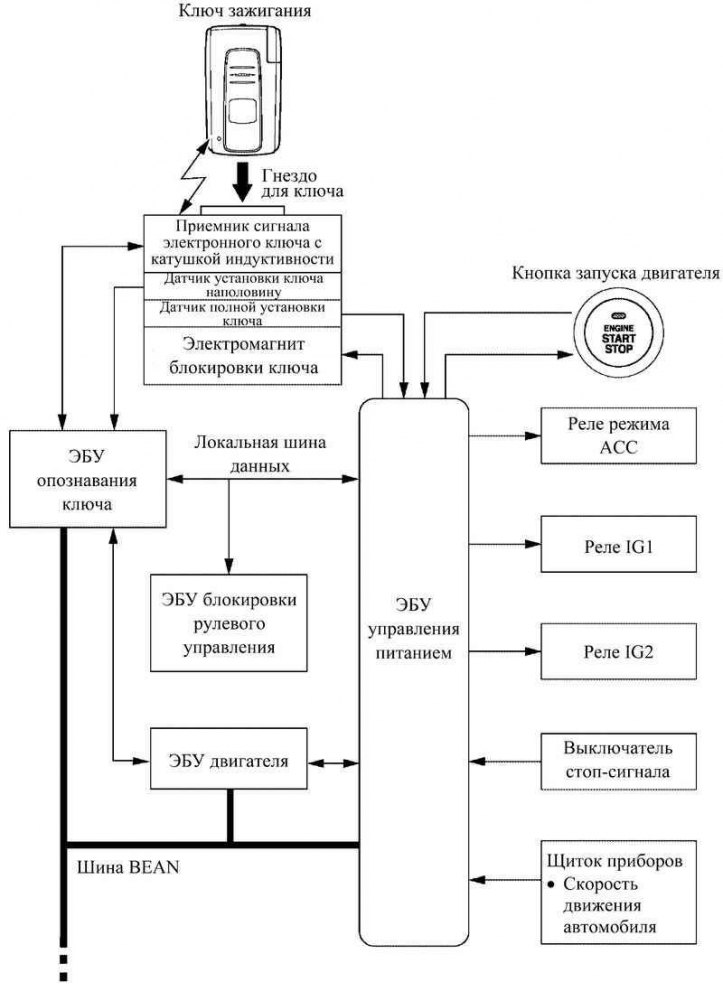
Fig. 1.61. Block diagram of the engine starting system
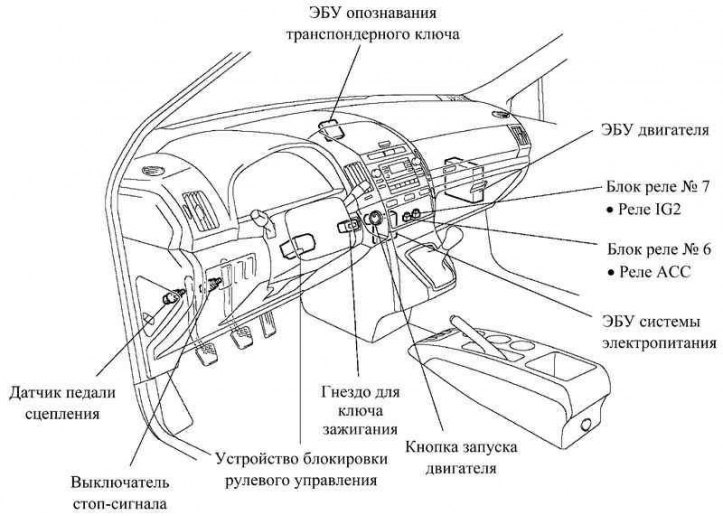
Fig. 1.62. Location of the main components of the engine starting system
In previous models, the driver had to insert the key into the ignition to turn on the car's electrical equipment and start the engine (with ignition switch). However, the new Corolla Verso instead uses a push-button engine start system, which the driver presses after inserting the key into a special slot. Thanks to the use of this modern system, the operation of the car is significantly simplified.
The system is standard on all models.
The system consists of the following main components: power supply ECU, engine start button, ignition key socket, ignition key, ACC relay, IG1 relay, IG2 relay, key recognition ECU and steering lock ECU. The system is controlled by the power supply ECU.
The engine start button works in conjunction with the immobilizer and steering lock system.
Along with the engine start button, a semi-automatic starter control function has been introduced when starting the engine.
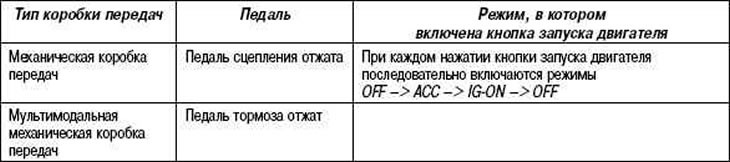
Table 1.26 below shows the power modes that are activated when the engine start button is pressed, depending on whether the brake pedal is pressed or released (on vehicles with a multimodal manual transmission M-MT) or clutch pedal (on cars with manual transmission).
Table 1.26. Power modes activated by pressing the engine start button
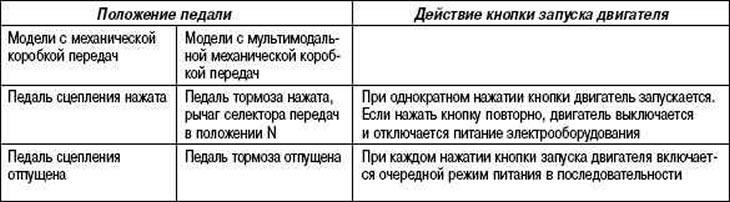
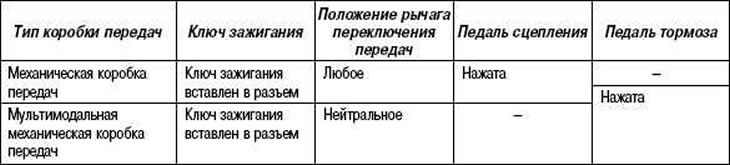
Table 1.27. Engine starting conditions
[The original publication can be found on the website www.toyotaman.ru]
Table 1.28. Conditions under which all vehicle equipment is switched on
Main differences
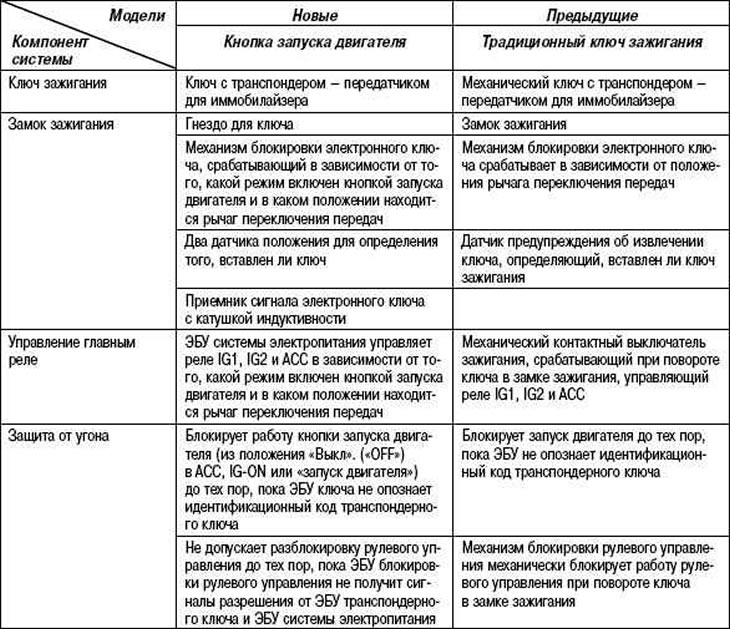
The main differences between the push-button engine start system and the traditional system with a key and ignition switch are described in Table 1.29.
Table 1.29. Main differences of the push-button engine start system
Operating mode of the control lamp
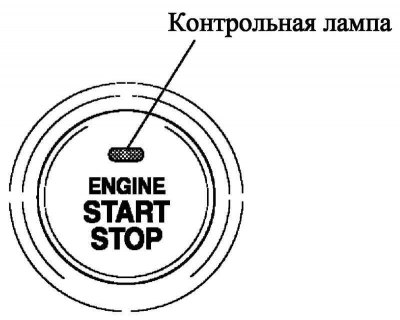
Fig. 1.63. Engine start indicator lamp
Note: If the push-button engine start system malfunctions, the indicator lamp will flash yellow. If you turn off the engine in this condition, it may not be possible to start it.
Table 1.31. Operating mode of the control lamp
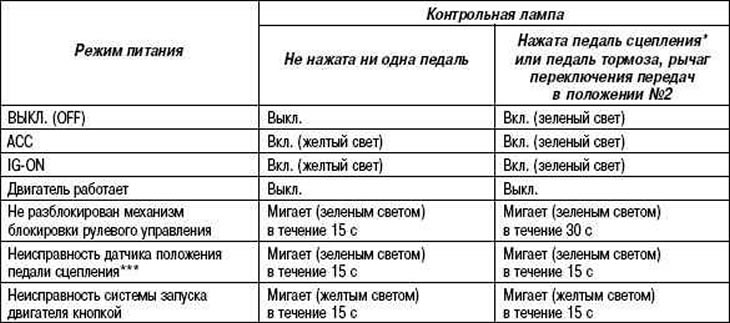
* Cars with manual transmission.
** Vehicles with multimodal manual transmission M-MT.
* * * If the power mode is "Off". ("OFF") press the clutch pedal for more than five minutes and then open the driver's side door, the warning light on the engine start button will start flashing. This is not a sign of a malfunction.
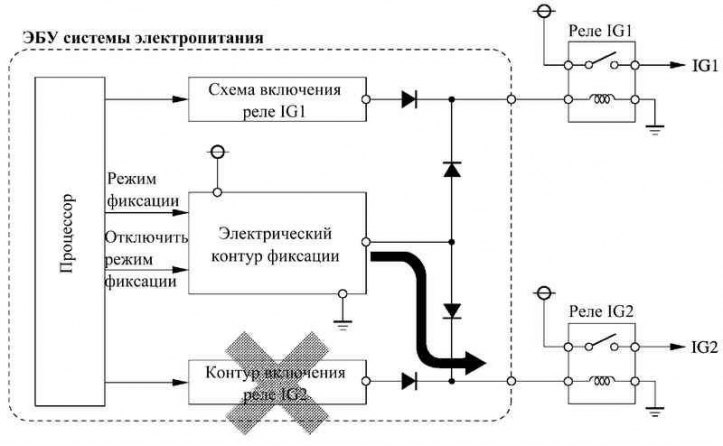
Fig. 1.64. Block diagram of the electrical fixation circuit
Power supply system ECU
The power supply system ECU controls the push-button engine start system according to signals from sensors and other ECUs.
Communication between the power supply system ECU and the key recognition ECU is carried out via the BEAN bus (on-board electronic equipment data exchange bus). In addition, there is a dedicated serial communication line for independent data transfer between the key recognition ECU and the steering lock ECU.
The power supply ECU has an electrical latching circuit that keeps the IG1 and IG2 relays on if the IG1 and IG2 switching circuits fail. This prevents power from being cut off if the IG1 and IG2 switching circuits fail while the vehicle is being driven.
Maintenance recommendation
The power supply system ECU memory constantly records the power supply mode currently enabled. Thus, if the power supply system ECU is de-energized, for example, when the battery is removed, then after connecting the battery, the power supply system ECU will restore the previously enabled power supply mode.
Therefore, if you remove the battery pack in any power mode other than" Off". ("OFF"), power to the vehicle's electrical equipment will be applied at the same time as power is applied to the power supply system ECU (when connecting the battery). Therefore, before removing the battery pack, turn on the "Off" mode with the engine start button. ("OFF") and remove the key from the socket.