



Contents: Examination ↓ Repair ↓
1. The rear window heating grid consists of a series of horizontal heating elements located on the glass surface.
2. Small breaks in the heating element can be repaired without removing the rear window.
Examination
3. Turn on the ignition and turn the rear window defogger ignition to the on position. Take a voltmeter, place the positive probe on the positive terminal of the rear window defogger grid and the negative probe on the ground terminal. If there is no battery voltage reading, check the fuse, rear window defogger switch and related wiring. If voltage is present but the defogger grid does not heat up completely or partially, perform the following tests.
4. When measuring voltage during the next two tests, wrap aluminum foil around the tip of the positive probe of the voltmeter and press the foil against the heating element with your finger (Fig. 14.4). Place the negative probe against the ground terminal of the heating grid.
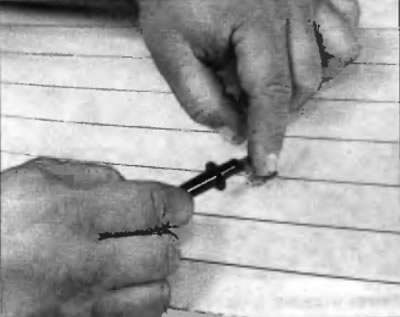
Fig. 14.4. Wrap the positive probe of the voltmeter with aluminum foil and press the foil to the wire with your finger
5. Check the voltage at the center of each heating element (Fig. 14.5). If the voltage is 5 or 6 V, the element is OK (there is no break). If the voltage is zero, the element has an open circuit between the center and the positive end. If the voltage is 10-12 V, the element has an open circuit between the center of the element and the ground side. Check each heating element.
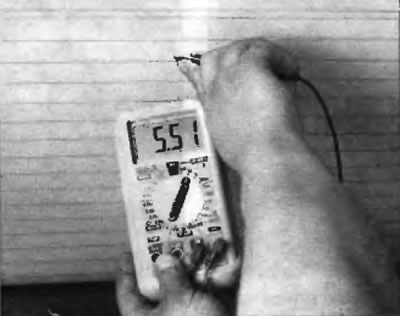
Fig. 14.5. To determine if any heating element is broken, check the voltage at the center of each element
6. Connect the negative cable to a good ground point on the body. The reading should remain the same. If it does not, the ground is bad.
7. To find the break, place the negative probe of the voltmeter on the ground terminal of the heating grid. Place the positive probe of the voltmeter, wrapped in foil, on the positive end of the heating element and move it towards the negative end. The point at which the voltmeter reading deviates from a few volts to zero is the point at which the heating element is damaged (Figure 14.7).
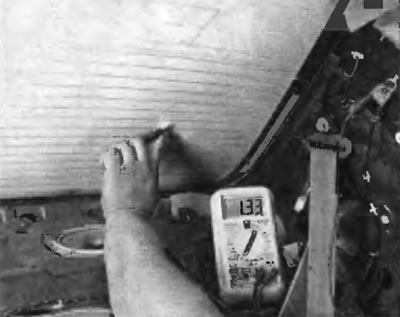
Fig. 14.7. Move the positive lead of the voltmeter, wrapped in foil, from the positive to the negative end of the heating element. The point at which the voltmeter reading changes abruptly is the point at which the element is degenerated
Repair
8. Repair the break in the heating element using a repair kit specifically recommended for this purpose, available at many auto parts stores. This kit includes a plastic conductive epoxy.
9. Before repairing the break, turn off the system and allow the glass to cool for several minutes.
10. Lightly polish the element area with wire wool, then wipe it thoroughly with alcohol.
11. Cover the area to be repaired with masking tape.
12. Mix the epoxy thoroughly following the instructions included with the repair kit.
The original text is posted on [ToyotaMan.ru]
13. Apply epoxy material to the cut area in the masking tape, overlapping the damaged area at a distance of approximately 18 mm on both sides of the break point (fig. 14.13).
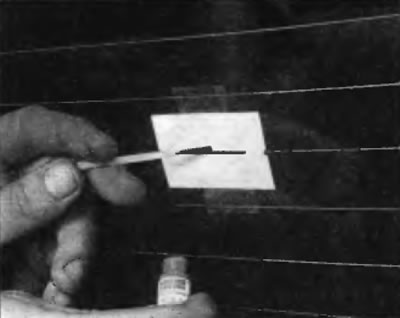
Fig. 14.13. To use the glass heating system repair kit, apply masking tape to the inside of the glass in the damaged area, then apply a special conductive material with a brush
14. Allow approximately 24 hours for the epoxy to cure before removing masking tape and using the system.