



a) Check the specific gravity of the electrolyte in each cell in a fully charged battery at 20°C.
- Density - 1.25 - 1.27
If the density does not meet the specified limits, charge the battery.
b) Check the amount of electrolyte in each element.
If the amount of electrolyte is insufficient, top up with distilled water.
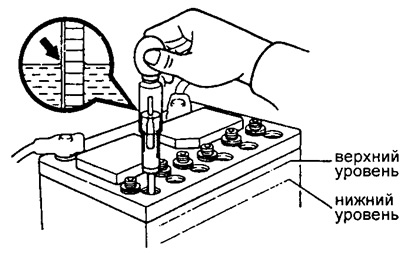
2. Check the battery terminals, fuses and fuses.
a) Check for loose or corroded battery terminals.
b) Check the integrity of the fuse links and fuses.
3. Check the condition of the drive belts.
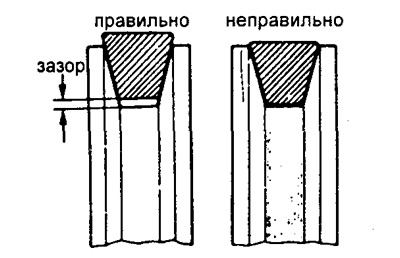
a) Visually inspect the belt for cracks, oiling and wear. Check for a gap between the belt and the bottom surface of the pulley groove. If the belt has any of these defects, replace it.
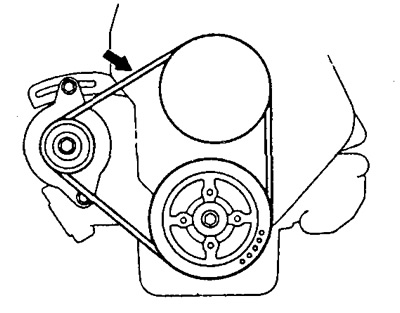
b) Measure the belt deflection at the location shown in the figure
- Force - 98 N
Belt deflection:
- new - 7-10 mm
- used - 10-15 mm
If the deflection does not correspond to the specified one, then adjust it.
Note: The term "Used Belt" refers to a belt that has been used on a running engine for more than 5 minutes.
After installing the new belt, leave the engine running for about five minutes and check the deflection again.
v) (Reference data).
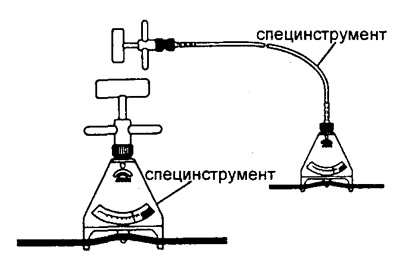
Using a special tool, measure the drive belt tension.
Drive belt tension:
- new belt - 45-55 kg
- used - 20-35 kg
If the belt tension is not as specified, adjust it.
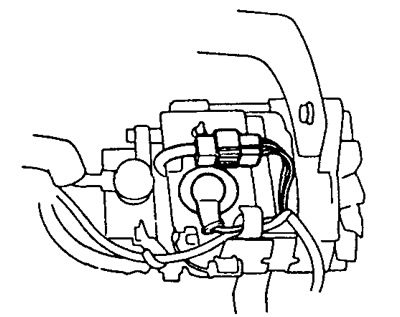
4. Visually inspect the wires going to the generator, check the reliability of their connection, the condition of the wiring, as well as the presence of extraneous noise coming from the generator when the engine is running.
5. Check the battery discharge indicator lamp circuit.
a) Warm up the engine to operating temperature, then turn it off.
b) Switch off all auxiliary units.
c) Turn the ignition key to the "ON" position. The battery discharge indicator lamp should light.
d) Start the engine. The lamp should go out.
If conditions are not met, check the test lamp circuit.
6. Checking the generator electrical circuit without load (at idle).
Note: If you have a tester for checking the generator and battery, connect the latter in accordance with the manufacturer's instructions.
a) If you do not have a tester, do the following:
- Disconnect the wire from the generator terminal "B" and connect it to the negative terminal of the ammeter.
- Connect the wire from the positive terminal of the ammeter to the "B" terminal of the generator.
- Connect the positive terminal of the voltmeter to the "B" terminal of the generator.
- Connect the negative terminal of the voltmeter to ground.
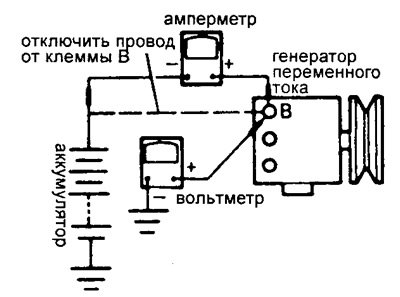
b) Measure the generator output voltage and current from idle speed to 2000 rpm.
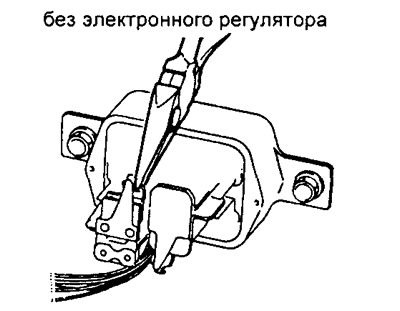
(Without electronic regulator)
- Current strength - no more than 10 A
- Output voltage - 14.0 -15.0 V (at 25°C)
If the voltage is not within the specified limits, replace the voltage regulator.
7. Check the charging circuit under load.
a) When the engine speed is 2000 rpm, turn on the high beam headlights and also move the heater fan switch to the "HI" position.
b) Check the ammeter readings.
- Current strength - not less than 30 A
If the ammeter reading is less than the specified value, repair the generator.
Note: When the battery is fully charged, the readings will be slightly less than the specified value.