Note: When diagnosing speed sensors, the brake system operates as normal (ABS does not work).
1. Make sure the battery voltage is (with ignition off) corresponds to the nominal value.
- Nominal voltage - 10-14 V
2. Check the ABS indicator.
a) Turn on the ignition.
b) Make sure the indicator lights up for three seconds. If not, repair or replace (if necessary) fuse, indicator lamp and wiring harness.
3. Read the fault codes.
a) Turn off the ignition.
b) Short-circuit the T terminalswith and E ₁ diagnostic connector.

c) Turn on the ignition.
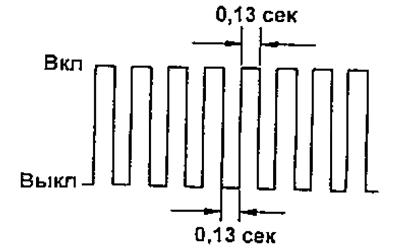
d) If the ABS system is normal, the indicator blinks as shown in the figure.
ABS system normal state code

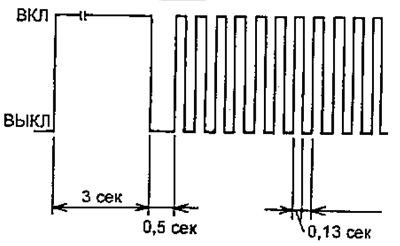
2WD models (code "0")
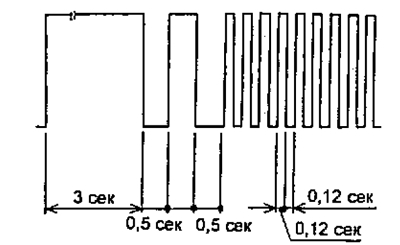
4WD models (code "1")
4. (Rotation speed sensors (ABS))
Check while the vehicle is moving.
a) Tighten the parking brake lever.
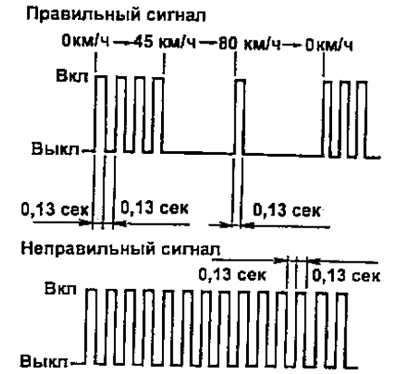
b) Accelerate the vehicle to a speed of over 80 km/h for a few seconds. Make sure that the indicator flashes according to the diagram in the figure.
5. Reading fault codes.
a) Stop the car. The ABS indicator will flash.
b) Short-circuit the T terminalswith and E ₁ diagnostic connector.
Note: Remove the jumper between the T terminalswith and E ₁ diagnostic connector.
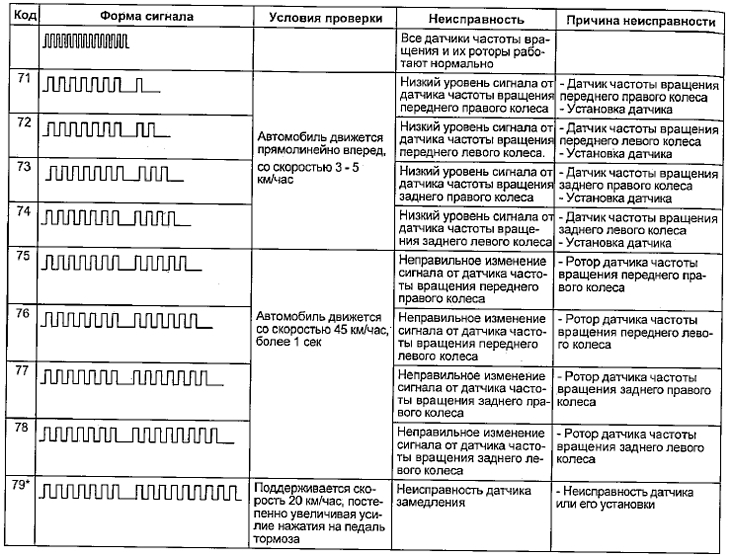
c) Determine the fault code by the number of flashes of the ABS indicator (see the table "Fault codes for the speed sensors and deceleration sensor").
Note:
- - During normal operation, the indicator flashes 2 times per second.
- - If there are two or more faults, the fault with the lowest code will be displayed first.
6. (Slowdown sensor)
Check the response height of the deceleration sensor.
a) Raise the rear of the vehicle.
Attention: Please measure the height as shown in the picture.
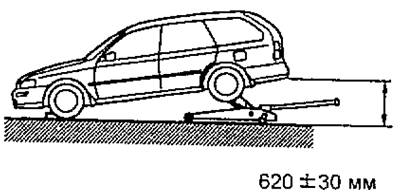
b) Check that the indicator light is flashing. If the indicator light is constantly on, check the voltage between the "IG" terminal of the deceleration sensor connector and the "ground".
- Nominal voltage - 10-14 V
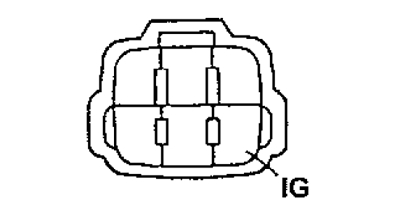
If the voltage is normal, replace the deceleration sensor.
c) Lower the vehicle.
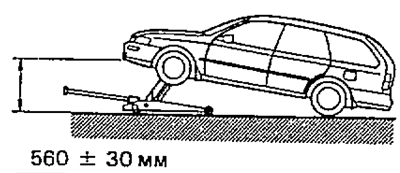
d) Raise the front of the car. Then repeat steps "b" and "c".
Attention: Please measure the height as shown in the picture.
7. (Slowdown sensor)
Check while driving.
a) Check that the ABS indicator is blinking. If the indicator is constantly on, check the voltage between the "IG" terminal of the deceleration sensor connector and the ground.
- Nominal voltage - 10-14 V
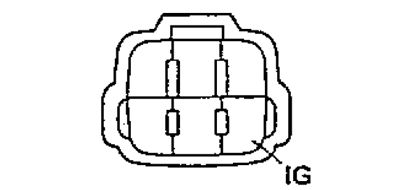
If the voltage is normal, replace the deceleration sensor.
b) At speeds over 20 km/h, lightly press the brake pedal.
c) Check that there is no change in the indicator blinking as shown in the figure.
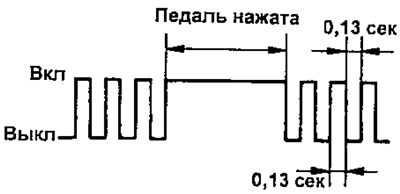
d) At a speed of about 20 km/h, press the brake pedal harder.
d) Make sure that when you press the pedal, the indicator flashes as shown in the figure.
e) At a speed of more than 20 km/h, press the brake pedal all the way down.
g) Make sure the indicator light is flashing.
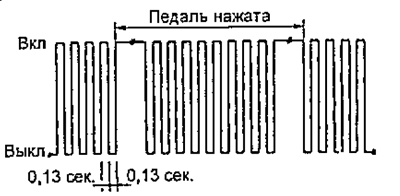
If the indicator blinks do not match the description, check the correct installation of the deceleration sensor. If the deceleration sensor was installed correctly, replace it.
8. Replace or repair faulty system components.
Note: When repairing or replacing ABS parts, turn off the ignition.
9. Disconnect the T terminalswith, Ts and E ₁ diagnostic connector.
Table. ABS system fault codes
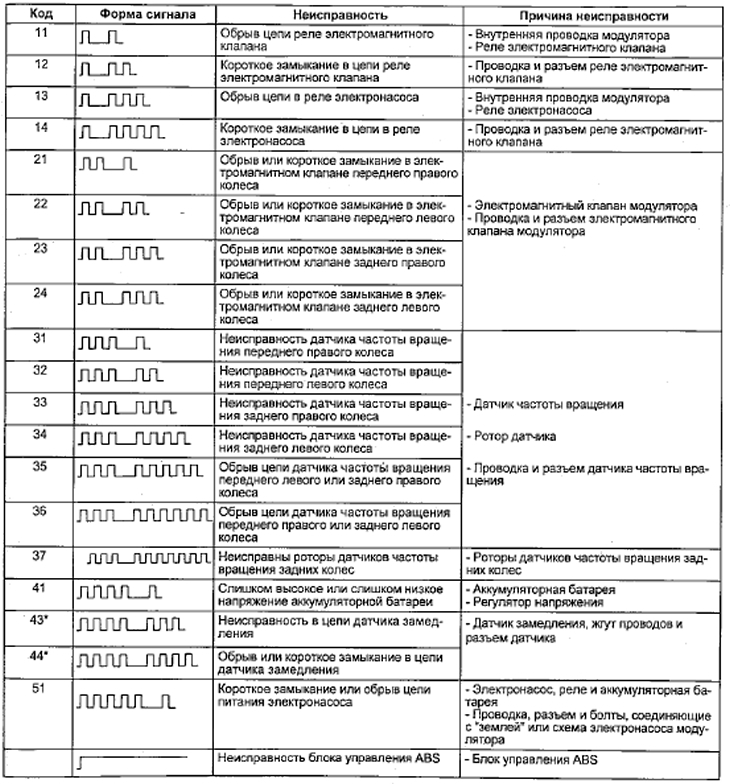
Speed Sensor and Deceleration Sensor Error Codes