
Share information:

Fuel injection system car Toyota Carina 6 (T190)

Fuel injection system — general information
The injection system consists of three main subsystems: fuel, air supply and electronic control.
The injection system consists of three main subsystems: fuel, air supply and electronic control.
Fuel system
Fuel is supplied by the fuel pump through the fuel filter to each injector under pressure set by the fuel pressure regulator. The fuel pressure regulator provides a fuel pressure differential between the fuel and intake...
Fuel is supplied by the fuel pump through the fuel filter to each injector under pressure set by the fuel pressure regulator. The fuel pressure regulator provides a fuel pressure differential between the fuel and intake...
Air supply system
The air supply system provides the supply of the amount of air necessary for the operation of the engine. The amount of air entering the engine is determined by the throttle opening angle and the engine speed. The air...
The air supply system provides the supply of the amount of air necessary for the operation of the engine. The amount of air entering the engine is determined by the throttle opening angle and the engine speed. The air...
Electronic control system
All engines are equipped with a TOYOTA electronic control system that controls fuel injection, ignition timing, idle speed, diagnostic system, etc. using an electronic control unit using a microcomputer. The following...
All engines are equipped with a TOYOTA electronic control system that controls fuel injection, ignition timing, idle speed, diagnostic system, etc. using an electronic control unit using a microcomputer. The following...

Electrical Maintenance Precautions
1. Check the correct motor settings (see chapter " Maintenance and general inspection and adjustment procedures "). 2. Precautions when connecting appliances. A) Use the rechargeable battery as a power source for the...
1. Check the correct motor settings (see chapter " Maintenance and general inspection and adjustment procedures "). 2. Precautions when connecting appliances. A) Use the rechargeable battery as a power source for the...
Precautions for Cars with a Mobile Radio System
Structurally, the electronic control unit is designed in such a way as to exclude the influence of external electromagnetic interference on it. However, if the vehicle is equipped with a CB radio, etc. (even with an...
Structurally, the electronic control unit is designed in such a way as to exclude the influence of external electromagnetic interference on it. However, if the vehicle is equipped with a CB radio, etc. (even with an...
Precautions when working with the air supply system
1. Removing the oil dipstick, oil filler cap, hoses, etc. from the engine. may cause engine misalignment. 2. Disconnection, loosening of fasteners or cracking of elements of the air supply system (between throttle body...
1. Removing the oil dipstick, oil filler cap, hoses, etc. from the engine. may cause engine misalignment. 2. Disconnection, loosening of fasteners or cracking of elements of the air supply system (between throttle body...

Precautions when working with an electronic control system
1. Before disconnecting the electrical connectors of the electronic control unit, it is necessary to turn off the electrical power by either the ignition key or by removing the terminals from the battery. Warning: Be...
1. Before disconnecting the electrical connectors of the electronic control unit, it is necessary to turn off the electrical power by either the ignition key or by removing the terminals from the battery. Warning: Be...

Precautions when working with the fuel system
1. Before working on the fuel system, disconnect the negative cable from the battery. Attention: any diagnostic code in the memory device of the electronic control unit is erased when removed (-) negative terminal from...
1. Before working on the fuel system, disconnect the negative cable from the battery. Attention: any diagnostic code in the memory device of the electronic control unit is erased when removed (-) negative terminal from...

Diagnostic system — description
The electronic control unit has a built-in current self-diagnosis system, which continuously monitors the engine condition based on sensor signals. If a malfunction is detected, this system identifies it and informs the...
The electronic control unit has a built-in current self-diagnosis system, which continuously monitors the engine condition based on sensor signals. If a malfunction is detected, this system identifies it and informs the...

Engine Malfunction Indicator Lamp («CHECK»)
1. Indicator lamp "CHECK" - a warning light signal, which is a light board on the instrument panel, lights up when the ignition is on and the engine is not running. 2. After starting the engine, the scoreboard "CHECK"...
1. Indicator lamp "CHECK" - a warning light signal, which is a light board on the instrument panel, lights up when the ignition is on and the engine is not running. 2. After starting the engine, the scoreboard "CHECK"...

Output of diagnostic codes
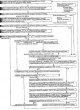
Attention. When diagnosing, two main modes are used: current self-diagnosis and testing. Current self-diagnosis mode To obtain an output diagnostic code, perform the following procedures. 1. Check the initial...
Attention. When diagnosing, two main modes are used: current self-diagnosis and testing. Current self-diagnosis mode To obtain an output diagnostic code, perform the following procedures. 1. Check the initial...
Diagnostic indication
1. If 2 or more types of faults appear at the same time, then the code with the smallest number is displayed first, and then as the numbers increase. 2. All fault codes recorded in the driving cycle, except for those...
1. If 2 or more types of faults appear at the same time, then the code with the smallest number is displayed first, and then as the numbers increase. 2. All fault codes recorded in the driving cycle, except for those...

Erasing a diagnostic code
1. After repair of a faulty node, the diagnostic code is stored in the memory of the electronic control unit. So it must be removed (erased) by disconnecting the fuse "EFI" (with the ignition off). Shutdown time (at...
1. After repair of a faulty node, the diagnostic code is stored in the memory of the electronic control unit. So it must be removed (erased) by disconnecting the fuse "EFI" (with the ignition off). Shutdown time (at...
Checking the diagnostic system circuit
Troubleshooting with a volt/ohmmeter Attention: - Troubleshooting procedures have been developed for each system and are described in this manual. These procedures may change slightly from time to time. However, the...
Troubleshooting with a volt/ohmmeter Attention: - Troubleshooting procedures have been developed for each system and are described in this manual. These procedures may change slightly from time to time. However, the...

Conclusions of the electronic control unit
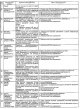
Engines 3S-FE, 4S-FE Engines 4A-FE, 5A-FE, 7A-FE Engines 3S-FE, 4S-FE Engines 4A-FE, 5A-FE, 7A-FE
Engines 3S-FE, 4S-FE Engines 4A-FE, 5A-FE, 7A-FE Engines 3S-FE, 4S-FE Engines 4A-FE, 5A-FE, 7A-FE

Checking the elements of the injection system using an oscilloscope
Note: Below are the correct waveforms for various motors. №10-20-Е1 (5A-FE, 4S-FE) Division value: X - 20 ms, Y - 20 V. Mode: idle. №10-20-Е1 (4A-FE, 3S-FE) Division value: X - 20 ms, Y - 20 V. Mode: idle. №10-40-Е1...
Note: Below are the correct waveforms for various motors. №10-20-Е1 (5A-FE, 4S-FE) Division value: X - 20 ms, Y - 20 V. Mode: idle. №10-20-Е1 (4A-FE, 3S-FE) Division value: X - 20 ms, Y - 20 V. Mode: idle. №10-40-Е1...

Removal and installation of the fuel pump
Attention: when performing work on removing and installing fuel system components, disconnect the fuel pump connector in the luggage compartment as shown in the figure. Removing Precautions: Do not smoke or use open...
Attention: when performing work on removing and installing fuel system components, disconnect the fuel pump connector in the luggage compartment as shown in the figure. Removing Precautions: Do not smoke or use open...

Fuel pump — check on the engine
Check the operation of the fuel pump. Short the terminals with a jumper "+V" And "FP" diagnostic socket. b) Turn on the ignition Attention: do not start the engine. V) Check for fuel pressure in the hose coming from the...
Check the operation of the fuel pump. Short the terminals with a jumper "+V" And "FP" diagnostic socket. b) Turn on the ignition Attention: do not start the engine. V) Check for fuel pressure in the hose coming from the...

Dismantling and assembly of the fuel pump
Disassembly 1. Remove the fuel pump from the bracket. A) Disconnect the fuel pump harness from the connector. b) Remove the bottom of the fuel pump from the bracket. V) Remove the rubber buffer from the fuel pump. G)...
Disassembly 1. Remove the fuel pump from the bracket. A) Disconnect the fuel pump harness from the connector. b) Remove the bottom of the fuel pump from the bracket. V) Remove the rubber buffer from the fuel pump. G)...

Fuel pump check
1. Check up resistance of a winding of the fuel pump. Use an ohmmeter to measure the resistance between the pump leads. Rated resistance - 0.2-3.0 Ohm If the resistance is out of range, replace the fuel pump. 2. Check...
1. Check up resistance of a winding of the fuel pump. Use an ohmmeter to measure the resistance between the pump leads. Rated resistance - 0.2-3.0 Ohm If the resistance is out of range, replace the fuel pump. 2. Check...
Fuel pressure control
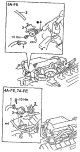
Serie A 1 - fuel return hose, 2 - vacuum hose, 3 - fuel pressure regulator, 4 - ring seal. 3S-FE, 4S-FE 1 - vacuum hose, 2 - fuel pressure regulator, 3 - ring seal, 4 - gasket on the engine Check on the engine Check...
Serie A 1 - fuel return hose, 2 - vacuum hose, 3 - fuel pressure regulator, 4 - ring seal. 3S-FE, 4S-FE 1 - vacuum hose, 2 - fuel pressure regulator, 3 - ring seal, 4 - gasket on the engine Check on the engine Check...

Removal and installation of the fuel tank
1 - service hatch cover, 2 - fuel pump assembly, 3 - gasket, 4 - fuel tank assembly, 5 - hose of the fuel vapor recovery system, 6 - fuel hose (filling tube), 7 - filling hose, 8 - lower protection of the fuel tank, 9 -...
1 - service hatch cover, 2 - fuel pump assembly, 3 - gasket, 4 - fuel tank assembly, 5 - hose of the fuel vapor recovery system, 6 - fuel hose (filling tube), 7 - filling hose, 8 - lower protection of the fuel tank, 9 -...

Fuel filter
4A-FE, 5A-FE 1 - inlet fuel hose, 2 - gasket, 3 - fuel filter. 7A-FE 1 - inlet fuel hose, 2 - fuel filter, 3 - air filter cover with air duct, 4 - gasket. 3S-FE, 4S-FE 1 - air filter cover with air duct, 2 - ABS...
4A-FE, 5A-FE 1 - inlet fuel hose, 2 - gasket, 3 - fuel filter. 7A-FE 1 - inlet fuel hose, 2 - fuel filter, 3 - air filter cover with air duct, 4 - gasket. 3S-FE, 4S-FE 1 - air filter cover with air duct, 2 - ABS...

Injectors — checking on the engine
1. Check the performance of the nozzles by ear. A) With the engine running or when turning it over with a starter, use a phonendoscope to make sure by ear (sound of injected fuel) in the performance of the injectors,...
1. Check the performance of the nozzles by ear. A) With the engine running or when turning it over with a starter, use a phonendoscope to make sure by ear (sound of injected fuel) in the performance of the injectors,...

Removal and installation of nozzles
Removal and installation of nozzles (5A-FE) 1 - rear seat cushion, 2 - fuel pump connector, 3 - air filter cover with air duct, 4 - intake air temperature sensor connector, 5 - vacuum hose (fuel vapor accumulator), 6 -...
Removal and installation of nozzles (5A-FE) 1 - rear seat cushion, 2 - fuel pump connector, 3 - air filter cover with air duct, 4 - intake air temperature sensor connector, 5 - vacuum hose (fuel vapor accumulator), 6 -...

Checking the injectors
1. Inspect the nozzles, use a match to check for dirt on the inlet mesh, if there is, blow it out with air. 2. Check the quality of the injection nozzles. Note: Avoid sparks during testing. Keep a fire extinguisher...
1. Inspect the nozzles, use a match to check for dirt on the inlet mesh, if there is, blow it out with air. 2. Check the quality of the injection nozzles. Note: Avoid sparks during testing. Keep a fire extinguisher...

Installation of nozzles
1. Install injectors and fuel manifold. A) Install a new sealing sleeve on the injector (if filmed). b) Apply a thin layer of fuel (lithol) on a new O-ring and install it on the injector. V) Rotate the injectors and...
1. Install injectors and fuel manifold. A) Install a new sealing sleeve on the injector (if filmed). b) Apply a thin layer of fuel (lithol) on a new O-ring and install it on the injector. V) Rotate the injectors and...

Removal and installation of the throttle body
Series A 1. Disconnect (-) wire from the negative battery terminal. 2. Drain the engine coolant. 3. Disconnect the accelerator cable. 4. (Models with automatic transmission) Disconnect the throttle control cable. Note:...
Series A 1. Disconnect (-) wire from the negative battery terminal. 2. Drain the engine coolant. 3. Disconnect the accelerator cable. 4. (Models with automatic transmission) Disconnect the throttle control cable. Note:...

Throttle Body Disassembly
Series A 1. Remove the idle speed control valve by unscrewing the 4 mounting screws. 2. Remove the throttle position sensor by unscrewing the 2 mounting screws. 3S-FE, 4S-FE 1. Remove the idle speed control valve by...
Series A 1. Remove the idle speed control valve by unscrewing the 4 mounting screws. 2. Remove the throttle position sensor by unscrewing the 2 mounting screws. 3S-FE, 4S-FE 1. Remove the idle speed control valve by...

Throttle position sensor test
Series A 1. Check throttle position sensor. a) (4A-FE with automatic transmission) Apply vacuum to the throttle damper. b) Insert a 0.4 or 0.9 mm thick feeler gauge between the throttle stop adjusting screw and lever....
Series A 1. Check throttle position sensor. a) (4A-FE with automatic transmission) Apply vacuum to the throttle damper. b) Insert a 0.4 or 0.9 mm thick feeler gauge between the throttle stop adjusting screw and lever....

Installing and adjusting the throttle position sensor
Series A 1. Set the throttle to the fully closed position. 2. Install the sensor in the position shown in the figure (90°counterclockwise from original position), insert it into the throttle body, then turn it clockwise...
Series A 1. Set the throttle to the fully closed position. 2. Install the sensor in the position shown in the figure (90°counterclockwise from original position), insert it into the throttle body, then turn it clockwise...

Throttle body device
Serie A 5A-FE, 7A-FE 4A-FE 1 - vacuum hose of the fuel vapor accumulator, 2 - vacuum hose, 3 - throttle body, 4 - throttle position sensor, 5 - throttle position sensor connector, 6 - intake air temperature sensor...
Serie A 5A-FE, 7A-FE 4A-FE 1 - vacuum hose of the fuel vapor accumulator, 2 - vacuum hose, 3 - throttle body, 4 - throttle position sensor, 5 - throttle position sensor connector, 6 - intake air temperature sensor...

Valve of the idling speed control system
Vehicle check 1. Check the resistance of the valve winding. A) Disconnect the valve connector. b) Using an ohmmeter, measure the resistance between the terminal "+V" and conclusions "ISC1", "ISC2" connector. Rated...
Vehicle check 1. Check the resistance of the valve winding. A) Disconnect the valve connector. b) Using an ohmmeter, measure the resistance between the terminal "+V" and conclusions "ISC1", "ISC2" connector. Rated...

Main relay of the fuel injection system
Schemes for switching on the main relay of the injection system 1 - battery, 2 - main fusible insert 2.0L, 3 - fusible insert AM2 (ZOA), 4 - ignition lock, 5 - EFI fuse (15A), 6 - JGN fuse (7.5A), 7 - the main relay of...
Schemes for switching on the main relay of the injection system 1 - battery, 2 - main fusible insert 2.0L, 3 - fusible insert AM2 (ZOA), 4 - ignition lock, 5 - EFI fuse (15A), 6 - JGN fuse (7.5A), 7 - the main relay of...

Location of electronic control system components
Serie A 1 - coolant temperature sensor, 2 - coolant temperature sensor, 3 - nozzles, 4 - valve of the frequency control system, 5 - absolute pressure sensor in the intake manifold, 6 - throttle position sensor, 7 -...
Serie A 1 - coolant temperature sensor, 2 - coolant temperature sensor, 3 - nozzles, 4 - valve of the frequency control system, 5 - absolute pressure sensor in the intake manifold, 6 - throttle position sensor, 7 -...

Fuel pump relay switch
1. Remove the fuel pump relay switch. 2. Check the electrical circuit of the relay using an ohmmeter. Measure the resistance between the terminals of the fuel pump relay switch. If these conditions are not met, replace...
1. Remove the fuel pump relay switch. 2. Check the electrical circuit of the relay using an ohmmeter. Measure the resistance between the terminals of the fuel pump relay switch. If these conditions are not met, replace...

Coolant temperature sensor and intake air temperature sensor
Checking the coolant temperature and intake air temperature sensors 1. To remove the coolant temperature sensor, drain the coolant. 2. Remove the sensor, disconnect the connector. 3. Using an ohmmeter, measure the...
Checking the coolant temperature and intake air temperature sensors 1. To remove the coolant temperature sensor, drain the coolant. 2. Remove the sensor, disconnect the connector. 3. Using an ohmmeter, measure the...

Manifold absolute pressure sensor
1. Check the supply voltage of the absolute pressure sensor in the intake manifold. A) Disconnect the sensor connector. b) Turn on the ignition. V) Using a voltmeter, measure the voltage between the terminals of the...
1. Check the supply voltage of the absolute pressure sensor in the intake manifold. A) Disconnect the sensor connector. b) Turn on the ignition. V) Using a voltmeter, measure the voltage between the terminals of the...

Checking the knock sensor
1. Disconnect a wire from the negative plug of the storage battery. 2. Remove the knock sensor by first disconnecting the sensor connectors. 3. Using an ohmmeter, verify that there is no continuity between the sensor...
1. Disconnect a wire from the negative plug of the storage battery. 2. Remove the knock sensor by first disconnecting the sensor connectors. 3. Using an ohmmeter, verify that there is no continuity between the sensor...

System for increasing the idle speed during the operation of the power steering (series A)
Checking the electro-pneumatic valve 1. Remove the electro-pneumatic valve. 2. Using an ohmmeter, verify that there is no open circuit in the valve winding by measuring its electrical resistance. Rated resistance (at...
Checking the electro-pneumatic valve 1. Remove the electro-pneumatic valve. 2. Using an ohmmeter, verify that there is no open circuit in the valve winding by measuring its electrical resistance. Rated resistance (at...

Electropneumatic valve for exhaust gas recirculation (EGR) (4A-FE with automatic transmission)
4A-FE (automatic transmission) 1 - accelerator cable, 2 - throttle valve control cable (automatic transmission), 3 - intake air temperature sensor connector, 4 - air filter cover with air duct, 5 - vacuum hose, 6 -...
4A-FE (automatic transmission) 1 - accelerator cable, 2 - throttle valve control cable (automatic transmission), 3 - intake air temperature sensor connector, 4 - air filter cover with air duct, 5 - vacuum hose, 6 -...

Electropneumatic valve of the fuel vapor recovery system
Checking the electro-pneumatic valve 1. Remove the electro-pneumatic valve. 2. Using an ohmmeter, verify that there is no open circuit in the valve winding by measuring its electrical resistance. Rated resistance (at...
Checking the electro-pneumatic valve 1. Remove the electro-pneumatic valve. 2. Using an ohmmeter, verify that there is no open circuit in the valve winding by measuring its electrical resistance. Rated resistance (at...

Oxygen sensor
1. Warm up the engine to normal operating temperature. 2. Measure the oxygen sensor feedback voltage. A) Connect the positive lead of the voltmeter to the "VF1" diagnostic connector, and the negative terminal to the...
1. Warm up the engine to normal operating temperature. 2. Measure the oxygen sensor feedback voltage. A) Connect the positive lead of the voltmeter to the "VF1" diagnostic connector, and the negative terminal to the...
This section is available on: russian, bulgarian, belarusian, ukrainian, serbian, croatian, romanian, polish, slovak, hungarian
Similar sections for other Toyota models
➥ Power unit: Fuel injection (petrol) Toyota Camry Vista V40 (1994-1998)
➥ Power unit: Fuel supply (injector) Toyota Corolla E80 (1983-1990)
➥ Power unit: Fuel injection (petrol) Toyota Corona T190 (1992-1997)
➥ Power unit: Fuel system (injector) Toyota Cruiser 60/80 (1980-1997, petrol)
➥ Power unit: Fuel injection system Toyota Duet (1998-2004)
Link in different formats to this article
TEXTHTMLBB Code
- General information
- User manual
- Maintenance
- Power unit
- Engines 4A-FE, 5A-FE, 7A-FE
- Engines 3S-FE, 4S-FE
- Diesel engines 2C
- Engine repair
- Cooling system
- Lubrication system
- Fuel system
- Control system (diesel)
- Fuel injection system
- Engine electrical equipment
- Transmission
- Clutch
- Mechanical gearbox
- Automatic gearbox
- Drive shafts
- Chassis, running gear
- Car suspension
- Steering
- Brake system
- Body and interior
- Exterior (external elements)
- Interior (internal elements)
- Air conditioning and heater
- Electrical equipment
- Equipment and devices
- Headlights and lighting
- Breakers and switches
- Electrical circuits
- General information
- Introduction to the manual
- Power unit
- Gasoline engines
- Diesel engines
- Lubrication system
- Cooling system
- Fuel system (carburetor)
- Fuel system (injector)
- Ignition system
- Transmission
- Clutch
- Car gearbox
- Drive shafts
- Chassis, running gear
- Front suspension
- Rear suspension
- Steering
- Brake system
- Electrical equipment
- Power devices
- Electrical circuits