



Note: Before installing the camshafts, they should be carefully inspected, and before removing each shaft, its axial clearance should be checked (see item 13).
Removal
1. Disconnect the ground cable from the battery (see paragraph 1 of chapter 5).
2. Remove the cylinder head cover (see paragraph 4).
3. Bring piston #1 to the TDC position on the compression stroke (see paragraph 3). Visually ensure that the engine is at TDC on the compression stroke - the timing mark on the crankshaft pulley/damper is aligned with the "0" mark on the timing chain cover, and the TDC marks on the camshaft sprockets are aligned and parallel to the top edge of the timing chain cover (fig. 3.8 and 6.8)
4. After aligning the TDC marks, apply paint marks to the timing chain links where they meet the upper timing marks on the timing shaft sprockets (Fig. 7.4).
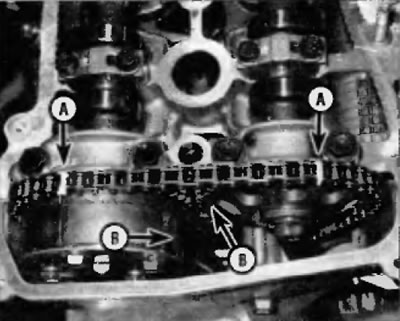
Fig. 7.4. With the TDC marks aligned, mark the timing chain links with paint where they meet the upper timing marks on the camshaft sprockets (A). The other two marks (B) are used to align the sprockets with the timing chain during installation
Note: There are two sets of marks on the camshaft sprockets. The marks that align at TDC are just reference marks for the TDC position and nothing more: the other two marks are used to align the sprockets with the timing chain during installation.
5. Remove the timing chain tensioner from the chain cover (fig. 6.14, a, b) and the camshaft position sensor from the cylinder head (see chapter 6).
6. Hold the camshaft by the hex section with a large wrench and loosen the exhaust camshaft sprocket mounting bolts a few turns. If the camshaft sprockets turn while loosening the bolts, turn the engine clockwise until the "TDC" marks on the shaft sprockets are aligned again.
Note: If removal of the intake camshaft sprocket is required (with WT actuator), follow the procedure and remove the sprocket mounting bolts later on the bench.
7. Remove the exhaust camshaft sprocket mounting bolt. Loosen the exhaust camshaft bearing cap bolts in two or three stages, starting with the outer caps and moving toward the center (in the reverse order of tightening). Remove the cap bolts and remove the shaft from the cylinder head. Unhook the chain from the sprocket and remove the sprocket from the engine.
8. Check the markings on the inlet camshaft bearing caps. They should be marked with numbers from 1 to 5 and marked "I" (which stands for "intake", indicating that the covers are for the intake camshaft (Fig. 7.8).
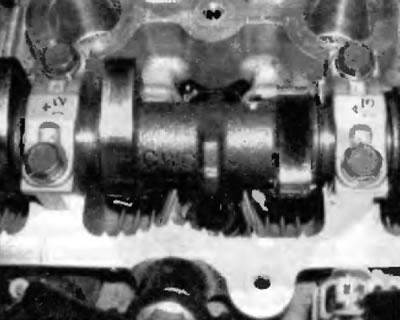
Fig. 7.8. The camshaft bearing caps are numbered and have arrows on them that should point towards the end of the engine where the timing chain is located
Caution: Arrange the covers in order. They should be installed in the same places from which they were removed.
9. Loosen the intake camshaft bearing cap bolts in two or three stages, starting from the outer caps and moving toward the center (in the reverse order of tightening) (fig. 7.22).
10. Remove the intake camshaft bearing caps, then remove the camshaft from the cylinder head. Mark each camshaft with the word "Intake" or "Exhaust" to avoid mixing them up.
Note: When looking at the engine from the front of the car, the front shaft is the exhaust shaft and the shaft closest to the bulkhead is the intake shaft. Be sure to return the camshafts to their original positions when installing.
After removing the camshafts, hang the timing chain with a piece of wire and secure it to some element on the bulkhead (Fig. 7.10). This will prevent the timing chain from falling into the engine while performing the rest of the steps. Also cover the hole in the timing chain cover with a rag to prevent any foreign objects from falling into the engine.
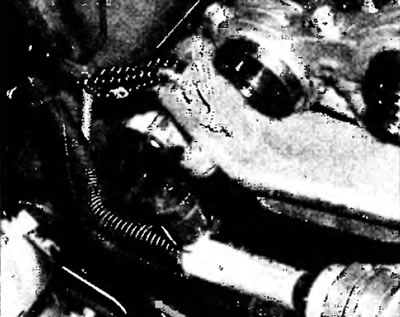
Fig. 7.10. Hang the timing chain off to the side with a piece of wire and insert a rag into the hole in the timing chain cover to prevent foreign objects from falling into the engine
11. Remove the tappets from the cylinder head, arranging them in order according to the valve and cylinder on which they were installed (fig. 7.11, a, b).
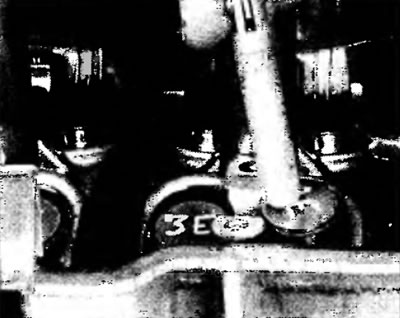
Fig. 7.11, a. Mark the tappets appropriately (e.g. "I" (Intake) for intake or "E" (Exhaust) for exhaust and their position numbers) and remove them using a magnetic tool
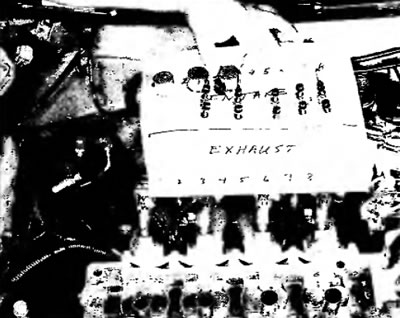
Fig. 7.11, b. Mark the cardboard box to store the tappets and bearing caps according to the order in which they are installed
Caution: Arrange the tappets in order. They should be installed in the same places from which they were removed.
12. Inspect the camshafts, camshaft bearings and tappets as described below. Inspect the camshaft sprockets for worn teeth. Inspect the chains for cracks or excessive roller wear, and also for stretching (see paragraph 6). If any elements show signs of increased wear, they should be replaced.