



Caution: Wait until the engine has cooled down completely before starting this procedure.
Note: This procedure requires special tools. Please read the procedure carefully and have the necessary tools and equipment ready before you begin.
1. Disconnect the ground cable from the battery (see paragraph 1 of chapter 5).
2. Remove the drive belt (see chapter 1) and generator (see chapter 5).
3. Remove the cylinder head cover (see paragraph 4).
4. Apply the parking brake and chock the rear wheels. Loosen the nuts on the right front wheel. Raise the front of the car and place reliable supports under it. Remove the right front wheel and the corresponding wheel liner.
Caution: If the vehicle is equipped with electronically controlled air suspension, turn off the ride height control switch.
5. Remove the lower engine guard (Fig. 6.5). Remove the wing splash guards (see chapter 11).
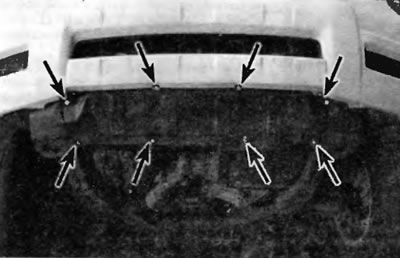
Fig. 6.5. Location of lower engine guard mounting components on newer Highlander models
6. Drain the coolant from the cooling system (see chapter 1). While the coolant is draining, remove the power steering pump from the engine without disconnecting the hydraulic lines from it (see chapter 10). Tie the booster pump to the body with a piece of wire and place it aside.
7. Disconnect the exhaust pipe from the exhaust manifold/catalytic converter (see chapter 4).
8. Bring piston No.1 to the TDC position on the compression stroke (see paragraph 3). Visually check that the engine is at TDC on the compression stroke - the timing mark on the crankshaft pulley/damper is aligned with the "0" mark on the timing chain cover, and the mark on the camshaft sprocket is aligned and parallel to the top edge of the timing chain cover (Fig. 6.8).
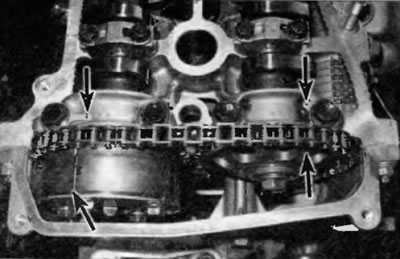
Fig. 6.8. When the engine is in the TDC position, the marks on the camshaft sprockets (bottom arrows) aligned with the marks on the camshaft bearing caps (top arrows)
Note: There are two sets of marks on the camshaft sprockets. The marks that align at TDC are just reference marks for the TDC position and nothing more: the other two marks are used to align the sprockets for the valve train during installation.
9. Remove the crankshaft pulley/damper, being careful not to move the engine past TDC (see paragraph 11). If the engine is moved out of TDC while performing this step, move the engine back to TDC before continuing. The engine must remain at TDC for piston #1 throughout the entire procedure.
10. Support the engine from above using the engine support beam (it can be rented).
11. Remove the passenger side engine mount and engine mount thrust rod (see paragraph 17). Remove the front engine mount and the transaxle mount (see paragraph 17).
12. Remove the drive belt tensioner (Fig. 6.12) and the crankshaft position sensor from the timing chain cover. Also remove the bolt securing the crankshaft position sensor wiring harness to the timing chain cover.
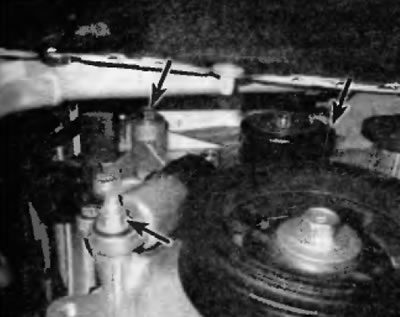
Fig. 6.12. Drive belt tensioner fastening elements
13. Remove the oil pan (see paragraph 13).
14. Remove the main wiring harness mounting bolts and remove the timing chain tensioner from the rear of the timing chain cover (fig. 6.14, a, b).
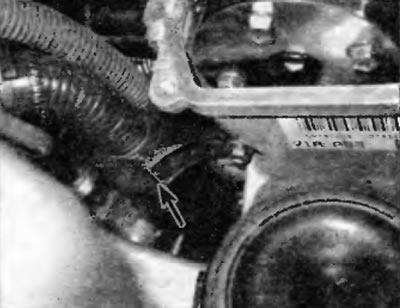
Fig. 6.14, a. Remove the two bolts securing the main wiring harness to the timing chain cover
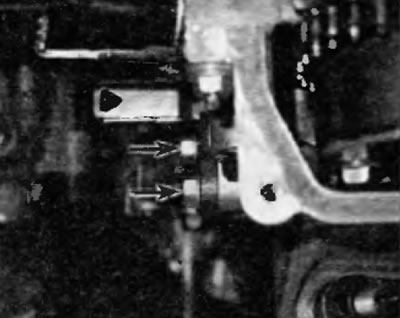
Fig. 6.14, b. Timing chain tensioner mounting nuts
15. Remove the timing chain cover mounting bolts (note the diameter, location and length of the screws when removing them as they should be reinstalled in their original locations) and remove the cover from the engine (fig. 6.15, a-g).
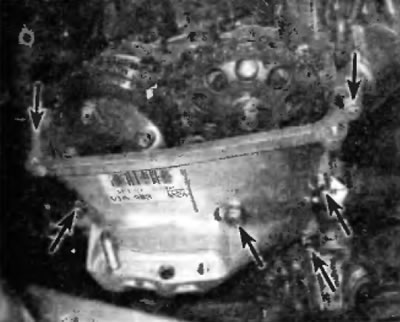
Fig. 6.15, a. Upper timing chain cover mounting screws
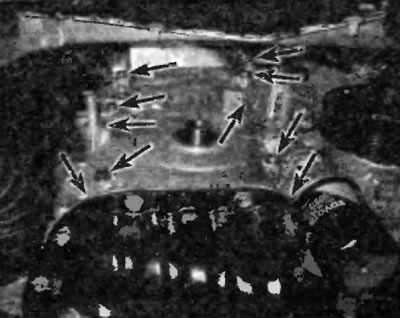
Fig. 6.15, b. Upper screws for fastening the valve timing chain cover
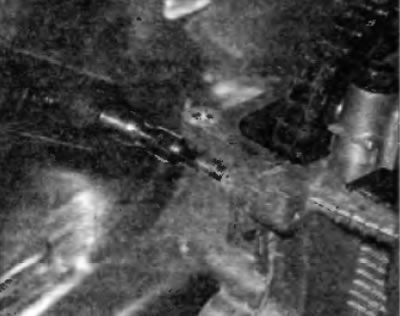
Fig. 6.15, c. You will need to unscrew the studs securing the timing chain cover...
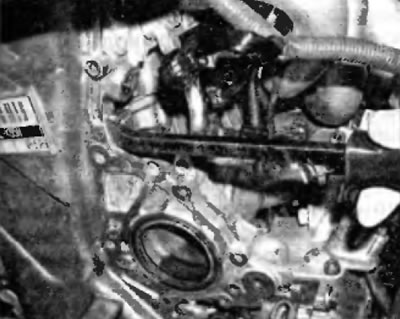
Fig. 6.15, g....and only the son-in-law shine the cover from the engine
16. Remove the crankshaft position sensor pulse wheel from the crankshaft. Note the "E" mark on the front side (after installation it should be facing outwards) (fig. 16.16).
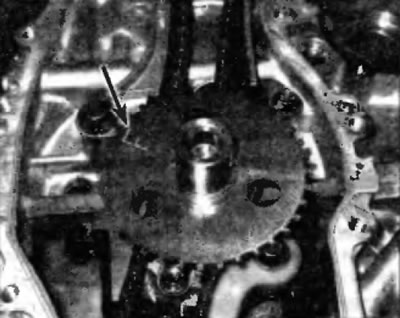
Fig. 6.16. Remove the crankshaft position sensor pulse wheel from the shaft (mark "F" is indicated by the arrow)
17. Remove the timing chain tensioner/guide lever and the lower chain guide (Fig. 6.17).
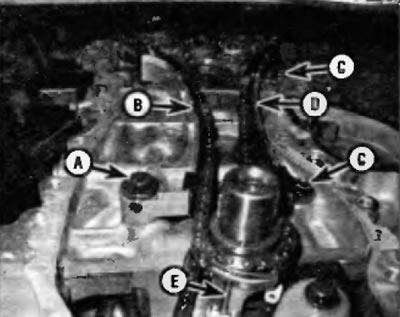
Fig. 6.17. Fastening the timing chain guide
A. Articulated bot
B. Tensioner Lever/Chain Guide
C. Fixed chain guide mounting bolts
D. Fixed chain guide
E Lower timing chain guide
18. Remove the timing chain from the camshaft sprockets, then remove the chain and crankshaft sprocket from the engine as a unit. The crankshaft sprocket should be able to be removed from the shaft by hand. If the sprocket does not come off the shaft, gently pry it off with a lever.
Note: If you intend to use a timing chain and a delta, make a mark with white paint or chalk to indicate the front side of the chain. If a timing chain that has been removed and is then reinstalled in the opposite direction, noise and increased wear may occur.
19. Remove the fixed timing chain guide (Fig. 6.17).
20. To remove the sprockets from the camshafts, loosen the bolts while holding the shafts with a wrench on the hex section only. Before removing, note the identification marks on the camshaft sprockets, then unscrew the bolts. Pull the sprockets by hand to remove them from the pins. If necessary, use a small puller to remove the sprockets. With claws that fit into the holes provided on the sprockets.
Note: These models are equipped with a variable valve timing system that includes an actuator attached to the intake camshaft sprocket. When removing the intake camshaft sprocket on these models, only the center bolt that secures the sprocket to the shaft should be loosened and removed. Do not loosen the outer four bolts that secure the actuator to the sprocket.