



Warning! Gasoline is highly flammable. Therefore, extra precautions should be taken when working with the fuel system. See warning in paragraph 2.
1. Relieve the fuel pressure (see paragraph 2).
2. Disconnect the ground cable from the battery (see paragraph 1 of chapter 5).
3. Remove the engine cover (see "Intake manifold - removal and installation" in Chapter 2A or 2B).
4. Remove the air intake duct (see paragraph 9).
Models with four-cylinder engine
5. Disconnect the electrical connectors at the fuel injectors and set the injector wiring harness aside.
6. Disconnect the fuel supply line from the fuel pressure pulsation damper (see paragraph 4).
7. Unscrew the fuel rail mounting bolts (Fig. 15.7).
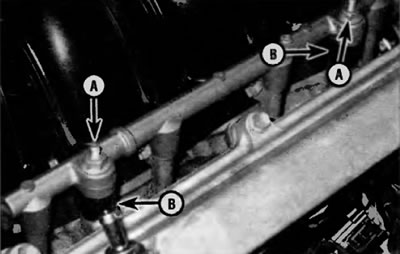
Fig. 15.7. To disconnect the fuel rail from the intake manifold on models with a four-cylinder engine, tighten the bolts (A). After removing the fuel rail and injectors, remove and check the condition of the spacers (B). If they are damaged, replace them
8. Remove the fuel rail and fuel injectors as a single assembly.
9. To remove the fuel injectors and replace the sealing rings in them, refer to paragraphs 23 and 24.
10. Installation is performed in the reverse order of removal. Tighten the fuel rail mounting bolts to the specified torque specified in Specifications at the beginning of this chapter.
Models with V6 engine
Application: On these models, the fuel rail is actually made up of two sections. The front fuel rail houses the fuel injectors for the front bank of cylinders. The rear fuel rail houses the fuel injectors for the rear bank of cylinders. If only one injector is leaking an o-ring/seal, it is still recommended to replace the o-rings on all injectors. Most fuel rails require removal of the entire assembly. Therefore, to avoid having to remove the fuel rail later to replace another o-ring and/or seal, replace all o-rings/seals at the same time. However, if only one front bank injector is leaking, be aware that you have the option of removing the front fuel rail without removing the rear fuel rail. This means you do not have to remove the intake manifold. Conversely, you can remove the rear fuel rail without removing the front fuel rail, although you will need to remove the intake manifold to do so. Finally, if a leak occurs from one injector, it is recommended to remove all injectors and replace all O-rings and/or seals. Removing the intake manifold on these vehicles is not very difficult.
11. Remove the suspension strut clamp (see paragraph 3 of chapter 10).
12. Remove the intake manifold (see chapter 2B).
13. Disconnect the electrical connectors of the injectors on the front cylinder head (fig. 15.13).
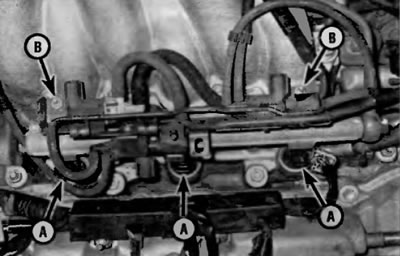
Fig. 15.13. Disconnect the electrical connectors (A) of the fuel injectors on the front cylinder head. To disconnect the support bracket of the vacuum switching valve (VSV) from the intake manifold, unscrew the two nuts (B) (models with V6 engine)
14. Remove the vacuum switching valve (VSV) support bracket from the intake manifold (fig. 15.13) and set the bracket aside. Do not disconnect the vacuum hoses.
15. If you are going to remove the entire fuel rail assembly, disconnect the fuel supply line from the fuel rail (see paragraph 4).
16. If you are only going to remove the front fuel rail, disconnect the metal cross pipe that connects the front fuel rail to the rear fuel rail. To do this, remove the banjo (hollow) union bolt from the front fuel rail (fig. 3.8). If you are going to remove the rear fuel rail, remove the pulsation damper from this rail (fig. 14.8) and remove the cross pipe. Remove the sealing washers and discard them (when assembling, use new ones).
17. If you are removing only the front fuel rail and injectors, remove the front fuel rail mounting bolts (fig. 15.21) and remove this ramp and injectors by pulling the assembly straight up.
18. To remove the fuel injectors and replace their sealing rings, refer to steps 23 and 24 below.
19. If you are going to remove the entire fuel rail assembly (or just the rear fuel rail), remove the intake manifold (see chapter 2B).
20. Disconnect the electrical connectors on the rear fuel rail (Fig. 15.20).
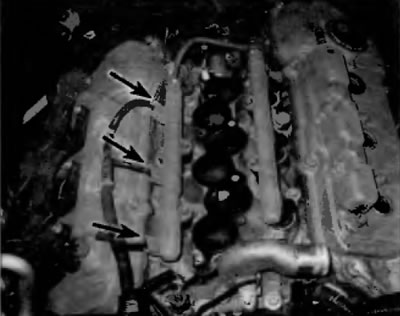
Fig. 15.20. Disconnect the electrical connectors of the rear fuel injectors (models with V6 engine)
21. Remove the fuel rail mounting bolts (fig. 15.21).
[The original article is on the portal ToyotaMAN]
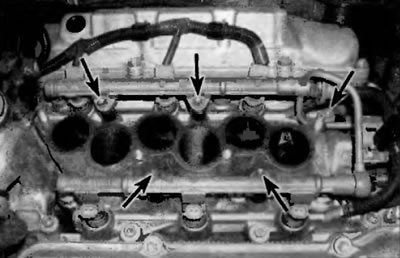
Fig. 15.21. To disconnect the fuel rail assembly from the intake manifold, remove these bolts (models with V6 engine)
22. Remove the fuel rail and fuel injectors as a single unit (fig. 15.22).
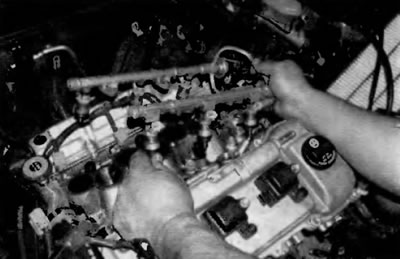
Fig. 15.22. Remove the fuel rail and injectors as a single unit
23. Remove the fuel injectors from the fuel rail (fig. 15.23).
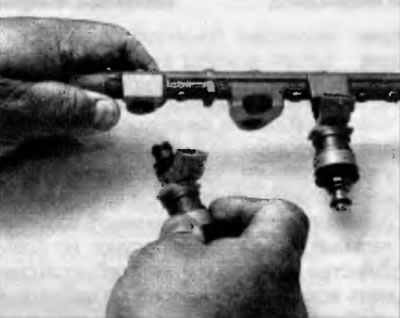
Fig. 15.23. To remove each injector from the fuel rail, pull it out of the rail while simultaneously unscrewing
24. If you intend to continue using the same injectors, replace the sealing bushings and O-rings (fig. 15.24).
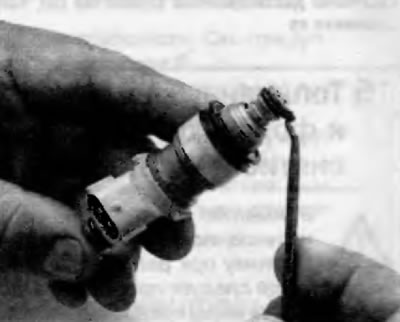
Fig. 15.24. If you plan to put the "old" injectors back in place, remove the sealing rings and sealing bushings from them and replace them with new ones
25. Installation is performed in the reverse order of removal. Use new injector sealing rings and tighten the fuel rail mounting bolts to the specified torque specified in Specifications at the beginning of this chapter.