



Contents: Removal ↓ Upper intake manifold ↓ To remove spark plugs ↓ For all other procedures ↓ Lower intake manifold ↓ Installation ↓
Caution: Wait until the engine has cooled down completely before starting this procedure.
Removal
1. Relieve the pressure in the fuel system (see chapter 4), then disconnect the ground cable from the battery (see paragraph 1 of chapter 5).
2. Remove the engine cover (fig. 4.2, a, b).
Upper intake manifold
Note: The following procedure requires removing the upper intake manifold to access the rear cylinder head cover, rear cylinder head, and sensors. However, to remove the spark plugs, perform a compression test, and service the fuel rail, you can separate the upper intake manifold from the throttle body while leaving the air cleaner housing and throttle body in place.
3. On 2004 and later Highlander and all Lexus models, remove the upper hood panel/air intake box deflector (see chapter 11).
4. On 2004 and later Highlander and all Lexus models, remove the windshield wiper arms and windshield wiper motor (see chapter 12).
5. On 2004 and later Highlander and all Lexus models, remove the lower hood panel (see chapter 11).
6. Disconnect the positive crankcase ventilation hose from the cylinder head cover (Fig. 5.6).
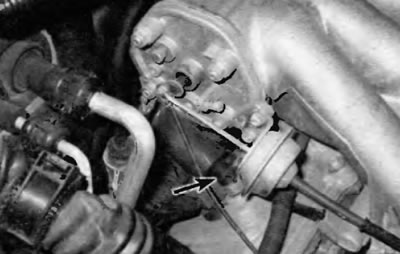
Fig. 5.6. Location of the positive crankcase ventilation hose on the rear cylinder head cover
To remove spark plugs
7. Disconnect the ground bus, the variable geometry air intake system (ACIS) components (see chapter 6) and vacuum lines (Fig. 5.7) from the upper intake manifold and disconnect the corresponding electrical connectors. Using masking tape and a marker, mark each electrical connector to ensure proper assembly.
[The original is this website: www.toyotaman.ru]
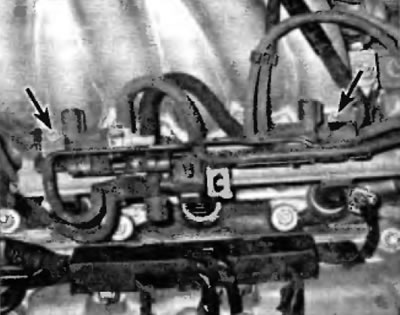
Fig. 5.7. Loosen the nuts, remove the vacuum block from the upper intake manifold and position the weld to the side
8. Unscrew the throttle body mounting nuts (Fig. 5.8).
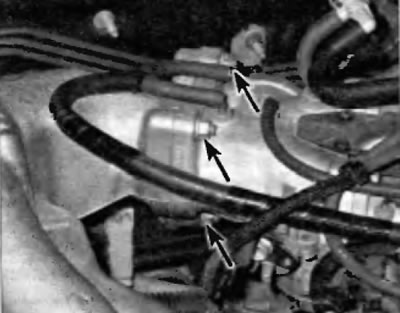
Fig. 5.8. Location of throttle body mounting nuts (2001 model shown, same for later models)
9. Remove the bolts and clamp at the rear of the upper intake manifold.
10. Remove the bolts and nuts securing the upper intake manifold to the lower intake manifold (Fig. 5.10).
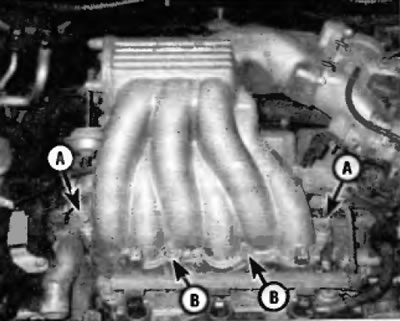
Fig. 5.10. Location of bolts (B) and nuts (A) for fastening the upper intake manifold (3.0L VG engine shown, similar for 3.3L V6 engine)
11. Remove the two Torx screws (A) from the cylinder head (Fig. 5.10).
12. Move the upper intake manifold to the side and separate it from the throttle body and lower intake manifold (Fig. 5.12).
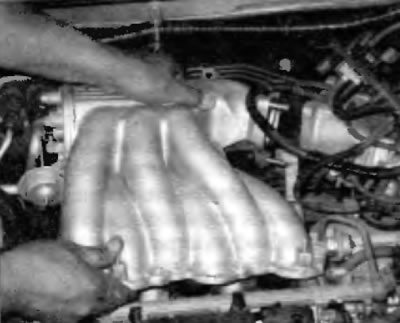
Fig. 5.12. Move the upper intake manifold to the side to disconnect it from the throttle body
For all other procedures
13. Disconnect the ground bus, the variable geometry air intake system (ACIS) components (see chapter 6) vacuum lines (Fig. 5.7) and coolant bypass hoses from the upper intake manifold to the throttle body assembly and disconnect the corresponding electrical connectors. Note: Clamp the coolant hoses before disconnecting them or plug the hoses immediately after disconnecting. Be prepared for coolant to leak. The throttle body can remain connected to the upper intake manifold unless it must be removed for gasket service or cleaning. Using masking tape and a marker, mark each electrical connector to ensure proper assembly.
14. Remove the air filter housing and air intake ducts (see chapter 4).
15. Disconnect the accelerator cable (see chapter 4) or disconnect the electronic throttle control system electrical connector (see chapter 6) on the throttle body.
16. Remove the tie between the two suspension struts (see paragraph 3 of chapter 10).
17. Remove the bolts and the upper intake manifold clamp and the throttle body clamp at the rear of the upper intake manifold.
18. Remove the bolts and nuts securing the upper intake manifold to the lower intake manifold and remove the upper intake manifold assembly with the throttle body from the engine compartment (Fig. 5.10).
Lower intake manifold
19. Drain the coolant into a clean container (see chapter 1).
20. Disconnect the electrical connectors on the fuel injectors (see chapter 4). Also disconnect the fuel line from the fuel rail (see chapter 4).
Note: The intake manifold can be removed either without removing the injectors and fuel rail, or with their removal, depending on the nature of the work to be performed.
21. Disconnect the heater hoses from the lower intake manifold.
22. Remove the bolts and the two nuts in the reverse order of tightening, then disconnect the lower intake manifold from the engine (Fig. 5.26). If the manifold does not come off, do not pry it off by inserting any lever between the mating surfaces, as this may damage the joint.
23. After removing the intake manifold, access to the coolant connecting hose is available (Fig. 5.23). Due to the difficulty of accessing this hose for replacement, it is recommended to replace it with a new one each time the intake manifold is removed for any other work.
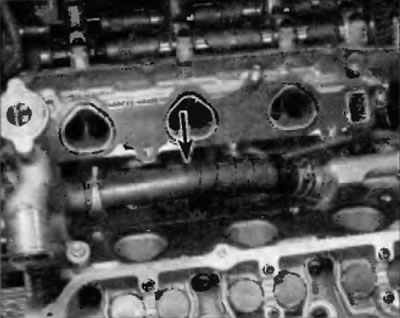
Fig. 5.23 This coolant hose should be replaced whenever the intake manifold is removed for any other repairs
Installation
24. Use a scraper to remove all traces of old gasket material and sealant from the lower intake manifold and cylinder heads, then clean the mating surfaces with lacquer thinner or acetone.
25. Install new gaskets, then install the manifold onto the engine. Be careful not to move the gaskets, then remove the nuts/install the bolts.
26. Tighten the nuts/bolts evenly in three or four stages to the specified torque as shown in Specifications at the beginning of this chapter. Tighten the bolts in the correct sequence (Fig. 5.26).
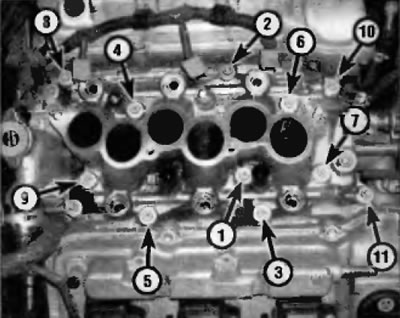
Fig. 5.26. Sequence of tightening the lower intake manifold mounting bolts
27. Install the remaining components in the reverse order of removal. Install a new gasket between the lower intake manifold and the upper intake manifold (Fig. 5.27).
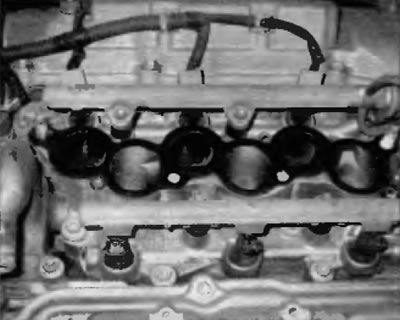
Fig. 5.27. Install a new gasket after the lower intake manifold surface has been properly prepared
28. Fill the cooling system. Start the engine and check for fuel, vacuum, and coolant leaks.