



Note: Install the parts as shown in the figure.
1. Apply grease to the following parts:
- two cuffs,
- two pistons,
- two anthers.
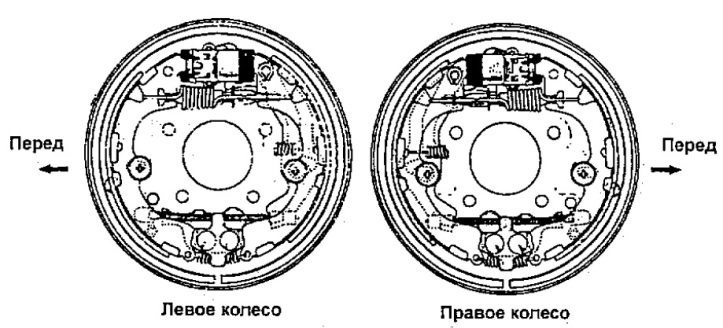
Installing rear drum brakes
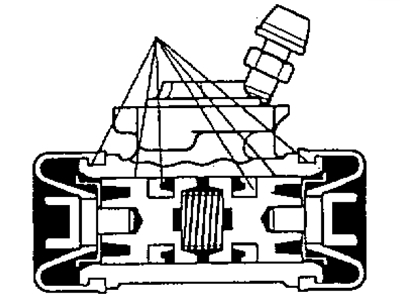
2. Assemble the wheel brake cylinder.
a) Install two new cuffs.
b) Install the spring and two pistons into the cylinder. Make sure the piston flanges are facing inward.
c) Install two anthers.
3. Install the wheel brake cylinder.
Install the wheel brake cylinder on the brake shield and tighten the 2 bolts.
- Tightening torque - 10 Nm
4. Using the special tool, connect the brake pipe to the wheel brake cylinder.
- Tightening torque - 15 Nm
5. Apply high temperature grease to the following parts:
a) Contact surfaces of the brake shoe and brake shield.
b) Contact surfaces of the retaining plate and the brake shoe.
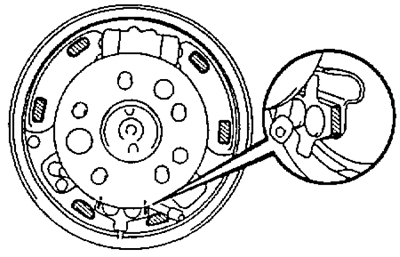
c) Automatic regulator bolt.
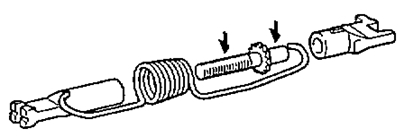
d) Contact surfaces of the automatic regulator and the brake shoe.
6. If necessary, replace the adjusting shim.
a) Install the parking brake lever with a new snap ring.
b) Install the automatic regulator lever with a new retaining ring.
7. Using a feeler gauge, measure the gap between the brake shoe and the lever.
- Maximum allowable gap is 0.35 mm
If the gap does not meet technical requirements, select an adjusting shim of the required thickness.
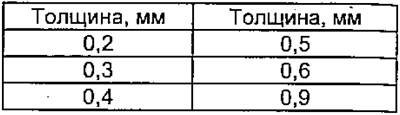
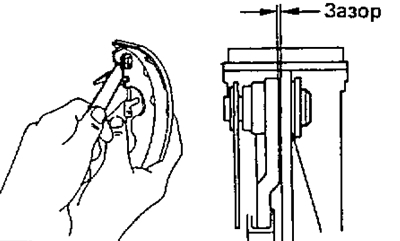
8. Install the automatic regulator and rear shoe.
a) Using pliers, connect the parking brake cable to the lever.
b) Install the regulator and return spring.
c) Install the automatic regulator lever spring.
d) Install the rear brake shoe with one end in the brake cylinder and the other behind the retaining plate.
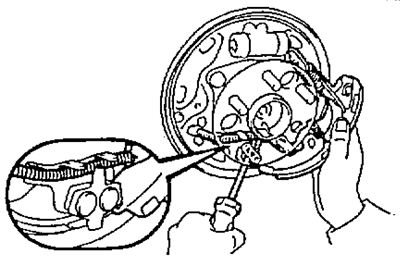
d) Using the special tool, install the holder, spring seats and holder spring.
Caution: Do not allow oil or grease to come into contact with the friction surfaces.
9. Installing the front brake shoe.
a) Install the retaining spring between the rear and front brake shoes.
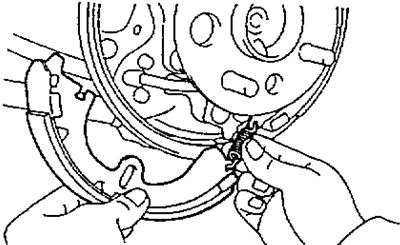
b) Install the front brake shoe with one end into the brake cylinder and automatic adjuster, and the other end behind the retaining plate.
Caution: Do not allow oil or grease to come into contact with the friction surfaces.
c) Using the special tool, install the spring retainer, spring seats and retainer spring.
d) Using the special tool, connect the return spring.
10. Checking the operation of the automatic clearance adjustment mechanism between the pads and the drum.
a) Move the parking brake lever up and down. Check that the automatic regulator works.
If the automatic adjuster does not work, check that the rear brakes are assembled correctly.
b) Set the minimum possible length of the automatic regulator.
c) Install the brake drum.
d) Pull the parking brake lever fully until you hear the ratchet brake mechanism click into action.
Checking the gap between the brake linings and the brake drum.
a) Remove the brake drum.
b) Measure the inner diameter of the drum and the diameter formed by the brake shoe linings.
Check that the obtained difference in diameters corresponds to the nominal gap.
The original publication can be found on the website ToyotaMan
- Nominal clearance - 0.6 mm
If the clearance between the linings and the drum is not within specifications, check the parking brake system.
12. Install the brake drum.
13. Install the rear wheel.
14. Fill the reservoir with brake fluid and bleed the brake system.
15. Check for leaks.