



Installation of electrical equipment relays for FJ60 vehicles
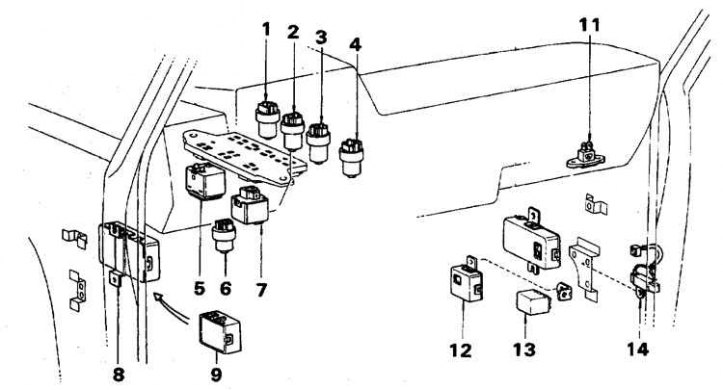
1. Ignition system relay; 2. Relay for switching on lighting devices; 3. Relay for switching on rear lights; 4. Heater fan relay; 5. Windscreen wiper relay; 6. Engine cooling fan relay; 7. Turn signal interrupter; 8. Emission Control System Processor; 9. Preheating timer; 11. Socket for portable lamp; 12. Seat belt processor; 13. Battery charge indicator lamp relay; 14. Signal lamp resistor
Installation of the FJ62 car electrical equipment relay
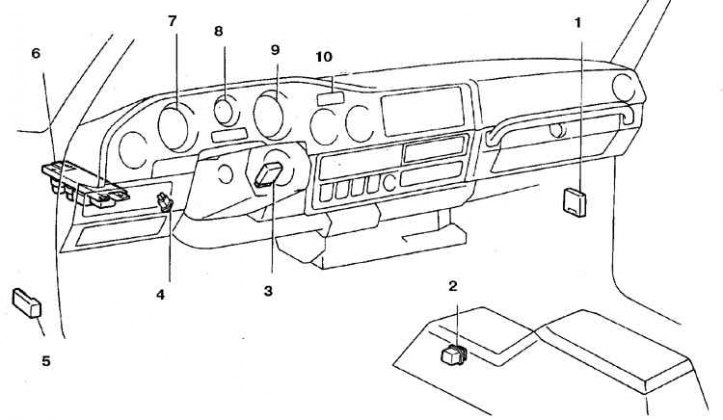
1. Seat belt relay; 2. Rear heater relay; 3. Windshield wiper relay; 4. Circuit breaker; 5. Headlight washer relay; 6. Relay block; 7. Instrument cluster; 8. Tachometer; 9. Speedometer; 10. Clock
Installation of electrical equipment relays for FJ80 vehicles
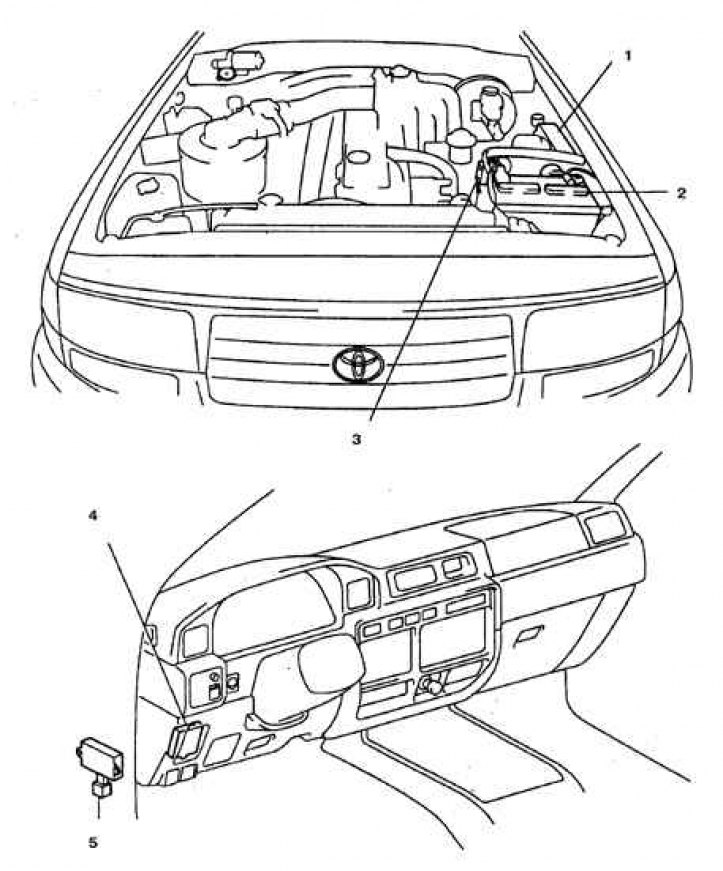
1. Relay block 2; 2. Battery; 3. Fusible link (main, AM1 and AM2); 4. Fuse box; 5. Relay block 1
Examination
1. The most reliable results are obtained by testing using the relay connection diagram. If the connection diagram is not available, then perform tests taking into account the following information.
2. A pair of terminals of any relay is connected to a coil, which ensures the relay is triggered. The remaining terminals are closed or opened in pairs when the coil is energized.
3. As a rule, the contact layout is indicated on the relay body.
4. Connect one of the relay coil terminals to the positive terminal of the battery via a wire with a thin wire as a fuse. Connect the second terminal to ground. After connecting, a click should be heard. If there is no click, then reverse the polarity of the connection (polarity of connection matters on some relays).
5. Check for continuity between the relay terminals in accordance with the marking on the housing.
(This material is taken from a resource: www.ToyotaMan.ru)
6. If the test results are negative, replace the relay.