



Contents: Before launch ↓ Normal startup method (cold engine) ↓ If the weather is excessively cold... ↓ Removal air and condensate from the…↓ Jump starting with an additional…↓
Caution: Avoid prolonged engine operation at high speeds and abrupt acceleration when the engine is not warmed up, especially on turbocharged models.
Before launch
1. Apply the parking brake.
2. Turn off unnecessary lights and auxiliary equipment.
3. Press the clutch pedal all the way down and move the gearshift lever to neutral. Keep the clutch pedal depressed until the engine starts.
Normal startup method (cold engine)
1. Turn the ignition switch to the "ON" position and check that the cold start assist indicator comes on. Keep the key in the "ON" position until the indicator goes out.
2. While pressing the accelerator pedal approximately halfway, crank the engine crankshaft while turning the ignition key to the "START" position. Release the ignition key and accelerator pedal when the engine starts.
3. After the engine has been running for approximately 10 seconds, the vehicle is ready to drive.
Note: If the weather is frosty, let the engine warm up for a few minutes before driving.
If the weather is excessively cold...
1. Turn the ignition switch to the "ON" position and check that the cold start assist indicator comes on. Keep the key in the "ON" position until the indicator goes out.
2. With the accelerator pedal fully depressed, crank the engine while turning the ignition key to the "START" position. Release the ignition key and accelerator pedal when the engine starts.
3. After warming up the engine for a few minutes, the car is ready to drive.
4. If the engine runs unsteadily after starting, increase the crankshaft speed by turning the idle fuel control drive adjustment handle clockwise to a value at which the engine runs smoothly. After the engine has fully warmed up, return the adjustment handle to its original position.
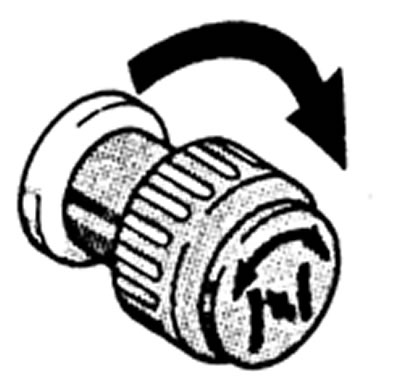
Removal air and condensate from the fuel system
1. Removing air from the fuel system.
a) If you run out of fuel and the engine stalls, the engine may not start after refueling. In this case, pump fuel using the hand pump until you feel more resistance.
b) If the fuel system is in order, but the engine does not start, then the engine needs adjustment and repair.
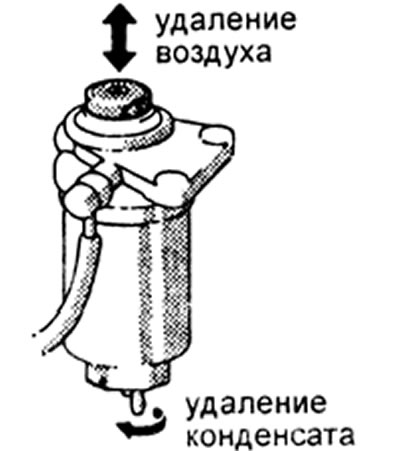
2. If the indicator lights up and the sound alarm sounds indicating the presence of water in the fuel filter.
a) Place a small tray under the drain plug or drain hose to collect water.
b) Turn the drain plug counterclockwise approximately 2-2.5 turns. (Any more loosening will cause water to leak around the circumference of the drain plug.)
c) Pump fuel using the hand priming pump until fuel starts to flow out.
d) After draining the water, tighten the drain plug by hand.
View the full text on the portal (Toyotaman.ru)
Caution: Do not use a tool when tightening the drain plug.
Jump starting with an additional battery
1. Turn off all unnecessary lights and accessories and ensure that the vehicles do not touch.
2. If necessary, remove all vent plugs from the booster and discharged batteries. Place a cloth over the open vents on the batteries (this helps reduce the risk of explosion).
3. If the engine of the vehicle with the booster battery does not work, start it and let it run for a few minutes. When starting with the booster battery, the engine should run at approximately 2000 rpm.
4. Connecting cables.
a) Make the cable connections in the sequence shown in the figure.
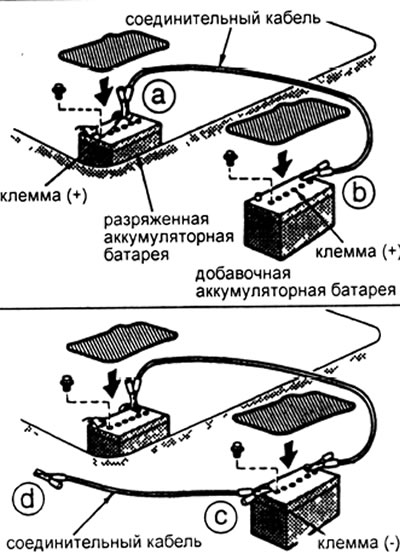
Note:
- On vehicles with two batteries, only the battery located on the right side can be used as an additional battery.
- To avoid serious injury when making connections, do not lean over the battery or allow cables or clamps to accidentally touch anything other than the appropriate battery terminals or ground.
b) Connect the clamp from the other end of the negative jumper battery cable to a rigid, stationary, unpainted metal part of the vehicle with the dead battery, as close to the starter as possible.
5. Charge the discharged battery with the connecting cable connected for approximately 5 minutes.
6. Start the engine in the normal way. Once started, it should run at 2000 rpm for several minutes.
7. Carefully disconnect the cables.
8. Carefully remove any cloths covering the batteries as they may contain sulfuric acid.
9. If the ventilation plugs were removed, install them in their places.