Contents: Checking the engine start inhibit…↓ Checking the input shaft speed…↓ Checking the manual shift mode switch ↓ Checking the gear shifters on the…↓ Checking the electromagnetic valves ↓ Checking the brake light switch ↓
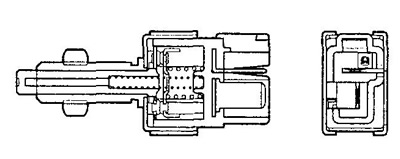
Checking the engine start inhibit switch
Check for continuity between the connector terminals indicated in the table.
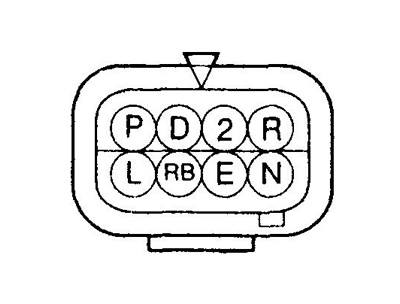 | 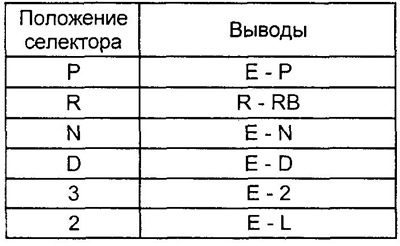 |
If there is no continuity between the specified terminals, replace the start inhibit switch.
Checking the input shaft speed sensor and output shaft speed sensor
The sensors can only be checked using an oscilloscope. If the sensors are faulty, fault codes (37, 42) will be displayed. The sensor signals can be checked at the corresponding terminals of the automatic transmission electronic control unit.
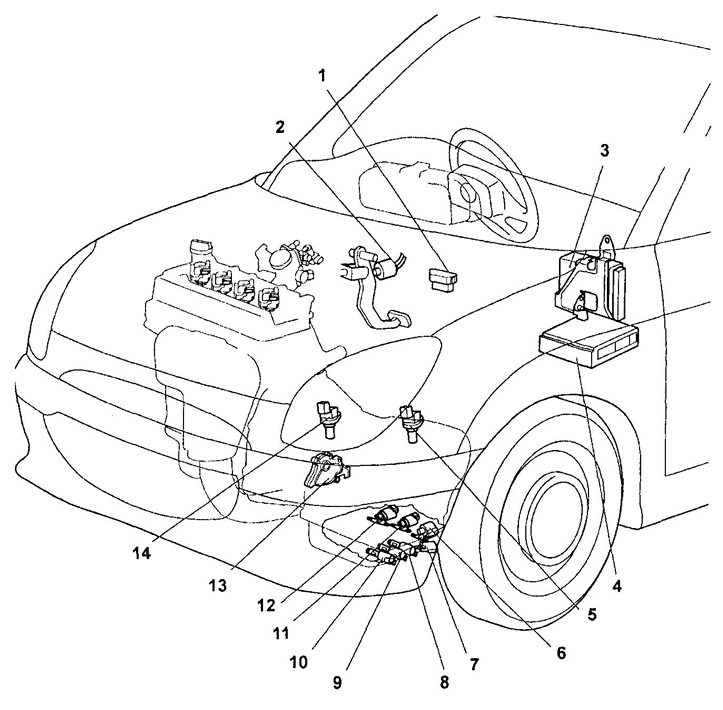
Arrangement of electrical control system components (models without steering wheel shift mode).
1 - diagnostic connector,
2 - brake light switch,
3 - electronic engine control unit,
4 - electronic control unit of automatic transmission,
5 - output shaft speed sensor,
6 - electromagnetic valve of partial lock-up of the torque converter (LUCR),
7 - working fluid temperature sensor (automatic transmission),
8 - electromagnetic valve No.3,
9 - electromagnetic valve No.1,
10 - electromagnetic valve No.2,
11 - electromagnetic valve of torque converter lock-up (LUCC),
12 - electromagnetic switching valve (SOLR),
13 - engine start prohibition switch,
14 - input shaft speed sensor.
Checking the manual shift mode switch
1. Remove the steering wheel together with the airbag module.
Attention:
- Wait at least 60 seconds after disconnecting the negative battery cable before disconnecting the air bag module.
- When removing, refer to the relevant chapter "Safety Restraint System (SRS)".
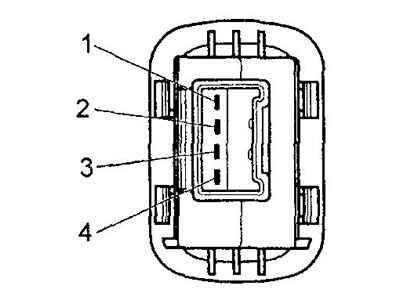
2. With the switch button pressed, check for conductivity between terminals "1" (E) - "2" (SPT) of the manual gear shift switch connector.
Checking the gear shifters on the steering wheel
1. Remove the steering wheel together with the airbag module.
Attention:
- - Do not disconnect the air bag module until at least 60 seconds have passed after disconnecting the negative battery cable.
- - When removing, refer to the relevant chapter "Safety system (SRS)".
2. With the upshift switch button pressed, check for continuity between terminals "SIFTU" - "E" of the upshift switch connector.
3. With the downshift switch button pressed, check for continuity between terminals "SIFTD" - "E" of the downshift switch connector.
Checking the electromagnetic valves
1. Disconnect the solenoid valve connector on the gearbox.
2. Measure the resistance between terminal "1" (SOLR), terminal "2" (LUCR) and ground.
- Nominal resistance - 14-18 Ohm
3. Connect the positive battery terminal to terminal "1" (SOLR) and the negative terminal to ground, if the valve is working properly, you should hear a clicking sound. Repeat the procedure for terminal "2" (LUCR).
4. Measure the resistance between terminal "3" (LUCC) of the solenoid valve connector and ground.
- Nominal resistance - 11 - 13 Ohm
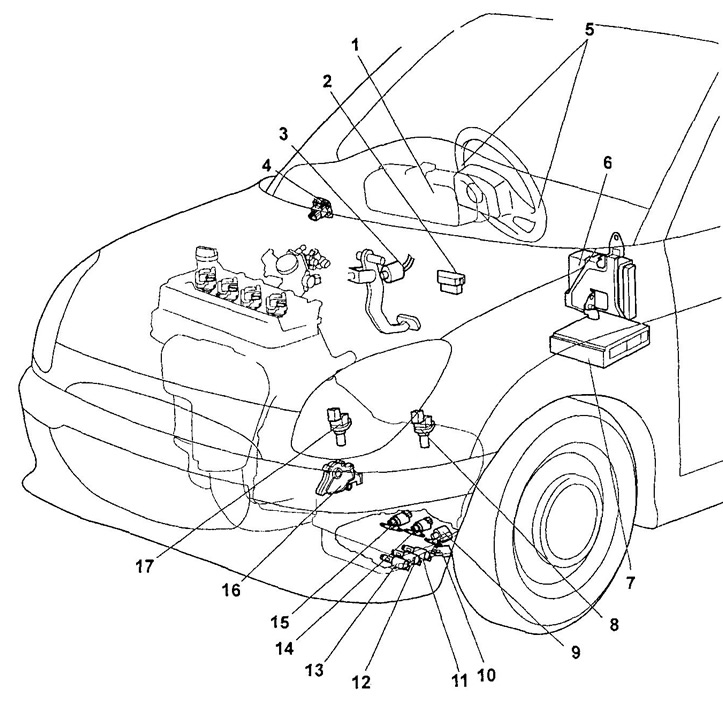
Arrangement of electrical control system components (models with steering wheel shift mode).
1 - gear engaged indicator,
2 - diagnostic connector,
3 - brake light switch,
4 - manual gear shift mode switch,
5 - gear shift on the steering wheel,
6 - electronic engine control unit,
7 - electronic control unit of automatic transmission,
8 - output shaft speed sensor,
9 - electromagnetic valve of partial lock-up of the torque converter (LUCR),
10 - automatic transmission fluid temperature sensor,
11 - electromagnetic valve No.3,
12 - electromagnetic valve No.1,
13 - electromagnetic valve No.2,
14 - electromagnetic valve of torque converter lock-up (LUCC),
15 - electromagnetic switching valve (SOLR),
16 - engine start prohibition switch,
17 - input shaft speed sensor.
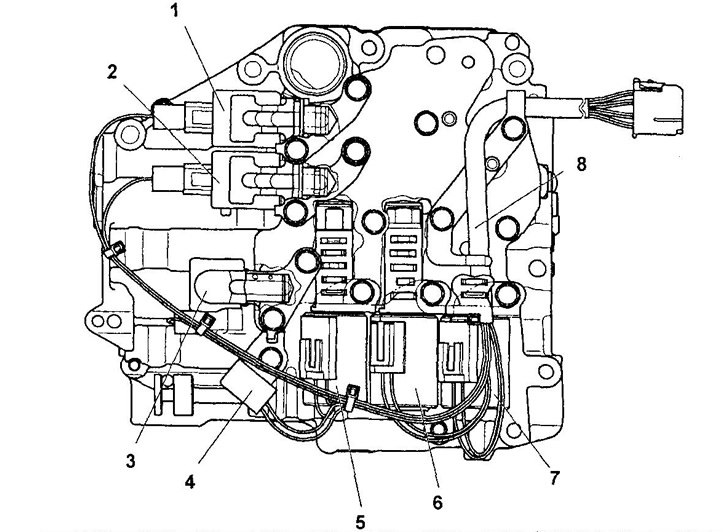
Location of electromagnetic valves.
1 - electromagnetic switching valve (SOLR),
2 - electromagnetic valve of torque converter lock-up (LUCC),
3 - electromagnetic valve of partial lock-up of the torque converter (LUCR),
4 - automatic transmission fluid temperature sensor,
5 - electromagnetic valve No.3,
6 - electromagnetic valve No.1,
7 - electromagnetic valve No.2,
8 - electromagnetic valve wiring harness.
5. Connect the positive terminal of the battery to terminal "3" (LUCC) and the negative terminal to ground; if the valve is working properly, you should hear a clicking sound.
The material was taken from a resource: toyotaman
6. Measure the resistance between the terminals of the connector of the solenoid valves "5" (OTMP) and "9" (E).
Nominal resistance:
- at a temperature of 0°C - 5-6 Ohm
- at a temperature of 140°C - 70-74 Ohm
7. Check solenoid valves No.1, No.2, No.3.
a) Measure the resistance between the terminals of the solenoid valve connector "6" (B1+) and "10" (B1-).
b) Measure the resistance between the terminals of the solenoid valve connector "8" (C2+) and "12" (C2-).
c) Measure the resistance between the terminals of the solenoid valve connector "7" (SZV2+) and "11" (SZV2-).
- Nominal resistance - 5.0-5.6 Ohm
10. Check for continuity between the terminal of each solenoid valve connector and the corresponding terminal of the solenoid valve connector (see Fig. "Checking the solenoid valve harness").
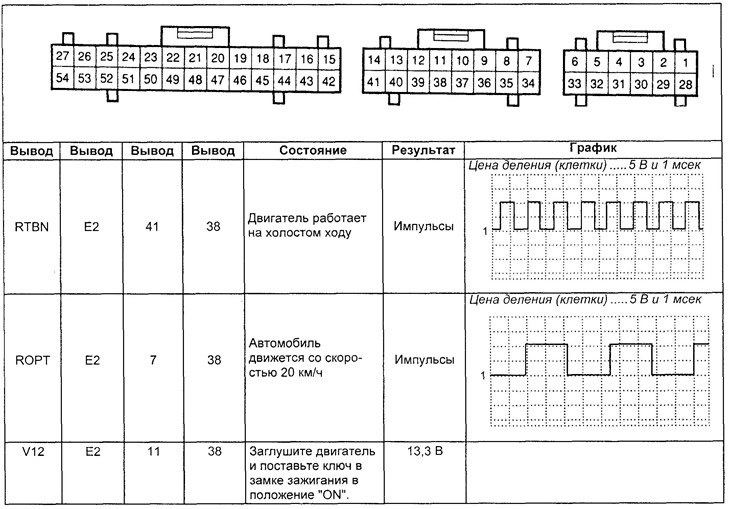
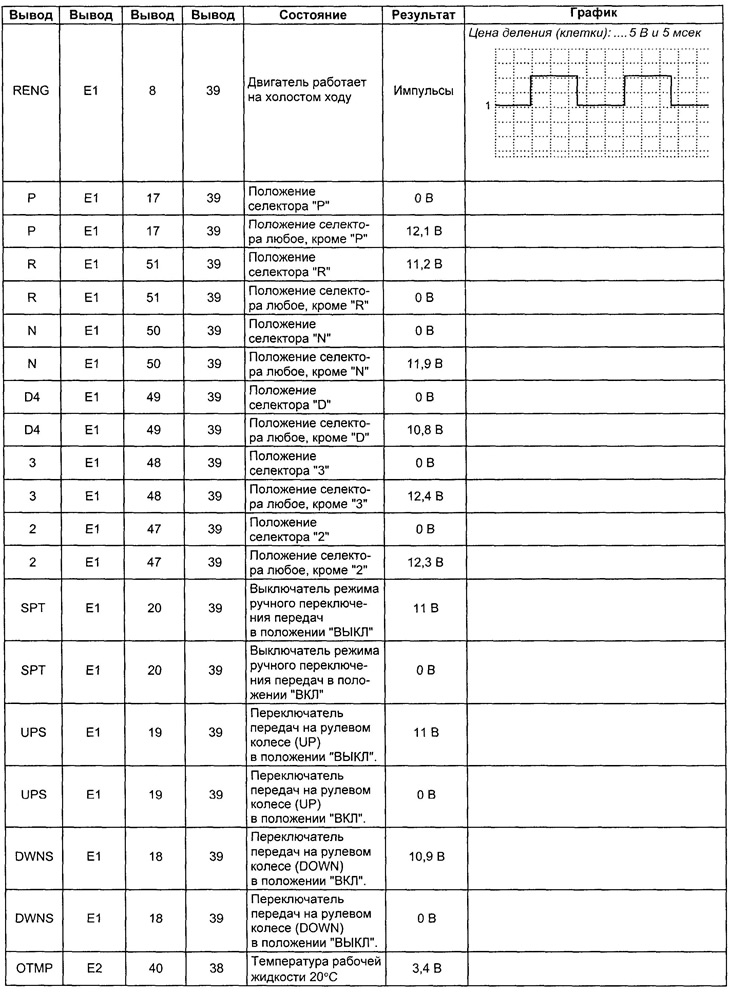
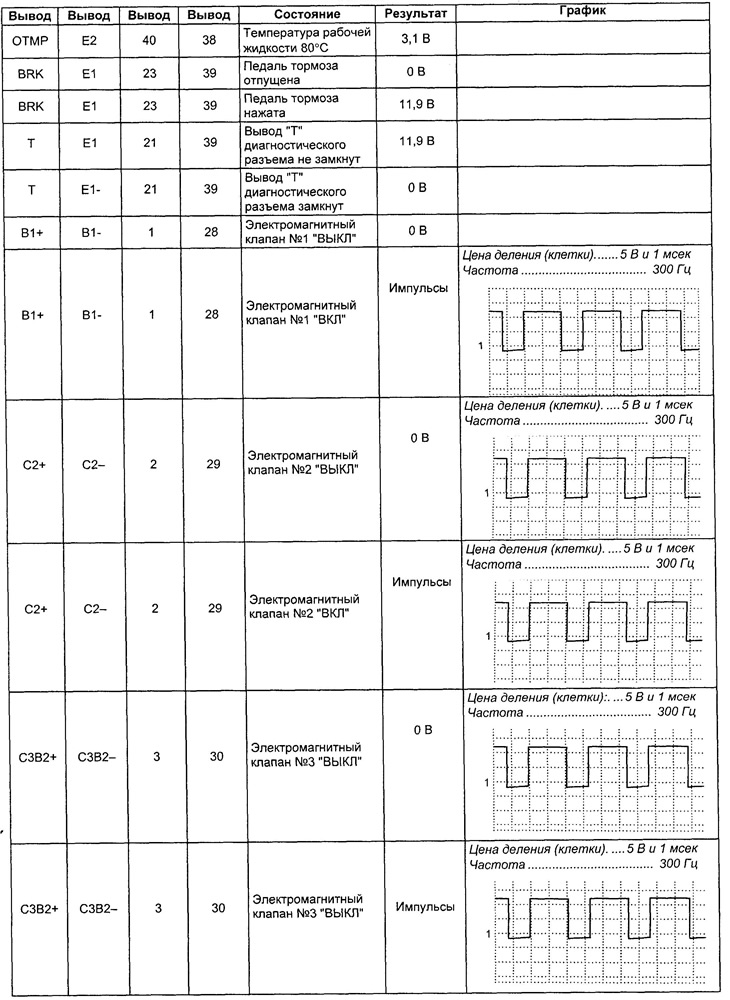
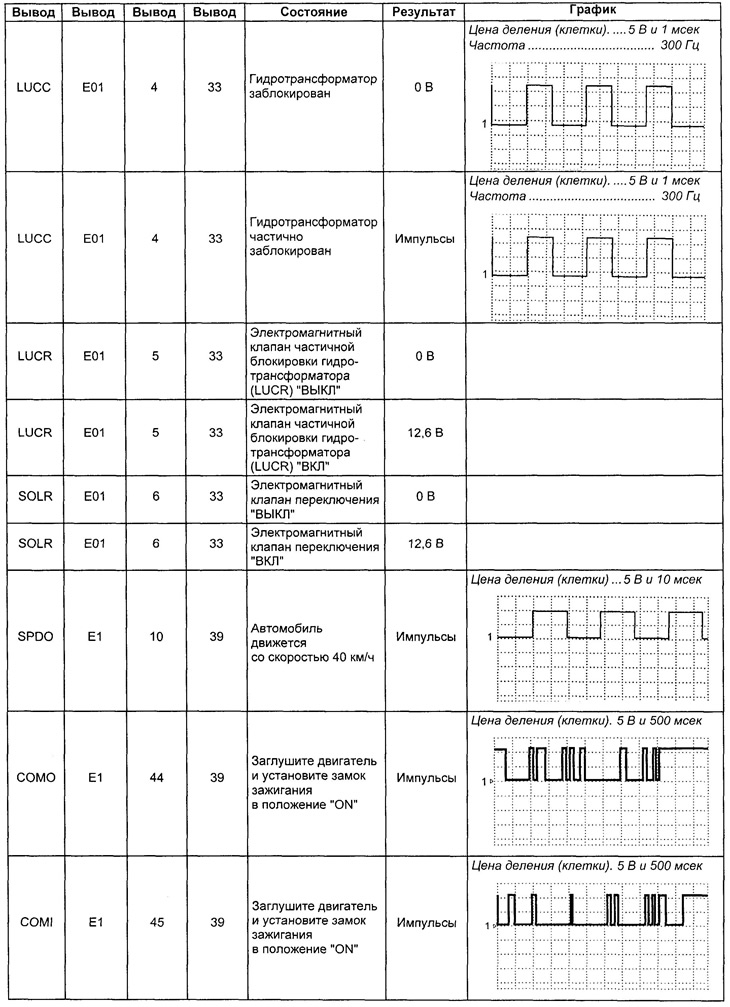
11. Check the voltage at the terminals of the automatic transmission control unit connector.
a) Turn on the ignition.
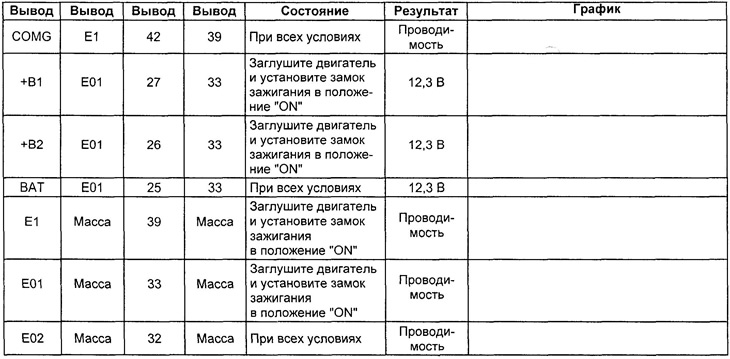
b) Measure the voltage at each terminal of the automatic transmission and engine control unit connector (see table "Voltage at the terminals of the automatic transmission control unit connector").
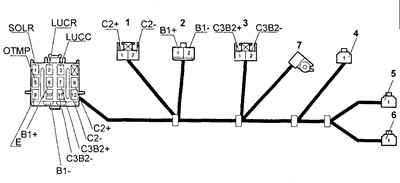
Checking the electromagnetic valve harness.
1 - electromagnetic valve No.2,
2 - electromagnetic valve No.1,
3 - electromagnetic valve No.3,
4 - electromagnetic valve of partial lock-up of the torque converter (LUCR),
5 - electromagnetic valve of torque converter lock-up (LUCC),
6 - electromagnetic switching valve (SOLR).
Table. Voltage at the terminals of the automatic transmission control unit connector.
Checking the brake light switch
Check the continuity between the terminals of the brake light switch connector.
Conductivity between terminals:
- the brake pedal is pressed - there is conductivity
- brake pedal released - no conductivity