



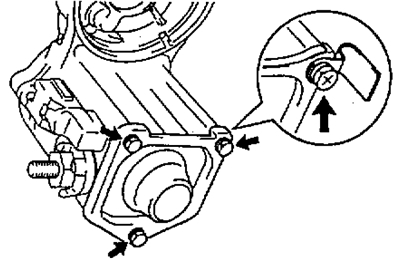
2. Check the wear of the contact plate. Use a caliper to measure the wear of the plate.
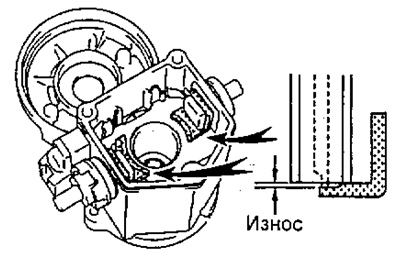
- Maximum wear limit: 0.9 mm
If wear exceeds the maximum allowable limit, replace the plate.
3. Disassembling the terminals.
a) Loosen the terminal nuts.
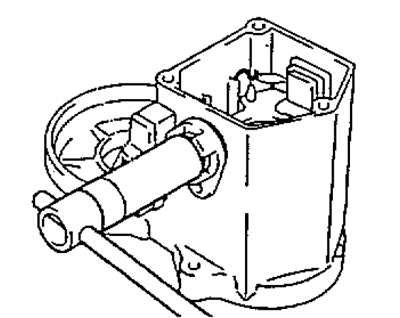
b) Disassembling the terminal "C":
Remove the nut, wave washer, outer terminal insulator, O-ring, bolt, contact plate, inner terminal insulator and insulation gasket.
The material is republished from an online website (ToyotaMan)
c) Disassembling pin "30":
Remove the nut, wave washer, outer terminal insulator, seal, O-ring, bolt, contact plate, inner terminal insulator and insulation gasket.
4. Assembly of terminals. (Terminal "30").
Install the following items as shown in the figure:
- (1) insulating gasket,
- (2) internal output isolator,
- (3) contact plate,
- (4) bolt,
- (5) O-ring seal,
- (6) seal and outer insulator of the output (align the insulator protrusion with the housing groove),
- (7) wave washer,
- (8) nut.
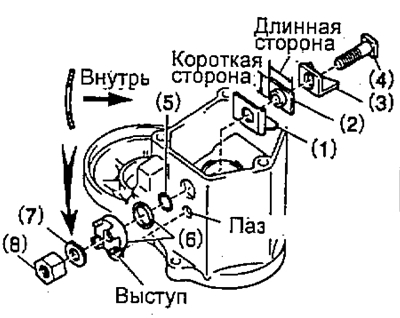
(Conclusion "C").
Install the following items:
- (1) internal output isolator,
- (2) contact plate,
- (3) bolt,
- (4) O-ring seal,
- (5) external output isolator,
- (6) wave washer,
- (7) nut.
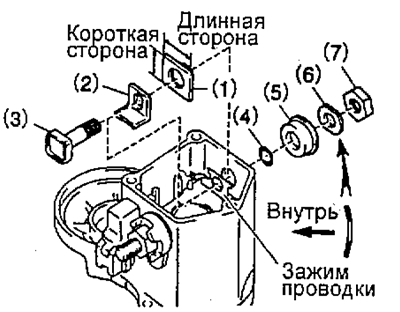
Temporarily tighten the terminal nuts.
5. Tighten the terminal nuts.
a) Place a wooden block on the contact plate and press it in place.
- The dimensions of the bar are 20x37x40 mm
- Pressing force - 981 N
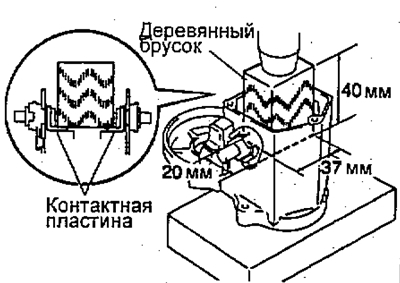
b) Tighten the nuts.
- Tightening torque - 17 Nm
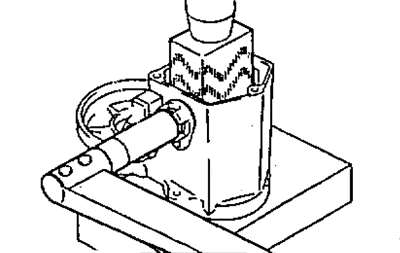
Note: Exceeding the tightening torque may cause cracks to appear on the inner surface of the insulator.
6. Clean the surfaces of the contact plate and plunger.
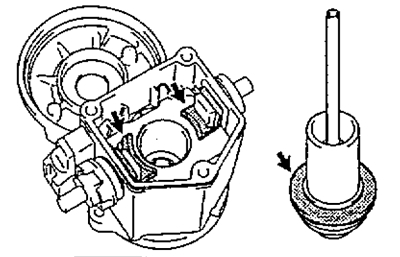
7. Install the plunger, new gasket, cover and wiring clamp, securing with three bolts.