



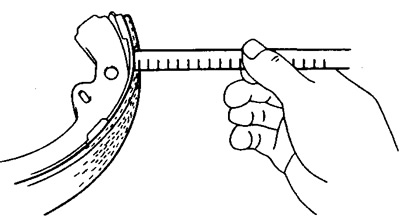
2. Check the thickness of the brake pads:
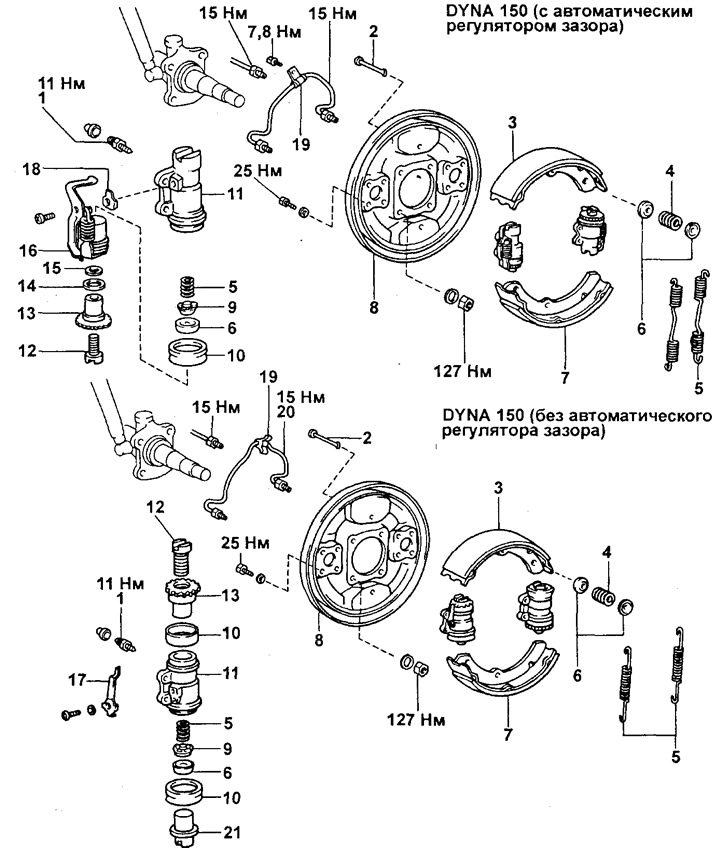
Drum brake.
1 - Bleed nipple,
2 - Holder,
3 -; 7 - Upper and lower brake pads,
4 - Retaining spring,
5 - Return spring,
6 - Cap,
8 - Brake shield,
9 - Spring seat,
10 - Dust cover,
11 - Wheel cylinder,
12 - Adjusting bolt,
13 - Adjusting nut,
14 - Dust seal,
15 - Saddle,
16 - Wheel cylinder piston assembly,
17 - Regulator locking lever,
18, 19 - Retainer,
20 - Brake pipe,
21 - Piston.
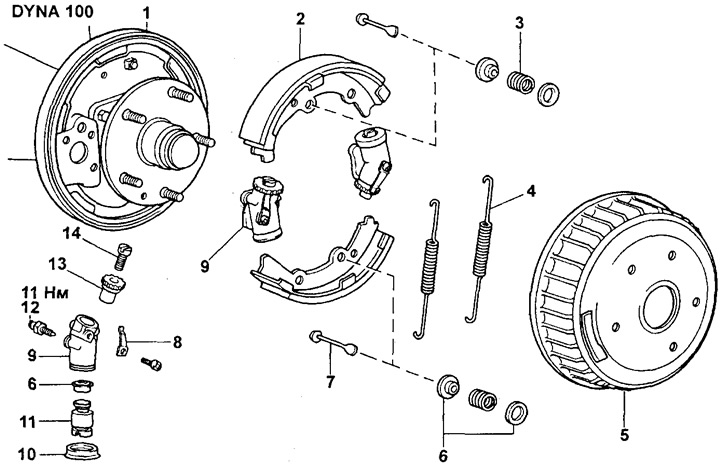
Drum brake.
1 - Brake shield,
2 - Brake shoe,
3 - Retaining spring,
4 - Return spring,
5 - Brake drum,
6 - Cap,
7 - Holder,
8 - Regulator locking lever,
9 - Working brake cylinder,
10 - Dust cover,
11 - Piston,
12 - Bleed nipple,
13 - Adjusting nut,
14 - Adjusting bolt.
Minimum acceptable:
- DYNA 100 - 1.0 mm
- DYNA 150 (without automatic gap adjuster) — 1.5 mm
- DYNA 150 (with automatic clearance regulator) — 1.5 mm
Minimum acceptable:
- DYNA 100 - 6.0 mm
- DYNA 150 (without automatic gap adjuster) — 6.5 mm
- DYNA 150 (with automatic clearance regulator) — 6.5 mm
The original article is on the portal: TOYOTAMAN
If the pad lining thickness is less than the minimum or shows signs of uneven wear, replace the brake pads.
Note: If any of the brake pads need to be replaced, replace all front brake pads to maintain uniform braking.
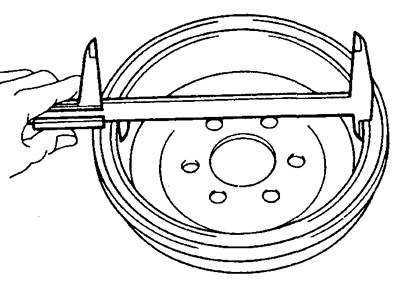
3. Check the inner diameter of the brake drum.
Maximum internal diameter:
- DYNA 100 - 256 mm
- DYNA 150 (without automatic gap adjuster) — 292 mm
- DYNA 150 (with automatic clearance regulator) — 262 mm
Normal inner diameter:
- DYNA 100 - 254 mm
- DYNA 150 (without automatic gap adjuster) — 290 mm
- DYNA 150 (with automatic clearance regulator) — 260 mm
If the drum is scored or worn, the brake drum can be turned on a lathe.
4. If the contact between the brake lining and the drum is incorrect, the lining must be repaired using a brake shoe grinder or the entire brake shoe must be replaced.