



Contents: Replacing brake pads ↓ Removal the caliper ↓ Disassembling the caliper ↓ Checking and repairing components ↓ Assembling the caliper ↓ Installing the caliper ↓
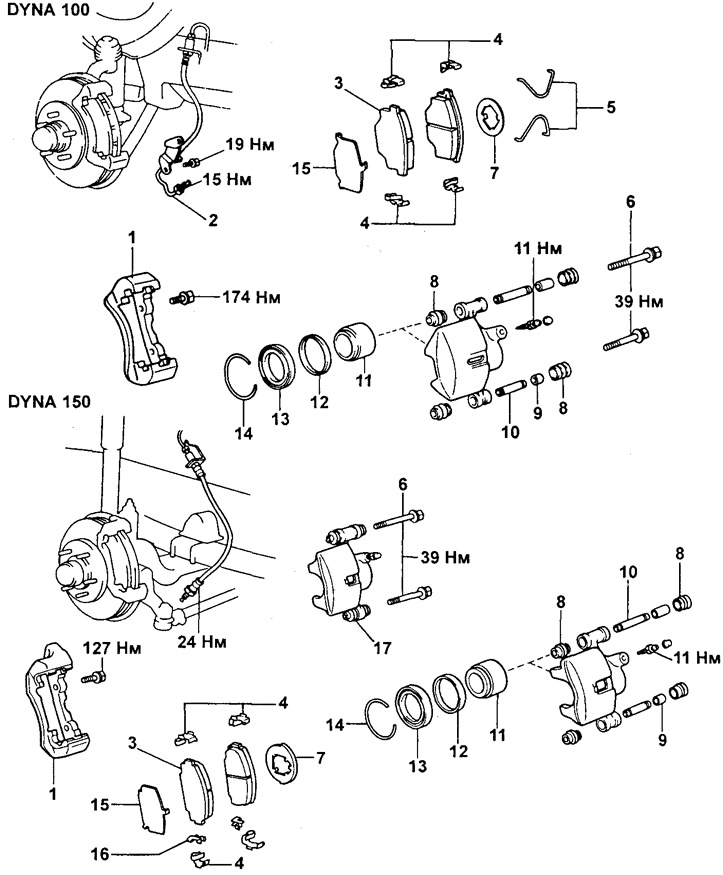
Disc brake.
1 - Bracket,
2 - Brake pipe and bracket,
3 - Brake shoe,
4 - Brake shoe support plates,
5 - Spring,
6 - Set bolt,
7-; 15 - Anti-squeak gasket,
8 - Dust cover,
9 - Bushing,
10 - Sliding sleeve,
11 - Piston,
12 - Piston cuff,
13 - Piston dust cover,
14 - Mounting ring,
16 - Brake pad wear indicator plate,
17 - Support.
Replacing brake pads
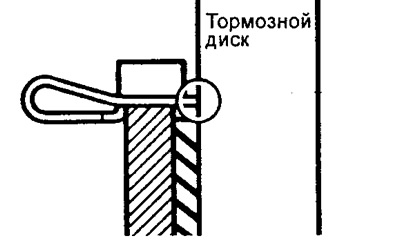
Note: (DYNA 150) If the brakes squeal while driving, check the brake pad wear indicator plate. The brake pad wear indicator plate should be 3 mm from the brake disc, otherwise the brake pads should be replaced.
1. Remove the front wheel.
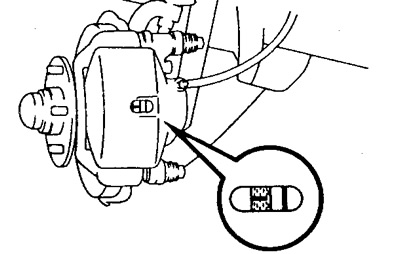
2. Check the thickness of the brake pad linings through the inspection hole.
Minimum thickness:
- DYNA 100 - 1.0 mm
- DYNA 150 - 3.0 mm
Standard value is 10.0 mm
3. Remove the cylinder from the bracket.
a) Remove the two mounting bolts from the bracket.
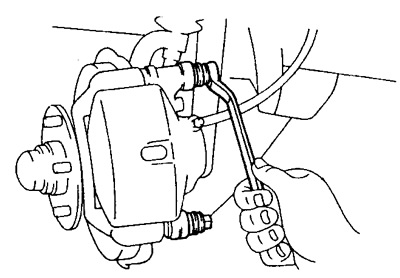
b) Remove the caliper and hang it so as not to damage the brake hose.
Recommendation: there is no need to disconnect the brake hose.
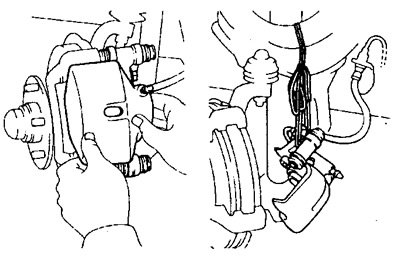
4. Remove the following parts: two springs (DYNA 100), two brake pads, two anti-squeal linings, four brake pad support plates, three brake pad wear indicator plates (DYNA 150).
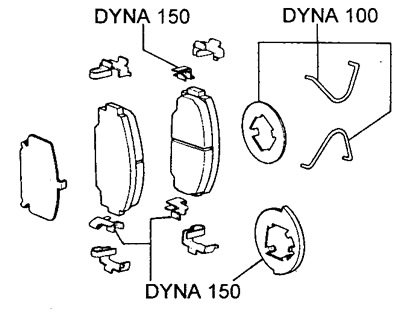
5. Check the thickness of the brake disc.
6. Check the brake disc runout.
7. Install the four support plates onto the bracket.
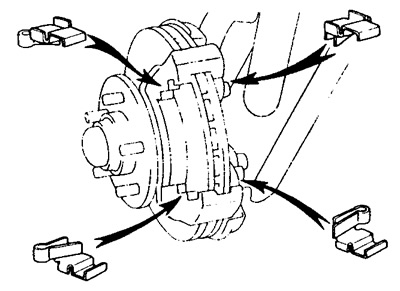
8. Install new brake pads.
a) (DYNA 150) Install three brake pad wear indicator plates.
b) Install anti-squeak pads.
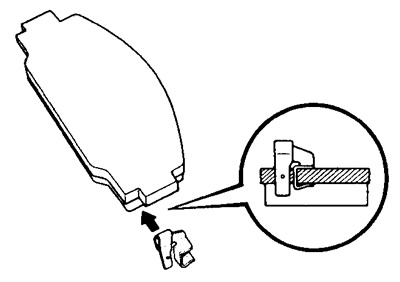
c) Install new brake pads.
Warning: Do not allow oil or grease to come into contact with rubbing surfaces.
The original is published on the website: ToyotaMan.ru
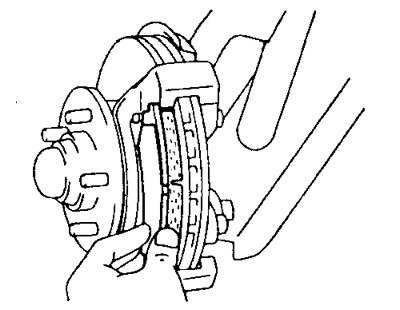
9. Install the cylinder.
a) Drain a small amount of liquid from the tank.
b) Press the piston into the cylinder.
Note: Replace the brake pads alternately for the left and right brake mechanisms. Do not remove the pads from both sides, since in this case, when pressing the piston into the cylinder on one side, the piston on the other side may fall out.
c) Install anti-squeak pads on the piston.
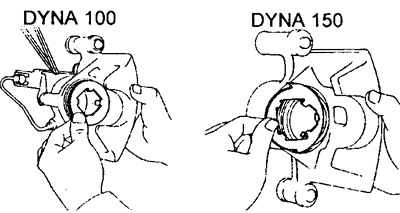
d) Install the caliper carefully so as not to damage the dust cover.
d) Insert and tighten the two mounting bolts.
- Tightening torque: 39 Nm
10. Install the front wheel.
11. Check the brake fluid level in the reservoir and top up if necessary.
Removal the caliper
1. Disconnect the brake pipes. (DYNA 100)
a) Disconnect the brake pipes using a wrench.
Note: Place a container underneath to catch the drained brake fluid.
b) Disconnect the brake pipe mounting bracket from the caliper.
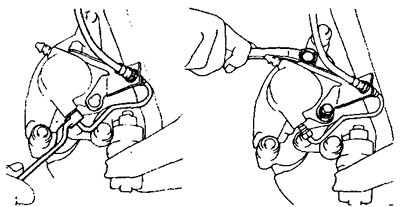
(DYNA 150)
a) Disconnect the brake hose from the caliper.
2. Unscrew the two mounting bolts and remove the caliper.
3. Remove the following parts: two springs (DYNA 100), two pads, anti-squeal linings, four brake pad support plates, three brake pad wear indicator plates (DYNA 150).
Disassembling the caliper
1. Remove the following parts: two sliding bushings, four dust boots, two bushings.
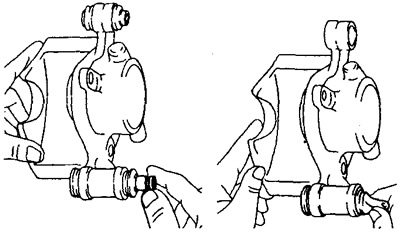
2. Using a screwdriver, remove the piston mounting ring and dust boot.
3. Remove the piston from the cylinder.
a) Place a rag between the piston and the cylinder.
b) Use compressed air to remove the piston from the cylinder.
Caution: Do not place fingers in front of the piston when applying compressed air.
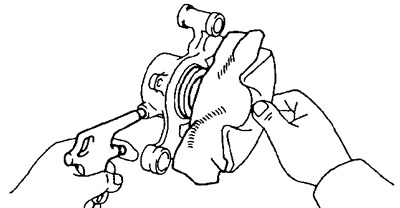
4. Use a screwdriver to remove the piston seal.
Checking and repairing components
1. Measure the thickness of the brake shoe lining.
Minimum thickness:
- DYNA 100 - 1.0 mm
- DYNA 150 - 3.0 mm
Nominal thickness - 10.0 mm
Replace the brake pad if the lining thickness is less than the minimum (the slit is no longer visible), or there are signs of uneven wear.
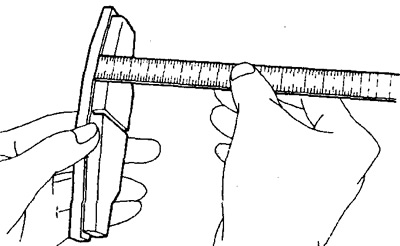
2. Measure the thickness of the brake disc.
- Nominal - 25.0 mm
- Minimum allowable - 24.0 mm
If the disc is scored or its thickness is less than the minimum, repair or replace the disc.
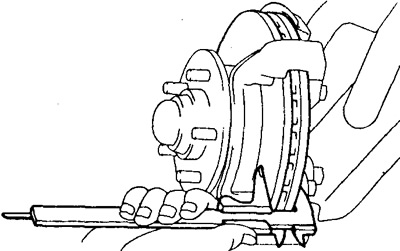
3. Measure the runout of the brake disc at a distance of 10 mm from the outer edge of the brake disc.
- Maximum disc runout - 0.15 mm
If the runout exceeds the maximum value, replace the disc.
Note: Before measuring runout, check that the front bearing clearance complies with specifications.
4. If necessary, replace the brake disc.
a) Remove the bracket from the steering knuckle.
b) Remove the hub.
c) Remove the brake disc from the hub.
d) Install the new brake disc on the hub, tighten the bolts:
Tightening torque:
- DYNA 100 — 69 Nm
- DYNA 150 — 64 Nm
d) Install the hub.
e) Install the bracket on the steering knuckle.
Tightening torque:
- DYNA 100 — 147 Nm
- DYNA 150 — 127 Nm
Assembling the caliper
1. Apply lithium based grease as shown in the figure.
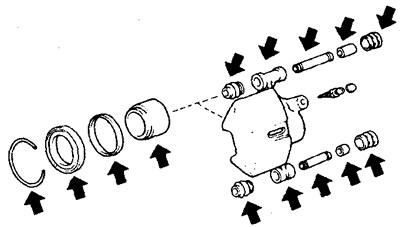
2. Install the piston seal and insert the piston into the cylinder.
3. Install the piston dust boot and secure it with the mounting ring.
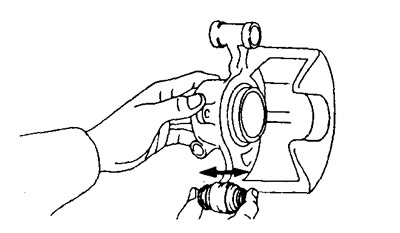
4. Install the bushing, dust cover and sliding bushing.
a) Install the bushing and boot on the caliper.
b) Check that the dust boots fit tightly into the corresponding grooves of the caliper.
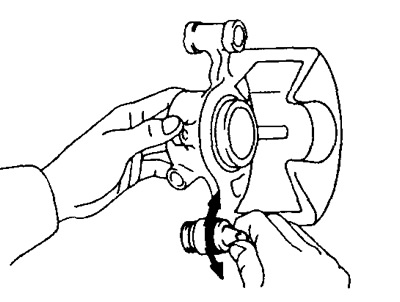
c) Install the sliding bushings.
d) Ensure that the dust boots fit tightly into the corresponding grooves of the bushings.
Installing the caliper
1. Install anti-squeal pads on the piston.
2. Install the pads.
3. Install the caliper.
4. Connect the brake lines to the caliper.
(DYNA 100)
a) Connect the brake pipe mounting bracket to the caliper.
- Tightening torque: 19 Nm
b) Connect the brake pipe and tighten with a wrench.
- Tightening torque: 15 Nm
(DYNA 150)
a) Connect the brake hose to the caliper and tighten it.
- Tightening torque: 24 Nm
5. Fill the reservoir with brake fluid and bleed the brake system.
6. Check for brake fluid leaks from the system.