a) Type and adjustment of bench injectors:
Bench nozzle: DN12SD12 (NIPPONDENSO)
- Opening pressure of the nozzle needle: 145 - 155 bar.
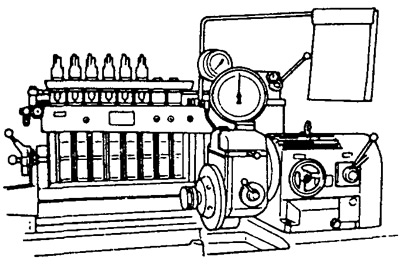
b) Error of the stand tachometer: ±40 rpm.
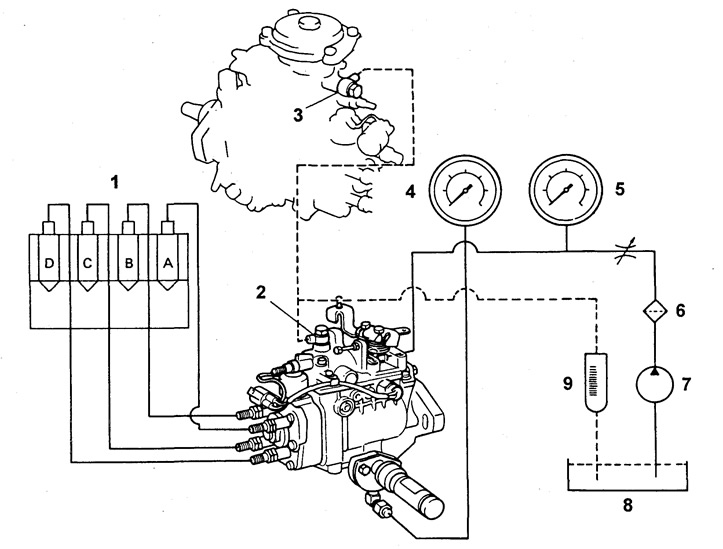
Stand layout.
1 - injectors,
2 and 3 - return fuel line,
4 and 5 - fuel pressure gauges,
6 - stand filter,
7 - stand pump,
8 - stand fuel tank,
9 - stand flow meter.
c) Set the stand limb to zero.
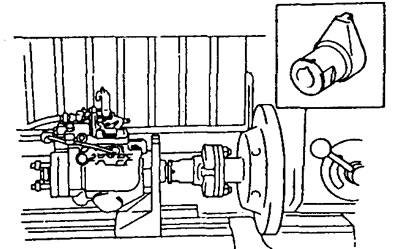
d) Install the pump on the stand.
Reminder: Place a mark on the coupling opposite the pump shaft key.
d) High pressure tubes:
- Outer diameter - 6.0 mm
- Inner diameter - 2.0 mm
- Length - 840 mm
- Minimum bending radius - 25 mm
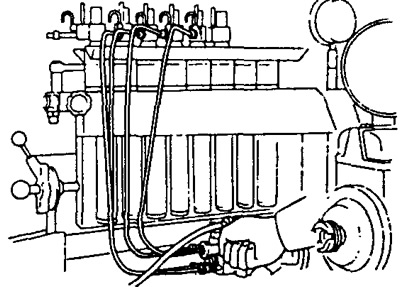
e) Connect the fuel supply and outlet bench tubes. Install adapters if necessary.
Caution: Secure the fuel return pipe only with the pump bolt (bolt with nozzle, marking OUT).
g) Remove the right cover of the advance mechanism.
c) Install NIPPON-DENSO plunger stroke measuring tool No.95095-10220 and 95095-10231.
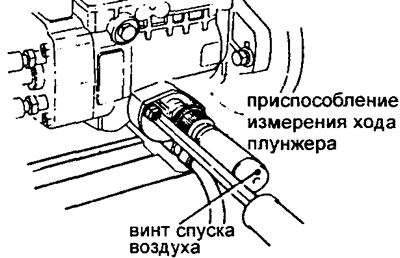
i) Apply +12V to the fuel shut-off valve (from the stand system or battery).
j) The fuel supply pressure to the pump must be 0.2 bar. The fuel temperature during testing must be 40 - 45°C.
l) Install the protractor on the fuel injection pump lever.
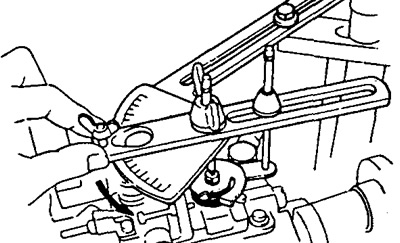
m) Set the pump control lever to the maximum speed position.
n) Check the correct orientation of the cam washer (correct assembly):
Remove the discharge valve from the "C" fitting.
Align the key position mark on the coupling with the "C" fitting. Turn on the stand's booster pump. If fuel does not flow out of the "C" fitting, disassemble the pump and change the cam washer position by 180°.
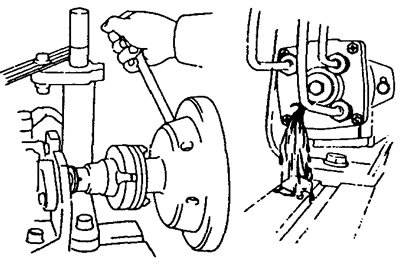
o) Run the pump at 2000 rpm for 5 minutes. Check for fuel leaks and unusual noise.
2. Pre-setting of cyclic feed at full load.
a) Set the fuel injection pump control lever to the maximum position.
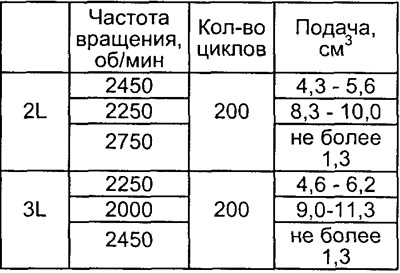
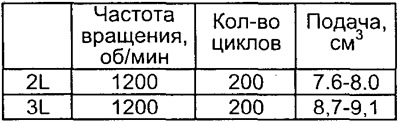
b) Measure the volume of fuel supplied. (See table 1)
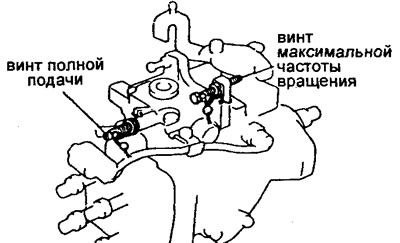
c) Remove the O-ring seal of the maximum feed screw (the seal is welded with a spot weld) or cut the wire from a regular seal.
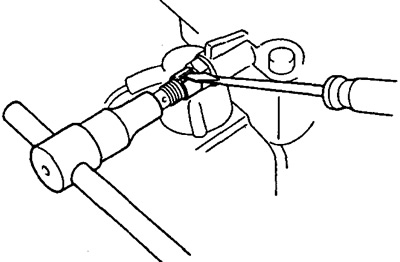
d) Adjust the cycle feed by turning the full feed screw.
Note: The feed rate will increase by approximately 300-1200 cycles for every ½ turn of the screw.
3. (With height compensator).
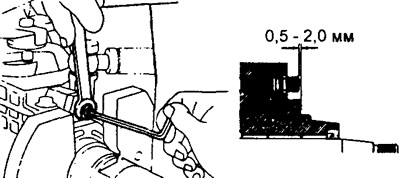
Presetting the injection advance regulator according to load. Set the regulator shaft output.
- Exit distance - 0.5-2.0 mm
4. Presetting the maximum rotation speed.
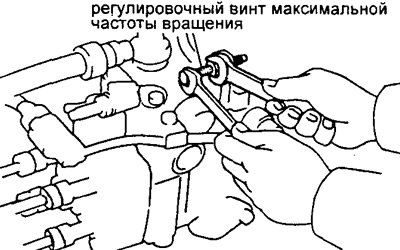
a) Set the control lever to the maximum speed stop.
b) Remove the stop screw seal.
c) Adjust the cycle feed by turning the maximum speed stop screw, (see table 2).
5. Adjusting the pressure of the booster pump.
a) Measure the pressure in the pump body.
Rotation speed - pressure
- 500 rpm - 3.2-3.8 bar
- 2100 rpm - 6.6-7.2 bar
b) If the pressure is low, adjust it by lightly tapping the piston of the pressure reducing valve, monitoring the pressure gauge readings.
Caution: If the pressure is too high or the preload of the pressure reducing valve spring is maximum, replace the pressure reducing valve.
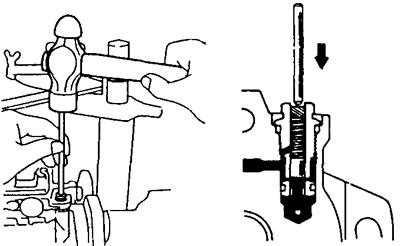
6. Checking the return fuel consumption to the tank. Measure the return fuel consumption at 2200 rpm.
- Fuel consumption - 70-380 cm³/min
Caution: Always install the fuel return line mounting bolt (with a jet and the OUT mark), belonging to the pump.
Table 1

Table 2

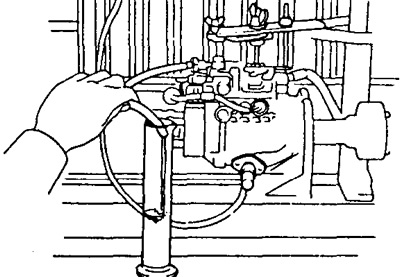
7. Adjusting the injection advance automatic.
a) Set the measuring device to zero.
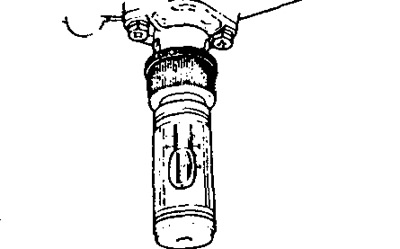
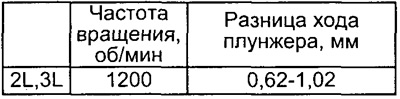
b) Measure the stroke of the advance piston at the speed values specified below.
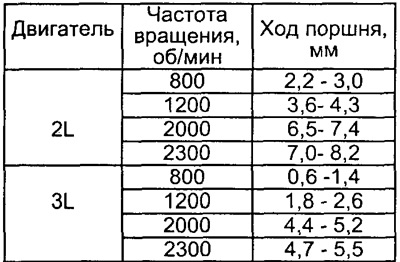 |  |
Note: Hysteresis should not be more than 0.3 mm.
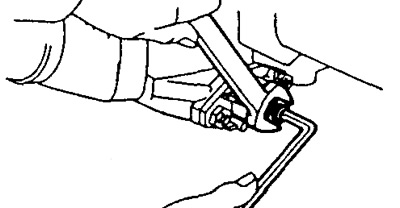
c) Using a 5 mm Allen key, adjust the stroke of the injection advance plunger.
Note: The plunger stroke decreases when the screw is turned clockwise and increases when the screw is turned counterclockwise.
8. Adjustment of cyclic feed at full load.
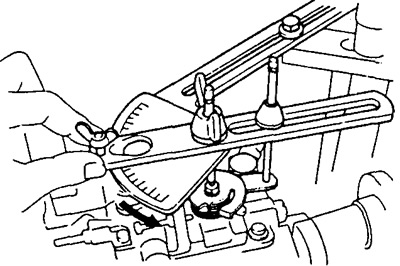
a) Angle of rotation of the regulator lever: all models
- plus (A) 23...33 degrees
- minus (B) 13...21 degrees
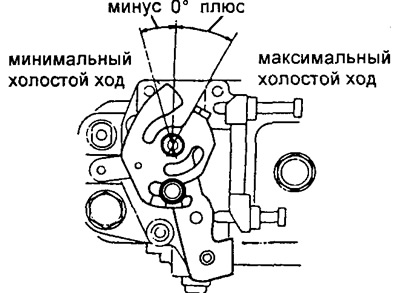
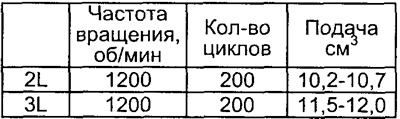
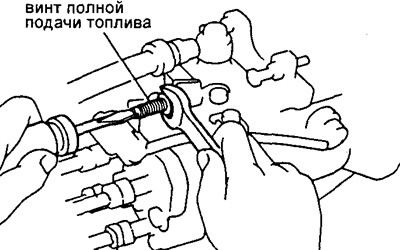
c) Make adjustments by turning the full feed screw.
Note: The flow will increase by approximately 3 cm³/200 cycles for every ½ turn of the screw.
 |  |
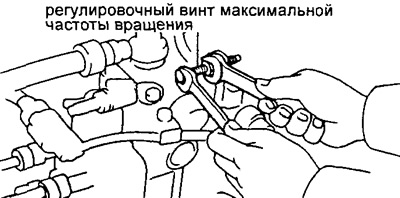
9. Adjusting the feed at maximum idle speed.
a) Adjust by turning the maximum speed screw.
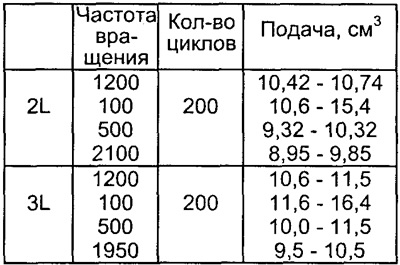
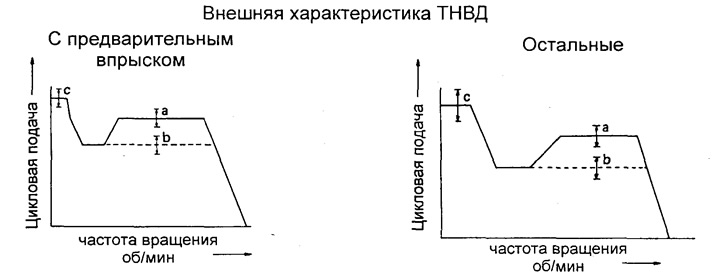
10. Adjustment of feed according to external characteristics.
Permissible unevenness of feed
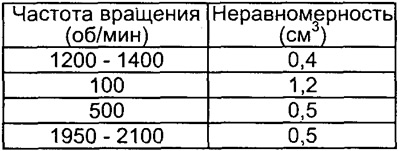
If the starting feed rate (at a speed of 100 rpm) does not correspond to the table value, then replace the regulator bushing plug:
Press the plug out of the regulator bushing.
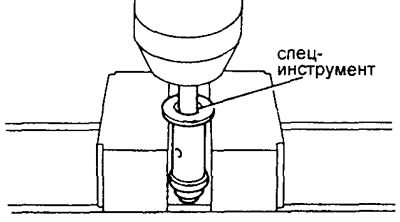
Remove:
- (1) retaining ring;
- (2) spacer;
- (3) thrust bearing;
- (4) cork.

Measure the thickness of the bushing plug head, select a new bushing plug.
Note:
- Extending the plug by 0.1 mm increases the starting flow by 0.6 cm³/200 cycles. If the flow irregularity exceeds the specified value, replace the delivery valve.
- The plugs are produced with a head thickness from 3.0 to 4.2 mm in 0.1 mm increments.
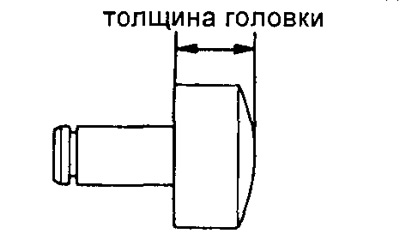
Assemble the regulator sleeve in the reverse order of disassembly, press the plug into the sleeve.
11. Adjusting the injection advance automatic (by load).
[The official source is on the portal: TOYOTAMAN]
Table 3

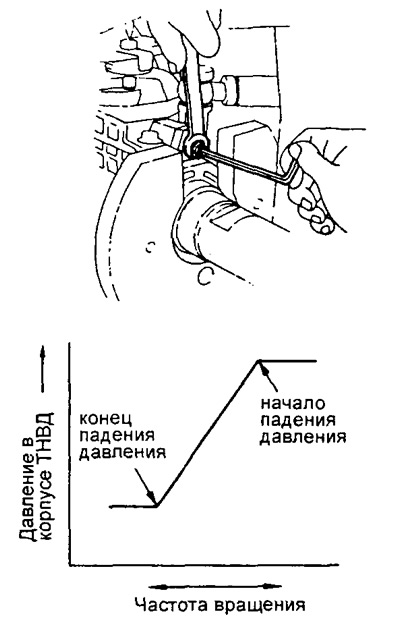
a) The adjustment is carried out by turning the shaft of the regulator sleeve. The machine starts to operate at a rotation speed of 1200 rpm.
b) Move the control lever to the maximum speed position and measure the fuel supply.
c) Slowly move the lever to the minimum idle stop and secure the lever at the point where the pressure in the pump body begins to drop.
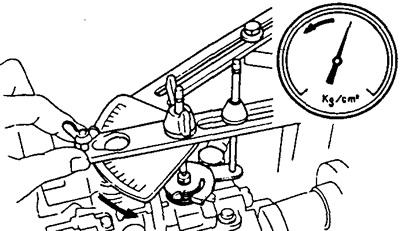
d) Measure the flow rate at the point where the pressure starts to drop. Calculate the difference in flow rates and compare with the data in the table.
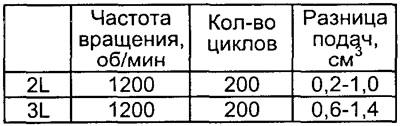
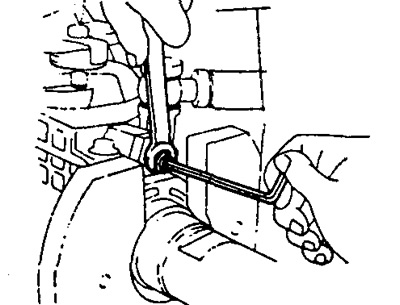
d) Adjust the feed difference.
Note: Half a turn of the regulator shaft changes the flow by 3 cm³/200 cycles.
e) Move the control lever to the point where the pressure in the pump body stops dropping, secure the lever.
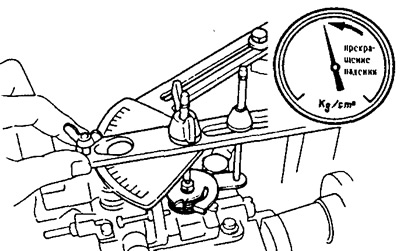
Compare the fuel supply value with the data in the table.
g) Check the change in the stroke of the injection advance plunger at the start and end points of the pressure change in the pump.
 |  |
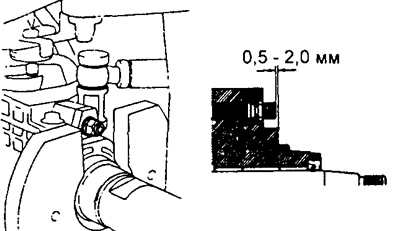
c) Measure the protrusion of the regulator shaft.
- Protrusion - 0.5-2.0 mm
12. Adjusting the idle speed and checking the minimum speed regulator (see table 4)
Adjust the feed by turning the minimum idle speed screw.
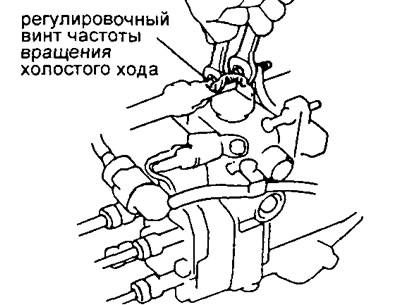
13. Adjusting the advance angle change during cold start.
a) Measure the fuel temperature in the pump.
- Fuel temperature - 15 - 35°C
b) Install the pump shaft key vertically.
c) Set the zero of the injection advance plunger stroke meter.
Table 4. 2L and 3L engines
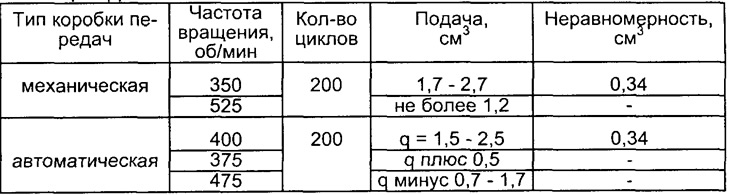
d) Place the pump control lever on the stop and take the angle of rotation of the lever as zero.
d) Delete (if installed) plate between the heating control lever and the thermostat.
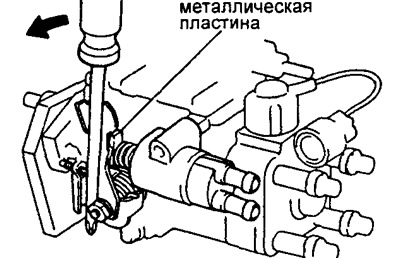
e) Turn the heating control lever clockwise to a torque of 5 Nm and hold the torque for 10 seconds.
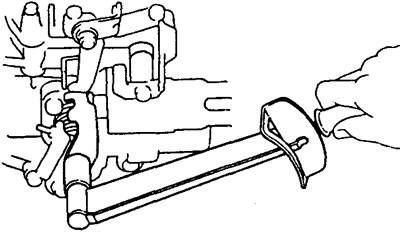
g) Measure the stroke of the advance mechanism plunger (see table 5).
c) Adjust the plunger stroke by turning the adjusting screw.
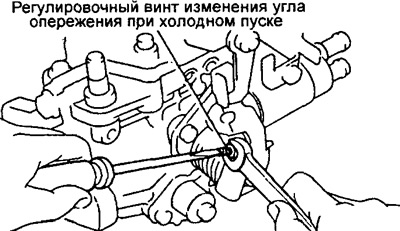
14. Adjusting the heating control system
a) Measure the clearance between the control lever and the minimum idle speed screw.
Table 5

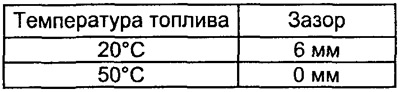 | 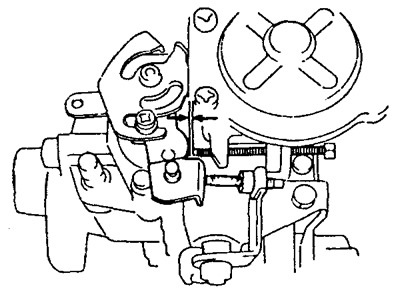 |
b) Adjust the gap by turning the screw in the heating control lever.
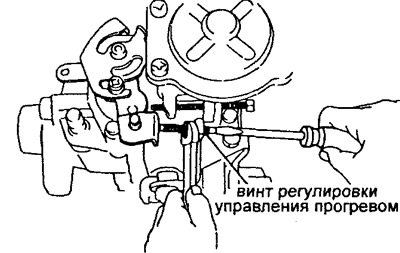
15. Sealing of elements.
Place seals on the maximum speed and full fuel supply screws.