Contents: Rear wheel axle ↓ Maintenance recommendation ↓ Changing wheel alignment ↓ Hitting a hill ↓ Hitting a depression ↓ A design that prevents the rear of…↓ Changing wheel alignment ↓ Table 4.3. Technical characteristics…↓ Table 4.4. Nominal tightening torques ↓
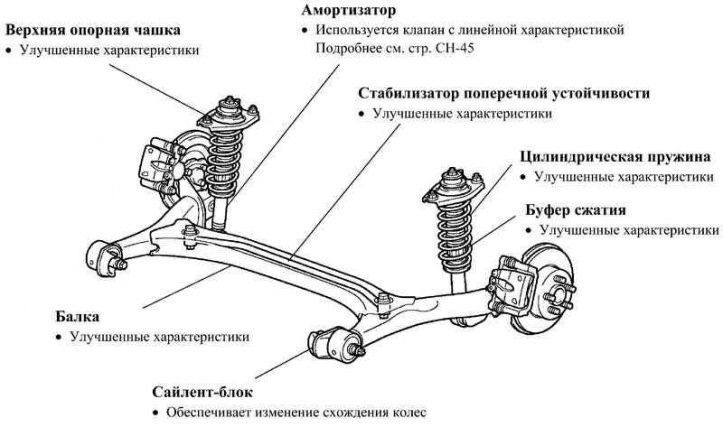
Fig. 4.6. Rear suspension components
Thanks to the optimal arrangement of components, optimization of wheel alignment during compression and rebound, and the use of geometry that prevents the rear of the car from lifting during braking, excellent ride smoothness and excellent vehicle control are achieved.
Rear wheel axle
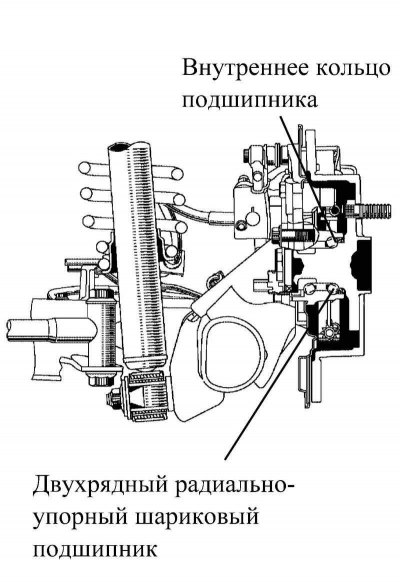
Fig. 4.7. Rear wheel axle design
The rear wheel axle is mounted on a double-row radial thrust ball bearing with low rolling resistance.
To increase the rigidity of the structure, the inner ring of the bearing is part of the axle journal.
Maintenance recommendation
When lifting the vehicle, install the jack only under the areas of the body specifically designated for this purpose. It is prohibited to install the jack under the axle beam, suspension trailing arm or silent block.
Changing wheel alignment
In a torsion bar suspension, the camber and toe angles of the wheels change as the wheel moves vertically (when driving over a bump or depression), providing the car with straight-line driving and excellent cornering.
Hitting a hill
Similar to independent suspension, the axis connecting the centers of the right and left silent blocks of the longitudinal arms is the center of rotation.
Hitting a depression
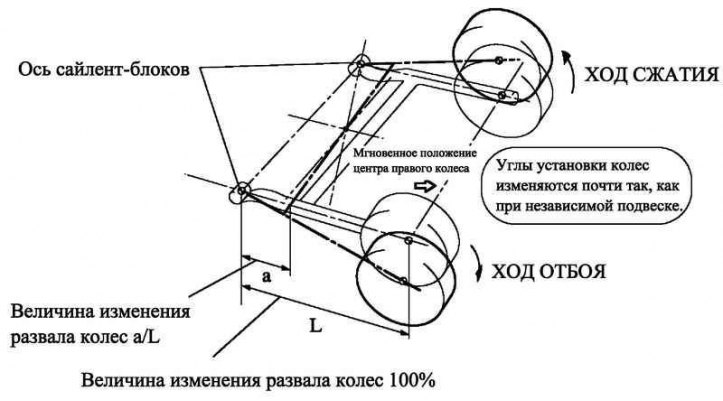
Fig. 4.8. Compression and rebound travel of the suspension axle
When driving over a depression or when the suspension travel of the right and left wheels is different, the torsion bar twists relative to the center of its section.
In addition, due to the difference in the suspension travel of the wheels, the camber angle of the wheels changes, the change is determined by the ratio of the distance between the axis of the silent block 1 and the center of twist of the torsion bar (dimension "a" in the figure) to the distance between the axis of the silent block 1 and the wheel axis (dimension "L" in the figure). Therefore, by choosing the optimal distance from the silent block to the center of the wheel, the design ensures the optimal camber angle of the wheels depending on the suspension travel, which, in turn, provides the car with excellent directional stability when cornering.
A design that prevents the rear of the vehicle from lifting when braking
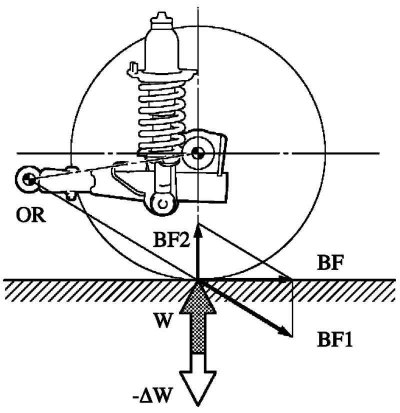
Fig. 4.9. Operating principle of the structure preventing the rear of the car from lifting during braking
When braking, the force of inertia shifts the center of gravity forward, lifting the rear of the car. The support point OR receives the braking force BF and breaks it down into its components: BF1, the line of action of which passes through the support point, and BF2, directed upward.
Force BF1 tends to change the height of the support point OR. When OR is raised, it acts in the direction (-?W) opposite to the alternating load (W), keeping the car from rising.
(The original article is on the portal: «ToyotaMAN»)
Changing wheel alignment
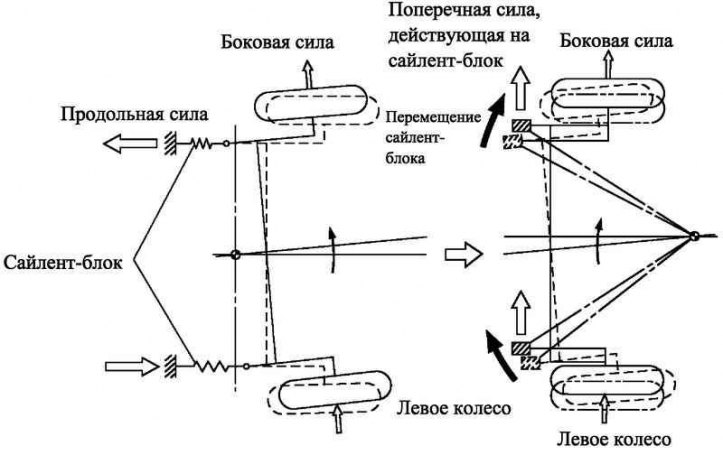
Fig. 4.10. Wheel alignment change diagram
Longitudinal and transverse forces acting on the vehicle when cornering lead to deformation of the silent blocks of the suspension arms.
When turning right, the right suspension arm moves forward and the left arm moves backward, causing the left wheel to toe in.
In this case, the design ensures that the energy of the lateral force acting during cornering on the silent blocks, which are the support of the longitudinal suspension arms, is used to return the left suspension arm in the direction in which the toe-in of the wheels again becomes positive. This achieves excellent ride smoothness and excellent controllability of the car.
Table 4.3. Technical characteristics for testing and adjustment work

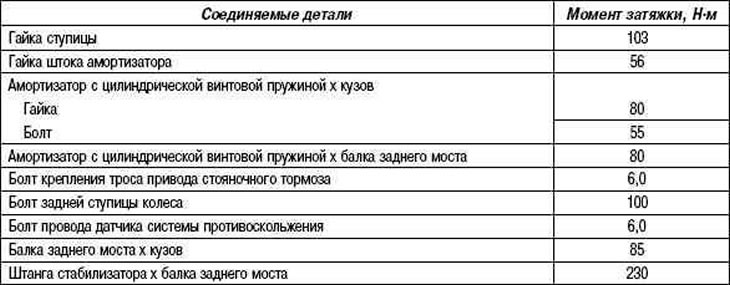
Table 4.4. Nominal tightening torques