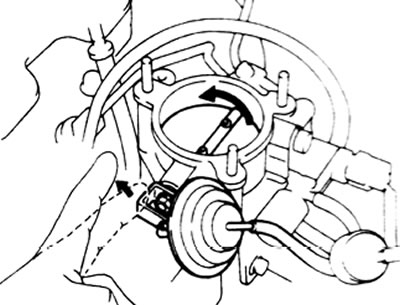
a) Close the damper and lower the lever: the damper should smoothly return to the closed position
b) For type 1
Using a vacuum pump, create a vacuum on the lower diaphragm of the drive: the valve should open halfway.
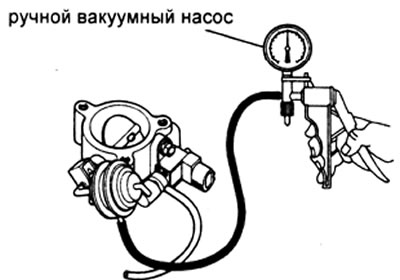
c) For type 1
Using a vacuum pump, create a vacuum on the upper diaphragm of the drive: the valve should open completely.
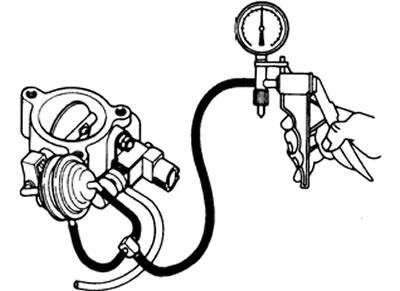
d) For type 2
Using a vacuum pump, create a vacuum above the actuator diaphragm: the valve should open to half its full stroke.
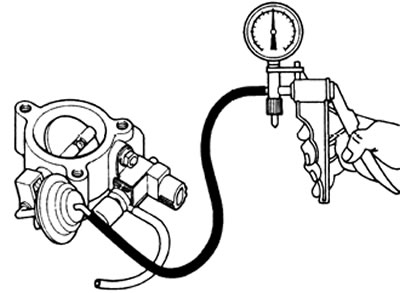
2. Checking the vacuum shut-off valves.
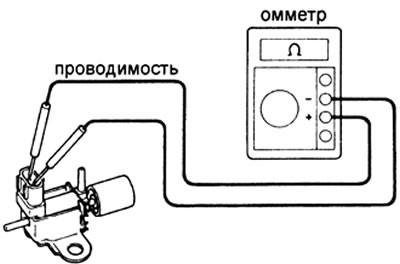
A. Checking the winding.
Measure the resistance of the winding between the valve terminals.
Resistance:— 37 -44 Ohm
If there is no conductivity, replace the valve.
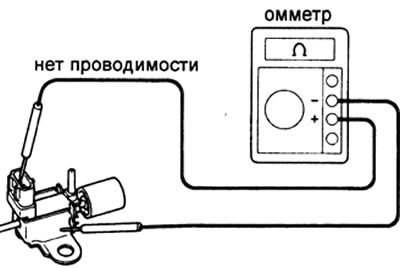
B. Checking for short circuit to ground.
Measure the resistance between each terminal of the valve and its body. In both cases, the resistance should be infinite.
B. Checking the work.
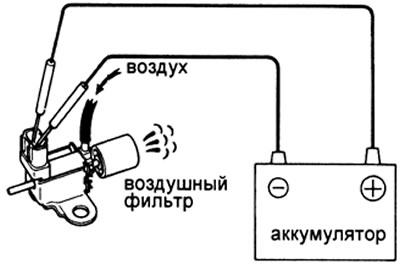
a) Blow into the "E" nozzle: air should come out of the "G" nozzle
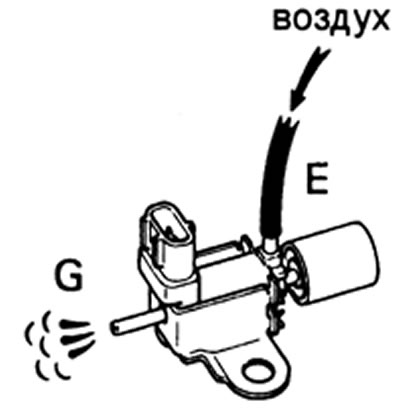
b) Apply power from the battery to the valve terminals: air should now be released into the filter.