



Contents: Checking the headlight relay ↓ Checking the rear side light relay,…↓ Checking the combination switch ↓ Checking the Reverse Light Switch ↓ Checking the start inhibit switch…↓ Checking limit switches ↓ Checking the glove compartment light…↓ Checking the brake light switch ↓ Checking the high brake light (on…↓ Checking the integrated relay…↓ Checking the integrated relay…↓
Checking the headlight relay
1. Check for constant conductivity between terminals "1" and "2".
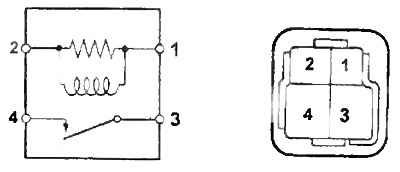
2. Check for continuity between terminals "3" and "4" when applying battery voltage between terminals "3" and "2".
Checking the rear side light relay, fog light relay, turn signal relay
1. Check for constant conductivity between terminals "1" and "2".
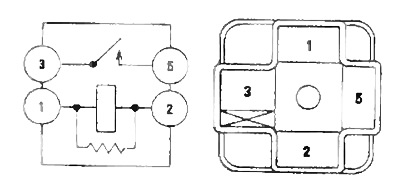
2. Check for conductivity between terminals "3" and "5" when applying battery voltage to terminals "1" and "2".
Checking the combination switch
Checking the light switch
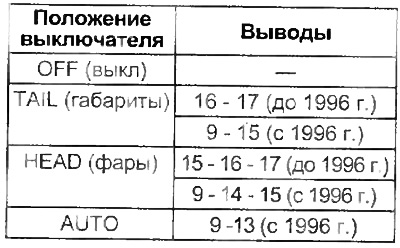
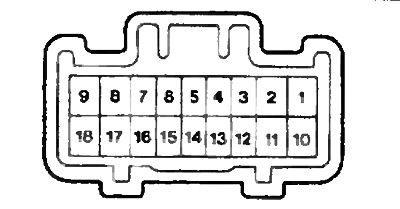
Models before 1996.
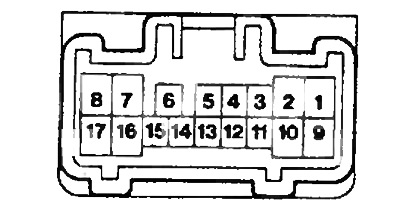
Models since 1996
Checking the turn signal flasher relay
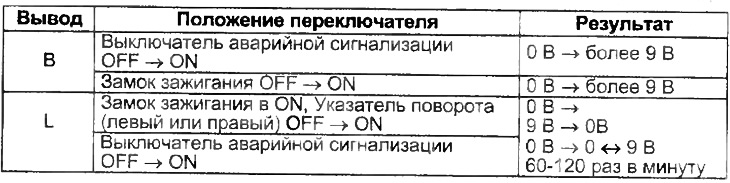
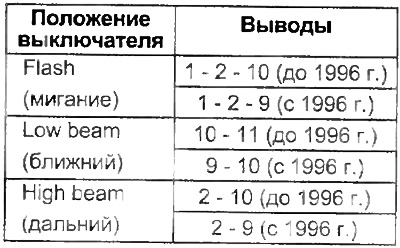
Checking the headlight switch
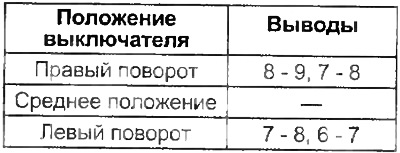
Checking the turn signal switch
Checking the light switch when turning
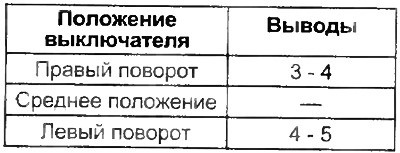
Checking the fog light switch
Check that there is conductivity between terminals "12" and "13" if the switch is in the "ON" position. And also the absence of conductivity between terminals "12" and "13" if the switch is in the "OFF" position.
Checking the hazard warning switch
Check that there is conductivity between terminals "2" and "3" in any position of the switch.
Check that there is continuity between terminals "7" and "10" if the switch is in the "OFF" position.
Check that there is continuity between terminals "7" and "8", and also "4", "5", "6" and "9" if the switch is in the "ON" position.
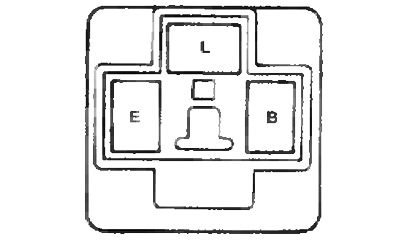
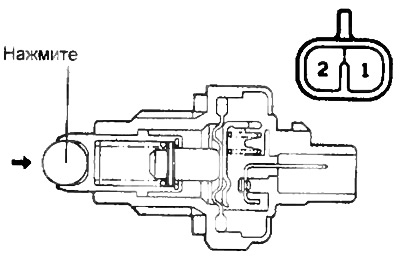
Checking the Reverse Light Switch
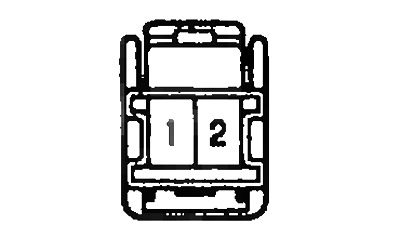
Check for conductivity between terminals "1" and "2" when pressing the switch ball.
Checking the start inhibit switch and the automatic transmission selector position sensor
Check the conductivity between the connector terminals at different selector positions.
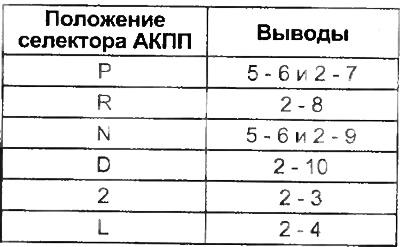 | 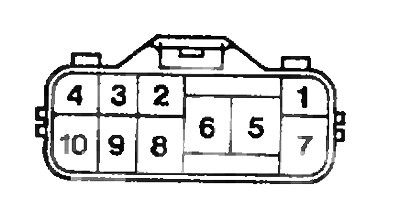 |
Checking limit switches
Check that there is no continuity between the connector terminal and the bracket when pressing the switch rod.
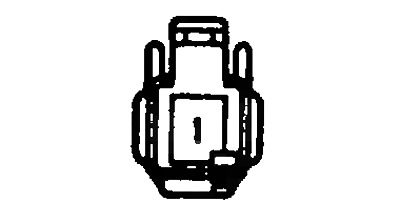
Checking the glove compartment light limit switch (ZX, AX, VX)
Check that when you press the switch rod, there is no conductivity between terminals "1" and "2" of the connector.
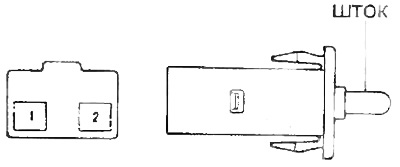
Checking the brake light switch
Continuity between terminals "1" and "2" when pressing the brake pedal.
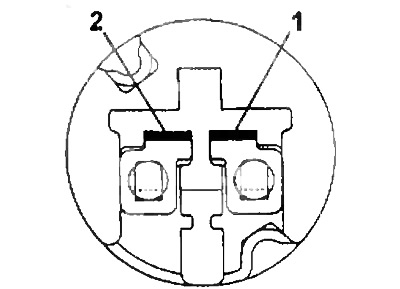
Checking the high brake light (on the spoiler)
Connect the "+" of the battery to terminal "1" and to terminal "2" and make sure that the brake light comes on.
Note: Observe the correct polarity of the battery connection.
Checking the integrated relay (models produced before 1996)
1. Checking the key left in ignition warning system.
a) Connect the battery to terminal "B1", and to terminal "B10", "B5" and "B6" and make sure that the buzzer sounds.
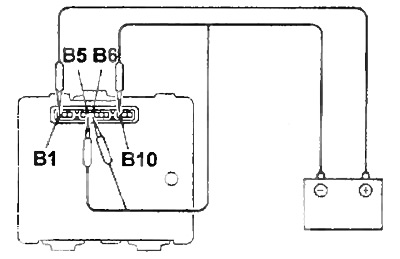
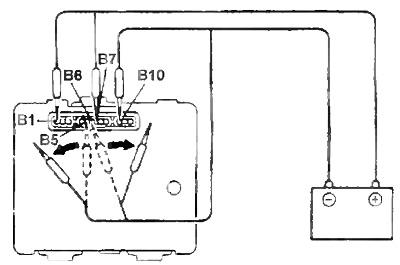
b) Make sure that when disconnecting (connection) battery wires from (to) the terminals specified in paragraph (a):
- disconnecting from the "B5" battery.
- disconnecting the battery from "B6".
- connecting to the "B7" battery.
2. Checking the operation of the warning system about the side lights not being switched off (except ZX, VX).
a) Connect the "+" of the battery to the "B1" terminal and to the "B10" terminal and make sure that the buzzer sounds when connecting the battery to the "B12" terminal and to "B6".
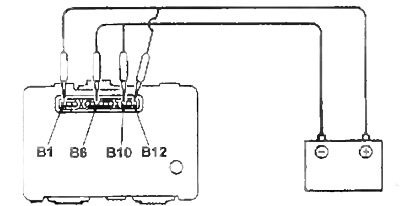
b) Make sure that when disconnecting (connection) battery wires from (to) the terminals specified in paragraph (a):
- disconnecting from the "B12" "+" battery.
- disconnecting from the "B6" "-" battery.
- connecting to "B7" "+" of the battery.
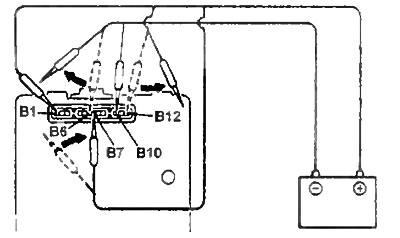
3. Checking the operation of the automatic lighting shutdown system (ZX, VX).
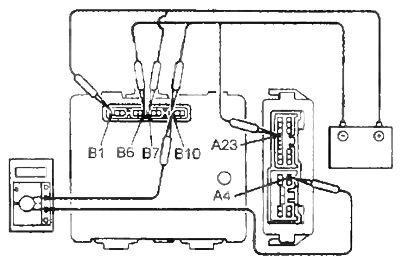
Rear dimensions
a) Connect the "+" of the battery to terminal "B1" and "-" to terminal "B 10". Make sure there is conductivity between terminals "A4" and "B10" when connecting the "+" of the battery to terminal "B7" and "-" to "A23".
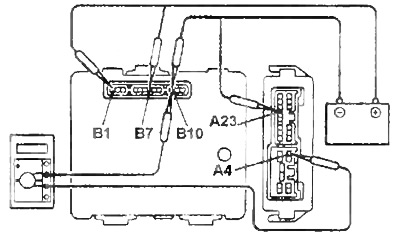
b) Make sure that there is no change in conductivity between terminals "A4" and "B 10" when disconnecting the "+" of the battery from terminal "B7".
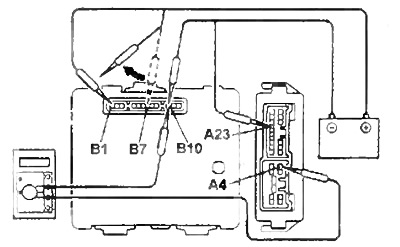
c) Make sure there is no conductivity between terminals "A4" and "B 10" when connecting the battery to "B6".
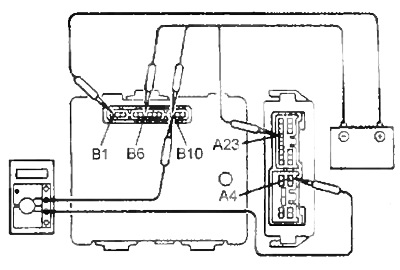
d) Make sure there is conductivity between terminals "A4" and "B 10" when connecting the "+" of the battery to terminal "B7".
Headlights
a) Connect the "+" of the battery to terminal "B1" and the "-" to terminal "B10". Make sure there is conductivity between terminals "A3" and "B10" when connecting the "+" of the battery to terminal "B7" and to "A22".
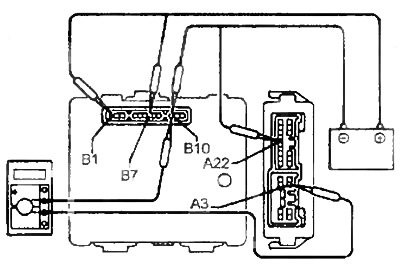
b) Make sure that there is no change in conductivity between terminals "AZ" and "B 10" when disconnecting the "+" of the battery from terminal "B7".
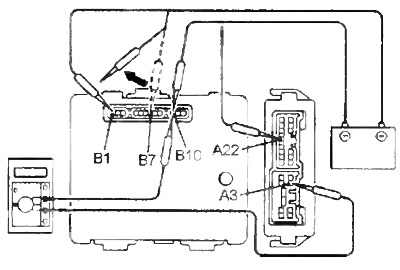
c) Make sure there is no conductivity between terminals "A3" and "B 10" when connecting the battery to "B6".
See the source on the internet resource TOYOTAMAN
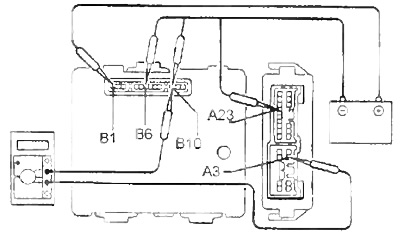
d) Make sure that there is conductivity between the "AZ" and "B10" terminals when connecting the "+" battery to the "B7" terminal.
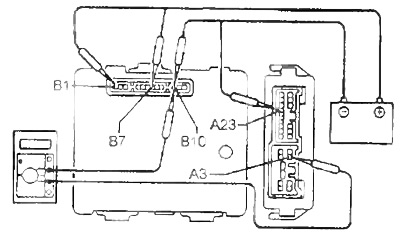
4. Checking the operation of the ignition switch illumination system.
a) Connect the battery to terminal "B1" and "-" to terminal "B 10".
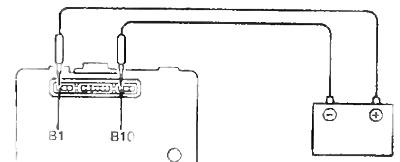
b) Make sure there is conductivity between terminals "B2" and "B10" when connecting the "-" of the battery to terminal "B6".
c) Make sure there is no conductivity between terminals "B2" and "B10" when disconnecting the battery from terminal "B6".
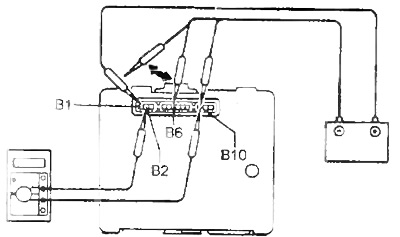
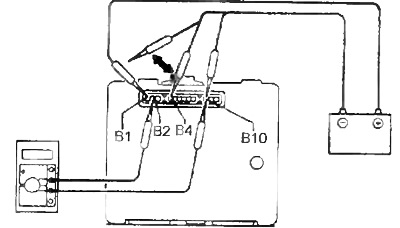
d) Make sure there is conductivity between terminals "B2" and "B10" when connecting the battery to terminal "B4".
d) Make sure there is no conductivity between terminals "B2" and "B 10" when disconnecting the battery from terminal "B4".
Checking the integrated relay (models produced since 1996)
1. Checking the key left in ignition warning system.
a) Connect the battery to terminal "B 16" and to terminal "A10", make sure that the buzzer sounds when connecting the battery to terminals "A5" and "A6".
b) Make sure that when disconnecting the battery cables from the terminals specified in (a):
- disconnecting from the "A5" "-" battery.
- disconnecting the "-" battery from the "A6".
- connecting to the "A7" "+" of the battery.
2. Checking the operation of the warning system for side lights that are not switched off.
a) Connect the battery to terminal "B 16" and to terminal "A10" and make sure that the buzzer sounds when connecting the "+" of the battery to terminal "A12" and to "A6".
b) Make sure that the sound stops when the battery cables are disconnected from the terminals specified in (a):
- disconnecting the "+" battery terminal from the "A12".
- disconnecting the "-" battery from the "A6".
- connecting to the "A7" "+" of the battery.
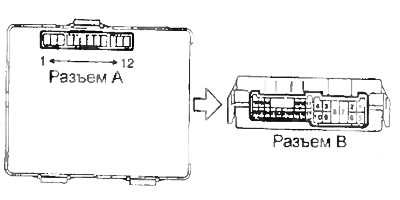
3. Checking the operation of the ignition switch illumination system.
a) Connect the "+" of the battery to terminal "B16" and to terminal "A10".
b) Make sure there is conductivity between terminals "A2" and "A10" when connecting the "-" of the battery to terminal "A6".
c) Make sure there is no conductivity between terminals "A2" and "A10" when disconnecting the "-" battery from terminal "A6".
d) Make sure there is conductivity between terminals "A2" and "A10" when connecting the "-" of the battery to terminal "A4".
d) Make sure there is no conductivity between terminals "A2" and "A10" 5 seconds after disconnecting the "-" battery terminal from terminal "A4".