



Clutch wear
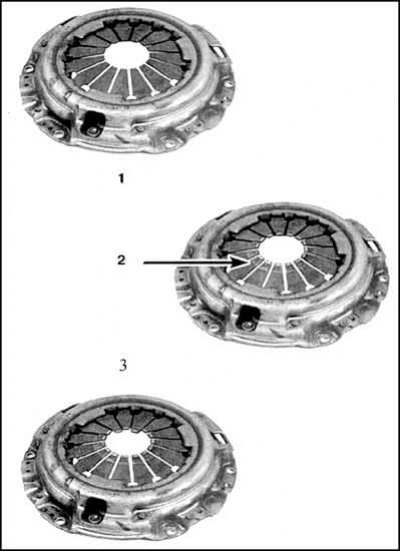
1. Normal wear of petals; 2. Increased wear of petals; 3. Breakage or deformation of the spring petals
Attention! Remove dust from wear of linings with a special cleaner. Do not use gasoline or solvent.
Removal
When describing the procedures, it is assumed that the work is performed without removing the engine.
1. Remove the master cylinder.
2. Hang up the engine and remove the transmission. If the engine is supported from below, keep in mind that the oil receiver is located near the pan and if the pan is deformed, the oil access to the engine may be blocked.
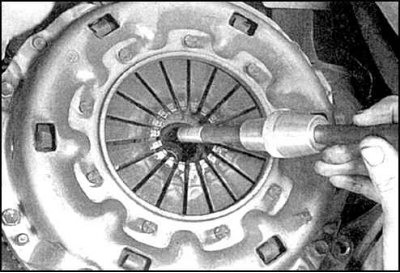
3. Secure the clutch by inserting the mandrel.
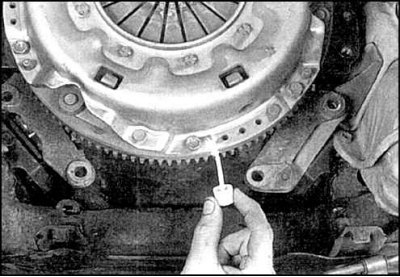
4. Find the alignment marks (letters X or O), if they are absent, mark the position of the clutch on the flywheel.
5. Gradually, 1/2 turn per turn, evenly loosen the 6 bolts, unscrew the bolts and remove the clutch.
Examination
As a rule, only the friction disc requires replacement. However, the condition of all parts should be inspected.
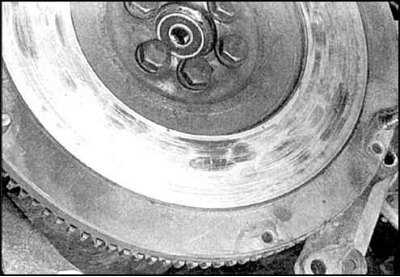
1. Check the condition of the flywheel.
2. It is recommended to remove the flywheel and sand it down regardless of the surface condition.
3. Check the condition of the guide bearing.
4. Check the condition of the friction lining surface, measure the distance to the disc rivet heads, which should be at least 0.8 mm.
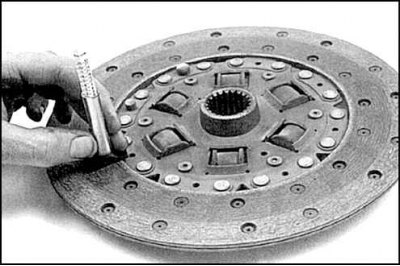
5. Check the condition of the springs, loose rivets, and other signs of damage.
[The material is reprinted from an online resource toyotaman.ru]
6. It is recommended to replace the disk regardless of its condition.
7. Along with the friction disc, the release bearing is usually also replaced.
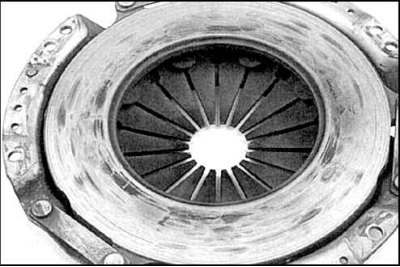
8. Check the condition of the pressure plate surface.
9. Check the condition of the diaphragm spring and spring petals (see fig. Clutch wear).
10. Minor defects of the disc can be sanded down with sandpaper; in case of significant defects, replace the clutch.
Installation
1. Clean the flywheel and clutch thoroughly.
2. Install the clutch, aligning the marks, and tighten the bolts by hand.
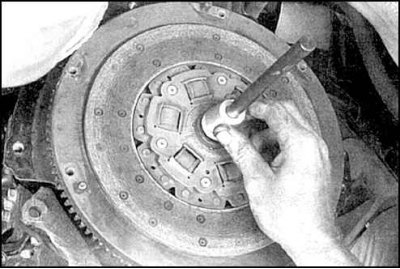
3. Center the disc using a drift that should fit into the guide bearing, tighten the clutch bolts gradually and evenly in a crisscross pattern.
4. Lubricate the release bearing groove, the friction surfaces of the fork and the splines of the gearbox input shaft with high-melting grease.
5. Install the bearing.
6. Install the transmission.
7. Tighten all fasteners to the specified torque.