



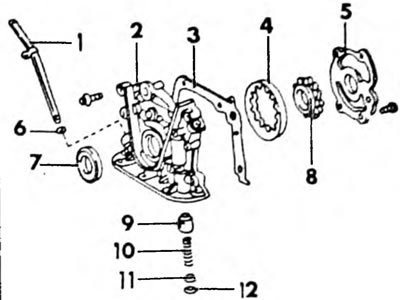
Fig. 113. Assembly drawing of the sheet metal pump of the 1.6 l engine. 1. Oil dipstick; 2. Oil pump housing; 3. Housing gasket; 4. Slave rotor; 5. Oil pump housing cover; 6. Sealing ring; 7. Seal; 8 Drive rotor; 9. Pressure reducing valve; 10. Spring; 11. Spring stop; 12. Retaining ring
Removal and installation the oil pump
- To remove the oil pump, remove the oil pan and oil receiver screen.
- Drain the engine oil. If oil was added recently, collect the leaking oil in a container for refilling.
- Remove the oil pan (Chapter 3.1).
- Unscrew the two bolts securing the oil intake pipe from the inside of the crankcase and unscrew the fastening of both support rods. Remove the oil receiver screen with the pipe. Remove the oil deflector screen.
- Remove the timing belt as described in the relevant chapter.
- Remove the oil dipstick and unscrew the guide tube.
- Unscrew the pump mounting bolts on the front side of the cylinder block. The pump is located in the location shown in Figure 114.
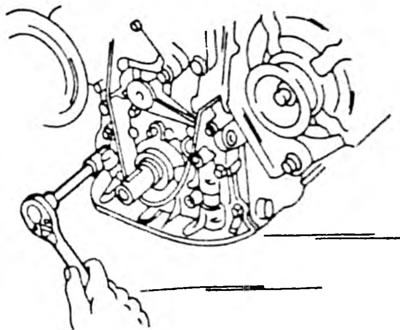
Fig. 114. Removing the pump housing from the front side of the engine.
- Remove the pump and remove the gasket. If the pump is very tightly seated, you can gently tap the pump body from the inside of the crankcase with a plastic hammer.
- The pump is installed in the reverse order. It is necessary to replace the pump gasket. Install and tension the toothed belt in accordance with the instructions in the relevant chapter. Adjust the tension of the V-belt of the generator and water pump in accordance with the instructions chapters 4.3.2.
- After installing the oil pan, fill the engine with oil as described in chapter 3.1.
Oil pump overhaul
- Unscrew the oil pump cover from the inside of the front part of the housing.
- Remove the inner and outer gears from the housing. Before removing the gear, mark the direction of rotation on the back side with a felt-tip pen.
- Remove the retaining ring from the front of the housing and take out the parts of the pressure reducing valve. The position of the individual parts can be seen in Figure 113.
Clean all parts and replace if necessary. If there is wear on the working surfaces of the front part of the housing or cover, replace the parts; otherwise, carefully pry the seal with a screwdriver. Check the pressure relief valve piston hole for wear and tear.
Check for broken teeth on the rotor. Rotors must be replaced as a set. Insert the rotor into the hole as shown in Figure 115 and use a feeler gauge to measure the gap between the outside of the outer rotor and the pump hole (on the left in the picture). The gap should not exceed 0.2 mm. For the next check, insert a feeler gauge between the tip of the outer rotor and the tip of the inner rotor (medium rice.). The gap should not exceed 0.35 mm.
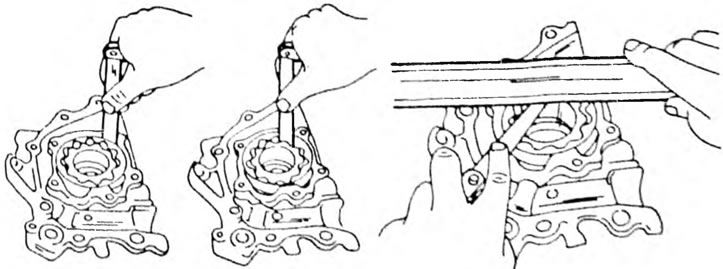
Fig. 115. Checking the oil pump clearance (see text)
Place a ruler on the surface of the rotor and housing (right fig.) and measure the gap between the linear and rotors with a feeler gauge. The gap should not exceed 0.10 mm. If the measurement results exceed the specified values, replace the rotors as a set. Assemble the oil pump in the reverse order. Insert the outer rotor with the marked side outward. Fill the pump hole with oil before installing the cover. Insert the parts of the pressure reducing valve and secure with a retaining ring.