



Engine cooling system
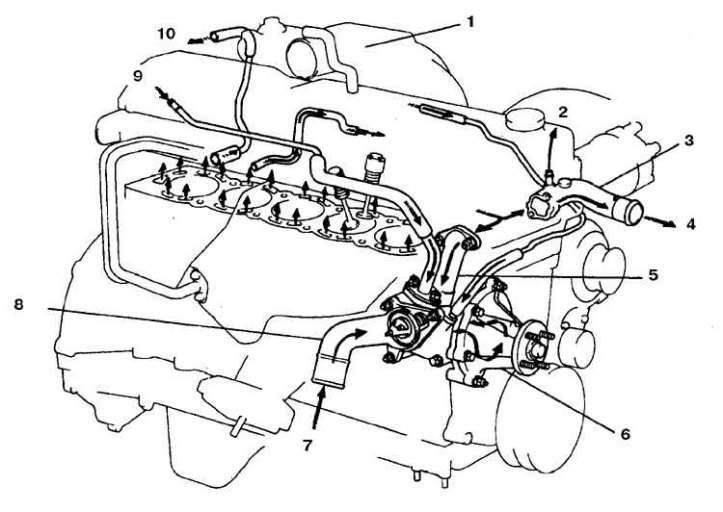
1. Damper body; 2. To the radiator; 3. Outlet pipe; 4. To the radiator; 5. Bypass pipe; 6. Pump; 7. From the radiator; 8. Inlet pipe; 9. From the heater; 10. To the heater
Cooling system thermostatically controlled, high pressure
The coolant pump is centrifugal, the thermostat has an expanding working fluid. After the engine warms up to normal operating temperature, the thermostat opens, as a result of which the liquid enters the radiator, where it cools down and enters the engine again. The cooling system is connected to the atmosphere by a radiator cap, which has a control valve. This design increases the boiling point of the liquid and the efficiency of cooling the liquid in the radiator. If the pressure in the cooling system exceeds the level at which the spring-loaded control valve of the radiator cap is triggered, then under the action of pressure the valve is lifted from the seat and part of the liquid flows through the bypass pipe into an additional expansion tank with coolant. When the system cools, excess liquid flows back into the radiator.
The tank maintains the liquid level in the system and is also a reservoir for receiving overheated liquid. This type of cooling system is called closed, since the liquid flowing through the plug valve is stored for further use.
Heating system
The heating system includes a fan and a radiator mounted in a single housing under the right side of the front panel of the body, hoses for supplying and draining coolant from the engine cooling system and a control panel for heating/cooling the air in the cabin, located on the front panel of the body. The coolant heated by the engine flows through the heater radiator. The heating mode is set by opening the damper, as a result of which the heater housing communicates with the space of the cabin. The switch on the control panel controls the operation of the fan, which forces air through the radiator.
Air conditioning system
The air conditioning system consists of a condenser mounted in front of the radiator, an evaporator installed next to the heater core, a compressor mounted on the engine, a moisture separator with a high-pressure reducing valve, hoses and pipes connecting all of these units.
The original publication can be found on the website ToyotaMan.ru
The fan directs the air flow from the passenger compartment to the evaporator radiator, where heat is transferred from the air to the refrigerant. In the evaporator radiator, the refrigerant boils to form low-pressure steam, providing heat removal. The compressor circulates the heated refrigerant, maintaining its increased pressure, from the evaporator to the condenser, where the refrigerant is cooled, and back to the evaporator.