



Contents: Removal the oil pump ↓ Disassembling the oil pump ↓ Oil pump condition monitoring ↓ Assembling the oil pump ↓ Installing an oil pump ↓
Removal the oil pump
Reminder: When repairing the oil pump, the oil pan and oil receiver must be removed and cleaned.
1. Drain the engine coolant (see section "Cooling system").
2. Drain the engine oil (see the relevant paragraph).
3. Remove the timing belt and pulleys except the camshaft pulley (see the relevant section).
4. Remove the water pump (see section "Cooling system").
5. Remove the oil pan.
a) Unscrew fourteen bolts and four nuts.
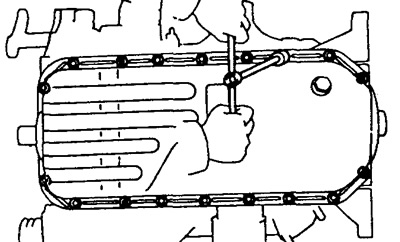
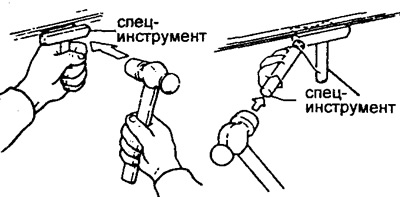
b) Insert the blade of the special tool between the cylinder block and the oil pan, cut off the applied sealing material and remove the oil pan.
Warning: Do not use special tools to remove the timing belt cover and rear oil seal holder.
Care should be taken not to damage the oil pan flange.
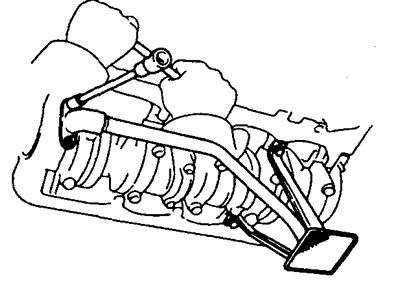
6. Remove the oil receiver and gasket by unscrewing two bolts and two nuts.
7. Remove the oil pump, (timing belt cover).
a) (With heating control device). Disconnect the thermostat block water bypass hose from the timing belt cover.
b) Before removing the two nuts securing the timing belt cover to the high-pressure fuel pump, check the alignment of the high-pressure fuel pump marks.
If marks are missing, apply new marks for reinstallation.
c) Remove the two nuts.
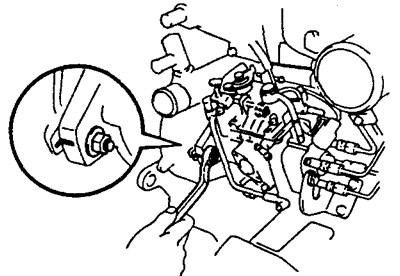
d) Unscrew the five bolts, remove the timing belt cover and gasket.
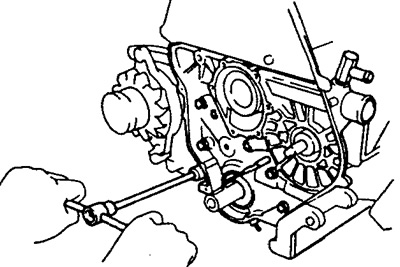
Disassembling the oil pump
1. Place the timing belt cover on wooden blocks.
Warning: The height of the stands should be adjusted so as not to damage the TDC indicator.
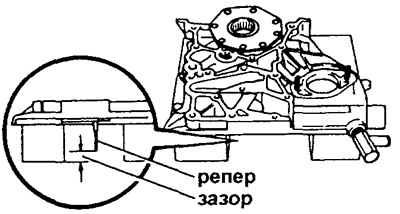
2. Remove the pressure relief valve. Using a 12mm Allen key, remove the plug, gasket, spring and pressure relief valve.
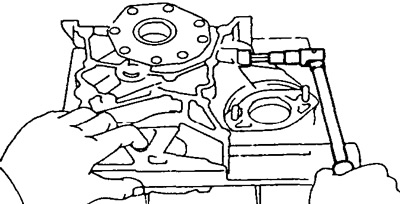
3. Remove the drive and driven gears. Remove the six screws, then remove the pump housing cover, drive and driven rotors.
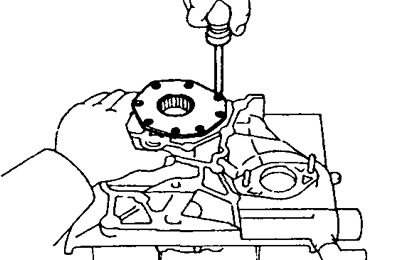
Oil pump condition monitoring
1. Check the condition of the pressure reducing valve.
Lubricate the valve with engine oil and check that it moves down smoothly (in the valve hole) under its own weight. If this condition is not met, replace the pressure reducing valve. If necessary, replace the oil pump housing.
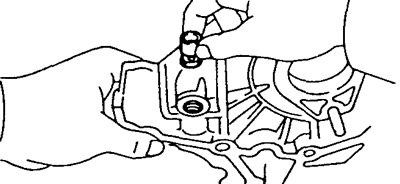
2. Check the condition of the driving and driven gears.
A. Using a feeler gauge, check the clearance between the outside diameter of the driven gear and the housing.
- Nominal clearance - 0.144 - 0.219 mm
- Maximum gap - 0.40 mm
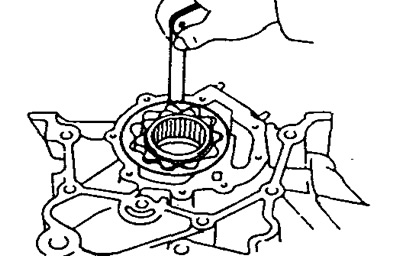
If the gap exceeds the maximum permissible value, replace the gears as a set.
If necessary, replace the oil pump housing.
B. Check the end clearance of the gears. Using a flat feeler gauge, measure the clearance between the gears and a precision square.
- Nominal end gap - 0.035 - 0.085 mm
- Maximum end gap - 0.15 mm
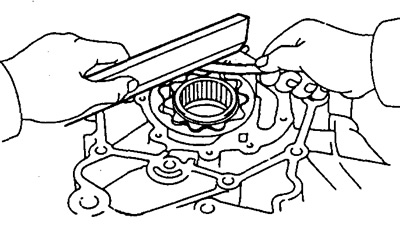
If the end clearance exceeds the maximum permissible value, replace the gears as a set. If necessary, replace the oil pump housing.
B. Check the clearance at the tips of the gears. Using a flat feeler gauge, measure the clearance between the tips of the teeth of the driven and driving gears.
- Nominal gap at the tops - 0.110-0.240 mm
- Maximum gap at the tops - 0.30 mm
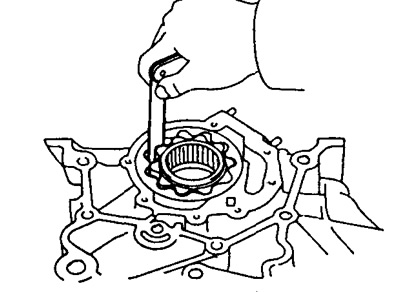
If the gap at the tops exceeds the maximum permissible value, replace the gears as a set.
Assembling the oil pump
1. Place the timing belt cover on wooden blocks.
Warning: The height of the stands should be adjusted so as not to damage the TDC indicator.
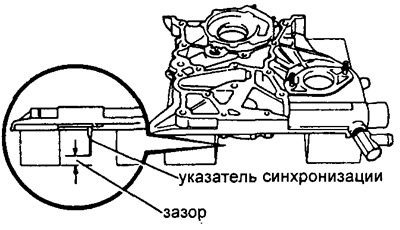
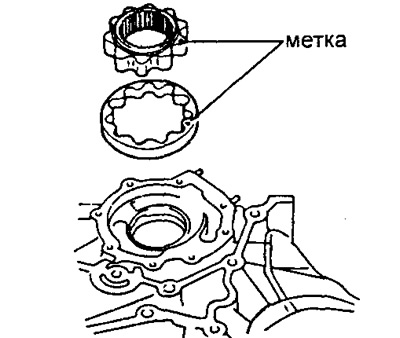
2. Install the drive and driven gears.
a) Place the drive and driven gears in the timing belt cover with the marks facing up.
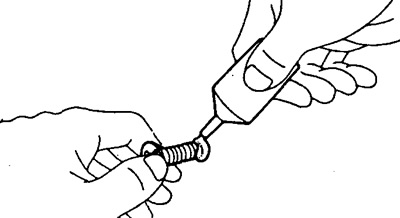
b) Apply glue to two or three threads of the screws. Glue: 14108833-00070, THREE BOND 1324 or equivalent.
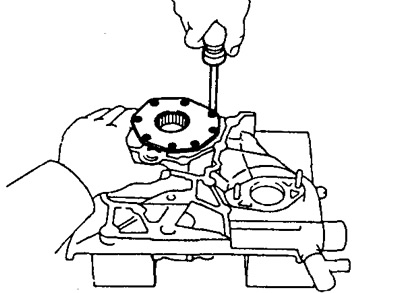
c) Install the pump housing cover with six screws.
- Tightening torque - 10 Nm
2. Install the pressure reducing valve.
a) Insert the valve and spring into the mounting hole of the timing belt housing.
b) Using a hex key (12 mm), install a new gasket and plug.
- Tightening torque - 37 Nm
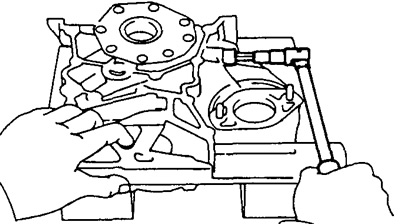
Installing an oil pump
1. Install the oil pump (timing belt cover).
a) Place a new gasket on the cylinder block.
b) Install the timing belt cover with five bolts.
- Tightening torque - 23 Nm
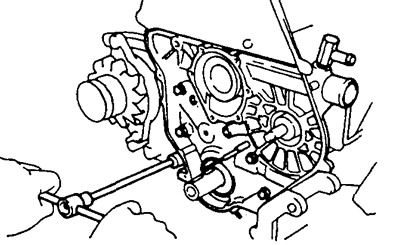
c) Install two nuts securing the fuel injection pump to the timing belt cover.
- Tightening torque - 21 Nm
d) Check the alignment of the fuel injection pump marks.
If there is no correct alignment, then align the marks by tilting the fuel injection pump.
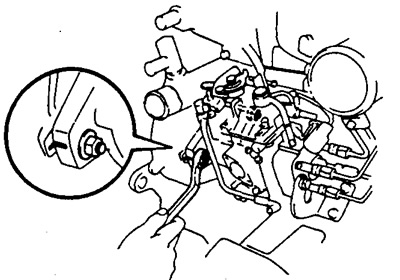
d) Connect the block water bypass hose from the thermostat to the timing belt cover.
2. Install the oil pan. Install a new gasket and oil pan with two bolts and two nuts.
- Tightening torque - 12 Nm
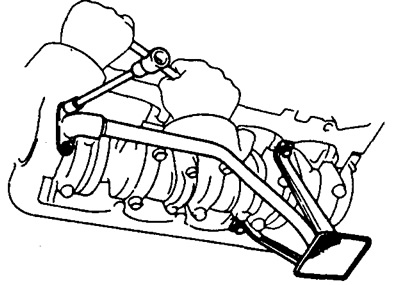
3. Install the oil pan.
a) Remove the old sealing material; being careful not to allow oil drops to come into contact with the contact surfaces of the oil pan and cylinder block.
Using a razor blade and scraper, remove old sealant from gasket surfaces and seal grooves. Clean all components thoroughly.
Using solvent, clean both sealing surfaces.
Warning: Do not use solvent that will damage painted surfaces.
The original source is located on the website toyotaman
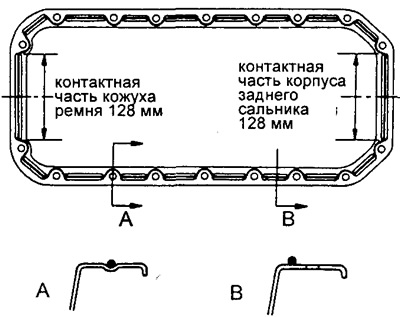
b) Apply sealant to the oil pan as shown in the figure.
Reminder: Apply a layer of sealant at least 5mm thick (preferably a little more) on the areas of the oil pan that are in contact with the timing belt cover and the rear oil seal retainer.
Sealant element No.08826-00080 or equivalent.
Reminder: Avoid applying excess sealant to the surface. Be especially careful around the lubrication channels.
Assembly must be completed within five minutes of applying the sealant. Otherwise, the sealant must be removed and then reapplied.
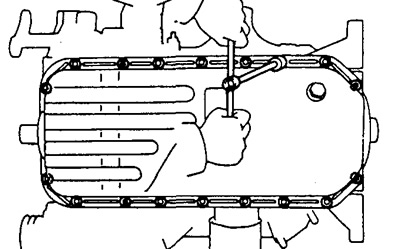
c) Install the oil pan with fourteen bolts and four nuts.
- Tightening torque - 18 Nm
4. Install the water pump (see section "Cooling system").
5. Install the pulleys and timing belt (see section "Engine mechanisms").
6. Fill with engine oil.
7. Fill the engine with coolant.
8. Start the engine and check for leaks.