



The cylinder head is made of light metal alloys and operates with transverse scavenging, i.e. the intake and exhaust valves are located opposite each other. The spark plugs are screwed into the combustion chambers. The intake manifold has 8 long intake pipes; the intake manifold of a carburetor engine is heated by coolant.
On a 1.6 L engine, the exhaust valve camshaft is belt driven. The exhaust camshaft pinion is engaged with the camshaft pinion of the intake valves. The camshafts are mounted in five bearings. Bearings are lubricated through a channel in the center of the shaft. On a 2.0 L engine, both camshafts are driven in the same way, only the gears of the second camshaft drive are located in the middle of both camshafts. On a 1.6 L engine, both camshaft gears are located at the front of the cylinder head.
Adjustment of valve clearances on both engines is carried out by replacing the adjusting washers between the valves and valve tappets; replacement is carried out without removing the camshafts.
The timing belt cover consists of three parts (1.6L engine) or from two parts (2.0L engine). Inspection hole in the bottom cover (on 1.6 l engines) or in the top cover (on 2.0 l engines) provides the ability to adjust the tension of the toothed belt.
The pistons are made of heat-resistant metal and have recesses to prevent valve impacts. The piston pins are installed the same way on all engines, i.e. the pins are pressed into the connecting rod heads and the pistons "float" on the pins. Each piston has two compression rings and one oil scraper ring.
Before starting work, it is necessary to thoroughly clean all external surfaces of the engine. To prevent foreign objects from getting in, first cover all openings in the engine with clean rags.
The engine disassembly will be described in detail below in the subsection "Repair and overhaul". In this way, we will be able to describe the work that is carried out both on the engine that has been removed and without removing it, without describing the disassembly work twice. If it is necessary to carry out a complete disassembly, it is necessary to combine individual work processes, and in a given order. In general, when disassembling, all movable and removable parts should be marked to ensure their installation in their original places. This is especially important for pistons, valves, bearing caps and bearing liners. The removed parts should be folded so as not to mix them up.
Never mark bearing or sealing surfaces with a scriber or stamp. Paint is best suited for marking. When removing crankshaft bearing shells, their installation locations should also be marked, i.e. either on the mechanism housing side or on the bearing cap side. The main and connecting rod bearing numbers should be applied to the rear side of the corresponding bearing shell.
The valves are best placed on the bottom of an inverted cardboard box with the valve numbers written next to them. Figure 4 shows the arrangement of the removed valves in numerical order. It is also impossible to mix up the valves of one cylinder. It is best to have the inlet valves on one side and the outlet valves on the other side, i.e. you can lay the valves on the bottom in this manner by stacking two cardboard boxes. Most of the parts are made of aluminum and should be handled accordingly. If hammering is required to seat the part, use only rubber, plastic, or leather mallets. If you do not have a mounting stand, it is best to cut suitable wooden blocks on which to rest the engine so that you can access it from the top and bottom. Once removed, the cylinder head can be clamped in a vice using the metal bracket screwed to the intake manifold studs.
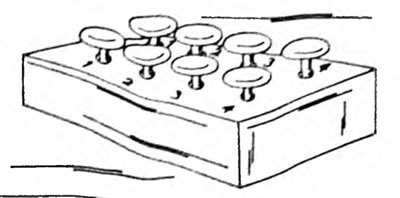
Fig. 4. The valves can be placed on the bottom of an inverted cardboard box, with the inlet valves on one side and the outlet valves on the other.
The normal sequence of engine disassembly is described below, and some details of removal are detailed below in the relevant subsections. The cylinder head can be removed without removing the engine. Tension adjustment and replacement of the timing belt can also be done without removing the engine.
Disassemble the engine in the following sequence:
4A-F engine and 4A-FE engine (1.6 L)
- Loosen the water pump pulley nuts, loosen the V-belt adjusting bolt and remove the V-belt (Fig. 5). Remove the pulley from the water pump.
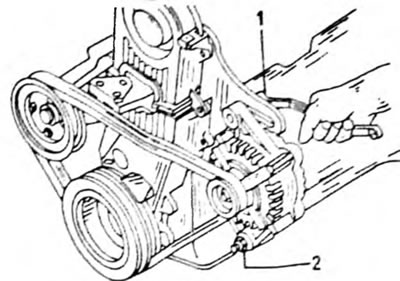
Fig. 5. To remove the V-belt, loosen the two bolts and nuts (1) and (2).
- Remove the four spark plugs. To do this, insert a long spark plug wrench, shown in Fig. 6, into the individual holes. Before doing this, remove the ignition wires.
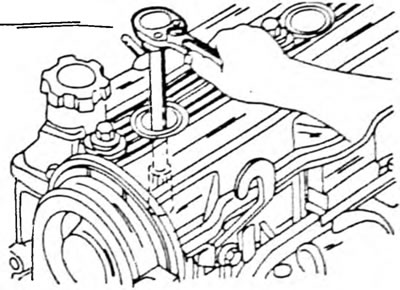
Fig. 6. A long spark plug wrench is required to remove the spark plugs.
The official source is on the portal (www.ToyotaMan.ru)
- Disconnect the crankcase ventilation hose from the ventilation valve.
- Unscrew the three nuts of the cylinder head cover and remove the cover with the sealing washers of the nuts and the gasket. The sealing washers are replaced during installation.
- Turn the crankshaft pulley until the mark matches the "0" mark on the timing belt cover. Check if there is any play in the valve tappets of the first cylinder. If there is no play, turn the engine one more revolution. Fig. 7 shows the installation of the crankshaft pulley so that the engine is at TDC.
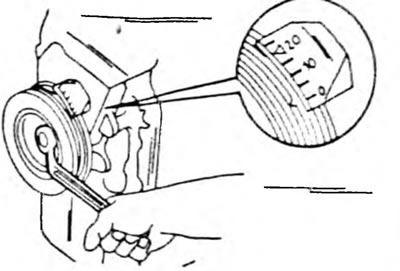
Fig. 7. Turn the crankshaft with a spanner until the "0" mark aligns with the mark on the pulley.
- Loosen the crankshaft pulley fastening and remove it from the shaft using a puller. The pulley has two threaded holes for screwing in the puller, as shown in Fig. 8.
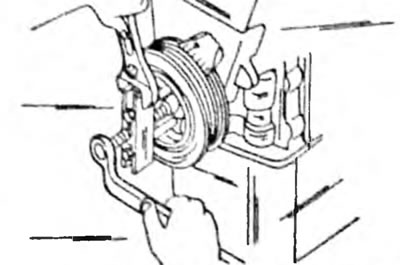
Fig. 8. Removing the crankshaft pulley using a special puller
- Unscrew the upper, middle and lower toothed belt covers and remove the gaskets. Unscrew a total of 9 bolts.
- Remove the timing belt drive pulley. It is mounted on the front side of the crankshaft and is easily removed as shown in Fig. 9.
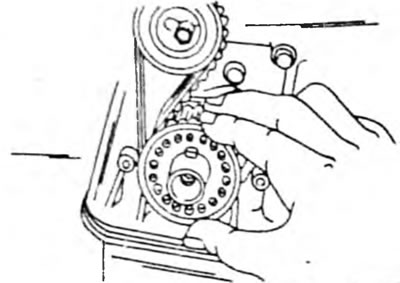
Fig. 9. Removing the toothed belt pulley from the front side of the crankshaft. Note how the washer is fitted.
- If the timing belt is to be reinstalled, mark it with a direction arrow and its location relative to the camshaft gear and crankshaft pulley, as shown in Fig. 10.
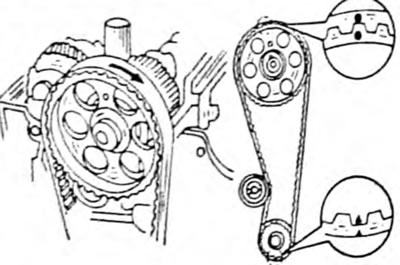
Fig. 10. Apply the direction arrow as shown on the left side of Fig. The right figure shows the relative position of the gears of the toothed belt.
- Loosen the toothed belt tensioner bolt at the front of the engine, press the tensioner to the left with a screwdriver as shown in Fig. 11, and tighten it in this position. The toothed belt is now loose and can be removed. If necessary, the belt tension roller can be removed.
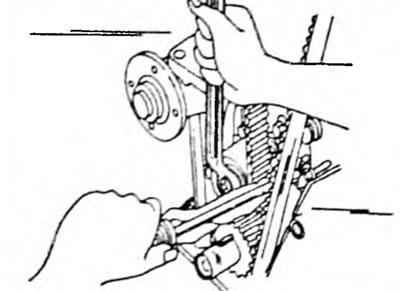
Fig. 11. Press the tensioner with a screwdriver and tighten the bolt again.
- Remove the timing belt sprocket from the crankshaft. If necessary, use a strong screwdriver or pry bar.
- Loosen the camshaft gear bolt. The shaft must be held from turning. In the place shown in Fig. 12, there is a hexagon on the shaft where a wrench can be inserted. Do not damage the cylinder head when resting the wrench against it.
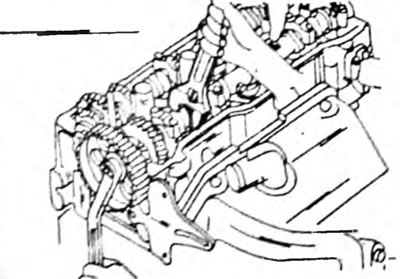
Fig. 12. Holding the camshaft when loosening the camshaft gear bolt.
- Loosen the distributor screws, disconnect the vacuum hose and remove the distributor together with the wires connected to it.
- Unscrew the drain pipe (2 bolts).
- Unscrew the two bolts and remove the exhaust manifold support.
- Loosen the four bolts and remove the upper exhaust manifold heat shield.
- Remove three bolts and two nuts from the exhaust manifold and remove the exhaust manifold with gaskets, remove three more bolts and remove the lower heat shield from the exhaust manifold.
- Remove the cooling system inlet housing. To do this, disconnect the two water hoses, unscrew the two nuts and one bolt (Fig. 13) and remove the housing.
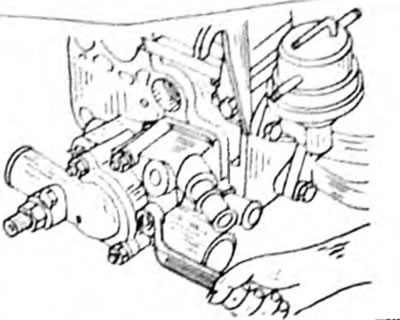
Fig. 13. Removing the cooling system inlet housing
- On carburetor engines, remove the fuel pump.
- Disconnect the crankcase ventilation hose, disconnect the water hose from the intake manifold and unscrew the two intake manifold support bolts.
- Unscrew six bolts and two nuts, remove the cable clamp and remove the intake manifold with the gasket.
- Measure the axial clearance of both camshafts. To do this, install a dial indicator on the end of the camshaft, as shown in Fig. 14, and use two screwdrivers to move the camshaft in both directions. Take readings from the dial indicator. The clearance of the inlet camshaft should be between 0.030 and 0.085 mm; the clearance of the exhaust camshaft should be between 0.035 and 0.090 mm.
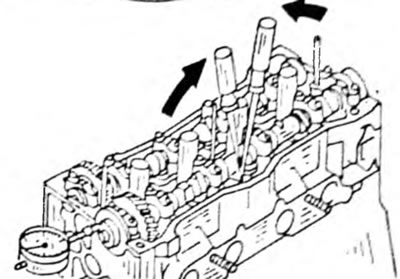
Fig. 14. Measuring the axial clearance of the F/FE engine camshaft distributor. Check both shafts in the manner specified
- Since the axial clearance of the camshafts is very small, the camshaft must be held straight when removed. Otherwise, the cylinder head may be damaged or even broken. Therefore, the following instructions must be followed precisely:
— Turn the intake camshaft so that the hole on the gear is in the position shown in Fig. 15.
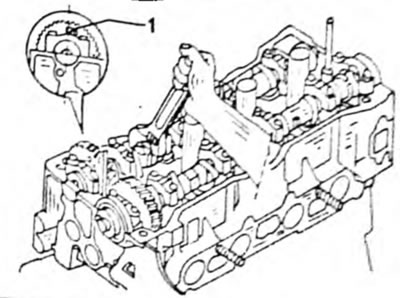
Fig. 15. Turn the intake camshaft so that the hole (1) on the gear wheel is in the indicated position
— Unscrew the bearing cap bolts No.1 of the intake and exhaust camshafts one by one and remove both caps.
— Fasten both separate gear wheels of the intake camshaft together by screwing a 16-20 mm long M6 bolt into the wheels, as shown in Fig. 16. This removes the tension of the torsion spring of the secondary gear wheel.
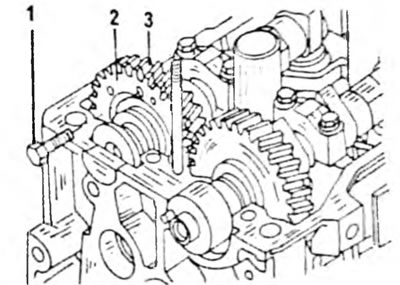
Fig. 16. Before removing the intake camshaft, pass the bolt through both parts of the intake camshaft gear. 1. Bolt M6; 2. Secondary gear; 3. Main gear wheel
— Loosen the bolts of the four remaining bearing caps evenly, in the order shown in Fig. 17. Remove the bearing caps one by one and pull out the intake camshaft. Do not use a screwdriver or similar tool to remove the shaft under any circumstances. If it is not possible to pull out the camshaft in a horizontal position, replace bearing cap No.3 (at the bottom in Fig. 17), tighten evenly and then loosen the bolts evenly again, pulling the camshaft wheel upward. The camshaft is disassembled. These works are described in chapter 2.8.
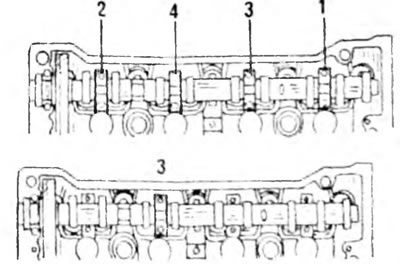
Fig. 17. Sequence of unscrewing the camshaft bearing cap bolts. The location of bearing cap No.3 is shown below
- To remove the exhaust camshaft, turn it to the position where its pin is in the position shown in Fig. 18.
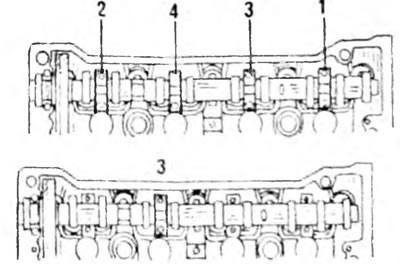
Fig. 18. Turn the exhaust camshaft to the installation pin (1) in the specified position. Only then can the camshaft be removed.
- Unscrew the camshaft bearing caps in the same way as described for the intake camshaft and pull out the shaft.
- Using a Torx key, loosen the cylinder head mounting bolts in the sequence shown in Fig. 19. Loosening the bolts in a different sequence may cause the cylinder head to become skewed. Raise the cylinder head. If the head is stuck, insert a screwdriver, as shown in Fig. 20, between the ledge on the engine block and the head, without damaging the surface. The head sits on pins.
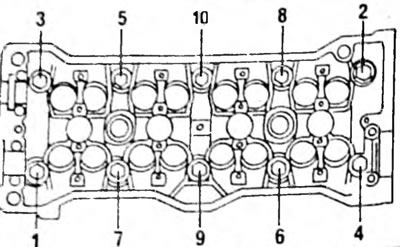
Fig. 19. Sequence of unscrewing the cylinder head bolts
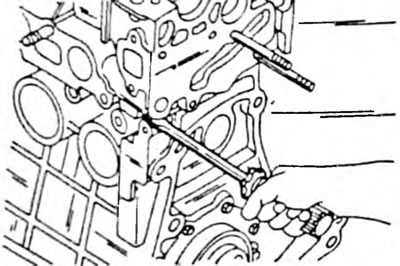
Fig. 20. Separate the cylinder head in the manner shown.
- Turn the engine over and unscrew the oil pan. The pan is secured with two nuts and 19 bolts. Because of the sealant, the oil pan may sit very tightly and may need to be pressed out. When installing the tool for pressing out the pan, do not damage the oil pan flange. After removing the oil pan, remove the gasket.
- Unscrew the filter mesh at the bottom of the crankcase.
- Unscrew the oil pump from the front of the crankcase and pull it out. The pump is secured with seven bolts. To remove the pump, knock them out of the crankcase with a plastic hammer. Remove the pump gasket.
- Before disassembling the crank mechanism, check the axial play of the four connecting rod bearings of the crankshaft. To do this, place a dial indicator on the cylinder block, as shown in Fig. 21, press the connecting rod to one side and reset the dial indicator scale. Then press the connecting rod to the other side and read the dial indicator scale. Normal play is from 0.15 to 0.25 mm, but a wear limit of 0.30 mm is acceptable. If the play is greater than the specified value, the bearing or crankshaft must be replaced. Also measure the axial play of the other connecting rod bearings.
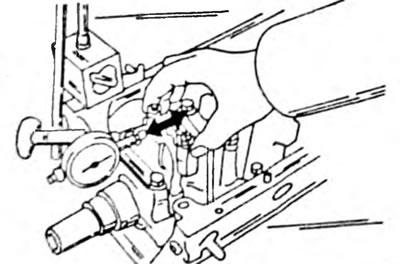
Fig. 21. Measure the axial clearances of the connecting rod bearings on all crankshaft journals. To do this, move the bearing in both directions in the direction of the arrows.
- Number the connecting rod bearing caps and connecting rods. To do this, use a center punch as shown in Fig. 22. Make one strike with the center punch on the first connecting rod, two strikes on the second connecting rod, etc. When removing the caps, the two connecting rod bearings should always be at the bottom dead center. To separate the cap, alternately strike the studs with a plastic hammer, knocking the connecting rod inward (Fig. 23). The engine should be located on its side.
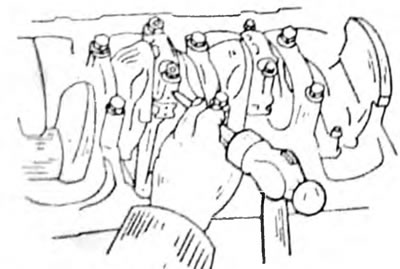
Fig. 22. Marking the connecting rod bearing caps before removing the connecting rods
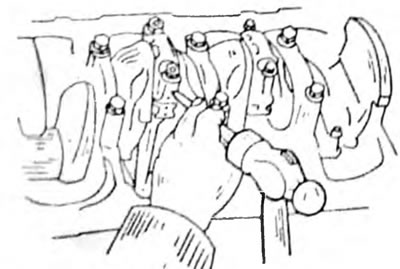
Fig.23. Knock out the connecting rod bearing bolts with a plastic hammer
- Place pieces of rubber or plastic hose on the connecting rod studs (to protect the cylinder marks) and pull the connecting rods together with the pistons out of the cylinders one by one. Immediately screw the bearing shells and caps onto the corresponding connecting rods.
- After removal, arrange the pistons and connecting rods of both remaining assemblies in order for installation.
- Hold the flywheel with a screwdriver inserted into the teeth to prevent it from turning and unscrew the clutch mounting bolts evenly and crosswise.
- While still holding the flywheel, unscrew the flywheel mounting bolts. Remove the flywheel. If necessary, tap it with a plastic hammer.
- Remove the intermediate plate from the rear of the engine.
- Unscrew the rear oil seal flange. The oil seal can be removed from the flange immediately.
- Check and record the crankshaft axial clearance (chapter 2.7.2).
- Remove the crankshaft. In this case, the bearing caps are numbered (No. 1 on the belt pulley side, No.5 on the flywheel side). Remove the spacer washer from the middle bearing.
Fig. 24 shows the assembly diagram of the crank mechanism, which can be used during disassembly.
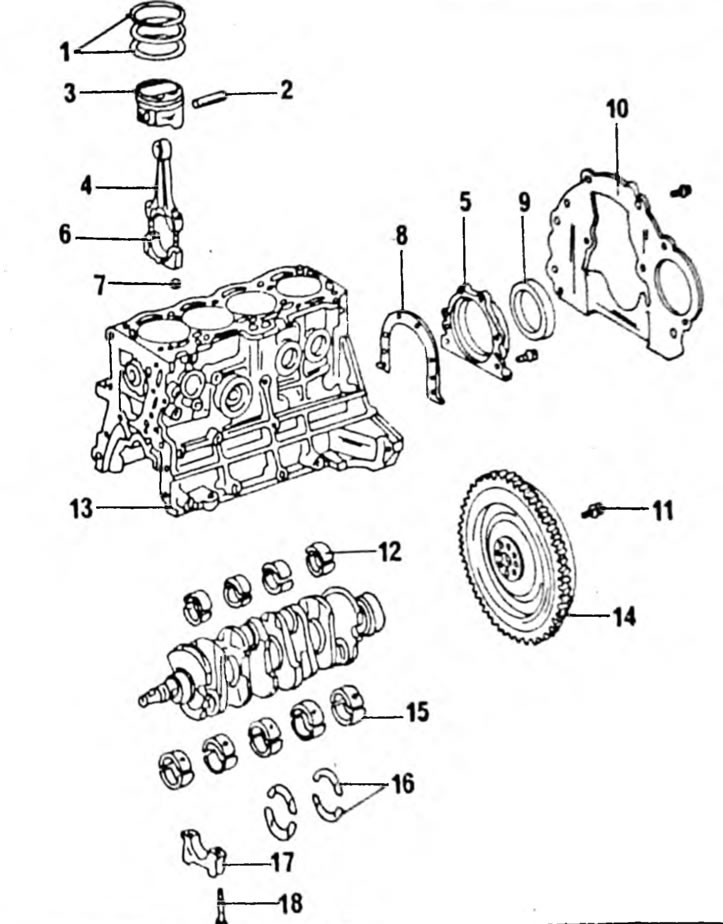
Fig. 24. Assembly diagram of the cylinder block together with the crank mechanism. 1. Piston rings; 2. Piston pin; 3. Piston; 4. Connecting rod; 5. Seal flange; 6. Connecting rod bearing cap; 7. Nut 50 mm; 8. Flange gasket; 9. Rear oil seal; 10. Engine intermediate board; 11. Bolt 80 mm; 12. Connecting rod bearing shell; 13. Cylinder block; 14. Flywheel; 15. Crankshaft bearing; 16. Spacer washers 17. Main bearing cap; 18. Bolt 50 mm.
Disassembling the 3S FE engine
- Loosen the fastening of the generator V-belt mounting plate, press the generator inward and remove the V-belt.
- Unscrew the water pump pulley.
- Remove four spark plugs.
This requires an extended spark plug wrench to access the recessed spark plugs
- Loosen the engine lifting brackets.
- Unscrew the exhaust manifold heat shield on one side of the engine, unscrew the two bolts and remove the manifold support.
- Unscrew the exhaust manifold. If there is another heat shield, remove it.
- Loosen the ignition distributor mounting bolts, remove the ignition distributor and sealing ring.
- Disconnect the water and vacuum hoses of the exhaust gas toxicity reduction system and unscrew the outlet fitting of the cooling system, which is shown in Fig. 25.
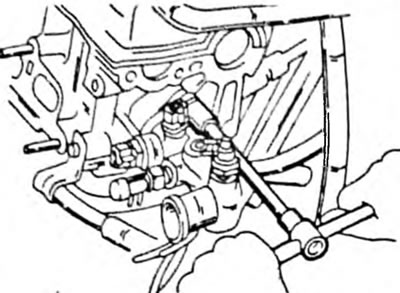
Fig. 25. Unscrew the water outlet pipe in the indicated places.
- Disconnect the water hoses from the bypass tube and unscrew the tube. Remove the sealing ring.
- Loosen the four cylinder head cover nuts and remove the cover. Remove the gasket and rubber tips
- Turn the crankshaft until the mark on the crankshaft pulley aligns with the "0" mark on the scale on the front side of the engine (see fig. 7). Check that the valves of the first cylinder are open. If they switch (one opens, the other closes), turn the crankshaft one more revolution. To avoid mistakes, watch the camshaft gear. There is a hole on the gear that should match the mark on the camshaft bearing cap, as shown in Fig. 26.
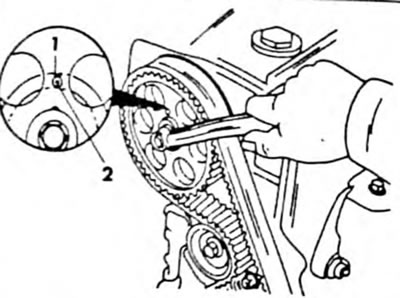
Fig. 26. Slowly turn the camshaft sprocket until the hole (1) in the gear is in line with the pointer (2) in the bearing cap.
- Loosen the crankshaft pulley bolt (hold the flywheel to prevent the crankshaft from turning) and remove the pulley. To remove the pulley, you can use two crowbars. You can also use the puller shown in Fig. 8. The puller is installed in two threaded holes in the pulley.
- Unscrew the upper and lower toothed belt covers and remove the gaskets. Unscrew the 5 bolts of the lower cover and 4 bolts of the upper cover.
- Remove the timing belt guide washer (see fig. 9).
- When installing the timing belt, again mark it with an arrow indicating the direction of belt movement and a mark indicating the position of the camshaft gear relative to the crankshaft gear, as shown in Fig. 27 and 28 for the camshaft and crankshaft gears.
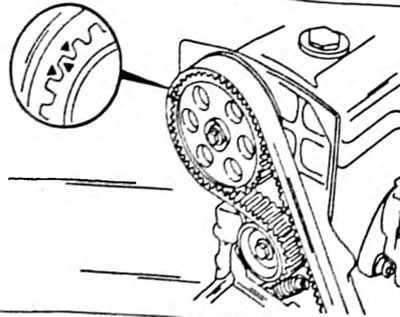
Fig. 27. Before removing the timing belt, mark the relative positions on the timing belt and the camshaft gear (only when reinstalling the timing belt).
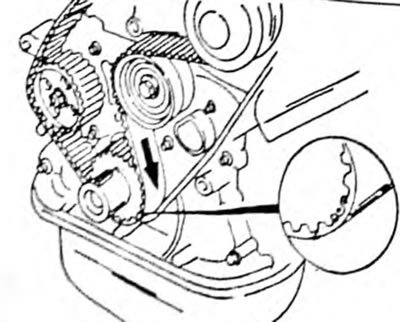
Fig. 28. Apply a direction arrow (with paint) to the toothed belt and, before removing the toothed belt, mark the relative positions on the toothed belt and on the crankshaft toothed wheel.
- Loosen the timing belt tensioner bolt at the front of the engine, press the tensioner to the left with a screwdriver as shown in Fig. 11, and secure it in the new position. The timing belt is now free and can be removed. If necessary, the belt tension roller can be removed.
- Remove the toothed wheel from the crankshaft. If necessary, use two screwdrivers or pry bars as shown in Fig. 29.
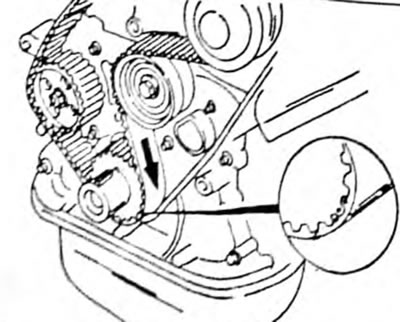
Fig. 29. Removing the crankshaft gear using screwdrivers
- Loosen the camshaft wheel bolt. Hold the shaft from turning. Usually, the tool shown in Fig. 30 is inserted into two holes in the wheel for this purpose, but you can also insert a long rod into one of the holes, turn the wheel until the rod stops against the cylinder head, and then loosen the bolt. Remove the washer and gear wheel.
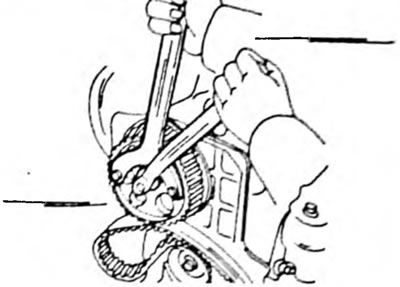
Fig. 30. Hold the camshaft gear from turning. The water pump wheel is also held.
- If installed, remove the exhaust gas return valve and the control valve. They are located in the location shown in Fig. 31. To remove, disconnect the vacuum hoses, unscrew the union nut and unscrew the two bolts. Remove the control valve with the gasket. The exhaust gas return valve is secured with one bolt.
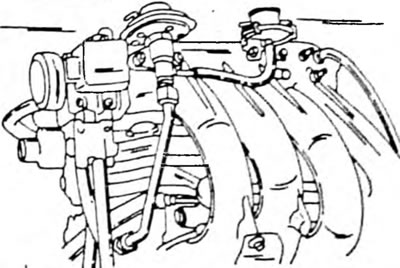
Fig. 31. Location of exhaust gas return system valves.
- On an injection engine, unscrew the throttle valve unit. Remove the cold engine starter injection tube and the air supply tube. It is secured with two bolts. Before doing this, disconnect the air hoses.
- Loosen the intake manifold support bolts, remove the support, disconnect the vacuum hose and loosen the six bolts and two intake manifold nuts. Remove the intake manifold with the gasket.
- Remove the injection pipes and injectors.
- Before removing the camshafts, measure their axial clearance. To do this, install a dial indicator on the end of the camshaft, as shown in Fig. 32. Pull the shaft by the camshaft gear until it stops. Zero the dial indicator scale, press the feeler gauge against the measuring rod and push the camshaft in the opposite direction. The clearance of the intake camshaft should be from 0.045 to 0.10 mm; the clearance of the exhaust camshaft should be from 0.030 to 0.085 mm. If the clearance of the shaft exceeds the specified value, it is necessary to replace the shaft. Sometimes it is necessary to replace the bearing caps and the cylinder head together.
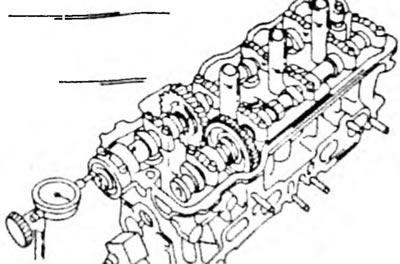
Fig. 32. Measuring the axial clearance of the camshafts. The clearance of both shafts must be measured.
- Since the axial clearance of the camshafts is very small, the camshaft must be held straight when removed to avoid damaging the cylinder head. For this reason, the following instructions must be followed precisely:
— Turn the intake camshaft until the pin on the sprocket is set to the position shown in Fig. 33. When the pin is set to the specified angle before TDC, the cams of the second and fourth cylinders rest against the tappets and hold the camshaft in a horizontal position.
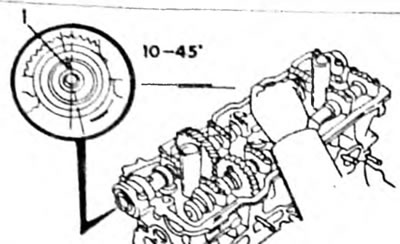
Fig. 33. Position of pin (1) when removing the exhaust manifold shaft
— Fasten both separate gear wheels of the intake camshaft together by screwing a 16-20 mm long M6x bolt into the wheels, as shown in Fig. 34. This relieves the pressure of the torsion spring of the secondary gear wheel. Before removing the camshaft, be sure to ensure that the spring is unloaded.
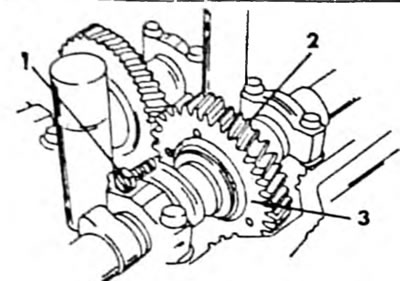
Fig. 34. Blocking the drive gear of the exhaust camshaft. Before removing the shaft, the pressure of the installed spring on the gear wheel, consisting of two parts, must be crushed. 1. Insert bolt; 2. Main drive wheel; 3. Secondary drive wheel
— Evenly and crosswise unscrew the bolts of the rear bearing cover, cover No.3 and cover No.4, and in exactly this order: rear bearing cover, cover No.3 and cover No.4. At this point, do not loosen the bolts of cover No.2.
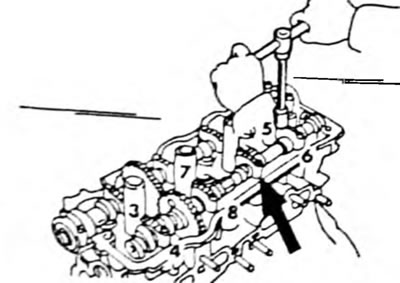
Fig. 35. Sequence of unscrewing the bolts of the bearing caps of the exhaust camshaft. The cap indicated by the arrow does not come off.
— Evenly and crosswise unscrew the bolts of cover No.2. At the same time, constantly check that the camshaft remains in a straight and horizontal position. If it is impossible to remove the camshaft in a horizontal position, screw on the cover of bearing No.2, screw on the remaining covers in the reverse order, check the position of the pin according to Figure 36 and repeat the working operations again. The shaft has a solid toothed pulley and cannot be disassembled.
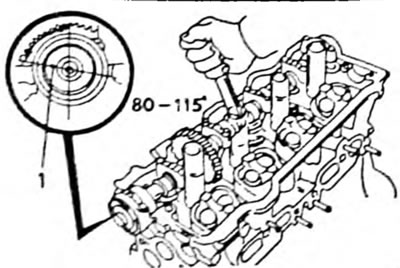
Fig.36. Position of pin (1) when removing the intake camshaft
- Using a Torx wrench, loosen the cylinder head bolts in the sequence shown in Fig. 19. Loosening the bolts in a different sequence may cause the cylinder head to become skewed. Raise the cylinder head. If the head is firmly seated, insert a screwdriver in the place shown in Fig. 20 between the protrusion of the engine block and the head, without damaging the surface. The head sits on pins.
- The remaining work related to disassembly is carried out in a manner similar to that described for the 1.6 l engine. When removing the gear of the conceivable pump, it must be held in the same way as shown in Fig. 30 for the camshaft.