



If necessary, check the removed pump:
- First mark the surfaces of the driven leash and then remove it from the housing.
- Clamp the drive gear in a vice with soft metal pads and unscrew the nut with a spanner. Remove the pump gear and pull out the leash.
- Unscrew the plug from the bottom and remove the parts of the pressure reducing valve. Clean all parts well and replace if necessary. The seal in the housing must be replaced without fail (carefully pull it out with a screwdriver). Check for dents on the tops of the leash. The leashes must be replaced as a set.
- Insert the outer leash into the hole and measure the gap between the outer side of the outer leash and the pump hole with a feeler gauge. The gap should not exceed 0.2 mm. For the next check, insert the feeler gauge between the top of the outer leash tooth and the top of the inner leash tooth (see fig. 318). The gap should not exceed 0.20 mm. Otherwise, replace the oil pump and/or the leashes (included). Place a ruler on the housing surface (Fig. 319) and measure the gap between the ruler and the drive shafts with a feeler gauge. The gap should not exceed 0.20 mm. Otherwise, replace the oil pump and/or drive shafts (included). The oil pump assembly is performed in the reverse order. Insert the outer leash with the marked surface facing outward. Insert the inner leash and put the pump drive gear on the shaft of the leashes. Screw on the nut and clamp the drive gear in a vice again. Tighten the nut to a torque of 47 Nm. Pour oil into the pump opening to pre-lubricate the leashes. Insert the parts of the pressure-reducing valve and screw in the plug. Lubricate the sealing lips of the gland and hammer the gland into the pump body flush.
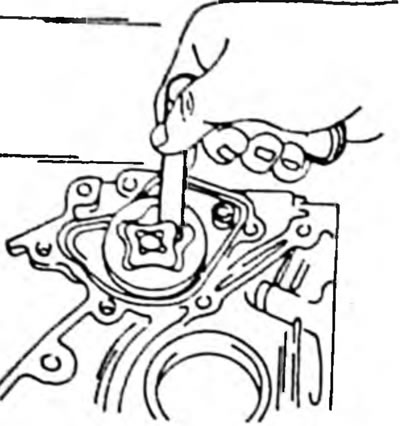
Fig. 318. Measuring the gaps between the tops of the teeth of the leashes
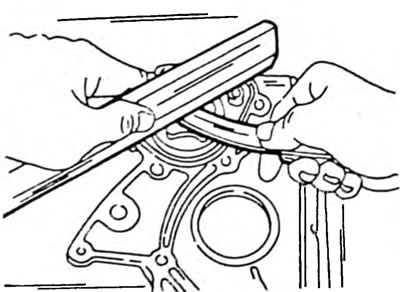
Fig. 319. Measuring the axial play of the pump carriers
Replacing the oil filter is done in the same way as on gasoline engines.
(The full article is posted on the website ToyotaMan.ru)