



Contents: Distribution of braking force…↓ Distribution of braking force…↓ Brake master cylinder control unit ↓ System operation ↓ Diagnostics ↓ Operation in emergency mode ↓
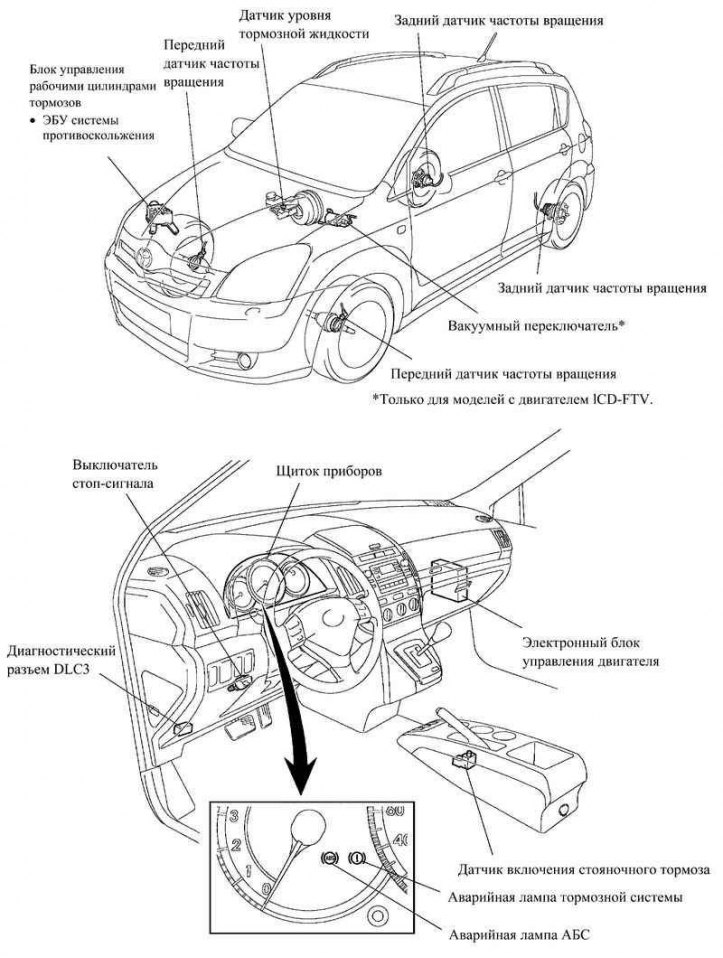
Fig. 6.3. Location of the main components of the electronic brake force distribution (EBD) system
The mechanical brake force distribution system used on previous models has given way to an electronic control unit (ECU) for the anti-skid system, which precisely controls the braking force depending on the vehicle's driving conditions.
Distribution of braking force between the front and rear wheels
When you press the brake pedal while driving straight, the load on the rear wheels decreases, and on the front wheels increases. The ABS electronic control unit recognizes this condition from the signals from the speed sensors and sends a command to the brake working cylinder control unit, regulating the braking force transmitted to the rear wheels.
The magnitude of this force depends, for example, on the vehicle load and also on the deceleration speed. This ensures an optimal distribution of the braking forces transmitted to the rear wheels, depending on the driving conditions.
Distribution of braking force between the right and left wheels (when braking in a turn)
When braking in a turn, the load on the inner wheels decreases, and on the outer wheels increases. The electronic control unit of the anti-skid system recognizes this condition from the signals of the speed sensors and sends a command to the control unit of the brake working cylinders, ensuring optimal distribution of the braking force between the inner and outer wheels.
Brake master cylinder control unit
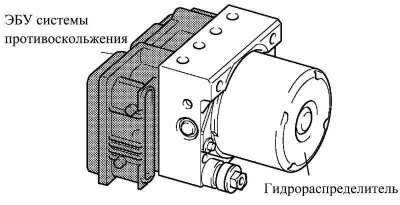
Fig. 6.4. Brake working cylinder control unit
The brake working cylinder control unit consists of a hydraulic distributor and an anti-skid system ECU.
The brake control unit used is from BOSCH, just like in Avensis vehicles.
System operation
The ABS electronic control unit calculates the rotation speed and deceleration rate of each wheel, and controls wheel locking based on signals from 4 rotation speed sensors. Depending on whether the wheels are slipping, the anti-skid electronic control unit regulates the brake fluid pressure in the working cylinder of each wheel, including the check and pressure-reducing valves in one of three modes: pressure reduction, holding and pressure increase.
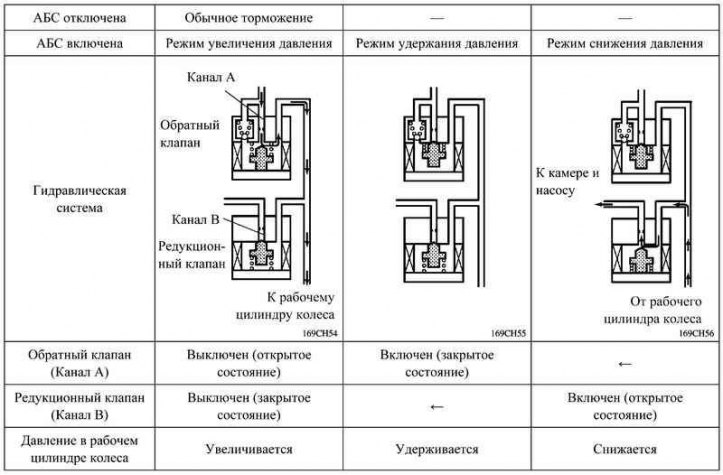
Fig. 6.5. Operating principle of the system (EBD)
[The article is taken from a web resource: toyotaman.ru]
Diagnostics
When the skid control ECU detects a malfunction of the ABS with Electronic Brakeforce Distribution (EBD), the ABS warning lamp and the brake system warning lamp come on to indicate a malfunction of the system (see table below).
At the same time, electronic trouble codes (DTC) are stored. DTC can be read by the number of flashes of the ABS warning lamp: to do this, connect the SST diagnostic tool to the Tc and CG contacts of the DLC3 diagnostic connector (09843-18040) or microprocessor tester II.
The diagnostic system provides an active mode for diagnosing sensor signals. The function is activated by connecting the SST diagnostic tool to the Ts and CG contacts of the DLC3 diagnostic connector (09843-18040) or microprocessor tester II.
If any faults are detected during the sensor check, the anti-skid electronic control unit stores the corresponding electronic DTC codes. The DTCs stored in the memory during the sensor check can be read by the number of flashes of the ABS warning lamp when the Tc and CG contacts of the DLC3 diagnostic connector are closed or by using the microprocessor tester II.
Operation in emergency mode
If a malfunction occurs in the ABS system, the anti-skid system ECU blocks the activation of the anti-lock braking system.
If a fault occurs in the Electronic Brake-force Distribution (EBD) system, the skid control ECU disables the system. In this case, the brake system will operate as if there is no ABS with Electronic Brake-force Distribution (EBD).
