



1. Prepare fresh transmission fluid of the appropriate grade (see Specifications at the beginning of the Chapter).
2. Other tools and materials required for the upcoming procedure include: a trolley jack, supports to secure the vehicle in a raised position, a drain tank with a capacity of at least 7.6 liters, and a supply of rags and old newspapers.
3. Park the vehicle on a level, horizontal surface with a hard surface, jack it up and place it on supports, ensuring free access to the transmission oil pan drain plug.
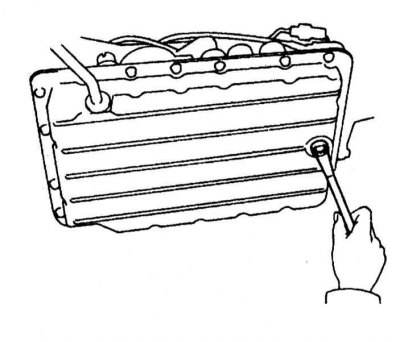
4. Place a drain pan and all necessary equipment under the pan. Try not to touch the heated components of the power unit and exhaust system located under the bottom of the car. Having properly placed the receiving container, unscrew the drain plug (refer to the accompanying illustration). When the fluid flow has completely stopped, wipe the drain plug, screw it back into place and tighten it securely.
5. If the vehicle is equipped accordingly, remove the transmission housing guard, then unscrew the mounting bolts located around the perimeter of the pan.
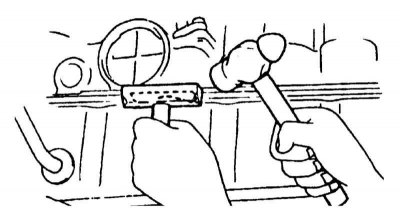
6. Using a soft-faced hammer, gently tap the tray to break up the layer of sealant (refer to the accompanying illustration).
Note: To avoid damaging the mating surfaces, do not attempt to pry the pan with a lever.
7. Lower the pan and drain the remaining ATF from it.
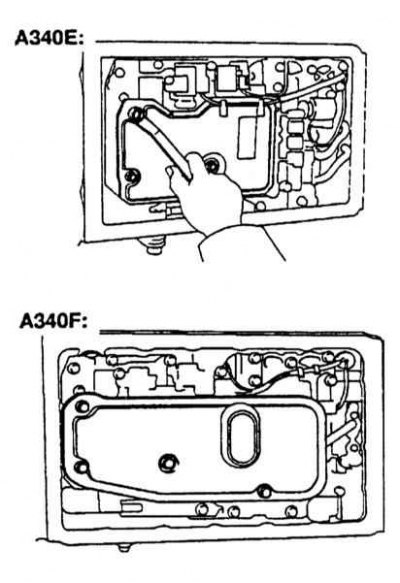
8. Remove the mounting screws (refer to the accompanying illustration) and remove the ATF filter from the valve body.
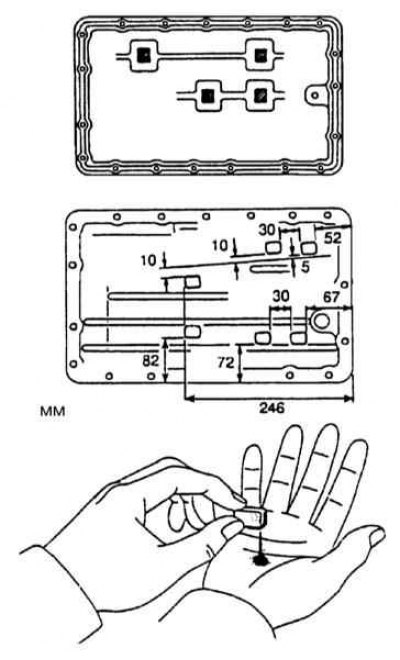
9. Carefully inspect the internal surfaces of the pan, assess the condition of the filter element and the drained ATF. During use, the transmission fluid may change its originally bright red color to dark red or even brown, and also acquire a burning smell - such changes usually indicate overheating of the transmission during vehicle operation. If metal filings or particles of friction material are found in the fluid, pan or filter, you should check the condition of the internal components of the AT or rotation converter. Magnets are provided to collect metal filings, when removing them, you must remember their location - if they are installed incorrectly, the pan will not close tightly (refer to the accompanying illustration). If you are unsure about the condition of the fluid or filter, contact a car service specialist.
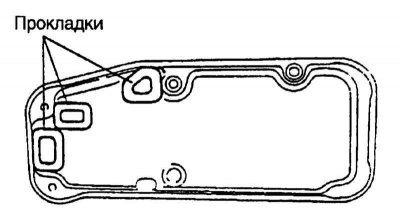
10. Wash the pan with solvent and, if possible, dry it with compressed air. Use a scraper to remove traces of old gasket material from the mating surfaces of the pan, crankcase and valve body.
Note: Be careful not to damage the mating surface of the lightweight aluminum alloy valve body.
Replacing the gaskets (refer to the accompanying illustration), install a new ATF filter.
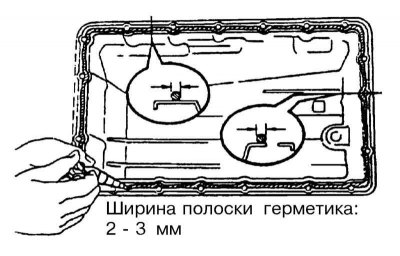
11. Make sure the mating surface of the pan is absolutely clean and dry and apply a bead of Three Bond 1281 or similar sealant to it (refer to the accompanying illustration). Place the filler neck on the dipstick guide tube and press the pan against the transmission housing. Working around the perimeter of the pan, tighten the mounting bolts to the required torque in several steps.
12. Lower the vehicle to the ground and fill the transmission with the correct grade of ATF through the filler neck (see section Checking the level of the working fluid of the automatic transmission).
13. Shift the transmission to position "P", set the parking brake and start the engine.
14. Move the AT selector lever through all positions in turn, finally returning it to the "P" position. Check the ATF level, if necessary, make the appropriate adjustment, bringing the fluid level to the correct mark on the dipstick blade.
15. During the first few days of operation, look under the vehicle, checking the transmission for signs of developing leaks. Recheck the ATF level, adjust if necessary (see section Checking the level of the working fluid of the automatic transmission).