



a) Use a scraper to remove carbon deposits and other carbon deposits from the piston crown.
b) Clean the piston grooves from deposits with a piece of a broken ring.
c) Using solvent and a soft bristle brush, thoroughly clean the piston.
Note: Do not use a wire brush.
2. Check the piston and piston rings.
A. Check the clearance between the piston and the cylinder.
a) Using a micrometer, measure the diameter of the piston skirt at a distance of 10 mm (KZ series) or 13 mm (EJ series) from the beginning of the skirt and in a direction perpendicular to the axis of the piston pin, as shown in the figure.
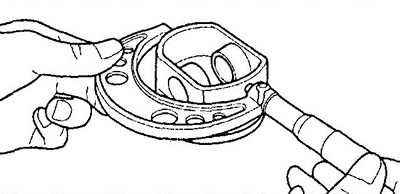
Nominal piston diameter:
- K3-VE — 71.970-71.958 mm
- K3-VE2 - 71.965 - 71.953 mm
eJ series:
- mark (1) — 71.965 - 71.975 mm
- mark (2) — 71.975 - 71.985 mm
- mark (3) — 71.985 - 71.995 mm
b) Measure the cylinder diameters in the direction of the engine axis (see above).
c) Determine the clearance between the cylinder and the piston by finding the difference between the results of measuring the piston diameter and the cylinder diameter.
Clearance between cylinder and piston:
Nominal:
- eJ series - 0.025 - 0.045 mm
- K3-VE — 0.030 - 0.054 mm
- K3-VE2 — 0.035 - 0.059 mm
Maximum - 0.090 mm
If the clearance is greater than the maximum, bore the cylinder block for repair-size pistons. Replace the cylinder block if necessary.
B. Check the clearances between the new compression rings and the piston grooves using a feeler gauge as shown in the illustration.
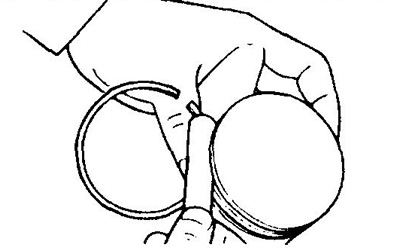
Nominal clearance:
Compression ring #1:
- kZ series - 0.035 - 0.080 mm
- eJ series - 0.040 - 0.060 mm
Compression ring #2:
- kZ series - 0.020 - 0.060 mm
- eJ series - 0.020 - 0.060 mm
Maximum clearance:
Compression ring #1:
- kZ series - 0.12 mm
- eJ series - 0.11 mm
Compression ring #2:
- kZ series - 0.11 mm
- eJ series - 0.11 mm
If the clearance is greater than the permissible limit, replace the rings and/or piston.
B. Check the piston ring gap.
a) Insert the piston ring into the cylinder.
b) Using a piston, push the ring to a distance of 45 mm from the surface of the cylinder block.
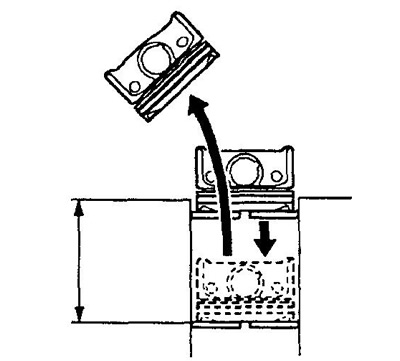
c) Use a flat feeler gauge to measure the gap in the lock.
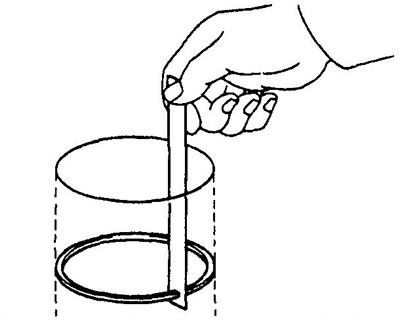
Nominal clearance in the piston ring lock:
- compression ring No.1 - 0.20 - 0.30 mm
- compression ring No.2 - 0.40 - 0.55 mm
- oil scraper ring - 0.15 - 0.50 mm
Maximum clearance:
- compression ring no. 1 - 0.65 mm
- compression ring #2 - 0.65 mm
oil scraper ring:
- eJ series - 1.00 mm
- kZ series - 0.69 mm
If the gap in the lock is greater than the maximum, replace all piston rings of this cylinder.
3. Check the connecting rod.
A. Using the special tool and a flat feeler gauge, check the connecting rod bend as shown in the illustration.
- Maximum allowable bending per 100 mm of length is 0.05 mm
If the twist is greater than the permissible limit, replace the connecting rod together with the connecting rod cap.
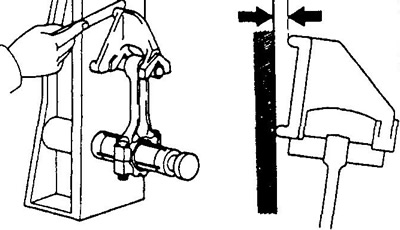
In a similar manner, check the twist of the connecting rod, as shown in the figure.
- Maximum twist per 100 mm of length - 0.05 mm
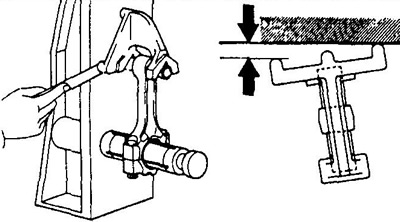
If twisting or bending is greater than the maximum value, replace the connecting rod together with the connecting rod cap.
B. Check the clearance between the piston pin and the piston bosses.
a) Use a bore gauge to measure the inner diameter of the piston bosses.
Inner diameter of piston bosses:
- series KZ - 18.007- 18.010 mm
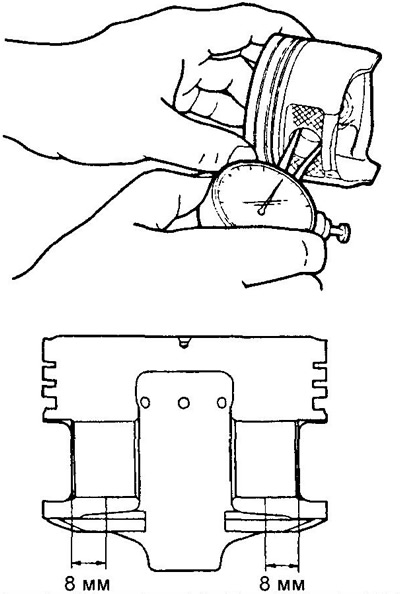
b) Using a micrometer, measure the piston pin diameter.
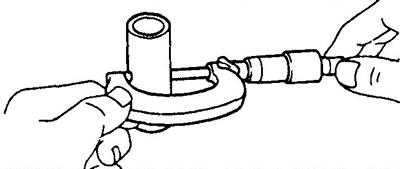
- Piston pin diameter: KZ series - 17.999 - 18.002 mm
d) Subtract the measured value of the piston pin diameter from the measured value of the piston boss inner diameter.
Nominal oil clearance between piston pin and piston bosses:
- kZ series - 0.005 -0.011 mm
- eJ series - 0.005 -0.011 mm
If the clearance is greater than the nominal value, replace the piston or connecting rod.
B. (KZ Series) Measure the outside diameter of the connecting rod bolt with a caliper in the area of greatest wear, as shown in the figure.
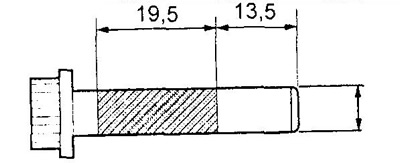
- Nominal diameter - 7.7 mm
If the diameter is less than the allowable value, replace the bolt.