



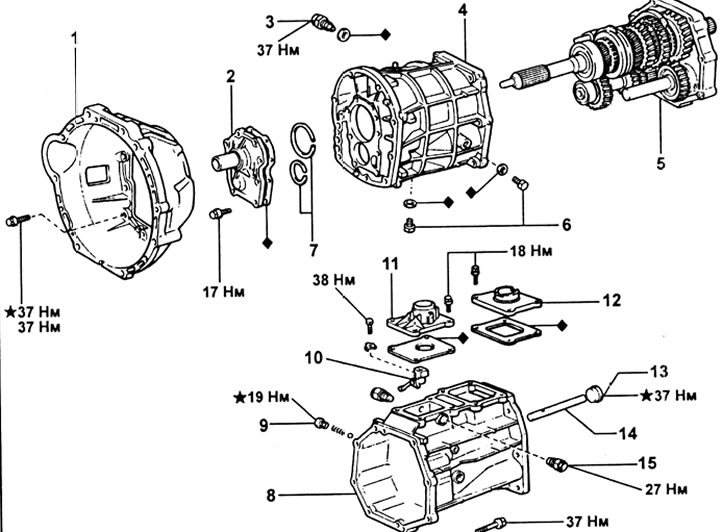
Gearbox G52.1 - clutch housing, 2 - primary shaft bearing holder, 3 - reversing light switch, 4 - gearbox housing, 5 - intermediate support, 6 - plug, 7 - retaining ring, 8 - transfer case adapter, 9 - plug, 10 - gear shift lever housing, 11 - gear shift lever cover, 12 - transfer case control lever cover, 13 - plug, 14 - gear shift lever shaft, 15 - limit pin.
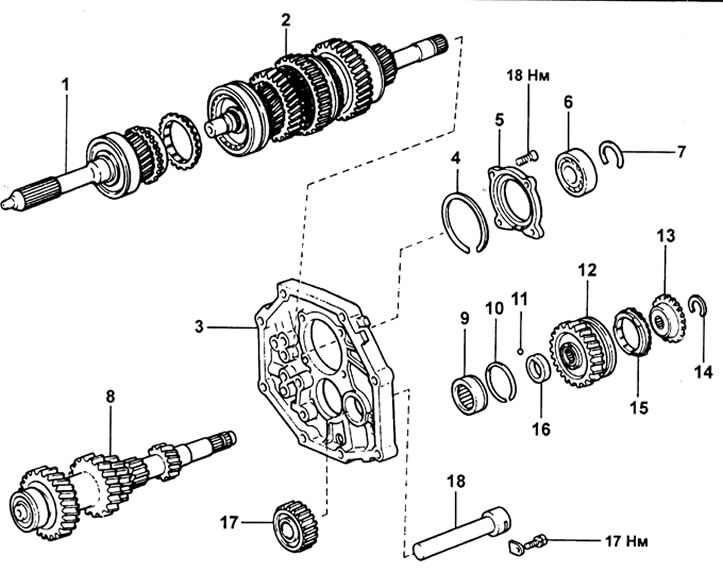
Gearbox G52 (continuation). 1 - primary shaft, 2 - secondary shaft, 3 - intermediate support, 4 - retaining ring, 5 - secondary shaft rear bearing holder, 6 - bearing, 7 - retaining ring, 8 - intermediate shaft, 9 - bearing, 10 - retaining ring, 11 - ball, 12 - intermediate shaft fifth gear pinion, 13 - fifth gear synchronizer hub, 14 - retaining ring, 15 - synchronizer ring, 16 - spacer sleeve, 17 - reverse gear intermediate gear, 18 - reverse gear intermediate gear shaft.
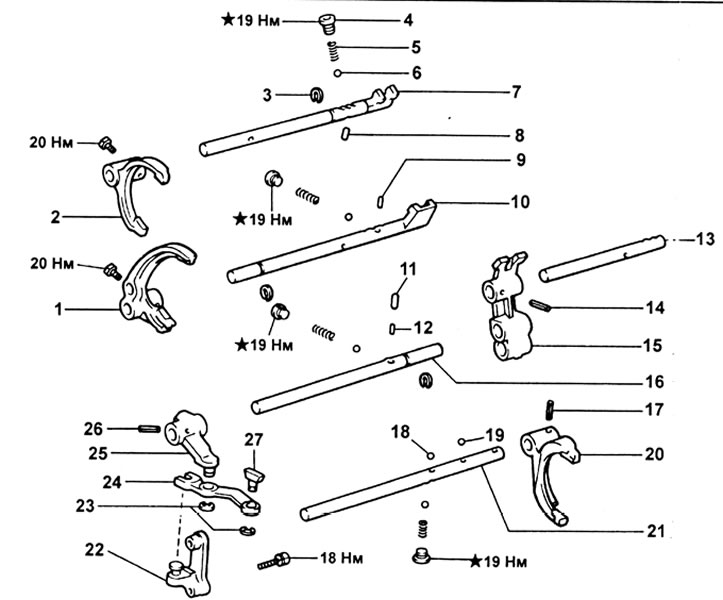
Gearbox G52 (continuation). 1 - gear shift fork #1, 2 - gear shift fork #2, 3 - retaining ring, 4 - plug, 5 - spring, 6 - ball, 7 - gear shift rod #2, 8 - locking pin #1, 9 - locking pin #2, 10 - gear shift rod #1, 11 - locking pin #3, 12 - locking pin #4, 13 - gear shift rod #5, 14 - pin, 15 - reverse gear engagement rod head, 16 - gear shift rod #3, 17 - pin, 18 - locking ball, 19 - ball, 20 - gear shift fork #3, 21 - gear shift rod #4, 22 - reverse gear engagement linkage bracket, 23 - retaining rings, 24 - reverse gear engagement linkage, 25 - reverse gear engagement fork, 26 - pin, 27 - reverse gear engagement linkage finger.
1. Remove the clutch release fork and bearing.
2. Remove the transfer case.
3. Remove the reversing light switch.
4. Unscrew the nine mounting bolts and separate the clutch housing from the gearbox.
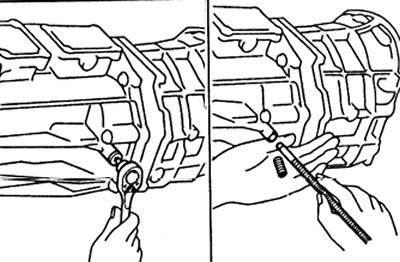
5. Removing the threaded plug.
a) Using a socket wrench with an internal Allen key, unscrew the threaded plug from the transfer case adapter.
b) Using a magnetic rod, remove the spring and ball.
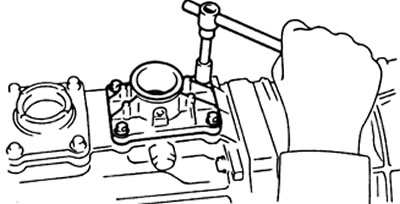
6. Remove the four bolts and gear shift lever cover. Then remove the transfer case control lever cover.
7. Remove the limit pins.
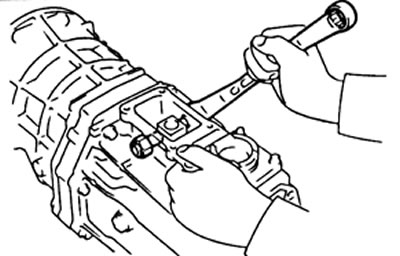
8. Removing the transfer case adapter.
a) Unscrew the plug from the transfer case adapter.
b) Loosen the gear shift lever housing mounting bolt.
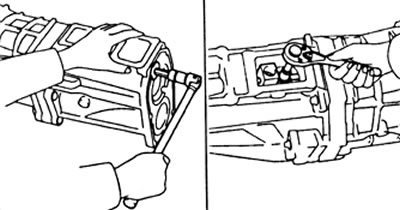
c) Remove the gear shift lever housing and shaft.
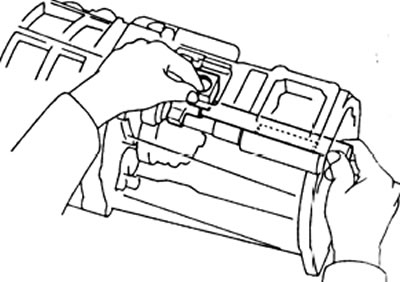
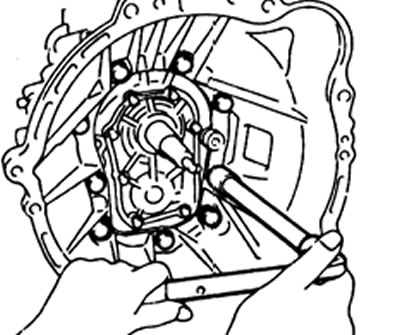
d) Unscrew the eight bolts and, using a plastic hammer, remove the transfer case adapter.
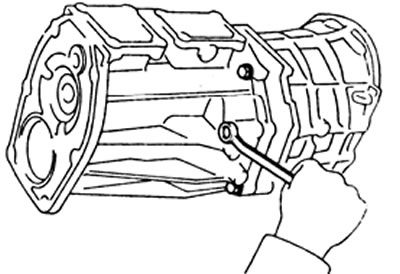
9. Remove the eight bolts and the input shaft bearing retainer and gasket.
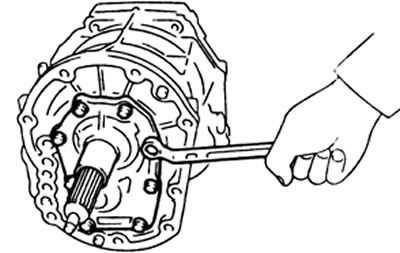
10. Remove the two retaining rings from the primary and intermediate shaft bearings.
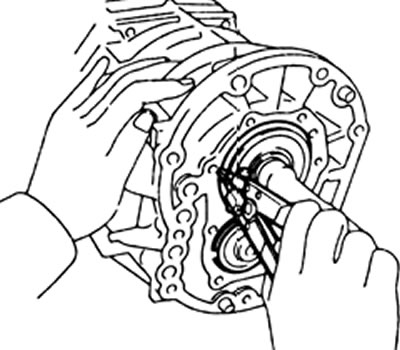
11. Removing the gearbox housing.
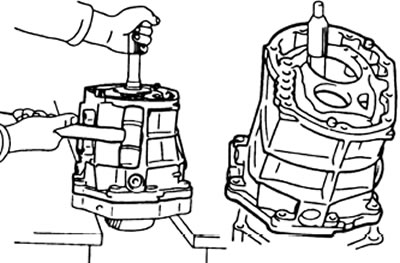
a) Position the gearbox as shown in the figure.
b) Using a plastic hammer, carefully separate the gearbox housing from the intermediate support.
c) Remove the gearbox housing from the intermediate support as shown in the figure.
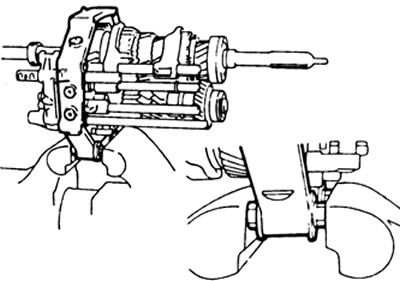
12. Install the intermediate support in a vice using two bolts, plate washers and nuts (see picture).
Caution: Select and install enough plate washers to avoid damaging the bolt threads.
13. Removing the threaded plugs.
a) Using a socket wrench with an internal Allen key, unscrew the four plugs.
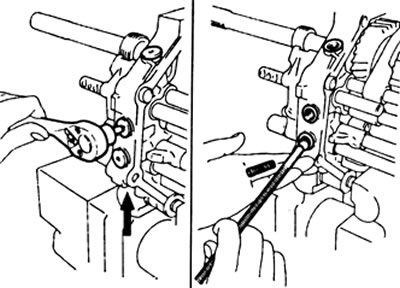
b) Using a magnetic rod, remove the springs and balls.
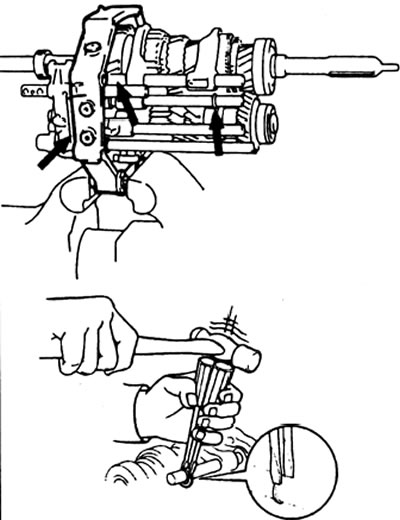
14. Using two screwdrivers and a hammer, remove the three shift rod retaining rings.
The original version is published on the website [www.ToyotaMan.ru]
15. Using a punch and a hammer, knock out the pin and remove gear shift rod No.5.
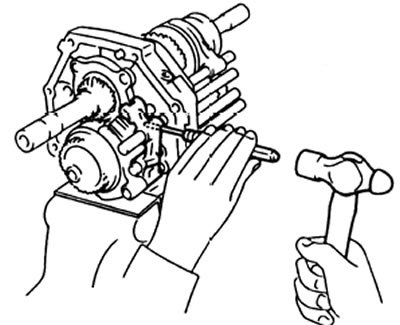
16. Using a punch and a hammer, knock out the pin from the No.3 gear shift fork.
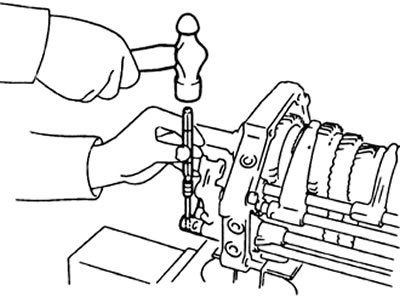
17. Remove gear shift fork No.3, gear shift rod No.4 and reverse gear engagement rod head.
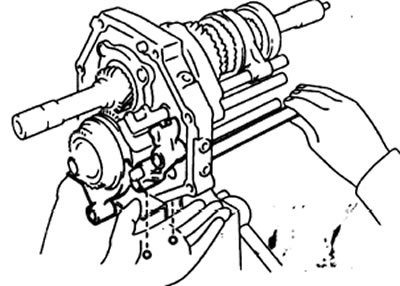
18. Removing the reverse gear engagement linkage, the reverse gear engagement fork and gear shift rod No.3.
a) Using a magnetic rod, remove locking pin #4 from gear shift rod #3.
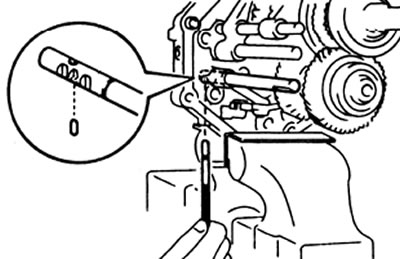
b) Using a punch and a hammer, knock out the pin from the reverse gear engagement fork.
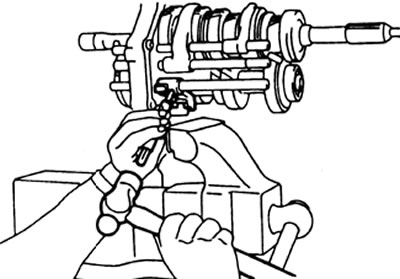
c) Remove gear shift rod No.3.
d) Remove locking pin No.3 from the intermediate support.
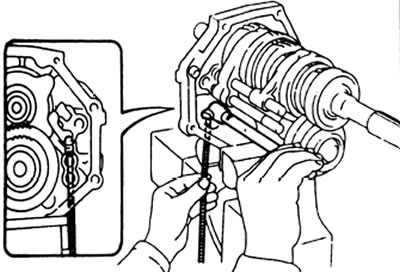
d) Remove the gear shift linkage assembly with the reverse gear engagement fork.
e) Using a screwdriver, remove the two retaining rings and separate the fork and pin from the reverse gear engagement linkage.
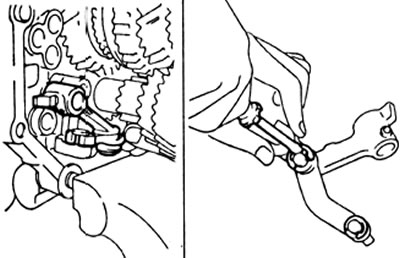
19. Removing gear shift rods No.1 and No.2, gear shift forks No.1 and No.2.
a) Using a magnetic rod, remove locking pin #2 from shift shaft #2.
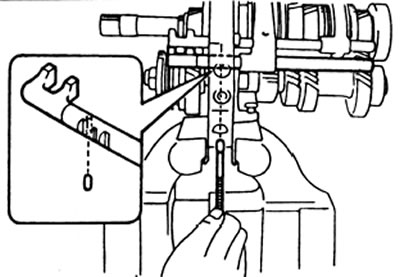
b) Loosen the mounting bolt of gear shift fork No.1.
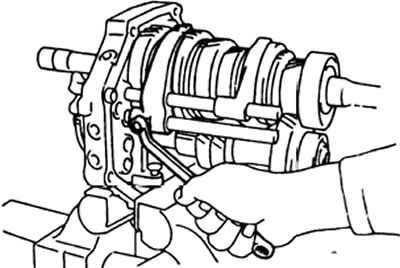
c) Remove gear shift rod No.1.
d) Remove locking pin No.1 from the intermediate support.
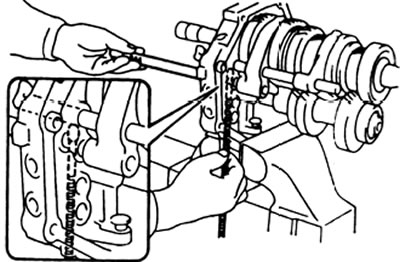
d) Unscrew the fastening bolt of gear shift fork No.2.
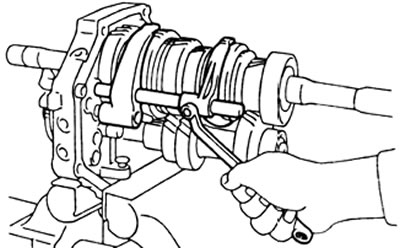
e) Remove gear shift forks No.1 and No.2 and gear shift rod No.2.
20. Using a feeler gauge, measure the axial clearance of the fifth gear intermediate shaft gear.
Nominal clearance - 0.10 - 0.30 mm
Maximum gap - 0.30 mm
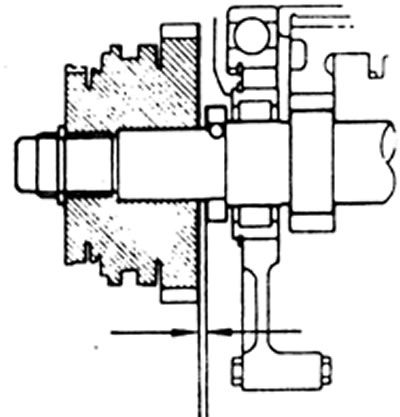
21. Removing the fifth gear synchronizer hub, synchronizer ring, needle bearings and intermediate shaft fifth gear gear.
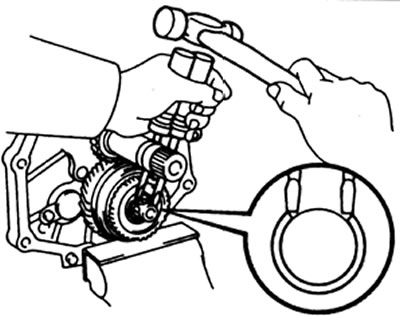
a) Using two screwdrivers and a hammer, remove the retaining ring.
b) Using a special tool, remove the fifth gear synchronizer hub.
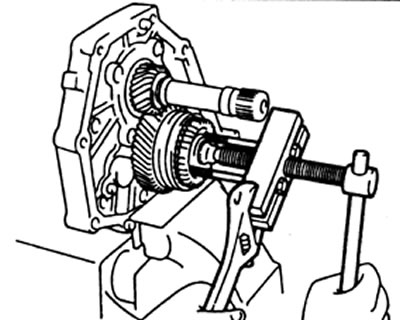
c) Remove the synchronizer ring, needle bearing and fifth gear gear of the intermediate shaft.
22. Remove the spacer sleeve from the intermediate shaft, then use a magnetic rod to remove the ball.
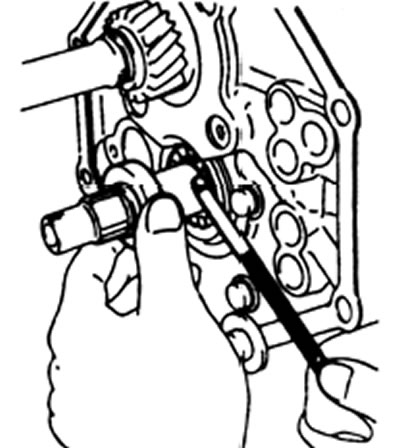
23. Loosen the two mounting bolts and remove the reverse gear selector linkage bracket.
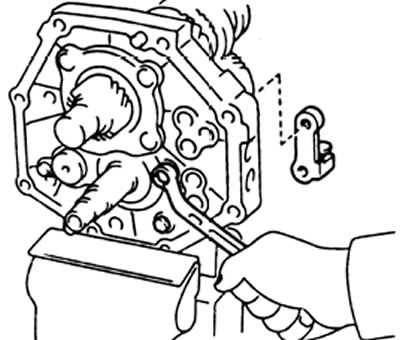
24. Removing the reverse gear intermediate gear and shaft.
a) Loosen the bolt securing the reverse gear intermediate gear shaft stopper and remove the stopper.
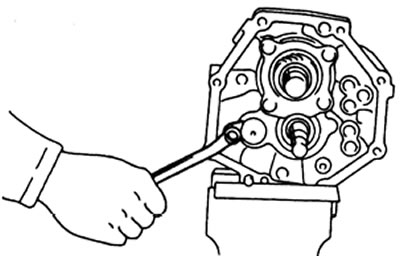
b) Remove the reverse intermediate gear and shaft.
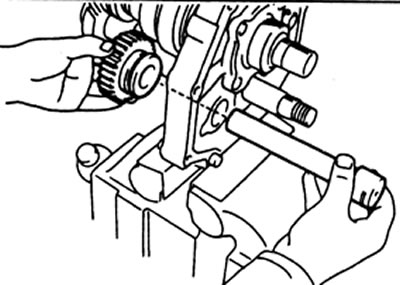
25. Using a socket wrench, remove the four bolts and the secondary shaft rear bearing retainer.
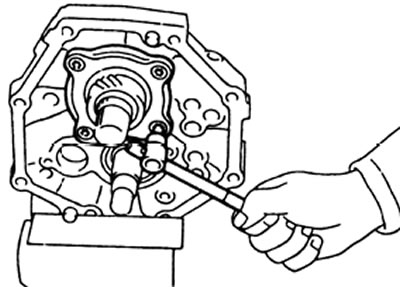
26. Removing the intermediate shaft.
a) Remove the intermediate shaft rear bearing retaining ring.
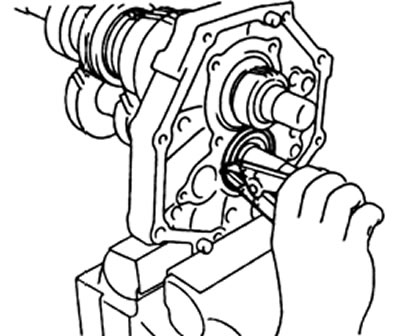
b) Using a special tool and a tool head (12 mm), remove the rear bearing of the intermediate shaft.
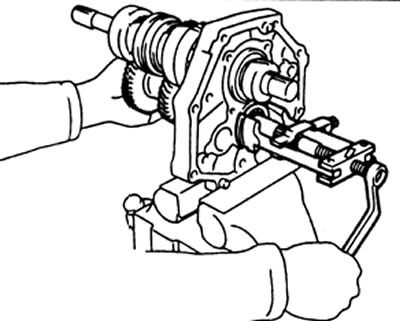
c) Remove the intermediate shaft.
27. Separate the primary shaft together with 13 bearing rollers and synchronizer ring from the secondary shaft.
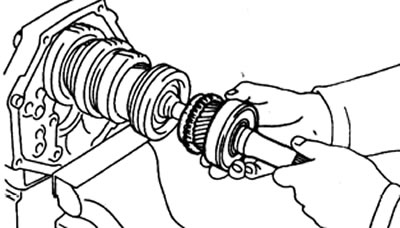
28. Remove the secondary shaft.
a) Remove the secondary shaft center bearing retaining ring.
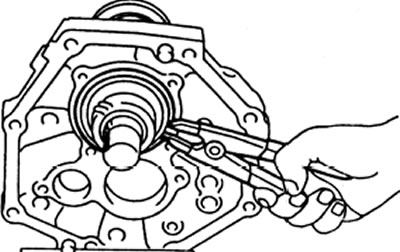
b) Separate the secondary shaft from the intermediate support by pulling the secondary shaft towards you and gently tapping the intermediate support with a plastic hammer.
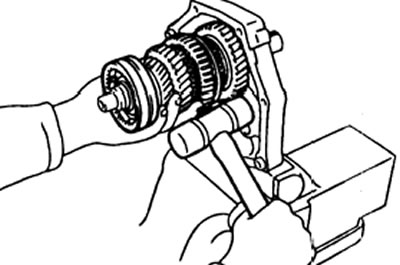
29. Checking the reversing light switch.
a) Check for continuity between the terminals when the switch is pressed (on).
b) Check for continuity between the terminals when the switch is not pressed (off).
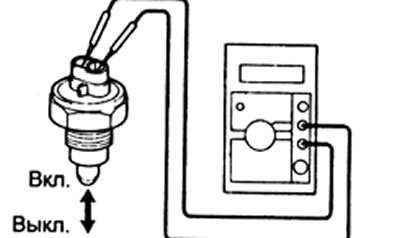
c) If the test result does not meet the specified conditions, replace the switch.