



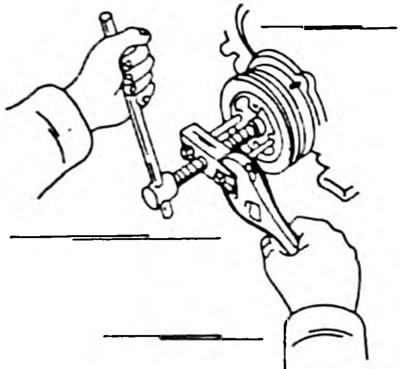
Fig. 290. Removing the crankshaft pulley with a puller.
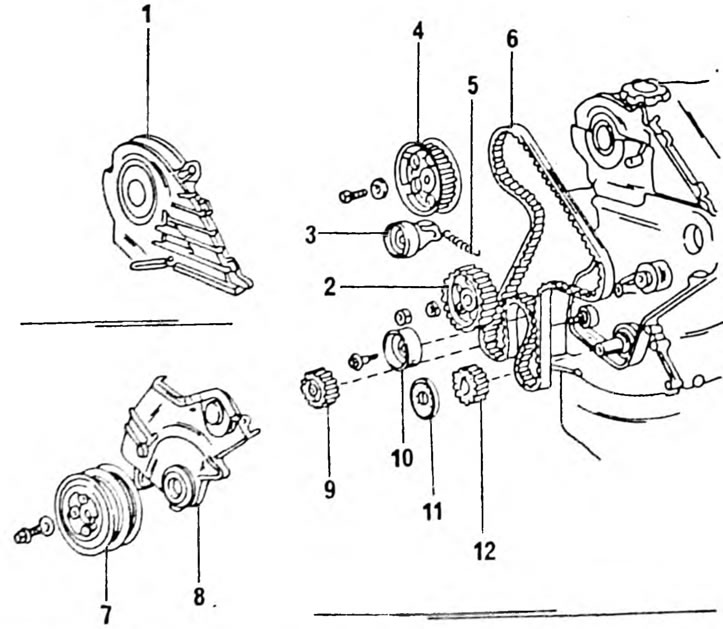
Fig. 291. Timing drive parts on a diesel engine. 1. Upper timing belt cover; 2. High pressure fuel pump gear; 3. Timing belt tensioner; 4. Camshaft gear wheel; 5. Timing belt tensioner release spring; 6. Toothed belt; 7. Crankshaft pulley; 8. Lower timing belt cover; 9 Water pump drive gear; 10. Timing belt guide roller; 11. Timing belt guide roller; 12. Crankshaft gear.
- Remove the toothed belts from the individual units at the front of the engine. If there is a power steering, the power steering pump pulley should also be removed.
- Remove the liquid coupling and the water pump pulley together with the radiator fan. To do this, unscrew the 4 coupling nuts and remove the coupling with the pulley and fan installed on it.
- Loosen the crankshaft pulley bolt. To prevent the crankshaft from turning, engage the gear and tighten the handbrake. Loosen the bolt with the head of the wrench. To remove the pulley, a puller is usually used, mounted on the pulley in the manner shown in Figure 290. Otherwise, you can place two crowbars under the pulley on opposite sides and use them to remove the pulley. Work is carried out under the car.
- Unscrew the upper timing belt cover from the front of the engine. To do this, remove three clamps and five bolts. Remove the gasket. The lower timing belt cover is removed later.
- Raise the engine using cables or chains from a lifting device and remove the right engine mount beam.
- Remove the connections between the four glow plugs and disconnect the power cable. Then unscrew the glow plugs.
- Turn the engine crankshaft until the piston of the first cylinder is set to the TDC position of the compression stroke. To turn the engine crankshaft, temporarily put the crankshaft pulley back. If the gear is still engaged, it should be disengaged. Turn the crankshaft until the camshaft gear mark is aligned with the cylinder head surface, as shown in Figure 292.
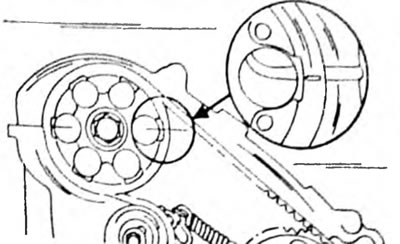
Fig. 292. When setting the piston of the first cylinder to the TDC position, the mark on the camshaft gear should coincide with the mark on the cylinder head.
- If the timing belt is to be reinstalled, mark the direction of rotation on it with a felt-tip pen (the belt can be installed on the opposite side by mistake). It is best to apply an arrow pointing in the direction of engine rotation. To install the toothed belt in its original position, marks should be applied to the three toothed wheels and the toothed belt, as shown in Figure 293.
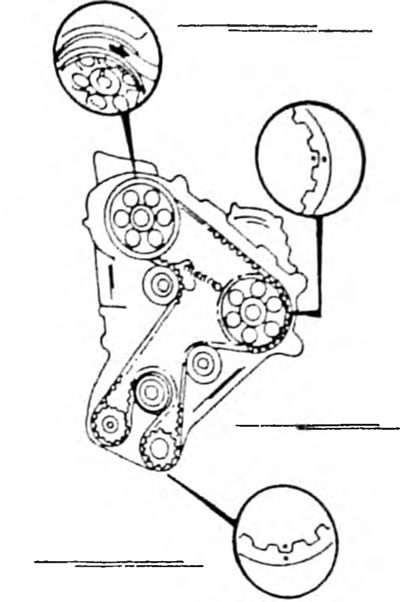
Fig. 293. Mark each timing wheel and the toothed belt. Mark the belt with an arrow (with a felt-tip pen), as shown above on the camshaft gear.
- Disconnect the return spring of the toothed belt tensioner with tweezers. Loosen the 2 bolts of the toothed belt tensioner. At the same time, press the belt to the outside so that it is free enough to remove it. Do not handle the belt with greasy hands and do not allow it to come into contact with oil, grease or similar substances.
- If no further work is required, the timing belt can be installed. Otherwise, follow the instructions below to remove or inspect the remaining timing drive components (when, for example, the engine has high mileage).
- Loosen the 2 timing belt tensioner mounting bolts and remove the tensioner.
- Loosen the camshaft gear mounting bolt. In doing so, hold the gear. To do this, use a strong metal rod that is inserted into the gear hole and rests against the cylinder head. You can also hold the gear as shown in Figure 294.
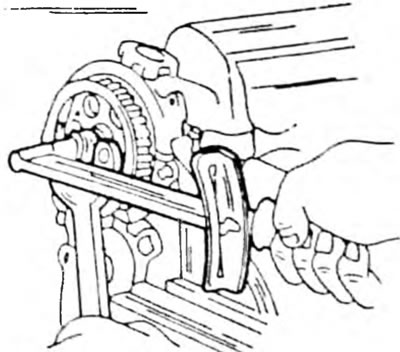
Fig. 294. The camshaft gear can be held in the manner shown
- Remove the toothed wheel from the camshaft. The wheel sits on the shaft on a pin and therefore does not need to be marked on the shaft. After removing the toothed wheel, do not turn the camshaft.
- Similarly, hold the drive gear of the high-pressure fuel pump and unscrew the nut. To remove the drive gear, you need the puller shown in Figure 290. Screw the puller bolts into the two threaded holes on the gear. The drive gear of the oil pump is removed in the same way.
- Remove the timing belt guide roller (one bolt).
- Check for wear and tear on all removed parts. If the tensioner is sticking in some places, it should be replaced. Measure the length of the return spring. The reinstalled spring should be 51.93 mm long when measured between the insides of both spring hooks, as shown in Figure 295.
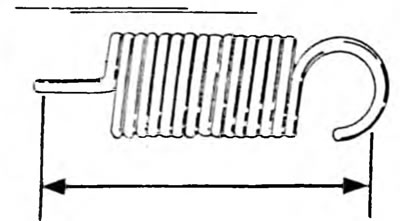
Fig. 295. The length of the return spring is measured between the two arrows
The installation of the timing mechanism drive is carried out in the reverse order, and the description is given based on the fact that all parts of the timing mechanism drive were removed.
- Place the crankshaft gear on the end of the shaft, straighten the key and groove in the gear, and drive the gear onto the shaft with a piece of pipe of the appropriate diameter. While doing this, watch the key so that it does not move.
- Install the oil pump drive gear in a similar manner, but here insert the tab on the drive gear into the cutout on the drive shaft. Screw on the nut and tighten it to 47 Nm. At the same time, hold the drive gear from turning.
- Install the timing belt guide roller. Tighten the bolt to 37 Nm. Check that the roller rotates easily after tightening.
- Place the high-pressure fuel pump gear on the shaft, aligning the key with the cutout, tap the gear and screw on the nut. Hold the gear from turning, as shown in Figure 294, and tighten the nut to a torque of 65 Nm.
- Place the toothed wheel on the camshaft. The toothed wheel has a hole into which the camshaft pin must enter. Screw in the bolt with a large washer, hold the shaft as shown in Figure 294, and tighten the bolt to a torque of 100 Nm. Do not turn the shaft when tightening the bolt, as the valves may hit the piston bottoms.
- Tighten the 2 tensioner mounting bolts without tightening them completely. Tighten the middle bolt with the roller to 7.5 Nm. Check that after tightening, the roller rotates easily in both directions.
- Check that the piston of the first cylinder is not out of position at TDC. The mark on the crankshaft pulley should be located at the top. The mark on the camshaft gear should be set as shown in Figure 292, and the mark on the drive gear of the high-pressure fuel pump should be aligned with the mark on the water pump.
- When installing a new timing belt, position it so that the letters and numbers on the back of the engine are visible after installation.
- First, place the belt on the camshaft gear. Hold the high-pressure fuel pump drive gear with a spanner and place the belt on the gear. Check that the teeth of the toothed belt are engaged correctly; the belt should be taut between the camshaft and oil pump gears.
- Continue holding the high pressure fuel pump gear, put the belt on the water pump gear and the crankshaft gear. Check again for proper engagement of the toothed belt teeth.
- Place the belt on the guide roller and the drive gear of the oil pump in this order. Check that the belt is not overtightened. All marks must match.
- When installing the old timing belt, install the belt in the manner described above, but all the marks made with a felt-tip pen during removal must also match. The arrow must also be directed correctly. Figure 293 shows how the marks match. If the belt has shifted by one tooth, it must be re-routed.
- Connect the return spring to the tensioner as shown in Figure 296. After connecting the spring, loosen the 2 tensioner bolts. This pulls the tension roller inward and tensions the toothed belt.
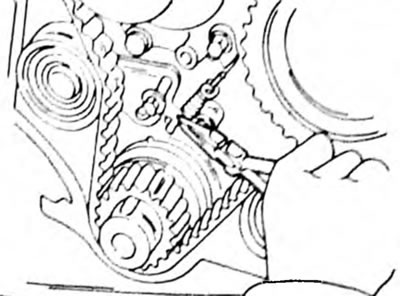
Fig. 296. Connecting the return spring of the toothed belt tension roller
- Tighten the bolt at the front end of the crankshaft until the crankshaft starts to turn. Turn the crankshaft exactly two revolutions and check that all marks are aligned as shown in Figure 297. If necessary, remove and reinstall the belt.
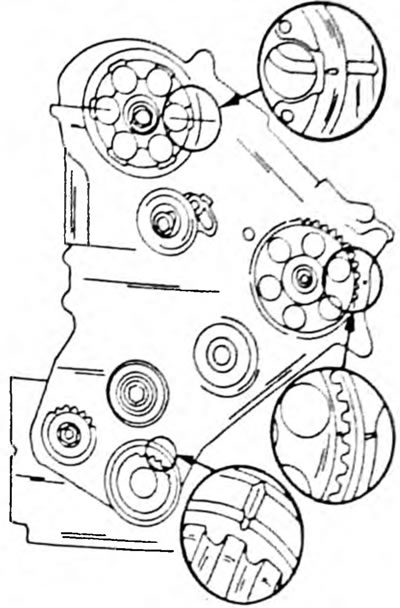
Fig. 297. The circles show the position of the marks of the various drive gears
- Tighten the tension roller bolts to 37 Nm without moving the mounting plate.
- Install the right engine mount support bracket. Tighten the smaller bolts to 37 Nm, the larger bolts to 65 Nm.
- If power steering is installed, do not fully tighten the large bolts yet.
- Screw in four glow plugs and tighten them to a torque of 13 Nm. Connect the current connectors to the plugs, install the current busbar with insulating washers, washers and nuts and put on four rubber tips.
- Place the timing belt guide washer on the end of the crankshaft. At the same time, align the wedge guide with the key. The bent edge of the guide washer should be facing outward, as shown in Figure 298. Place the lower timing belt cover with the gasket and tighten the 5 bolts evenly.
- Install the crankshaft pulley (pay attention to the key and cutout). A piece of pipe is used for mounting. Screw in and tighten the bolt to 100 Nm. The gear must be engaged to prevent the shaft from turning.
- Install the top timing belt cover with a new gasket and secure with 5 bolts and 3 clamps.
- Secure the power steering pump with 3 bolts. Tighten the bolts to 40 Nm. Install the pump pulley temporarily now.
- Install the power steering pump and alternator drive belt and adjust the belt tension as described in the relevant chapter for the alternator (chapter "Cooling system") and for the power steering pump (chapter "Steering"). The temporarily installed power steering pump pulley can now be tightened. To do this, press the belt with your thumb and tighten the nuts alternately with a socket and a torque wrench to a tightening torque of 45 Nm.