



Share information:
Description of vehicle and equipment Toyota Camry 3 (XV30)

Dimensions and new design of the Camry car body
Fig. 1.1. Dimensions of the Camry Fig. 1.2. New headlights and radiator grille of the Camry The new Camry 2001–2005 has some design features of the body. Modern streamlined, three-dimensional shapes of the bumper,...
Fig. 1.1. Dimensions of the Camry Fig. 1.2. New headlights and radiator grille of the Camry The new Camry 2001–2005 has some design features of the body. Modern streamlined, three-dimensional shapes of the bumper,...

Storage compartment of the instrument panel console
Fig. 1.5. New design of the storage compartment of the dashboard console of the Camry car The storage compartment of the instrument panel console is equipped with a cover. The upper part of the console is raised by 80...
Fig. 1.5. New design of the storage compartment of the dashboard console of the Camry car The storage compartment of the instrument panel console is equipped with a cover. The upper part of the console is raised by 80...

Car steering wheel
Fig. 1.6. New steering wheel of the Camry car The car is equipped with a newly developed four-spoke steering wheel. New switches on the steering wheel pad make their use even more convenient (Fig. 1.6).
Fig. 1.6. New steering wheel of the Camry car The car is equipped with a newly developed four-spoke steering wheel. New switches on the steering wheel pad make their use even more convenient (Fig. 1.6).
Front seats
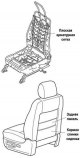
Fig. 1.7. Design features of the new front seats of the Camry A newly developed skeletal frame is used in the front seats to reduce their weight. A flat reinforcement mesh in the seat back serves to ensure comfortable...
Fig. 1.7. Design features of the new front seats of the Camry A newly developed skeletal frame is used in the front seats to reduce their weight. A flat reinforcement mesh in the seat back serves to ensure comfortable...

Seats with automatic control
Fig. 1.8. Operating principle and electrical diagram of the new front seats with automatic control The driver's seat lumbar support control has been changed from manual on the previous Camry to automatic power-assisted...
Fig. 1.8. Operating principle and electrical diagram of the new front seats with automatic control The driver's seat lumbar support control has been changed from manual on the previous Camry to automatic power-assisted...

Instrument cluster
Fig. 1.9. External appearance of the new instrument cluster of the Camry car The instrument cluster with Optitron display is now offered as standard equipment for all models (Fig. 1.9). The Optitron display provides...
Fig. 1.9. External appearance of the new instrument cluster of the Camry car The instrument cluster with Optitron display is now offered as standard equipment for all models (Fig. 1.9). The Optitron display provides...

Instrument panel and center console
The external design of the instrument panel uses a two-tone finish. The height offset of the central group of instruments, ventilation and heating system deflectors and controls is minimized. The center console is...
The external design of the instrument panel uses a two-tone finish. The height offset of the central group of instruments, ventilation and heating system deflectors and controls is minimized. The center console is...

Glass with UV protection
Camry vehicles are equipped with UV-protective glass, which blocks ultraviolet and infrared rays from sunlight (Table 1.2). Table 1.2. Glass with UV protection Glazing area Windshield Doors Lateral Back Degree of...
Camry vehicles are equipped with UV-protective glass, which blocks ultraviolet and infrared rays from sunlight (Table 1.2). Table 1.2. Glass with UV protection Glazing area Windshield Doors Lateral Back Degree of...

Glass with water-repellent protective coating
Fig. 1.11. Exterior view of a Camry equipped with glass with a water-repellent protective coating The front doors are equipped with glass with a water-repellent coating to increase visibility in the rain (Fig. 1.11).
Fig. 1.11. Exterior view of a Camry equipped with glass with a water-repellent protective coating The front doors are equipped with glass with a water-repellent coating to increase visibility in the rain (Fig. 1.11).

Automatic non-glare electrochromic rearview mirror
This system uses two sensors mounted on the interior rearview mirror to detect differences in the intensity of light entering the rearview mirror from behind the vehicle and the light surrounding the vehicle. Fig. 1.12....
This system uses two sensors mounted on the interior rearview mirror to detect differences in the intensity of light entering the rearview mirror from behind the vehicle and the light surrounding the vehicle. Fig. 1.12....

Electrochromic mirror element
Fig. 1.13. Cross-section of the outside rearview mirror An electrochromic mirror element consists of two layers of glass with an electrochromic filler between them. The electrochromic element changes color due to...
Fig. 1.13. Cross-section of the outside rearview mirror An electrochromic mirror element consists of two layers of glass with an electrochromic filler between them. The electrochromic element changes color due to...

Car interior and dashboard — general information
Fig. 1.15. General view of the Camry car interior The dashboard flows smoothly into the door trim, creating a sense of integrity and continuity. Trim panels imitating the color and texture of wood are used in various...
Fig. 1.15. General view of the Camry car interior The dashboard flows smoothly into the door trim, creating a sense of integrity and continuity. Trim panels imitating the color and texture of wood are used in various...

Vehicle identification data
Fig. 1.17. Locations of vehicle identification plates: A – vehicle identification number plate; B – certification sticker All vehicles are provided with identification data from the manufacturer, located in various...
Fig. 1.17. Locations of vehicle identification plates: A – vehicle identification number plate; B – certification sticker All vehicles are provided with identification data from the manufacturer, located in various...

Underhood space
Fig. 1.19. General view of the engine compartment of Camry cars with 1AZ-FE and 2AZ-FE engines: 1 – expansion tank of the cooling system; 2 – Engine oil filler cap; 3 – dipstick for measuring the oil level in the...
Fig. 1.19. General view of the engine compartment of Camry cars with 1AZ-FE and 2AZ-FE engines: 1 – expansion tank of the cooling system; 2 – Engine oil filler cap; 3 – dipstick for measuring the oil level in the...

Engine specifications
Model: 1AZ-FE, 2AZ-FE and 1MZ-FE. Type: engines 1AZ-FE and 2AZ-FE 4-cylinder, in-line, 4-stroke, gasoline; engine 1MZ-FE 6-cylinder, V-shaped, 4-stroke, gasoline. Cylinder diameter and piston stroke, mm: engine 1AZ-FE...
Model: 1AZ-FE, 2AZ-FE and 1MZ-FE. Type: engines 1AZ-FE and 2AZ-FE 4-cylinder, in-line, 4-stroke, gasoline; engine 1MZ-FE 6-cylinder, V-shaped, 4-stroke, gasoline. Cylinder diameter and piston stroke, mm: engine 1AZ-FE...
Recommended fuel
For vehicles with a gasoline engine, use unleaded gasoline with an octane rating of at least 95 (by research method). Warning! It is prohibited to operate the vehicle on leaded gasoline. The use of leaded gasoline leads...
For vehicles with a gasoline engine, use unleaded gasoline with an octane rating of at least 95 (by research method). Warning! It is prohibited to operate the vehicle on leaded gasoline. The use of leaded gasoline leads...
Recommended engine oil
Oil volume (drain and fill), l: engine 1AZ-FE: with filter - 3.8; without filter - 3.6. 2AZ-FE engine: with filter - 4.3; without filter - 4.1. 1MZ-FE engine: with filter - 4.7; without filter - 4.5. Toyota car uses oil...
Oil volume (drain and fill), l: engine 1AZ-FE: with filter - 3.8; without filter - 3.6. 2AZ-FE engine: with filter - 4.3; without filter - 4.1. 1MZ-FE engine: with filter - 4.7; without filter - 4.5. Toyota car uses oil...
Cooling system — general information
Coolant used in Toyota vehicles "Toyota Super Long Life Coolant" is filled at the manufacturing plant. To avoid technical problems, be sure to use the cooling liquid "Toyota Super Long Life Coolant" (toyota Extra Long...
Coolant used in Toyota vehicles "Toyota Super Long Life Coolant" is filled at the manufacturing plant. To avoid technical problems, be sure to use the cooling liquid "Toyota Super Long Life Coolant" (toyota Extra Long...
Battery — General Information
Specific gravity readings at 20°C: 1,250–1,290 — fully charged 1,160–1,200 — half discharged 1,060–1,100 — discharged Charging current: fast charging - Max 15A slow charging - Max 5A Note: When replacing, please check...
Specific gravity readings at 20°C: 1,250–1,290 — fully charged 1,160–1,200 — half discharged 1,060–1,100 — discharged Charging current: fast charging - Max 15A slow charging - Max 5A Note: When replacing, please check...

Clutch — General Information
Free pedal travel, mm: 5–15. Fluid Type: SAE L 703 or FMVSS No.116 DOT 3. Fig. 1.22. Recommended oil viscosity (SAE)
Free pedal travel, mm: 5–15. Fluid Type: SAE L 703 or FMVSS No.116 DOT 3. Fig. 1.22. Recommended oil viscosity (SAE)
Gearbox — General Information
Manual transmission Oil volume, l: 2.5 Oil type: API class GL-4 or GL-J transmission oil. Recommended oil viscosity: SAE 75W-90. Automatic transmission Volume of liquid (drain and fill), l: 3.5. Fluid type: Toyota...
Manual transmission Oil volume, l: 2.5 Oil type: API class GL-4 or GL-J transmission oil. Recommended oil viscosity: SAE 75W-90. Automatic transmission Volume of liquid (drain and fill), l: 3.5. Fluid type: Toyota...
Braking system and steering
Brake system Minimum pedal clearance when pressed with a force of 490 N (50 kgf) with the engine running, mm: (left hand drive cars) 63. Free pedal travel, mm: 1–6. Lever type parking brake: Adjustment of the parking...
Brake system Minimum pedal clearance when pressed with a force of 490 N (50 kgf) with the engine running, mm: (left hand drive cars) 63. Free pedal travel, mm: 1–6. Lever type parking brake: Adjustment of the parking...

Electric door windows
The electric windows can be operated by a switch located on each door. The power windows are in working order when the ignition switch is in the "ON" position. Operation with ignition switch removed: If both front doors...
The electric windows can be operated by a switch located on each door. The power windows are in working order when the ignition switch is in the "ON" position. Operation with ignition switch removed: If both front doors...
This section is available on: russian, bulgarian, belarusian, ukrainian, serbian, croatian, romanian, polish, slovak, hungarian
Link in different formats to this article
TEXTHTMLBB Code
- User manual
- Vehicle description
- Keys, locks and alarms
- Governing bodies
- Salon equipment
- Driving and operation
- Maintenance
- Power unit
- 4-cylinder engine
- Control system (I4)
- Engine overhaul (I4)
- 6-cylinder engine
- Control system (V6)
- Engine overhaul (V6)
- Transmission
- Clutch
- Mechanical gearbox
- Automatic gearbox
- Drive mechanism
- Chassis, running gear
- Wheels and tires
- Car suspension
- Steering
- Brake system
- Body and interior
- Exterior (external elements)
- Doors, locks and windows
- Air conditioning and heater
- Electrical equipment
- Equipment and devices
- Power devices
- Electrical circuits
- General information
- Controls and instruments
- Driving and operation
- Daily care
- Maintenance
- Power unit
- 4-cylinder engine
- 6-cylinder engine
- Engine overhaul
- Engine electrical equipment
- Cooling system
- Heating and ventilation
- Fuel system
- Exhaust system
- Transmission
- Mechanical gearbox
- Automatic gearbox
- Clutch
- Chassis, running gear
- Suspension and axle shafts
- Steering
- Brake system
- Body and interior
- Exterior (external elements)
- Interior (internal elements)
- Doors, locks and windows
- Electrical equipment
- Equipment and devices
- Electrical circuits
- General information
- User manual
- Maintenance
- Power unit
- 4-cylinder engine
- 6-cylinder engine
- Overhaul of engines
- Cooling and heating
- Fuel system
- Engine electrical equipment
- Control system
- Transmission
- Mechanical gearbox
- Automatic gearbox
- Clutch and drive shafts
- Chassis, running gear
- Brake system
- Car suspension
- Steering
- Body and interior
- Exterior (external elements)
- Interior (internal elements)
- Doors, locks and windows
- Electrical equipment
- Equipment and devices
- Headlights and lighting
- Electrical circuits
- General information
- User manual
- Maintenance
- Power unit
- Petrol engines
- Diesel engines
- Engine overhaul
- Cooling and lubrication system
- Fuel system (diesel)
- Fuel injection (petrol)
- Engine electrical equipment
- Transmission
- Clutch and cardan
- Automatic gearbox
- Chassis, running gear
- Front suspension
- Rear suspension
- Steering
- Brake system
- Body and interior
- Body elements
- Air conditioning and heater
- SRS security system
- Electrical equipment
- Equipment and devices
- Electrical circuits