



Share information:
4-cylinder car engine Toyota Camry 3 (XV30)

General information about 1AZ-FE and 2AZ-FE engines
The 1AZ-FE engine is an in-line, four-cylinder, 2.0-liter engine with two overhead camshafts in the cylinder head and 16 valves, developed on the basis of the 1AZ-FE engine of the modern RAV4 model. The 2AZ-FE engine,...
The 1AZ-FE engine is an in-line, four-cylinder, 2.0-liter engine with two overhead camshafts in the cylinder head and 16 valves, developed on the basis of the 1AZ-FE engine of the modern RAV4 model. The 2AZ-FE engine,...

Distinctive features of the 1AZ-FE and 2AZ-FE engines
The following characteristics of the 1AZ-FE and 2AZ-FE engines are provided by using the elements and systems specified in the table. High efficiency and fuel economy. Low noise and vibration levels. Light weight and...
The following characteristics of the 1AZ-FE and 2AZ-FE engines are provided by using the elements and systems specified in the table. High efficiency and fuel economy. Low noise and vibration levels. Light weight and...

Cylinder head cover
Fig. 2.4. Cylinder head cover and gasket: 1 – cylinder head cover; 2 – Integrated spark plug gasket; 3 – cylinder head cover gasket The cylinder head cover (Fig. 2.4) is a die-cast lightweight magnesium alloy. The...
Fig. 2.4. Cylinder head cover and gasket: 1 – cylinder head cover; 2 – Integrated spark plug gasket; 3 – cylinder head cover gasket The cylinder head cover (Fig. 2.4) is a die-cast lightweight magnesium alloy. The...

Cylinder head gasket
Fig. 2.5. Cylinder head gasket: 1 – FIPG coating The cylinder head gasket (Fig. 2.5) is steel, multi-layer, with a special coating.
Fig. 2.5. Cylinder head gasket: 1 – FIPG coating The cylinder head gasket (Fig. 2.5) is steel, multi-layer, with a special coating.

Cylinder head — design description
Fig. 2.6. Cross-section and top view of the cylinder head: 1 – fuel injector; 2 – bypass channel; 3 – conical displacer The wedge-shaped combustion chamber is used to provide high detonation resistance and fuel...
Fig. 2.6. Cross-section and top view of the cylinder head: 1 – fuel injector; 2 – bypass channel; 3 – conical displacer The wedge-shaped combustion chamber is used to provide high detonation resistance and fuel...

Cylinder Block — Design Description
Fig. 2.7. Cylinder block and air flow diagram during rotation of the engine crankshaft: 1 – coolant pump chamber; 2 – thermostat housing; 3 – crankcase; 4 - oil filter bracket; 5 – air conditioning compressor bracket; 6...
There is 1 comment
Fig. 2.7. Cylinder block and air flow diagram during rotation of the engine crankshaft: 1 – coolant pump chamber; 2 – thermostat housing; 3 – crankcase; 4 - oil filter bracket; 5 – air conditioning compressor bracket; 6...
There is 1 comment

Piston — design description
Fig. 2.8. Piston and piston skirt The piston is made of aluminum alloy, and the skirt area is made compact and lightweight. Part of the piston bottom has a wedge shape to improve fuel efficiency. The piston skirt is...
Fig. 2.8. Piston and piston skirt The piston is made of aluminum alloy, and the skirt area is made compact and lightweight. Part of the piston bottom has a wedge shape to improve fuel efficiency. The piston skirt is...

Connecting rod — design description
Fig. 2.9. Connecting rod: 1 – connecting rod bolts with tightening torque in the plastic zone The connecting rods (Fig. 2.9) and their caps are made of high-strength steel to reduce weight. To lighten the structure,...
Fig. 2.9. Connecting rod: 1 – connecting rod bolts with tightening torque in the plastic zone The connecting rods (Fig. 2.9) and their caps are made of high-strength steel to reduce weight. To lighten the structure,...

Crankshaft — design description
Fig. 2.10. Crankshaft: 1 – balance shaft drive gear; 2 – oil channel; 3 – counterweight Crankshaft (see fig. 2.10) has 5 journals and 8 counterweights. The crankshaft bearings are reduced in width to reduce friction....
Fig. 2.10. Crankshaft: 1 – balance shaft drive gear; 2 – oil channel; 3 – counterweight Crankshaft (see fig. 2.10) has 5 journals and 8 counterweights. The crankshaft bearings are reduced in width to reduce friction....

Balancing shaft — design description
Fig. 2.11. Balance shaft: 1 – crankshaft; 2 – drive; 3 – balancing shaft 2; 4 – balancing shaft 1; 5 – balancing shaft housing The balance shaft is used to reduce vibrations. The balance shaft is driven by a gear that...
Fig. 2.11. Balance shaft: 1 – crankshaft; 2 – drive; 3 – balancing shaft 2; 4 – balancing shaft 1; 5 – balancing shaft housing The balance shaft is used to reduce vibrations. The balance shaft is driven by a gear that...

Engine auxiliary drive system
General information Fig. 2.36. Drive of auxiliary equipment units: 1 – crankshaft pulley; 2 – Power steering pump pulley; 3 – tension pulley of the automatic tensioning mechanism; 4 – alternator pulley; 5 – coolant pump...
General information Fig. 2.36. Drive of auxiliary equipment units: 1 – crankshaft pulley; 2 – Power steering pump pulley; 3 – tension pulley of the automatic tensioning mechanism; 4 – alternator pulley; 5 – coolant pump...

Valve drive mechanism
Fig. 2.12. Diagram of the valve drive mechanism operation: 1 – VVT-i regulator; 2 – intake valve drive camshaft; 3 – exhaust valve drive camshaft; 4 – exhaust valves; 5 – inlet valves; 6 – chain tensioner; 7 – chain...
Fig. 2.12. Diagram of the valve drive mechanism operation: 1 – VVT-i regulator; 2 – intake valve drive camshaft; 3 – exhaust valve drive camshaft; 4 – exhaust valves; 5 – inlet valves; 6 – chain tensioner; 7 – chain...

Camshaft valve drive
Fig. 2.13. Valve drive camshaft: 1 – VVT-i regulator; 2 – intake valve drive camshaft; 3 – synchronization rotor; 4 – exhaust valve drive camshaft; 5 – camshaft drive sprocket The intake camshaft has a synchronization...
Fig. 2.13. Valve drive camshaft: 1 – VVT-i regulator; 2 – intake valve drive camshaft; 3 – synchronization rotor; 4 – exhaust valve drive camshaft; 5 – camshaft drive sprocket The intake camshaft has a synchronization...
Inlet and outlet valves
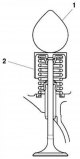
Inlet and outlet valves with an increased valve working surface are used to improve gas flow at the inlet and outlet. Valve stems of reduced diameter are used to reduce flow resistance at the inlet and outlet and to...
Inlet and outlet valves with an increased valve working surface are used to improve gas flow at the inlet and outlet. Valve stems of reduced diameter are used to reduce flow resistance at the inlet and outlet and to...
Timing chain
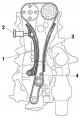
Fig. 2.15. Timing chain: 1 – chain guide shoe; 2 – chain tensioner; 3 – chain tensioner; 4 – oil spray nozzle A roller chain with a pitch of 8 mm is used. The timing chain is lubricated by an oil spray nozzle. Chain...
Fig. 2.15. Timing chain: 1 – chain guide shoe; 2 – chain tensioner; 3 – chain tensioner; 4 – oil spray nozzle A roller chain with a pitch of 8 mm is used. The timing chain is lubricated by an oil spray nozzle. Chain...

Lubrication system — general description
The lubrication system operates under pressure, the oil passes through the oil filter. The oil pump with trochoidal gears is driven by a chain from the crankshaft. The oil filter is located below the crankcase to...
The lubrication system operates under pressure, the oil passes through the oil filter. The oil pump with trochoidal gears is driven by a chain from the crankshaft. The oil filter is located below the crankcase to...

Oil pump — design description
Fig. 2.18. Oil pump: 1 – crankshaft; 2 – safety shaft; 3 – oil pump The oil pump with trochoidal gears is driven by a chain from the crankshaft and is compactly located under the timing chain cover. Friction is reduced...
Fig. 2.18. Oil pump: 1 – crankshaft; 2 – safety shaft; 3 – oil pump The oil pump with trochoidal gears is driven by a chain from the crankshaft and is compactly located under the timing chain cover. Friction is reduced...

Cooling system — general description
Fig. 2.19. Schematic diagram of the 2AZ-FE engine cooling system: 1 – water-cooled oil cooler; 2 – coolant pump; 3 – throttle pipe; 4 – bypass channel; 5 – thermostat; 6 – drain cock The cooling system is a closed,...
Fig. 2.19. Schematic diagram of the 2AZ-FE engine cooling system: 1 – water-cooled oil cooler; 2 – coolant pump; 3 – throttle pipe; 4 – bypass channel; 5 – thermostat; 6 – drain cock The cooling system is a closed,...

Intake and exhaust system — general description
Fig. 2.21. Intake and exhaust system of the Camry: 1 – three-way catalytic converter; 2 – exhaust manifold; 3 – intake manifold; 4 – main muffler; 5 - Three-way catalytic converter; 6 – air filter Two resonators, side...
Fig. 2.21. Intake and exhaust system of the Camry: 1 – three-way catalytic converter; 2 – exhaust manifold; 3 – intake manifold; 4 – main muffler; 5 - Three-way catalytic converter; 6 – air filter Two resonators, side...

Air filter — design description
Fig. 2.22. Intake and exhaust system of the Camry: 1 – resonator; 2 – mass air flow sensor; 3 – PET material (polyethylene terephthalate); 4 – resonator; 5 – air filter inlet pipe; 6 – side branch Flameless, fabric air...
Fig. 2.22. Intake and exhaust system of the Camry: 1 – resonator; 2 – mass air flow sensor; 3 – PET material (polyethylene terephthalate); 4 – resonator; 5 – air filter inlet pipe; 6 – side branch Flameless, fabric air...

Throttle assembly — design description
Fig. 2.23. Throttle assembly: 1 – throttle actuator electric motor; 2 – throttle valve; 3 – throttle return spring; 4 – throttle position sensor The use of the ETCS-i system without mechanical linkage ensures excellent...
Fig. 2.23. Throttle assembly: 1 – throttle actuator electric motor; 2 – throttle valve; 3 – throttle return spring; 4 – throttle position sensor The use of the ETCS-i system without mechanical linkage ensures excellent...

Intake manifold — design description
Fig. 2.24. Intake manifold: 1 – intake manifold cover The intake manifold is made of plastic to reduce weight and reduce heat transfer from the cylinder head. This reduces intake air temperature and improves volumetric...
Fig. 2.24. Intake manifold: 1 – intake manifold cover The intake manifold is made of plastic to reduce weight and reduce heat transfer from the cylinder head. This reduces intake air temperature and improves volumetric...

Exhaust manifold — design description
Fig. 2.25. Exhaust manifold: 1 – air-fuel ratio sensor; 2 – three-way catalytic converter; 3 – cross-section of a three-way catalytic converter A stainless steel exhaust manifold is used to reduce weight. A thin-walled,...
Fig. 2.25. Exhaust manifold: 1 – air-fuel ratio sensor; 2 – three-way catalytic converter; 3 – cross-section of a three-way catalytic converter A stainless steel exhaust manifold is used to reduce weight. A thin-walled,...

Exhaust pipe — design description
Fig. 2.26. Exhaust pipe: 1 – cross-section of a three-way catalytic converter; 2 – main muffler; 3 – additional muffler; 4 - Three-way catalytic converter A thin-walled, high-cell ceramic three-component catalytic...
Fig. 2.26. Exhaust pipe: 1 – cross-section of a three-way catalytic converter; 2 – main muffler; 3 – additional muffler; 4 - Three-way catalytic converter A thin-walled, high-cell ceramic three-component catalytic...

Two-stage exhaust control system
A two-stage exhaust control system is used. This system reduces back pressure when opening and closing the adjustable valve, which is located in the main muffler, thus changing the exhaust gas pressure. The valve opens...
A two-stage exhaust control system is used. This system reduces back pressure when opening and closing the adjustable valve, which is located in the main muffler, thus changing the exhaust gas pressure. The valve opens...

Fuel system — general description
Fig. 2.28. Fuel system of the Camry: 1 – fuel injector; 2 – pulsation damper; 3 – fuel pump; 4 – fuel tank The returnless fuel system is used to reduce fuel vapor emissions. A compact fuel pump is used, in which the...
Fig. 2.28. Fuel system of the Camry: 1 – fuel injector; 2 – pulsation damper; 3 – fuel pump; 4 – fuel tank The returnless fuel system is used to reduce fuel vapor emissions. A compact fuel pump is used, in which the...
Fuel injector — design description
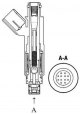
Fig. 2.30. Fuel injector A compact fuel injector (Fig. 2.30) with 12 holes with a high degree of fuel atomization is used.
Fig. 2.30. Fuel injector A compact fuel injector (Fig. 2.30) with 12 holes with a high degree of fuel atomization is used.
Fuel pump — design description
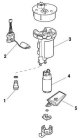
Fig. 2.31. Fuel pump components: 1 – fuel pressure regulator; 2 – fuel level sensor; 3 – fuel pump filter; 4 – fuel pump; 5 – mesh filter A compact fuel pump is used (see fig. 2.31), in which the fuel filter, pressure...
Fig. 2.31. Fuel pump components: 1 – fuel pressure regulator; 2 – fuel level sensor; 3 – fuel pump filter; 4 – fuel pump; 5 – mesh filter A compact fuel pump is used (see fig. 2.31), in which the fuel filter, pressure...

Ignition system — general description
General information Fig. 2.32. Ignition system operation diagram DIS system is used (direct ignition system). DIS improves the accuracy of ignition timing, reduces high voltage losses and increases the overall...
General information Fig. 2.32. Ignition system operation diagram DIS system is used (direct ignition system). DIS improves the accuracy of ignition timing, reduces high voltage losses and increases the overall...

Starter — design description
Compact and lightweight PS starter (electric motor with planetary gearbox) it is used on all models. Since the PS starter has a square-section anchor, its surface is used as a collector, which increases the starter...
Compact and lightweight PS starter (electric motor with planetary gearbox) it is used on all models. Since the PS starter has a square-section anchor, its surface is used as a collector, which increases the starter...
This section is available on: russian, bulgarian, belarusian, ukrainian, serbian, croatian, romanian, polish, slovak, hungarian
Similar sections for other Toyota models
➥ Petrol engines 1.0 l Toyota Duet (1998-2004)
➥ 6-cylinder engines Toyota 4Runner N120 (1989-1995)
➥ Engines 3S-FE/GE and 4S-FE Toyota Corona T190 (1992-1997)
➥ Engine repair Toyota Corolla E80 (1983-1990)
➥ Petrol engines 2F and 3F-E Toyota Cruiser 60/80 (1980-1997, petrol)
➥ 4-cylinder engine Toyota Highlander 1 (2000-2007, petrol)
Link in different formats to this article
TEXTHTMLBB Code
- User manual
- Vehicle description
- Keys, locks and alarms
- Governing bodies
- Salon equipment
- Driving and operation
- Maintenance
- Power unit
- 4-cylinder engine
- Control system (I4)
- Engine overhaul (I4)
- 6-cylinder engine
- Control system (V6)
- Engine overhaul (V6)
- Transmission
- Clutch
- Mechanical gearbox
- Automatic gearbox
- Drive mechanism
- Chassis, running gear
- Wheels and tires
- Car suspension
- Steering
- Brake system
- Body and interior
- Exterior (external elements)
- Doors, locks and windows
- Air conditioning and heater
- Electrical equipment
- Equipment and devices
- Power devices
- Electrical circuits
- General information
- Controls and instruments
- Driving and operation
- Daily care
- Maintenance
- Power unit
- 4-cylinder engine
- 6-cylinder engine
- Engine overhaul
- Engine electrical equipment
- Cooling system
- Heating and ventilation
- Fuel system
- Exhaust system
- Transmission
- Mechanical gearbox
- Automatic gearbox
- Clutch
- Chassis, running gear
- Suspension and axle shafts
- Steering
- Brake system
- Body and interior
- Exterior (external elements)
- Interior (internal elements)
- Doors, locks and windows
- Electrical equipment
- Equipment and devices
- Electrical circuits
- General information
- User manual
- Maintenance
- Power unit
- 4-cylinder engine
- 6-cylinder engine
- Overhaul of engines
- Cooling and heating
- Fuel system
- Engine electrical equipment
- Control system
- Transmission
- Mechanical gearbox
- Automatic gearbox
- Clutch and drive shafts
- Chassis, running gear
- Brake system
- Car suspension
- Steering
- Body and interior
- Exterior (external elements)
- Interior (internal elements)
- Doors, locks and windows
- Electrical equipment
- Equipment and devices
- Headlights and lighting
- Electrical circuits
- General information
- User manual
- Maintenance
- Power unit
- Petrol engines
- Diesel engines
- Engine overhaul
- Cooling and lubrication system
- Fuel system (diesel)
- Fuel injection (petrol)
- Engine electrical equipment
- Transmission
- Clutch and cardan
- Automatic gearbox
- Chassis, running gear
- Front suspension
- Rear suspension
- Steering
- Brake system
- Body and interior
- Body elements
- Air conditioning and heater
- SRS security system
- Electrical equipment
- Equipment and devices
- Electrical circuits