



Share information:
Overhaul of 4-cylinder engine Toyota Camry 3 (XV30)

General information and safety precautions for removing the power unit
If a decision has been made to remove the engine, then certain preparatory measures must be carried out. It is extremely important to determine the place where the work will be carried out. Undoubtedly, the best place...
If a decision has been made to remove the engine, then certain preparatory measures must be carried out. It is extremely important to determine the place where the work will be carried out. Undoubtedly, the best place...

Removal old sealant
Fig. 2.51. Removing old sealant After removing the mounting bolts and nuts, use a suitable sealant removal tool (Fig. 2.51). Caution! Be careful not to damage the surface of the part. Remove the sealant as thoroughly as...
Fig. 2.51. Removing old sealant After removing the mounting bolts and nuts, use a suitable sealant removal tool (Fig. 2.51). Caution! Be careful not to damage the surface of the part. Remove the sealant as thoroughly as...

Specification of types of nuts and bolts used
The types of bolts used are given in Table 2.15, the specification of the dimensions and tightening torques of the bolts used is given in Table 2.16. The types of nuts used are shown in Table 2.17. Table 2.15. Types of...
The types of bolts used are given in Table 2.15, the specification of the dimensions and tightening torques of the bolts used is given in Table 2.16. The types of nuts used are shown in Table 2.17. Table 2.15. Types of...

Maintenance of the mechanical part of the engine
Data for servicing the mechanical part of the engine are given in Table 2.18. Table 2.18. Data for servicing the mechanical part of the engine
Data for servicing the mechanical part of the engine are given in Table 2.18. Table 2.18. Data for servicing the mechanical part of the engine

Removal the oil filter
Unscrew the oil filler cap. Remove the PCV valve. Remove the spark plugs. Fig. 2.53. Removing the oil filter: 1 - special tool Remove the oil filter using special tool 09228-06501 (Fig. 2.53). Unscrew the nut and...
Unscrew the oil filler cap. Remove the PCV valve. Remove the spark plugs. Fig. 2.53. Removing the oil filter: 1 - special tool Remove the oil filter using special tool 09228-06501 (Fig. 2.53). Unscrew the nut and...

Removal the crankshaft pulley
Remove the camshaft position sensor. Set the piston of the first cylinder to TDC of the compression stroke. Fig. 2.55. Alignment of markings with marks on the camshaft bearing caps: 1 – marks on the lids; 2 – marking...
Remove the camshaft position sensor. Set the piston of the first cylinder to TDC of the compression stroke. Fig. 2.55. Alignment of markings with marks on the camshaft bearing caps: 1 – marks on the lids; 2 – marking...

Removal the coolant pump
Fig. 2.57. Timing chain tensioner fastening nuts Remove the timing chain tensioner by unscrewing the two nuts shown by the arrows in Figure 2.57. Fig. 2.58. Coolant pump mounting nuts and bolts: 1 – mounting bracket; 2...
Fig. 2.57. Timing chain tensioner fastening nuts Remove the timing chain tensioner by unscrewing the two nuts shown by the arrows in Figure 2.57. Fig. 2.58. Coolant pump mounting nuts and bolts: 1 – mounting bracket; 2...

Removal the oil pan
Remove the crankshaft position sensor. Remove the oil pan drain plug. Fig. 2.59. Removing the oil pan To remove the oil pan, unscrew the twelve bolts and two nuts. Insert the blade of the special tool 09032-00100...
Remove the crankshaft position sensor. Remove the oil pan drain plug. Fig. 2.59. Removing the oil pan To remove the oil pan, unscrew the twelve bolts and two nuts. Insert the blade of the special tool 09032-00100...

Disassembling the working components of the timing drive
Fig. 2.60. Bolts and nuts for fastening the timing chain cover Unscrew the fourteen bolts and two nuts securing the timing chain cover (Fig. 2.60). Using a screwdriver, separate the cover from the head and cylinder...
Fig. 2.60. Bolts and nuts for fastening the timing chain cover Unscrew the fourteen bolts and two nuts securing the timing chain cover (Fig. 2.60). Using a screwdriver, separate the cover from the head and cylinder...

Removal the oil pump drive chain
Fig. 2.62. Correct (combined by marks) crankshaft position: 1 – hole on the pump body Turn the crankshaft 90° counterclockwise and align the oil pump shaft mark with the hole on the pump housing, as shown in Figure...
Fig. 2.62. Correct (combined by marks) crankshaft position: 1 – hole on the pump body Turn the crankshaft 90° counterclockwise and align the oil pump shaft mark with the hole on the pump housing, as shown in Figure...

Removal the oil pump
Fig. 2.64. Oil pump mounting bolts After unscrewing the three mounting bolts, remove the oil pump (Fig. 2.64).
Fig. 2.64. Oil pump mounting bolts After unscrewing the three mounting bolts, remove the oil pump (Fig. 2.64).
Removal the camshaft caps and bearing
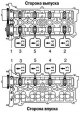
Fig. 2.65. The order of removal of the camshaft covers of the intake and exhaust valves Remove the exhaust and intake camshaft covers in the order shown in Figure 2.65. Remove the camshaft bearing. Remove the VVT-i...
Fig. 2.65. The order of removal of the camshaft covers of the intake and exhaust valves Remove the exhaust and intake camshaft covers in the order shown in Figure 2.65. Remove the camshaft bearing. Remove the VVT-i...

Removal the cylinder head, checking the axial play of the balance shafts
Fig. 2.66. Procedure for loosening the cylinder head mounting bolts Using a 10 mm socket wrench, in several passes, loosen and remove the ten cylinder head bolts in the sequence shown in Figure 2.66. Caution! Failure to...
Fig. 2.66. Procedure for loosening the cylinder head mounting bolts Using a 10 mm socket wrench, in several passes, loosen and remove the ten cylinder head bolts in the sequence shown in Figure 2.66. Caution! Failure to...

Checking the radial clearance of balance shafts
Fig. 2.68. Sequence of unscrewing the bolts for fastening the balance mechanism cover In several passes, sequentially, unscrew the eight mounting bolts and remove the balance mechanism cover (Fig. 2.68). Fig. 2.69....
Fig. 2.68. Sequence of unscrewing the bolts for fastening the balance mechanism cover In several passes, sequentially, unscrew the eight mounting bolts and remove the balance mechanism cover (Fig. 2.68). Fig. 2.69....

Replacing the rear crankshaft oil seal
Fig. 2.72. Removing the oil seal Use a knife to cut off the edge of the oil seal. Use a screwdriver wrapped in cloth to remove the oil seal (2.72). Note: Use sandpaper to remove any remaining oil seal from the rear oil...
Fig. 2.72. Removing the oil seal Use a knife to cut off the edge of the oil seal. Use a screwdriver wrapped in cloth to remove the oil seal (2.72). Note: Use sandpaper to remove any remaining oil seal from the rear oil...

Checking the timing chain and shaft sprocket
Measure the length of fifteen links of the chain in a taut state with a caliper. If the length of the fifteen-link section of chain is greater than the maximum, replace the chain. Note: Take three or more measurements...
Measure the length of fifteen links of the chain in a taut state with a caliper. If the length of the fifteen-link section of chain is greater than the maximum, replace the chain. Note: Take three or more measurements...

Checking the operation of the timing chain tensioner
Fig. 2.75. Timing chain tensioner operation test diagram Make sure the plunger moves freely when the ratchet is raised. Release the ratchet and make sure the plunger is locked (Fig. 2.75).
Fig. 2.75. Timing chain tensioner operation test diagram Make sure the plunger moves freely when the ratchet is raised. Release the ratchet and make sure the plunger is locked (Fig. 2.75).

Checking the camshaft runout
Fig. 2.76. Checking the camshaft runout on a stand using an indicator Mount the camshaft on two prisms. Mount the sensitive indicator head on the journal. Turn the camshaft manually in one direction and measure the...
Fig. 2.76. Checking the camshaft runout on a stand using an indicator Mount the camshaft on two prisms. Mount the sensitive indicator head on the journal. Turn the camshaft manually in one direction and measure the...

Checking the camshaft lobe height
Fig. 2.77. Measuring the camshaft lobe height using a micrometer Measure the camshaft lobe height (Fig. 2.77). Standard cam contour height is 46.495–46.595 mm. Minimum cam contour height: 46.385 mm.
Fig. 2.77. Measuring the camshaft lobe height using a micrometer Measure the camshaft lobe height (Fig. 2.77). Standard cam contour height is 46.495–46.595 mm. Minimum cam contour height: 46.385 mm.

Camshaft journal clearance (outer diameter)
Fig. 2.78. Measuring the camshaft journal diameter using a micrometer Measure the outside diameter of the camshaft journal (Fig. 2.78). Standard camshaft bracket inner diameter: no. 1 - 35.971–35.985 mm; no. 2,3,4,5 —...
Fig. 2.78. Measuring the camshaft journal diameter using a micrometer Measure the outside diameter of the camshaft journal (Fig. 2.78). Standard camshaft bracket inner diameter: no. 1 - 35.971–35.985 mm; no. 2,3,4,5 —...

Installing the WT (Intake Camshaft) Sprocket
Fig. 2.79. Installing the intake camshaft sprocket: 1 – locking pin; 2 – recess Hold the sprocket in such a position that the groove in it is slightly to the left of the camshaft dowel pin (from the shaft side). Install...
Fig. 2.79. Installing the intake camshaft sprocket: 1 – locking pin; 2 – recess Hold the sprocket in such a position that the groove in it is slightly to the left of the camshaft dowel pin (from the shaft side). Install...
Disassembling the cylinder head
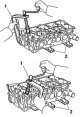
Remove the oil pressure sensor. Remove the coolant temperature sensor. Remove the camshaft position sensor by unscrewing the mounting bolt. Remove the pushers. Fig. 2.80. Removing crackers, spring plate, spring and...
Remove the oil pressure sensor. Remove the coolant temperature sensor. Remove the camshaft position sensor by unscrewing the mounting bolt. Remove the pushers. Fig. 2.80. Removing crackers, spring plate, spring and...
Checking the cylinder head
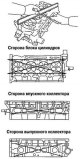
Fig. 2.82. Cylinder head surface warpage test diagram Using a ruler and a flat feeler gauge, check the warpage of the cylinder head surfaces mating with the cylinder block surface and with the surfaces of the intake and...
Fig. 2.82. Cylinder head surface warpage test diagram Using a ruler and a flat feeler gauge, check the warpage of the cylinder head surfaces mating with the cylinder block surface and with the surfaces of the intake and...

Checking valve seats
Apply a thin layer of white paint to the valve face. Lightly press the valve face against the seat, but do not rotate the valve. Then remove the valve and inspect the seat and valve face. If paint remains around the...
Apply a thin layer of white paint to the valve face. Lightly press the valve face against the seat, but do not rotate the valve. Then remove the valve and inspect the seat and valve face. If paint remains around the...

Checking the axial play of the camshaft
Fig. 2.85. Checking the axial clearance of the camshaft Install the camshafts. Use a dial indicator to measure the axial clearance by moving the camshaft back and forth (Fig. 2.85). Nominal clearance: inlet -...
Fig. 2.85. Checking the axial clearance of the camshaft Install the camshafts. Use a dial indicator to measure the axial clearance by moving the camshaft back and forth (Fig. 2.85). Nominal clearance: inlet -...

Checking the radial clearance in the camshaft bearings
Clean the working surfaces of the bearing caps and the camshaft journals. Install the front bearing shell. Place the camshaft in the cylinder head bed. Place a piece of plastic gauge on each camshaft journal. Install...
Clean the working surfaces of the bearing caps and the camshaft journals. Install the front bearing shell. Place the camshaft in the cylinder head bed. Place a piece of plastic gauge on each camshaft journal. Install...

Checking the valve spring
Fig. 2.87. Measuring the length of the valve spring Use a caliper to measure the length of the spring in its free state (Fig. 2.87). Valve spring length: 45.70 mm. Fig. 2.88. Measuring the valve spring...
Fig. 2.87. Measuring the length of the valve spring Use a caliper to measure the length of the spring in its free state (Fig. 2.87). Valve spring length: 45.70 mm. Fig. 2.88. Measuring the valve spring...
Checking the valve length
Check the overall length of the valve. Nominal length: inlet valve - 101.71 mm; exhaust valve - 101.15 mm. Maximum length: inlet valve - 101.21 mm; outlet valve - 100.70 mm. If the overall length is less than the...
Check the overall length of the valve. Nominal length: inlet valve - 101.71 mm; exhaust valve - 101.15 mm. Maximum length: inlet valve - 101.21 mm; outlet valve - 100.70 mm. If the overall length is less than the...
Checking the thickness of the valve plate
Check the valve plate thickness using a vernier caliper. Standard thickness of intake valves: 1.05–1.45 mm. Minimum tolerance: 0.5 mm. Standard thickness of exhaust valves: 1.20–1.60 mm. Minimum tolerance: 0.5 mm. If...
Check the valve plate thickness using a vernier caliper. Standard thickness of intake valves: 1.05–1.45 mm. Minimum tolerance: 0.5 mm. Standard thickness of exhaust valves: 1.20–1.60 mm. Minimum tolerance: 0.5 mm. If...

Measuring the valve stem diameter
Fig. 2.89. Measuring the valve stem diameter Use a micrometer to measure the diameter of the valve stem (Fig. 2.89). Valve stem diameter: inlet valve - 5.470–5.485 mm; exhaust valve - 5.465–5.480 mm.
Fig. 2.89. Measuring the valve stem diameter Use a micrometer to measure the diameter of the valve stem (Fig. 2.89). Valve stem diameter: inlet valve - 5.470–5.485 mm; exhaust valve - 5.465–5.480 mm.
Checking the internal diameters of the valve guide bushings
Check the inside diameters of the valve guides. Using a bore gauge, measure the inside diameters of the valve guides at three levels. The inner diameter of the sleeve is 5.510–5.530 mm. Perform the calculation by...
Check the inside diameters of the valve guides. Using a bore gauge, measure the inside diameters of the valve guides at three levels. The inner diameter of the sleeve is 5.510–5.530 mm. Perform the calculation by...

Checking the tappets and tappet boring in the cylinder head housing
Fig. 2.90. Checking the tappet diameter with a micrometer Use a micrometer to measure the diameter of the pusher (Fig. 2.90). Pusher diameter: 30.966–30.976 mm. Perform the calculation by subtracting the tappet diameter...
Fig. 2.90. Checking the tappet diameter with a micrometer Use a micrometer to measure the diameter of the pusher (Fig. 2.90). Pusher diameter: 30.966–30.976 mm. Perform the calculation by subtracting the tappet diameter...

Cylinder head assembly
Fig. 2.92. Inlet and outlet valve oil seals and their installation: 1 - special tool Using special tool 09201–41020, install new valve stem seals. The inlet valve stem seals are painted black, and the outlet valve stem...
Fig. 2.92. Inlet and outlet valve oil seals and their installation: 1 - special tool Using special tool 09201–41020, install new valve stem seals. The inlet valve stem seals are painted black, and the outlet valve stem...

Disassembling the cylinder block
Fig. 2.95. Measuring the axial clearance of the connecting rod crank head Check the axial clearance of the connecting rod bearing. Using a dial indicator, measure the axial clearance of the connecting rod crank head by...
Fig. 2.95. Measuring the axial clearance of the connecting rod crank head Check the axial clearance of the connecting rod bearing. Using a dial indicator, measure the axial clearance of the connecting rod crank head by...

Checking the radial clearance of the connecting rod bearing
Remove the connecting rod cap and check the connecting rod bearing radial clearance. Fig. 2.96. Connecting rod cap mounting bolts Check the alignment of the marks on the connecting rod and connecting rod cap to ensure...
Remove the connecting rod cap and check the connecting rod bearing radial clearance. Fig. 2.96. Connecting rod cap mounting bolts Check the alignment of the marks on the connecting rod and connecting rod cap to ensure...

Replacing main bearing shells
Fig. 2.99. Marking of the size group of main bearing shells When replacing standard size liners, it is necessary to use liners of the same size group indicated on the bearing cap. There are size groups of liners...
Fig. 2.99. Marking of the size group of main bearing shells When replacing standard size liners, it is necessary to use liners of the same size group indicated on the bearing cap. There are size groups of liners...

Removal the piston and connecting rod assembly
Fig. 2.100. Removing carbon deposits from the top of the cylinder Before removing the piston and connecting rod assembly, use a reamer to remove carbon deposits from the top of the cylinder, as shown in Figure 2.100....
Fig. 2.100. Removing carbon deposits from the top of the cylinder Before removing the piston and connecting rod assembly, use a reamer to remove carbon deposits from the top of the cylinder, as shown in Figure 2.100....

Measuring axial and radial clearances of the crankshaft and main bearings
Fig. 2.105. Measuring the axial clearance of the crankshaft Using a dial indicator, measure the axial play of the crankshaft by moving it back and forth (fig. 2.105). Standard gap is 0.040–0.240 mm. Maximum clearance –...
Fig. 2.105. Measuring the axial clearance of the crankshaft Using a dial indicator, measure the axial play of the crankshaft by moving it back and forth (fig. 2.105). Standard gap is 0.040–0.240 mm. Maximum clearance –...

Checking the clearance between the piston and the cylinder
Fig. 2.109. Measuring the piston skirt diameter Using a micrometer, measure the diameter of the piston skirt at the distance indicated in Figure 2.109 from the surface of the piston bottom to the end of the skirt (below...
Fig. 2.109. Measuring the piston skirt diameter Using a micrometer, measure the diameter of the piston skirt at the distance indicated in Figure 2.109 from the surface of the piston bottom to the end of the skirt (below...

Checking the clearance between the compression ring and the groove
Fig. 2.110. Measuring the gap between the compression ring and the groove Check the clearance between the compression ring and the groove by measuring it with a flat feeler gauge as shown in Figure 2.110. Standard...
Fig. 2.110. Measuring the gap between the compression ring and the groove Check the clearance between the compression ring and the groove by measuring it with a flat feeler gauge as shown in Figure 2.110. Standard...

Checking the clearance in the piston pin lock
Fig. 2.111. Pushing the piston ring: 1 – piston ring To check the gap in the piston ring lock, install the ring in the cylinder block. Use the piston to push the ring away from the cylinder block surface, as shown in...
Fig. 2.111. Pushing the piston ring: 1 – piston ring To check the gap in the piston ring lock, install the ring in the cylinder block. Use the piston to push the ring away from the cylinder block surface, as shown in...

Checking the internal diameter of the piston pin hole
Fig. 2.113. Measuring the internal diameter of the hole for the pin in the piston Using a dial bore gauge, measure the inside diameter of the piston pin hole (fig. 2.113). The inner diameter of the sleeve is...
Fig. 2.113. Measuring the internal diameter of the hole for the pin in the piston Using a dial bore gauge, measure the inside diameter of the piston pin hole (fig. 2.113). The inner diameter of the sleeve is...

Checking the piston pin diameter
Fig. 2.114. Measuring the piston pin diameter Using a micrometer, measure the piston pin diameter (fig. 2.114). Standard diameter: 21.997–22.009 mm. Maximum diameter – 21.990 mm.
Fig. 2.114. Measuring the piston pin diameter Using a micrometer, measure the piston pin diameter (fig. 2.114). Standard diameter: 21.997–22.009 mm. Maximum diameter – 21.990 mm.

Checking the piston pin fit
Fig. 2.115. Measuring the inner diameter of the connecting rod upper head bushing Using a dial gauge, measure the inside diameter of the connecting rod upper head bushing (fig. 2.115). Standard diameter: 22.005–22.017...
Fig. 2.115. Measuring the inner diameter of the connecting rod upper head bushing Using a dial gauge, measure the inside diameter of the connecting rod upper head bushing (fig. 2.115). Standard diameter: 22.005–22.017...
Checking the connecting rod
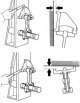
Fig. 2.116. Checking the bending and twisting of the connecting rod Using a special device and a flat feeler gauge, check the bend of the connecting rod. In the same way, check the twist of the connecting rod (fig....
Fig. 2.116. Checking the bending and twisting of the connecting rod Using a special device and a flat feeler gauge, check the bend of the connecting rod. In the same way, check the twist of the connecting rod (fig....

Checking the crankshaft
Fig. 2.117. Checking the crankshaft runout To check the crankshaft runout, place the crankshaft on prisms. Use a dial indicator to check the crankshaft runout on the central main journal (fig. 2.117). Maximum...
Fig. 2.117. Checking the crankshaft runout To check the crankshaft runout, place the crankshaft on prisms. Use a dial indicator to check the crankshaft runout on the central main journal (fig. 2.117). Maximum...
Checking the connecting rod and main journals
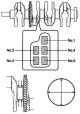
Fig. 2.118. Measuring the connecting rod and main journals Using a micrometer, measure the diameter of each connecting rod and main journal in two mutually perpendicular planes, as shown in Figure 2.118. Main journal...
Fig. 2.118. Measuring the connecting rod and main journals Using a micrometer, measure the diameter of each connecting rod and main journal in two mutually perpendicular planes, as shown in Figure 2.118. Main journal...

Checking the connecting rod bolts
Fig. 2.119. Measuring the diameter of the connecting rod bolt journal Using a vernier caliper, measure the diameter of the connecting rod bolt journal (fig. 2.119). Standard diameter is 7.5–7.6 mm. Minimum diameter -...
Fig. 2.119. Measuring the diameter of the connecting rod bolt journal Using a vernier caliper, measure the diameter of the connecting rod bolt journal (fig. 2.119). Standard diameter is 7.5–7.6 mm. Minimum diameter -...

Checking and replacing main bearing shells
Fig. 2.120. Measuring clearances in plain bearings: 1 – plastic gauge Clean each main journal and bearings. Inspect the surface of each main journal and bearing for pitting and scratches. If the journal or bearing is...
Fig. 2.120. Measuring clearances in plain bearings: 1 – plastic gauge Clean each main journal and bearings. Inspect the surface of each main journal and bearing for pitting and scratches. If the journal or bearing is...

Assembly of the connecting rod and piston group
Fig. 2.124. Installing a new retaining ring Using a screwdriver, install a new snap ring on one side into the piston cylinder bore (fig. 2.124). Gradually heat the piston to a temperature of 80–90°C. Apply a small...
Fig. 2.124. Installing a new retaining ring Using a screwdriver, install a new snap ring on one side into the piston cylinder bore (fig. 2.124). Gradually heat the piston to a temperature of 80–90°C. Apply a small...
Installing piston rings
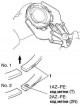
Fig. 2.126. Correct position of compression ring marks before installation Install the expander and two oil scraper rings. Use the piston ring expander to install the two compression rings. The ring marks should be...
Fig. 2.126. Correct position of compression ring marks before installation Install the expander and two oil scraper rings. Use the piston ring expander to install the two compression rings. The ring marks should be...

Cylinder block assembly
Fig. 2.128. Installing main bearing shells To install the main bearing shells, align the projections of the upper bearing shells with the recesses (indentations) bed the cylinder block and insert the liners (fig....
Fig. 2.128. Installing main bearing shells To install the main bearing shells, align the projections of the upper bearing shells with the recesses (indentations) bed the cylinder block and insert the liners (fig....

Installation of balance shafts
Fig. 2.132. Correct position of the driven gear Turn driven gear #1 of balance shaft #1 in the direction of rotation to the limiter, making sure that the marks on gears #1 and #2 are aligned (fig. 2.132). Fig. 2.133....
Fig. 2.132. Correct position of the driven gear Turn driven gear #1 of balance shaft #1 in the direction of rotation to the limiter, making sure that the marks on gears #1 and #2 are aligned (fig. 2.132). Fig. 2.133....

Installing the engine crankcase
Fig. 2.135. Places of sealant application Remove old sealant. Be careful not to damage the mating surfaces. Using a blade and scraper, remove old sealant from the mating surfaces and sealant recesses. Clean all...
Fig. 2.135. Places of sealant application Remove old sealant. Be careful not to damage the mating surfaces. Using a blade and scraper, remove old sealant from the mating surfaces and sealant recesses. Clean all...

Installing the cylinder head mounting bolts
Tighten the cylinder head mounting bolts. Fig. 2.143. Cylinder head bolt tightening sequence The cylinder head mounting bolts are tightened in two stages. If one of the bolts is damaged, replace it. Before installation,...
Tighten the cylinder head mounting bolts. Fig. 2.143. Cylinder head bolt tightening sequence The cylinder head mounting bolts are tightened in two stages. If one of the bolts is damaged, replace it. Before installation,...

Installing the VVT-i sprocket
Install the VVT-i sprocket. Fig. 2.145. Correct position of the VVT-i sprocket: 1 – groove; 2 – pin Hold the sprocket in such a position that the groove in it is slightly to the left of the camshaft dowel pin (when...
Install the VVT-i sprocket. Fig. 2.145. Correct position of the VVT-i sprocket: 1 – groove; 2 – pin Hold the sprocket in such a position that the groove in it is slightly to the left of the camshaft dowel pin (when...
Installing camshafts
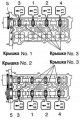
Install the lower and upper front camshaft bearing shells. Fig. 2.147. Tightening order of the bolts securing the bearing caps of the intake and exhaust valves Install the intake and exhaust camshafts and tighten the...
Install the lower and upper front camshaft bearing shells. Fig. 2.147. Tightening order of the bolts securing the bearing caps of the intake and exhaust valves Install the intake and exhaust camshafts and tighten the...

Installing an oil pump
Fig. 2.148. Oil pump mounting bolts Install the oil pump with a new gasket and tighten the bolts to 19 N·m (fig. 2.148).
Fig. 2.148. Oil pump mounting bolts Install the oil pump with a new gasket and tighten the bolts to 19 N·m (fig. 2.148).

Installing the oil pump sprocket and drive chain
Fig. 2.149. Installing the oil pump drive shaft To install the oil pump drive chain and sprocket, install the crankshaft with the key to the left and the oil pump shaft with the notch facing up, as shown in the figure...
Fig. 2.149. Installing the oil pump drive shaft To install the oil pump drive chain and sprocket, install the crankshaft with the key to the left and the oil pump shaft with the notch facing up, as shown in the figure...

Setting the piston of cylinder No. 1 to TDC of the end of the compression stroke
Fig. 2.154. Alignment of camshaft marks Turn the camshafts, aligning the marks on the sprockets with the marks on the camshaft bearing caps No.1 and No.2 (fig. 2.154). Fig. 2.155. Position of the crankshaft key Turn the...
Fig. 2.154. Alignment of camshaft marks Turn the camshafts, aligning the marks on the sprockets with the marks on the camshaft bearing caps No.1 and No.2 (fig. 2.154). Fig. 2.155. Position of the crankshaft key Turn the...

Installing the timing chain
Fig. 2.156. Alignment of crankshaft sprocket marks Place the chain on the crankshaft sprocket, aligning the link with the color marking (blue or orange) with marking on the star (fig. 2.156). Fig. 2.157. Fixing the...
Fig. 2.156. Alignment of crankshaft sprocket marks Place the chain on the crankshaft sprocket, aligning the link with the color marking (blue or orange) with marking on the star (fig. 2.156). Fig. 2.157. Fixing the...

Installing the Crankshaft Position Sensor Rotor
Fig. 2.159. Marking "F" of the alignment of the crankshaft position sensor rotor sprocket Install the crankshaft position sensor rotor as shown in Figure 2.159.
Fig. 2.159. Marking "F" of the alignment of the crankshaft position sensor rotor sprocket Install the crankshaft position sensor rotor as shown in Figure 2.159.
Installing the timing chain cover
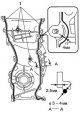
When removing old sealant, be careful not to damage the mating surfaces of the timing chain cover, coolant pump, cylinder head and cylinder block. Use a blade and scraper to remove old sealant from the mating surfaces...
When removing old sealant, be careful not to damage the mating surfaces of the timing chain cover, coolant pump, cylinder head and cylinder block. Use a blade and scraper to remove old sealant from the mating surfaces...

Installing the oil pan
Fig. 2.163. Places where sealant is applied to the surface of the tray: 1 – sealant Remove the old sealant from the surfaces where the oil pan and crankcase meet, being careful not to damage the contact surfaces. Clean...
Fig. 2.163. Places where sealant is applied to the surface of the tray: 1 – sealant Remove the old sealant from the surfaces where the oil pan and crankcase meet, being careful not to damage the contact surfaces. Clean...

Installing a Coolant Pump
Fig. 2.165. Places where sealant is applied to the surface of the coolant pump Before installation, clean the contact surfaces of the coolant pump from old sealant. Place new sealant on the edge of the pump (layer...
Fig. 2.165. Places where sealant is applied to the surface of the coolant pump Before installation, clean the contact surfaces of the coolant pump from old sealant. Place new sealant on the edge of the pump (layer...

Installing the crankshaft position sensor
Fig. 2.168. Installing the crankshaft position sensor: 1 – cable; 2 – clamp; 3 – bolt Install the crankshaft position sensor by tightening the clamp mounting bolts to a tightening torque of 9 N·m. After installation,...
Fig. 2.168. Installing the crankshaft position sensor: 1 – cable; 2 – clamp; 3 – bolt Install the crankshaft position sensor by tightening the clamp mounting bolts to a tightening torque of 9 N·m. After installation,...

Installing the crankshaft pulley
Fig. 2.169. Installing the crankshaft pulley Clean the crankshaft pulley. Align the key with the keyway of the crankshaft pulley and install the pulley. Using special tool 09213-54015 (91651-60855), 09330-00021 tighten...
Fig. 2.169. Installing the crankshaft pulley Clean the crankshaft pulley. Align the key with the keyway of the crankshaft pulley and install the pulley. Using special tool 09213-54015 (91651-60855), 09330-00021 tighten...

Installing the timing chain tensioner mechanism
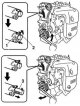
Fig. 2.170. Scheme of preparation of the timing chain tensioner mechanism for installation: 1 – pin; 2 – hook Press the ratchet, fully retract the plunger of the chain tensioner mechanism and hook the hook onto the pin...
Fig. 2.170. Scheme of preparation of the timing chain tensioner mechanism for installation: 1 – pin; 2 – hook Press the ratchet, fully retract the plunger of the chain tensioner mechanism and hook the hook onto the pin...
Setting the timing chain tensioner to working condition
Fig. 2.172. Putting the timing chain tensioner into working condition: 1 – hook; 2 – pin; 3 – plunger Turn the crankshaft counterclockwise and release the plunger pin from the hook. Then turn the crankshaft clockwise...
Fig. 2.172. Putting the timing chain tensioner into working condition: 1 – hook; 2 – pin; 3 – plunger Turn the crankshaft counterclockwise and release the plunger pin from the hook. Then turn the crankshaft clockwise...

Setting the piston of the first and fourth cylinders to TDC of the compression stroke
Fig. 2.173. Alignment of markings with marks on the camshaft bearing caps: 1 – marks on the lids; 2 – marking "0" Turn the crankshaft pulley and align its mark with the "0" mark on the timing chain cover. Make sure that...
Fig. 2.173. Alignment of markings with marks on the camshaft bearing caps: 1 – marks on the lids; 2 – marking "0" Turn the crankshaft pulley and align its mark with the "0" mark on the timing chain cover. Make sure that...

Final assembly of the unit
Install the camshaft position sensor, tightening it to a torque of 9 N·m. Fig. 2.176. Places of sealant application Apply new sealant to the areas shown in Figure 2.176. Fig. 2.177. Cylinder head cover mounting bolts...
Install the camshaft position sensor, tightening it to a torque of 9 N·m. Fig. 2.176. Places of sealant application Apply new sealant to the areas shown in Figure 2.176. Fig. 2.177. Cylinder head cover mounting bolts...
This section is available on: russian, bulgarian, belarusian, ukrainian, serbian, croatian, romanian, polish, slovak, hungarian
Similar sections for other Toyota models
➥ Engine overhaul Toyota Corona T190 (1992-1997)
➥ Engine overhaul Toyota 4Runner N120 (1989-1995)
➥ Overhaul engine Toyota Dyna Y50/Y60 (1984-1995)
➥ Engine repair Toyota Carina T190 (1992-1996)
➥ Engine overhaul Toyota RAV 4 XA10 (1994-2000)
➥ Overhaul of engines Toyota Highlander 1 (2000-2007, petrol)
Link in different formats to this article
TEXTHTMLBB Code
- User manual
- Vehicle description
- Keys, locks and alarms
- Governing bodies
- Salon equipment
- Driving and operation
- Maintenance
- Power unit
- 4-cylinder engine
- Control system (I4)
- Engine overhaul (I4)
- 6-cylinder engine
- Control system (V6)
- Engine overhaul (V6)
- Transmission
- Clutch
- Mechanical gearbox
- Automatic gearbox
- Drive mechanism
- Chassis, running gear
- Wheels and tires
- Car suspension
- Steering
- Brake system
- Body and interior
- Exterior (external elements)
- Doors, locks and windows
- Air conditioning and heater
- Electrical equipment
- Equipment and devices
- Power devices
- Electrical circuits
- General information
- Controls and instruments
- Driving and operation
- Daily care
- Maintenance
- Power unit
- 4-cylinder engine
- 6-cylinder engine
- Engine overhaul
- Engine electrical equipment
- Cooling system
- Heating and ventilation
- Fuel system
- Exhaust system
- Transmission
- Mechanical gearbox
- Automatic gearbox
- Clutch
- Chassis, running gear
- Suspension and axle shafts
- Steering
- Brake system
- Body and interior
- Exterior (external elements)
- Interior (internal elements)
- Doors, locks and windows
- Electrical equipment
- Equipment and devices
- Electrical circuits
- General information
- User manual
- Maintenance
- Power unit
- 4-cylinder engine
- 6-cylinder engine
- Overhaul of engines
- Cooling and heating
- Fuel system
- Engine electrical equipment
- Control system
- Transmission
- Mechanical gearbox
- Automatic gearbox
- Clutch and drive shafts
- Chassis, running gear
- Brake system
- Car suspension
- Steering
- Body and interior
- Exterior (external elements)
- Interior (internal elements)
- Doors, locks and windows
- Electrical equipment
- Equipment and devices
- Headlights and lighting
- Electrical circuits
- General information
- User manual
- Maintenance
- Power unit
- Petrol engines
- Diesel engines
- Engine overhaul
- Cooling and lubrication system
- Fuel system (diesel)
- Fuel injection (petrol)
- Engine electrical equipment
- Transmission
- Clutch and cardan
- Automatic gearbox
- Chassis, running gear
- Front suspension
- Rear suspension
- Steering
- Brake system
- Body and interior
- Body elements
- Air conditioning and heater
- SRS security system
- Electrical equipment
- Equipment and devices
- Electrical circuits