



Share information:
Driving and vehicle malfunctions Toyota Camry 3 (XV30)

Recommended fuel
Selecting the correct fuel is very important for satisfactory engine performance. Engine damage caused by using the wrong fuel is not covered by your new Toyota vehicle warranty. Use only unleaded gasoline. To help...
Selecting the correct fuel is very important for satisfactory engine performance. Engine damage caused by using the wrong fuel is not covered by your new Toyota vehicle warranty. Use only unleaded gasoline. To help...
Operating a vehicle in other countries
If you are planning to travel abroad in your car, prepare for it in advance: research local car registration and insurance regulations; check the possibility of refueling the vehicle with fuel of suitable quality in the...
If you are planning to travel abroad in your car, prepare for it in advance: research local car registration and insurance regulations; check the possibility of refueling the vehicle with fuel of suitable quality in the...
Refueling a car from barrels and ground tanks
To ensure fire safety, fuel dispensing pumps and connecting fuel hoses must be reliably grounded. This requirement is especially relevant for mobile petrol stations. Dispensing pumps and fuel hoses, especially those...
To ensure fire safety, fuel dispensing pumps and connecting fuel hoses must be reliably grounded. This requirement is especially relevant for mobile petrol stations. Dispensing pumps and fuel hoses, especially those...
Car break-in period
Drive smoothly and avoid high speeds. Your car does not require a complicated break-in period. However, following a few simple recommendations for the first 1000 km can help you save money and extend the life of your...
Drive smoothly and avoid high speeds. Your car does not require a complicated break-in period. However, following a few simple recommendations for the first 1000 km can help you save money and extend the life of your...

Ignition switch with steering lock
"START" – turns on the starter. When released, the key returns to the "ON" position. "ON" – switching on the engine and all auxiliary equipment, normal position when driving. "ACC" - auxiliary equipment, such as a...
"START" – turns on the starter. When released, the key returns to the "ON" position. "ON" – switching on the engine and all auxiliary equipment, normal position when driving. "ACC" - auxiliary equipment, such as a...

Automatic transmission
This automatic transmission has a gear lock system to minimize incorrect operation. This means that shifting can only be done from the "P" position when the brake pedal is depressed (if the ignition switch is in the...
This automatic transmission has a gear lock system to minimize incorrect operation. This means that shifting can only be done from the "P" position when the brake pedal is depressed (if the ignition switch is in the...

Manual transmission
Fig. 1.127. Manual gearbox lever shift diagram The diagram of the manual transmission lever shift is shown in Figure 1.127. When changing gears, press the clutch pedal all the way down, then release it slowly. Do not...
Fig. 1.127. Manual gearbox lever shift diagram The diagram of the manual transmission lever shift is shown in Figure 1.127. When changing gears, press the clutch pedal all the way down, then release it slowly. Do not...
Traction control system
The traction control system automatically helps prevent front wheel spin when starting off and accelerating the vehicle on slippery road surfaces. If the ignition key is turned to the "ON" position, the system is turned...
The traction control system automatically helps prevent front wheel spin when starting off and accelerating the vehicle on slippery road surfaces. If the ignition key is turned to the "ON" position, the system is turned...

Normal driving mode
Leave the system on during normal driving so that it can be activated when needed. When starting the engine, or immediately after the vehicle starts moving, you may hear a sound in the engine compartment for a few...
Leave the system on during normal driving so that it can be activated when needed. When starting the engine, or immediately after the vehicle starts moving, you may hear a sound in the engine compartment for a few...

Driving with the traction control system turned off
To get out of mud, fresh snow, etc., turn off the traction control system. This system regulates the engine, so it prevents the front wheels from becoming loose. Fig. 1.129. Location of the "TRC OFF" switch To turn off...
To get out of mud, fresh snow, etc., turn off the traction control system. This system regulates the engine, so it prevents the front wheels from becoming loose. Fig. 1.129. Location of the "TRC OFF" switch To turn off...
Vehicle stability control system
The vehicle stability control system helps provide comprehensive control of systems such as the anti-lock braking system, traction control system, engine management system, etc. This system automatically adjusts the...
The vehicle stability control system helps provide comprehensive control of systems such as the anti-lock braking system, traction control system, engine management system, etc. This system automatically adjusts the...

Control lamp of the stability control system «VSC»
Figure 1.130. Control lamp of the stability control system "VSC" This lamp warns of a malfunction in the vehicle's stability control system or traction control system (fig. 1.130). This lamp lights up for a few seconds...
Figure 1.130. Control lamp of the stability control system "VSC" This lamp warns of a malfunction in the vehicle's stability control system or traction control system (fig. 1.130). This lamp lights up for a few seconds...
Parking brake
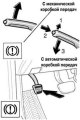
When parking, ensure that the parking brake is securely applied to prevent the vehicle from accidentally moving. With manual transmission Fig. 1.131. Lever and pedal of the parking brake system To turn on: pull the...
When parking, ensure that the parking brake is securely applied to prevent the vehicle from accidentally moving. With manual transmission Fig. 1.131. Lever and pedal of the parking brake system To turn on: pull the...

Adjusting the parking brake pedal and/or lever
1. Remove the rear wheel. Fig. 1.133. Adjusting the stroke of the parking brake lever 2. Adjust the gap between the parking brake shoes (fig. 1.133). 3. Install the rear wheel. Tightening torque: 103 Nm (1.050 kgf cm)....
1. Remove the rear wheel. Fig. 1.133. Adjusting the stroke of the parking brake lever 2. Adjust the gap between the parking brake shoes (fig. 1.133). 3. Install the rear wheel. Tightening torque: 103 Nm (1.050 kgf cm)....
Vehicle stability control (cruise control)
Cruise control allows you to drive at the desired speed above 40 km/h without pressing the accelerator pedal. Speed can be maintained uphill or downhill within the engine's operating limits, although a slight change in...
Cruise control allows you to drive at the desired speed above 40 km/h without pressing the accelerator pedal. Speed can be maintained uphill or downhill within the engine's operating limits, although a slight change in...

Enabling the stability control system
Fig. 1.134. Stability control system activation button To turn on cruise control, press the "ON-OFF" button (fig. 1.134). The system will turn on. The indicator lamp on the instrument panel will inform you that you can...
Fig. 1.134. Stability control system activation button To turn on cruise control, press the "ON-OFF" button (fig. 1.134). The system will turn on. The indicator lamp on the instrument panel will inform you that you can...

Cruise control system
Setting the desired speed On vehicles with automatic transmission, the selector lever must be in the "D" position before setting the cruise control speed. Fig. 1.135. Modes for setting the speed of the control lever of...
Setting the desired speed On vehicles with automatic transmission, the selector lever must be in the "D" position before setting the cruise control speed. Fig. 1.135. Modes for setting the speed of the control lever of...
Three-way catalytic converters
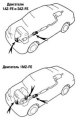
Fig. 1.136. Types of three-channel catalytic converters A three-way catalytic converter is an emission control device installed in the exhaust system (fig. 1.136). Its purpose is to reduce the amount of pollutants in...
Fig. 1.136. Types of three-channel catalytic converters A three-way catalytic converter is an emission control device installed in the exhaust system (fig. 1.136). Its purpose is to reduce the amount of pollutants in...
Precautions regarding engine exhaust gases
Avoid breathing engine exhaust fumes. They contain carbon monoxide, a colorless, odorless gas. It can cause unconsciousness or even death. Make sure the exhaust system has no holes or loose connections. The system...
Avoid breathing engine exhaust fumes. They contain carbon monoxide, a colorless, odorless gas. It can cause unconsciousness or even death. Make sure the exhaust system has no holes or loose connections. The system...
Engine oil consumption
Motor oil performs the basic functions of lubrication and cooling inside the engine and plays an important role in keeping the engine in good working condition. It is normal for some amount of engine oil to be consumed...
Motor oil performs the basic functions of lubrication and cooling inside the engine and plays an important role in keeping the engine in good working condition. It is normal for some amount of engine oil to be consumed...

Spark plugs with iridium tips
Fig. 1.137. Spark plug with an iridium tip The Toyota Camry engine is equipped with spark plugs with iridium tips (fig. 1.137). Use only iridium tip spark plugs and do not adjust gaps to ensure your engine's performance...
Fig. 1.137. Spark plug with an iridium tip The Toyota Camry engine is equipped with spark plugs with iridium tips (fig. 1.137). Use only iridium tip spark plugs and do not adjust gaps to ensure your engine's performance...
Brake system — general information
The tandem master cylinder brake system is a hydraulic system with two separate subsystems. If one subsystem fails, the other will still work. However, the pedal will become harder to press and your stopping distance...
The tandem master cylinder brake system is a hydraulic system with two separate subsystems. If one subsystem fails, the other will still work. However, the pedal will become harder to press and your stopping distance...
Adjusting the height of the brake pedal
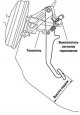
Fig. 1.138. Brake pedal height adjustment diagram Check and adjust the brake pedal height (fig. 1.138). Check the brake pedal height. Pedal height from floor: 144.1–154.1 mm. Adjust the brake pedal height. Remove the...
Fig. 1.138. Brake pedal height adjustment diagram Check and adjust the brake pedal height (fig. 1.138). Check the brake pedal height. Pedal height from floor: 144.1–154.1 mm. Adjust the brake pedal height. Remove the...
Checking the free travel of the brake pedal
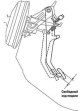
Fig. 1.139. Brake pedal free travel check diagram Stop the engine and press the brake pedal several times until there is no vacuum left in the booster (fig. 1.139). Press the pedal until you feel a noticeable...
Fig. 1.139. Brake pedal free travel check diagram Stop the engine and press the brake pedal several times until there is no vacuum left in the booster (fig. 1.139). Press the pedal until you feel a noticeable...

Checking the brake pedal travel reserve
Fig. 1.140. Brake pedal travel reserve check diagram Release the parking brake pedal (fig. 1.140). With the engine running, press the pedal and measure the amount of pedal travel as shown. Left-hand drive vehicles:...
Fig. 1.140. Brake pedal travel reserve check diagram Release the parking brake pedal (fig. 1.140). With the engine running, press the pedal and measure the amount of pedal travel as shown. Left-hand drive vehicles:...
Anti-lock braking system (ABS)
The anti-lock braking system is designed to help prevent the wheels from locking during sudden braking or braking on slippery road surfaces. This helps ensure the vehicle's directional stability and steering performance...
The anti-lock braking system is designed to help prevent the wheels from locking during sudden braking or braking on slippery road surfaces. This helps ensure the vehicle's directional stability and steering performance...

Anti-lock Brake System (ABS) Warning Light
Figure 1.141. Control lamp of the "ABS" system Control lamp of the "ABS" system (without vehicle stability control system) (fig. 1.141). This light comes on when the ignition key is turned to the "ON" position. If the...
Figure 1.141. Control lamp of the "ABS" system Control lamp of the "ABS" system (without vehicle stability control system) (fig. 1.141). This light comes on when the ignition key is turned to the "ON" position. If the...
Parking brake system of drum-disc type
The Camry is equipped with a drum-disc type parking brake system. This type of brake system requires periodic bedding of the brake shoes or when replacing the parking brake shoes and/or drums. Contact your Toyota dealer...
The Camry is equipped with a drum-disc type parking brake system. This type of brake system requires periodic bedding of the brake shoes or when replacing the parking brake shoes and/or drums. Contact your Toyota dealer...
Auxiliary braking system
If you apply the brakes suddenly, the brake assist system will interpret this as an emergency stop and provide enhanced braking to assist the driver who is unable to maintain a firm hold on the brake pedal. If you slam...
If you apply the brakes suddenly, the brake assist system will interpret this as an emergency stop and provide enhanced braking to assist the driver who is unable to maintain a firm hold on the brake pedal. If you slam...

Brake lining wear indicator
Fig. 1.142. Brake lining wear indication Brake pad wear indicators on disc brakes make a warning noise when the brake pads have worn to the point where they need to be replaced (fig. 1.142). If you hear a squealing or...
Fig. 1.142. Brake lining wear indication Brake pad wear indicators on disc brakes make a warning noise when the brake pads have worn to the point where they need to be replaced (fig. 1.142). If you hear a squealing or...
Starting the car engine
Before starting the engine 1. Inspect the area around the vehicle before getting into it. 2. Adjust the seat position, seatback angle, seat cushion height, headrest height and steering wheel angle. 3. Adjust the...
Before starting the engine 1. Inspect the area around the vehicle before getting into it. 2. Adjust the seat position, seatback angle, seat cushion height, headrest height and steering wheel angle. 3. Adjust the...
Driving a car in different conditions
Always reduce your speed in gusty crosswinds. This will allow you to control your car much better. Drive slowly onto curbs and, if possible, at right angles. Avoid driving over tall, sharp-edged objects and other road...
Always reduce your speed in gusty crosswinds. This will allow you to control your car much better. Drive slowly onto curbs and, if possible, at right angles. Avoid driving over tall, sharp-edged objects and other road...
Driving a car in winter
More severe operating conditions in winter lead to greater wear of vehicle parts and components. To minimize winter operating problems, you should follow the recommendations below. Driving on snow or ice For driving in...
More severe operating conditions in winter lead to greater wear of vehicle parts and components. To minimize winter operating problems, you should follow the recommendations below. Driving on snow or ice For driving in...
Towing a trailer
Your vehicle is designed primarily as a passenger vehicle for transporting passengers. Towing a trailer will negatively impact handling, performance, braking, durability, and fuel economy while driving (fuel...
Your vehicle is designed primarily as a passenger vehicle for transporting passengers. Towing a trailer will negatively impact handling, performance, braking, durability, and fuel economy while driving (fuel...
If the car does not start
Simple checks Before checking, be sure to perform the starting procedure and make sure there is enough fuel. Try starting the engine with other keys. If this works, your key may be faulty. Have your Toyota dealer check...
Simple checks Before checking, be sure to perform the starting procedure and make sure there is enough fuel. Try starting the engine with other keys. If this works, your key may be faulty. Have your Toyota dealer check...
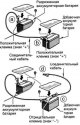
Jump starting with an additional battery
To avoid serious injury and vehicle damage from battery explosion, acid burns, electrical burns, and electronic damage, these instructions must be followed carefully. If you do not understand any part of this procedure,...
To avoid serious injury and vehicle damage from battery explosion, acid burns, electrical burns, and electronic damage, these instructions must be followed carefully. If you do not understand any part of this procedure,...
If the car engine overheats
Engine coolant overheating as indicated by the gauge, loss of power, loud detonation or humming noise indicate that the engine is likely overheating. In this case, you must do the following. 1. Carefully pull off the...
Engine coolant overheating as indicated by the gauge, loss of power, loud detonation or humming noise indicate that the engine is likely overheating. In this case, you must do the following. 1. Carefully pull off the...

On-board tool, jack and spare tire
Fig. 1.145. Storage locations for on-board tools, jack and spare wheel: 1 – jack handle; 2 - Wheel spanner; 3 – Front towing eye; 4 – Tool bag; 5 – jack; 6 – spare tire To prepare for a possible critical situation, it...
Fig. 1.145. Storage locations for on-board tools, jack and spare wheel: 1 – jack handle; 2 - Wheel spanner; 3 – Front towing eye; 4 – Tool bag; 5 – jack; 6 – spare tire To prepare for a possible critical situation, it...

Removal the decorative wheel cap (with steel rims)
Fig. 1.149. Removing the decorative cap Remove the decorative wheel cap (fig. 1.149). Fig. 1.150. Loosening the wheel nuts Remove the wheel trim using the beveled end of a wheel spanner as shown in Figure 1.150. Loosen...
Fig. 1.149. Removing the decorative cap Remove the decorative wheel cap (fig. 1.149). Fig. 1.150. Loosening the wheel nuts Remove the wheel trim using the beveled end of a wheel spanner as shown in Figure 1.150. Loosen...

Installing the jack
The vehicle must be unloaded before jacking. Never jack up a loaded vehicle. When removing heavy components such as an engine or gearbox, the vehicle's center of gravity may shift. To stabilize the vehicle, use a weight...
The vehicle must be unloaded before jacking. Never jack up a loaded vehicle. When removing heavy components such as an engine or gearbox, the vehicle's center of gravity may shift. To stabilize the vehicle, use a weight...

Replacing a damaged wheel
Remove the wheel nuts and replace the tires. Remove the flat tire by pulling it to the side and set it aside. Fig. 1.154. Installing the spare wheel Roll the spare tire into position and align the holes in the wheel...
Remove the wheel nuts and replace the tires. Remove the flat tire by pulling it to the side and set it aside. Fig. 1.154. Installing the spare wheel Roll the spare tire into position and align the holes in the wheel...
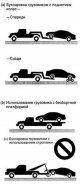
Towing a car
If your vehicle needs to be towed, it is recommended that you contact your Toyota dealer or use a specialist towing service. Consult with them about which method is best – a or b – It is better to tow your car. To...
If your vehicle needs to be towed, it is recommended that you contact your Toyota dealer or use a specialist towing service. Consult with them about which method is best – a or b – It is better to tow your car. To...
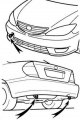
Towing a car in an emergency
If towing services are not available in an emergency, the vehicle can be towed by attaching a rope or chain to one of the towing eyes located underneath the vehicle. Use extreme caution when towing the vehicle. Fig....
If towing services are not available in an emergency, the vehicle can be towed by attaching a rope or chain to one of the towing eyes located underneath the vehicle. Use extreme caution when towing the vehicle. Fig....

Installing the front towing eye
Fig. 1.159. Removing the front towing eye from the spare wheel cover 1. Remove and turn over the spare tire cover. Remove the front towing eye by turning it as shown in Figure 1.159. Fig. 1.160. Removing the decorative...
Fig. 1.159. Removing the front towing eye from the spare wheel cover 1. Remove and turn over the spare tire cover. Remove the front towing eye by turning it as shown in Figure 1.159. Fig. 1.160. Removing the decorative...

Inability to shift the automatic transmission selector lever
Fig. 1.163. Automatic transmission selector lever lock release button If you cannot shift the selector lever from the "P" position to another position even after depressing the brake pedal, use the shift lock release...
Fig. 1.163. Automatic transmission selector lever lock release button If you cannot shift the selector lever from the "P" position to another position even after depressing the brake pedal, use the shift lock release...
This section is available on: russian, bulgarian, belarusian, ukrainian, serbian, croatian, romanian, polish, slovak, hungarian
Link in different formats to this article
TEXTHTMLBB Code
- User manual
- Vehicle description
- Keys, locks and alarms
- Governing bodies
- Salon equipment
- Driving and operation
- Maintenance
- Power unit
- 4-cylinder engine
- Control system (I4)
- Engine overhaul (I4)
- 6-cylinder engine
- Control system (V6)
- Engine overhaul (V6)
- Transmission
- Clutch
- Mechanical gearbox
- Automatic gearbox
- Drive mechanism
- Chassis, running gear
- Wheels and tires
- Car suspension
- Steering
- Brake system
- Body and interior
- Exterior (external elements)
- Doors, locks and windows
- Air conditioning and heater
- Electrical equipment
- Equipment and devices
- Power devices
- Electrical circuits
- General information
- Controls and instruments
- Driving and operation
- Daily care
- Maintenance
- Power unit
- 4-cylinder engine
- 6-cylinder engine
- Engine overhaul
- Engine electrical equipment
- Cooling system
- Heating and ventilation
- Fuel system
- Exhaust system
- Transmission
- Mechanical gearbox
- Automatic gearbox
- Clutch
- Chassis, running gear
- Suspension and axle shafts
- Steering
- Brake system
- Body and interior
- Exterior (external elements)
- Interior (internal elements)
- Doors, locks and windows
- Electrical equipment
- Equipment and devices
- Electrical circuits
- General information
- User manual
- Maintenance
- Power unit
- 4-cylinder engine
- 6-cylinder engine
- Overhaul of engines
- Cooling and heating
- Fuel system
- Engine electrical equipment
- Control system
- Transmission
- Mechanical gearbox
- Automatic gearbox
- Clutch and drive shafts
- Chassis, running gear
- Brake system
- Car suspension
- Steering
- Body and interior
- Exterior (external elements)
- Interior (internal elements)
- Doors, locks and windows
- Electrical equipment
- Equipment and devices
- Headlights and lighting
- Electrical circuits
- General information
- User manual
- Maintenance
- Power unit
- Petrol engines
- Diesel engines
- Engine overhaul
- Cooling and lubrication system
- Fuel system (diesel)
- Fuel injection (petrol)
- Engine electrical equipment
- Transmission
- Clutch and cardan
- Automatic gearbox
- Chassis, running gear
- Front suspension
- Rear suspension
- Steering
- Brake system
- Body and interior
- Body elements
- Air conditioning and heater
- SRS security system
- Electrical equipment
- Equipment and devices
- Electrical circuits