



Share information:
Car engine management system Toyota Camry 1 (XV10)

Technical specifications
EGR Temperature Sensor Resistance – at a temperature of 45°C 69 – 89 kOhm – at a temperature of 100°C 11 – 15 kOhm – at a temperature of 150°C 2 – 4 kOhm
EGR Temperature Sensor Resistance – at a temperature of 45°C 69 – 89 kOhm – at a temperature of 100°C 11 – 15 kOhm – at a temperature of 150°C 2 – 4 kOhm

General information about the toxicity reduction system
Four-cylinder engine emission control system 1 – diagnostic connector; 2 – EGR vacuum modulator; 3 – EGR valve; 4 – MAP sensor; 5 – TPF (behind the throttle body); 6 – coolant temperature sensor; 7 – ignition...
Four-cylinder engine emission control system 1 – diagnostic connector; 2 – EGR vacuum modulator; 3 – EGR valve; 4 – MAP sensor; 5 – TPF (behind the throttle body); 6 – coolant temperature sensor; 7 – ignition...

Electronic Control System (TCCS)
Location of the electronic control unit ECM in the car The electronic control unit (ECM) receives signals from various sensors that monitor the changing operating modes of the engine, such as the volume of air entering...
Location of the electronic control unit ECM in the car The electronic control unit (ECM) receives signals from various sensors that monitor the changing operating modes of the engine, such as the volume of air entering...

ECM self-diagnosis system
The ECM electronic control unit contains a built-in self-diagnostic system that detects and recognizes faults. When a fault occurs, the "check engine" indicator light comes on, the fault is identified and a diagnostic...
The ECM electronic control unit contains a built-in self-diagnostic system that detects and recognizes faults. When a fault occurs, the "check engine" indicator light comes on, the fault is identified and a diagnostic...

Coolant temperature sensor
Coolant temperature sensor resistance versus temperature Coolant Temperature Sensor Location on a Four Cylinder Engine The coolant temperature sensor is a thermistor that changes its resistance depending on the...
Coolant temperature sensor resistance versus temperature Coolant Temperature Sensor Location on a Four Cylinder Engine The coolant temperature sensor is a thermistor that changes its resistance depending on the...

Oxygen sensor
Caution! Use only a pointer voltmeter, as it is necessary to observe the oscillation of the pointer. One or two oxygen sensors are installed on cars. On models with two sensors, the main oxygen sensor is installed...
Caution! Use only a pointer voltmeter, as it is necessary to observe the oscillation of the pointer. One or two oxygen sensors are installed on cars. On models with two sensors, the main oxygen sensor is installed...
Throttle position sensor
The throttle position sensor is located at the end of the throttle shaft in the throttle body. By measuring the output voltage of the throttle position sensor, the ECM changes the amount of fuel supplied in accordance...
The throttle position sensor is located at the end of the throttle shaft in the throttle body. By measuring the output voltage of the throttle position sensor, the ECM changes the amount of fuel supplied in accordance...

Air flow meter (3VZ-FE V6 engines only)
Checking the resistance between the contacts of the air flow meter connector on the 3VZ-FE V6 engine The air flow meter measures the amount of air entering the engine. Based on the information from the air flow meter,...
Checking the resistance between the contacts of the air flow meter connector on the 3VZ-FE V6 engine The air flow meter measures the amount of air entering the engine. Based on the information from the air flow meter,...

MAF sensor for measuring the mass air flow (engine 1MZ-FE)
Checking the resistance of the air mass flow sensor when the engine is warming up (1MZ-FE V6 engine) The air mass flow sensor is located in the intake duct. The sensor operates by measuring the resistance of a heated...
Checking the resistance of the air mass flow sensor when the engine is warming up (1MZ-FE V6 engine) The air mass flow sensor is located in the intake duct. The sensor operates by measuring the resistance of a heated...
Absolute pressure sensor (four-cylinder engines)
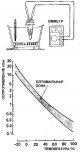
Dependence of the change in resistance of the temperature sensor of the air entering the engine on the temperature The intake manifold absolute pressure sensor induces a signal from 4 V in the absence of vacuum to 0.5 V...
Dependence of the change in resistance of the temperature sensor of the air entering the engine on the temperature The intake manifold absolute pressure sensor induces a signal from 4 V in the absence of vacuum to 0.5 V...

EGR temperature sensor
EGR temperature sensor (exhaust gas re-incineration systems) installed near the EGR valve. 1. To test the sensor, disconnect the electrical connector from it and measure the sensor's resistance at different...
EGR temperature sensor (exhaust gas re-incineration systems) installed near the EGR valve. 1. To test the sensor, disconnect the electrical connector from it and measure the sensor's resistance at different...

Knock sensor (V6 engines only)
The knock sensor detects detonation in the engine cylinders and transmits a control signal to the ECM, which reduces the ignition timing by an amount that eliminates detonation in the engine cylinders. 1. The knock...
The knock sensor detects detonation in the engine cylinders and transmits a control signal to the ECM, which reduces the ignition timing by an amount that eliminates detonation in the engine cylinders. 1. The knock...

Camshaft Position Sensor (1MZ-FE Engine)
The camshaft position sensor is located in the cylinder head near the timing belt cover. 1. Using an ohmmeter, check the resistance of the camshaft position sensor, which, depending on the temperature, should be between...
The camshaft position sensor is located in the cylinder head near the timing belt cover. 1. Using an ohmmeter, check the resistance of the camshaft position sensor, which, depending on the temperature, should be between...

Crankshaft angle sensor (1MZ-FE engines)
Location of the crankshaft angle sensor on the engine The crankshaft angle sensor is located in the front cover near the crankshaft pulley.
Location of the crankshaft angle sensor on the engine The crankshaft angle sensor is located in the front cover near the crankshaft pulley.

Air Induction System (ACIS) — Check
Arrangement of elements of the induction air supply system to the engine The induction air supply system changes the direction of air flow in the intake manifold depending on engine speed. The system's actuator is...
Arrangement of elements of the induction air supply system to the engine The induction air supply system changes the direction of air flow in the intake manifold depending on engine speed. The system's actuator is...

Air Induction System (ACIS) — Replacement
Warning! If your radio has an anti-theft code, check that you have the connection codes before disconnecting the battery. Caution! On models from 1993 onwards, the airbag system is disabled if the battery is...
Warning! If your radio has an anti-theft code, check that you have the connection codes before disconnecting the battery. Caution! On models from 1993 onwards, the airbag system is disabled if the battery is...

Exhaust Gas Recirculation (EGR) System
Scheme of operation of the exhaust gas re-burning system To reduce the emission of nitrogen oxide into the atmosphere along with the exhaust gases, part of the exhaust gases enters the intake manifold through the EGR...
Scheme of operation of the exhaust gas re-burning system To reduce the emission of nitrogen oxide into the atmosphere along with the exhaust gases, part of the exhaust gases enters the intake manifold through the EGR...
Crankcase ventilation system (PCV)
To reduce the emission of unburned hydrocarbons from the crankcase into the atmosphere when the engine is sealed, crankcase gases and oil vapor are drawn from the crankcase into the air supply tract of the engine and...
To reduce the emission of unburned hydrocarbons from the crankcase into the atmosphere when the engine is sealed, crankcase gases and oil vapor are drawn from the crankcase into the air supply tract of the engine and...

Exhaust system catalytic converter — general information
Removal the catalytic converter together with the exhaust system from under the car If there is damage or dents on the catalytic converter housing, it must be replaced It is necessary to periodically check that there is...
Removal the catalytic converter together with the exhaust system from under the car If there is damage or dents on the catalytic converter housing, it must be replaced It is necessary to periodically check that there is...
Engine Management System Fault Codes
Fault code Electrical circuit Diagnosis Malfunction area Code 1 – 1 flash, pause, 1 flash Fine There are no faults Code 12 – 1 flash, pause, 2 flashes RPM signal No NE signal is sent to the ECM within a few seconds of...
Fault code Electrical circuit Diagnosis Malfunction area Code 1 – 1 flash, pause, 1 flash Fine There are no faults Code 12 – 1 flash, pause, 2 flashes RPM signal No NE signal is sent to the ECM within a few seconds of...
This section is available on: russian, bulgarian, belarusian, ukrainian, serbian, croatian, romanian, polish, slovak, hungarian
Similar sections for other Toyota models
➥ Control system (diesel) Toyota RAV 4 XA20 (2000-2005)
➥ Control system Toyota Highlander 1 (2000-2007, petrol)
➥ Engine management systems Toyota Cruiser 100 (1998-2007)
➥ Control system Toyota Corolla Verso 3 (2004-2009)
➥ Control system (petrol) Toyota Corona T190 (1992-1997)
Link in different formats to this article
TEXTHTMLBB Code
- User manual
- Vehicle description
- Keys, locks and alarms
- Governing bodies
- Salon equipment
- Driving and operation
- Maintenance
- Power unit
- 4-cylinder engine
- Control system (I4)
- Engine overhaul (I4)
- 6-cylinder engine
- Control system (V6)
- Engine overhaul (V6)
- Transmission
- Clutch
- Mechanical gearbox
- Automatic gearbox
- Drive mechanism
- Chassis, running gear
- Wheels and tires
- Car suspension
- Steering
- Brake system
- Body and interior
- Exterior (external elements)
- Doors, locks and windows
- Air conditioning and heater
- Electrical equipment
- Equipment and devices
- Power devices
- Electrical circuits
- General information
- Controls and instruments
- Driving and operation
- Daily care
- Maintenance
- Power unit
- 4-cylinder engine
- 6-cylinder engine
- Engine overhaul
- Engine electrical equipment
- Cooling system
- Heating and ventilation
- Fuel system
- Exhaust system
- Transmission
- Mechanical gearbox
- Automatic gearbox
- Clutch
- Chassis, running gear
- Suspension and axle shafts
- Steering
- Brake system
- Body and interior
- Exterior (external elements)
- Interior (internal elements)
- Doors, locks and windows
- Electrical equipment
- Equipment and devices
- Electrical circuits
- General information
- User manual
- Maintenance
- Power unit
- 4-cylinder engine
- 6-cylinder engine
- Overhaul of engines
- Cooling and heating
- Fuel system
- Engine electrical equipment
- Control system
- Transmission
- Mechanical gearbox
- Automatic gearbox
- Clutch and drive shafts
- Chassis, running gear
- Brake system
- Car suspension
- Steering
- Body and interior
- Exterior (external elements)
- Interior (internal elements)
- Doors, locks and windows
- Electrical equipment
- Equipment and devices
- Headlights and lighting
- Electrical circuits
- General information
- User manual
- Maintenance
- Power unit
- Petrol engines
- Diesel engines
- Engine overhaul
- Cooling and lubrication system
- Fuel system (diesel)
- Fuel injection (petrol)
- Engine electrical equipment
- Transmission
- Clutch and cardan
- Automatic gearbox
- Chassis, running gear
- Front suspension
- Rear suspension
- Steering
- Brake system
- Body and interior
- Body elements
- Air conditioning and heater
- SRS security system
- Electrical equipment
- Equipment and devices
- Electrical circuits