



Share information:
Brake system of the car Toyota Camry 1 (XV10)

Technical characteristics of the brake system
Disc brakes Front Disc Thickness: - nominal 28 mm - minimum 26 mm Rear Disc Thickness: - nominal 10 mm - minimum 9 mm Brake disc runout 0.05 mm Minimum thickness of handbrake shoe 0.8 mm Drum brakes Brake lining...
Disc brakes Front Disc Thickness: - nominal 28 mm - minimum 26 mm Rear Disc Thickness: - nominal 10 mm - minimum 9 mm Brake disc runout 0.05 mm Minimum thickness of handbrake shoe 0.8 mm Drum brakes Brake lining...
General information about the brake system
The vehicle uses a hydraulically driven service brake system with diagonally split circuits, which significantly increases the safety of driving the vehicle. The brake system consists of a master cylinder, a vacuum...
The vehicle uses a hydraulically driven service brake system with diagonally split circuits, which significantly increases the safety of driving the vehicle. The brake system consists of a master cylinder, a vacuum...

Replacing disc brake pads
Attention! Always replace all pads on one axle of the vehicle, even if only one pad has reached the wear limit. If the pads are to be reinstalled, they must be marked before removal. Warning! When brake pads are in...
Attention! Always replace all pads on one axle of the vehicle, even if only one pad has reached the wear limit. If the pads are to be reinstalled, they must be marked before removal. Warning! When brake pads are in...

Disc Brake Caliper — Design Description
Warning! When brake pads are in use, brake dust is generated, which contains asbestos, which is harmful to health. Therefore, when cleaning the caliper, do not use compressed air and do not inhale the dust. Single...
Warning! When brake pads are in use, brake dust is generated, which contains asbestos, which is harmful to health. Therefore, when cleaning the caliper, do not use compressed air and do not inhale the dust. Single...

Disc Brake Caliper — Removal, Repair and Installation
Removal 1. Unscrew the bolt and disconnect the brake hose from the caliper. To prevent brake fluid from leaking, close the brake hose hole with a plug. 2. Replacing the brake caliper is part of the brake pad replacement...
Removal 1. Unscrew the bolt and disconnect the brake hose from the caliper. To prevent brake fluid from leaking, close the brake hose hole with a plug. 2. Replacing the brake caliper is part of the brake pad replacement...

Brake disc — inspection, removal and installation
Examination Cleaning the working surface of the brake disc with fine sandpaper The minimum thickness of the brake disc is stamped on the inner surface of the brake disc. Measuring the thickness of the brake disc 1....
Examination Cleaning the working surface of the brake disc with fine sandpaper The minimum thickness of the brake disc is stamped on the inner surface of the brake disc. Measuring the thickness of the brake disc 1....

Replacing brake shoes for drum brakes
Attention! Be sure to replace all the pads on one axle of the car, even if one pad has reached the wear limit. If the pads are to be reinstalled, they must be marked before removal. Warning! When brake pads are in...
Attention! Be sure to replace all the pads on one axle of the car, even if one pad has reached the wear limit. If the pads are to be reinstalled, they must be marked before removal. Warning! When brake pads are in...

Wheel brake cylinder — removal, repair and installation
Removal 1. Raise the rear of the vehicle and support it on stands. 2. Remove the brake drum. 3. Using a clamp, pinch the brake hose at the point closest to the wheel cylinder. 4. Remove any dirt around the junction of...
Removal 1. Raise the rear of the vehicle and support it on stands. 2. Remove the brake drum. 3. Using a clamp, pinch the brake hose at the point closest to the wheel cylinder. 4. Remove any dirt around the junction of...

Master Brake Cylinder — Removal, Repair and Installation
Master brake cylinder 1 – adapter with three tubes; 2 – adapter with two tubes; 3 – main brake cylinder; 4 – gasket; 5 – brake booster Removal 1. Disconnect the electrical connector from the brake fluid reservoir. 2....
Master brake cylinder 1 – adapter with three tubes; 2 – adapter with two tubes; 3 – main brake cylinder; 4 – gasket; 5 – brake booster Removal 1. Disconnect the electrical connector from the brake fluid reservoir. 2....

Brake lines and hoses
Unscrewing brake pipes When unscrewing the brake pipes, it is necessary to use an open-end wrench. Unscrewing the brake hose from the brake pipe When unscrewing the brake hose from the brake pipe, they must first be...
Unscrewing brake pipes When unscrewing the brake pipes, it is necessary to use an open-end wrench. Unscrewing the brake hose from the brake pipe When unscrewing the brake hose from the brake pipe, they must first be...

Bleeding the hydraulic brake system
Caution! When removing air, constantly monitor the presence of brake fluid in the reservoir, not allowing its bottom to become exposed, as this will allow air to enter the system again. Bleeding the hydraulic brake...
Caution! When removing air, constantly monitor the presence of brake fluid in the reservoir, not allowing its bottom to become exposed, as this will allow air to enter the system again. Bleeding the hydraulic brake...

Vacuum brake booster — checking, removal and installation
Examination 1. Press the brake pedal several times with the engine off to create the same pressure in the vacuum booster cavities, close to atmospheric. At the same time, by the force applied to the pedal, determine...
Examination 1. Press the brake pedal several times with the engine off to create the same pressure in the vacuum booster cavities, close to atmospheric. At the same time, by the force applied to the pedal, determine...

Replacing the handbrake pads on the rear disc brakes
Attention! Be sure to replace all pads, even if one pad has reached the wear limit. Warning! When brake pads are in operation, brake dust is generated which contains asbestos, which is harmful to health, so when...
Attention! Be sure to replace all pads, even if one pad has reached the wear limit. Warning! When brake pads are in operation, brake dust is generated which contains asbestos, which is harmful to health, so when...

Adjusting the parking brake
Lever drive If the handbrake lever travels a distance of 5 to 8 clicks when tightened to the stop, the handbrake adjustment is correct. If the travel is less than 5 clicks, the brake pads will be partially pressed...
Lever drive If the handbrake lever travels a distance of 5 to 8 clicks when tightened to the stop, the handbrake adjustment is correct. If the travel is less than 5 clicks, the brake pads will be partially pressed...

Replacing the handbrake cable
Rear cable 1. Raise the rear of the vehicle and secure it on stands. Remove the corresponding rear wheel. 2. Check that the handbrake is fully released and remove the brake disc or brake drum. 3. On models with drum...
Rear cable 1. Raise the rear of the vehicle and secure it on stands. Remove the corresponding rear wheel. 2. Check that the handbrake is fully released and remove the brake disc or brake drum. 3. On models with drum...
Brake light switch — removal, installation and adjustment
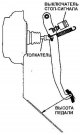
Removal and installation Location of the brake light switch The brake light switch is located at the top of the brake pedal bracket. 1. Disconnect the electrical connector from the brake light switch. 2. Loosen the lock...
Removal and installation Location of the brake light switch The brake light switch is located at the top of the brake pedal bracket. 1. Disconnect the electrical connector from the brake light switch. 2. Loosen the lock...
This section is available on: russian, bulgarian, belarusian, ukrainian, serbian, croatian, romanian, polish, slovak, hungarian
Similar sections for other Toyota models
➥ Brake system Toyota 4Runner N120 (1989-1995)
➥ Brake system Toyota Highlander 1 (2000-2007, petrol)
➥ Brake system Toyota Cruiser 100 (1998-2007)
➥ Brake system Toyota Corona T190 (1992-1997)
➥ Brake system Toyota Corolla E80 (1983-1990)
➥ Brake system Toyota Dyna Y50/Y60 (1984-1995)
Link in different formats to this article
TEXTHTMLBB Code
- User manual
- Vehicle description
- Keys, locks and alarms
- Governing bodies
- Salon equipment
- Driving and operation
- Maintenance
- Power unit
- 4-cylinder engine
- Control system (I4)
- Engine overhaul (I4)
- 6-cylinder engine
- Control system (V6)
- Engine overhaul (V6)
- Transmission
- Clutch
- Mechanical gearbox
- Automatic gearbox
- Drive mechanism
- Chassis, running gear
- Wheels and tires
- Car suspension
- Steering
- Brake system
- Body and interior
- Exterior (external elements)
- Doors, locks and windows
- Air conditioning and heater
- Electrical equipment
- Equipment and devices
- Power devices
- Electrical circuits
- General information
- Controls and instruments
- Driving and operation
- Daily care
- Maintenance
- Power unit
- 4-cylinder engine
- 6-cylinder engine
- Engine overhaul
- Engine electrical equipment
- Cooling system
- Heating and ventilation
- Fuel system
- Exhaust system
- Transmission
- Mechanical gearbox
- Automatic gearbox
- Clutch
- Chassis, running gear
- Suspension and axle shafts
- Steering
- Brake system
- Body and interior
- Exterior (external elements)
- Interior (internal elements)
- Doors, locks and windows
- Electrical equipment
- Equipment and devices
- Electrical circuits
- General information
- User manual
- Maintenance
- Power unit
- 4-cylinder engine
- 6-cylinder engine
- Overhaul of engines
- Cooling and heating
- Fuel system
- Engine electrical equipment
- Control system
- Transmission
- Mechanical gearbox
- Automatic gearbox
- Clutch and drive shafts
- Chassis, running gear
- Brake system
- Car suspension
- Steering
- Body and interior
- Exterior (external elements)
- Interior (internal elements)
- Doors, locks and windows
- Electrical equipment
- Equipment and devices
- Headlights and lighting
- Electrical circuits
- General information
- User manual
- Maintenance
- Power unit
- Petrol engines
- Diesel engines
- Engine overhaul
- Cooling and lubrication system
- Fuel system (diesel)
- Fuel injection (petrol)
- Engine electrical equipment
- Transmission
- Clutch and cardan
- Automatic gearbox
- Chassis, running gear
- Front suspension
- Rear suspension
- Steering
- Brake system
- Body and interior
- Body elements
- Air conditioning and heater
- SRS security system
- Electrical equipment
- Equipment and devices
- Electrical circuits