



Share information:
Car interior equipment Toyota Camry 3 (XV30)

Digital display watch
Fig. 1.75. Clock The clock with digital display is located at the top of the instrument panel above the center console (Fig. 1.75). To reset the clock: press the "H" button. To reset the minutes: press the "M" button....
Fig. 1.75. Clock The clock with digital display is located at the top of the instrument panel above the center console (Fig. 1.75). To reset the clock: press the "H" button. To reset the minutes: press the "M" button....

Outdoor temperature display
Fig. 1.76. Outside temperature display The outside temperature display shows the outside air temperature when the ignition is on (Fig. 1.76). The temperature range displayed on the display is from –30°C to 50°C. The key...
Fig. 1.76. Outside temperature display The outside temperature display shows the outside air temperature when the ignition is on (Fig. 1.76). The temperature range displayed on the display is from –30°C to 50°C. The key...

Multifunctional display
Fig. 1.77. Multifunctional display When you press the "INFO" button while the ignition switch is on, the following information is displayed on the clock or outside temperature indicator (Fig. 1.77). Each time you press...
Fig. 1.77. Multifunctional display When you press the "INFO" button while the ignition switch is on, the following information is displayed on the clock or outside temperature indicator (Fig. 1.77). Each time you press...
Cigarette lighter and ashtrays
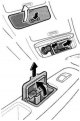
Fig. 1.78. Cigarette lighter and ashtrays To use the cigarette lighter, push it in. When it heats up, it will automatically pop out and be ready for use (Fig. 1.78). If the engine is not running, the key must be set to...
Fig. 1.78. Cigarette lighter and ashtrays To use the cigarette lighter, push it in. When it heats up, it will automatically pop out and be ready for use (Fig. 1.78). If the engine is not running, the key must be set to...

Sound signal
The horn button is located in the center of the steering wheel hub (cars without driver airbag) or along the edges of the steering wheel hub pad (cars with driver airbag). The sound signal can work both with the...
The horn button is located in the center of the steering wheel hub (cars without driver airbag) or along the edges of the steering wheel hub pad (cars with driver airbag). The sound signal can work both with the...
Power connectors
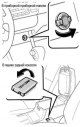
Fig. 1.79. Location of power connectors Power connectors are designed to supply electrical power to the vehicle's auxiliary accessories (Fig. 1.79). To use the power connectors, you must turn the key to the "ACC" or...
Fig. 1.79. Location of power connectors Power connectors are designed to supply electrical power to the vehicle's auxiliary accessories (Fig. 1.79). To use the power connectors, you must turn the key to the "ACC" or...

Glove box
Fig. 1.80. Opening and locking the glove compartment To use the glove box, pull the lever. When the instrument panel light is on, the glove box light will turn on when the glove box is opened. To lock: insert the main...
Fig. 1.80. Opening and locking the glove compartment To use the glove box, pull the lever. When the instrument panel light is on, the glove box light will turn on when the glove box is opened. To lock: insert the main...
Auxiliary storage boxes
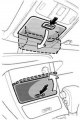
Fig. 1.81. Auxiliary storage boxes To use the boxes, open them as shown in Figure 1.81. Warning! To reduce the risk of injury in the event of an accident or sudden stop, always keep the auxiliary box closed while...
Fig. 1.81. Auxiliary storage boxes To use the boxes, open them as shown in Figure 1.81. Warning! To reduce the risk of injury in the event of an accident or sudden stop, always keep the auxiliary box closed while...
Rear console box
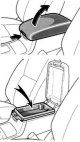
Fig. 1.82. Rear console box To access the rear console box, lift the release lever by lifting the rear console box lid (Fig. 1.82).
Fig. 1.82. Rear console box To access the rear console box, lift the release lever by lifting the rear console box lid (Fig. 1.82).
Front and rear cup holders
Cup holders are designed to securely hold cups or cans of drinks. With manual transmission: To use the cup holder, open the cover. With automatic transmission: To use the cup holder, press the cover. To ensure a secure...
Cup holders are designed to securely hold cups or cans of drinks. With manual transmission: To use the cup holder, open the cover. With automatic transmission: To use the cup holder, press the cover. To ensure a secure...

Cargo net
Fig. 1.83. Scheme of securing the cargo net To secure items, place the cargo net on the hooks (Fig. 1.83). Warning! Do not use the weight net to secure sharp or heavy objects. The net may tear. Be careful not to twist...
Fig. 1.83. Scheme of securing the cargo net To secure items, place the cargo net on the hooks (Fig. 1.83). Warning! Do not use the weight net to secure sharp or heavy objects. The net may tear. Be careful not to twist...

Rear sun shade
Fig. 1.84. Rear sunshade To raise the rear sunshade, pull out the tab of the visor and hang it on the brackets. To lower the sunshade, pull the tab slightly, remove it from the hook and carefully lower the sunshade...
Fig. 1.84. Rear sunshade To raise the rear sunshade, pull out the tab of the visor and hang it on the brackets. To lower the sunshade, pull the tab slightly, remove it from the hook and carefully lower the sunshade...

Steering wheel tilt
Fig. 1.85. Steering wheel position adjustment diagram The Camry is equipped with a height-adjustable steering wheel (Fig. 1.85). To change the steering wheel angle, grasp the steering wheel, pull the release lever...
Fig. 1.85. Steering wheel position adjustment diagram The Camry is equipped with a height-adjustable steering wheel (Fig. 1.85). To change the steering wheel angle, grasp the steering wheel, pull the release lever...

Exterior rear view mirrors
Fig. 1.86. Outside rearview mirror The driver's mirror is a wide-angle mirror with different curvature and dividing line. This provides different perception of distance on the inner and outer part of the dividing line...
Fig. 1.86. Outside rearview mirror The driver's mirror is a wide-angle mirror with different curvature and dividing line. This provides different perception of distance on the inner and outer part of the dividing line...

Control of electric drive of outside rear view mirrors
Fig. 1.87. External rearview mirror adjustment switches To adjust the mirror, use the switches (Fig. 1.87). 1. The main switch is used to select the mirror. Press the switch to the "L" (left) or "R" (right) position. 2....
Fig. 1.87. External rearview mirror adjustment switches To adjust the mirror, use the switches (Fig. 1.87). 1. The main switch is used to select the mirror. Press the switch to the "L" (left) or "R" (right) position. 2....
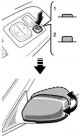
Folding the outside rearview mirrors
Fig. 1.88. Control button for folding the outside rearview mirrors To fold the mirrors when parking in tight spaces, press the mirror folding button (Fig. 1.88). The key must be in the "ACC" or "ON" position. Position 1...
Fig. 1.88. Control button for folding the outside rearview mirrors To fold the mirrors when parking in tight spaces, press the mirror folding button (Fig. 1.88). The key must be in the "ACC" or "ON" position. Position 1...

Interior rear view mirror
Fig. 1.89. Interior rearview mirror adjustment diagram Adjust the mirror so that only the rear of the car is clearly visible (Fig. 1.89). To reduce glare from headlights of a vehicle behind you when driving at night,...
Fig. 1.89. Interior rearview mirror adjustment diagram Adjust the mirror so that only the rear of the car is clearly visible (Fig. 1.89). To reduce glare from headlights of a vehicle behind you when driving at night,...

Individual mirrors
Fig. 1.90. Individual mirror operation diagram To use the personal mirror, turn the sun visor down and open the cover (Fig. 1.90). Individual lights come on when the lid is opened. To adjust the brightness of the...
Fig. 1.90. Individual mirror operation diagram To use the personal mirror, turn the sun visor down and open the cover (Fig. 1.90). Individual lights come on when the lid is opened. To adjust the brightness of the...

Car seats general view
While the vehicle is moving, the seatbacks of all passengers must be in an upright position, and the passengers themselves must sit comfortably, leaning back, and be properly fastened with seat belts. Adjust the...
While the vehicle is moving, the seatbacks of all passengers must be in an upright position, and the passengers themselves must sit comfortably, leaning back, and be properly fastened with seat belts. Adjust the...

Front seats — adjustment
Power-adjustable driver and front passenger seats are available as an option on all models for increased comfort. The eight-position adjustment servo used is based on the six-position one from the previous model, to...
Power-adjustable driver and front passenger seats are available as an option on all models for increased comfort. The eight-position adjustment servo used is based on the six-position one from the previous model, to...

Rear seats — folding
Fig. 1.95. General view of the rear seats The L-shaped headrest provides good visibility to the rear. The level of headrest comfort has also been increased by positioning the headrest closer to the passenger's head. The...
Fig. 1.95. General view of the rear seats The L-shaped headrest provides good visibility to the rear. The level of headrest comfort has also been increased by positioning the headrest closer to the passenger's head. The...

Seat heating system (additional equipment)
Fig. 1.98. Location of seat heating system components: 1 – Seat heating switch (from the driver's side); 2 – Seat heating switch (from the passenger side); 3 – Front right seat cushion heater; 4 – backrest heater The...
Fig. 1.98. Location of seat heating system components: 1 – Seat heating switch (from the driver's side); 2 – Seat heating switch (from the passenger side); 3 – Front right seat cushion heater; 4 – backrest heater The...
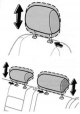
Front and rear headrests
Fig. 1.100. Front and rear head restraint adjustment diagram Head restraints provide effective protection against neck injury in a rear-end collision. To perform their protective function, head restraints must always be...
Fig. 1.100. Front and rear head restraint adjustment diagram Head restraints provide effective protection against neck injury in a rear-end collision. To perform their protective function, head restraints must always be...
Seat belts — use and care
Your vehicle is equipped with five seat belts (two in the front seats and three in the back), which are designed for five people. It is prohibited to exceed the rated passenger capacity of the vehicle. The shoulder...
Your vehicle is equipped with five seat belts (two in the front seats and three in the back), which are designed for five people. It is prohibited to exceed the rated passenger capacity of the vehicle. The shoulder...

Front seat belt pretensioners
The driver and front passenger seat belt pretensioners are designed to deploy in response to a severe frontal impact. If the air bag sensor detects an impact from a severe frontal collision, the pretensioners quickly...
The driver and front passenger seat belt pretensioners are designed to deploy in response to a severe frontal impact. If the air bag sensor detects an impact from a severe frontal collision, the pretensioners quickly...

Ensuring the safety of children
When transporting infants or small children in a vehicle, you should always use special child restraints. The child restraints you install in your vehicle should be appropriate for the child's height and weight. When...
When transporting infants or small children in a vehicle, you should always use special child restraints. The child restraints you install in your vehicle should be appropriate for the child's height and weight. When...

Driver and front passenger SRS airbags
Front SRS airbags (Supplemental Restriction System-auxiliary security system) designed to provide additional protection for the driver and front passenger, in addition to the basic protection provided by seat belts. In...
Front SRS airbags (Supplemental Restriction System-auxiliary security system) designed to provide additional protection for the driver and front passenger, in addition to the basic protection provided by seat belts. In...
Precautions to avoid SRS activation
The SRS air bag system is designed only to supplement the primary safety system of the driver and front passenger seat belts. Front occupants should be aware that if they are not properly wearing their seat belts, they...
The SRS air bag system is designed only to supplement the primary safety system of the driver and front passenger seat belts. Front occupants should be aware that if they are not properly wearing their seat belts, they...

SRS Side Air Bags
SRS side airbags (Supplemental Restriction System-auxiliary security system) designed to provide additional protection for the driver and front passenger in addition to the basic protection provided by seat belts. In...
SRS side airbags (Supplemental Restriction System-auxiliary security system) designed to provide additional protection for the driver and front passenger in addition to the basic protection provided by seat belts. In...

Side airbags and curtain airbags SRS
SRS side airbags (Supplemental Restriction System-auxiliary security system) and curtain air bags are designed to provide additional protection for the driver, front passenger and rear outboard passengers in addition to...
SRS side airbags (Supplemental Restriction System-auxiliary security system) and curtain air bags are designed to provide additional protection for the driver, front passenger and rear outboard passengers in addition to...

Air conditioning control panel
Fig. 1.112. General view of the air conditioning system control panel: 1 – temperature controller; 2 – air flow direction regulator; 3 – Front window air flow button; 4 – fan speed controller; 5 – air intake regulator...
Fig. 1.112. General view of the air conditioning system control panel: 1 – temperature controller; 2 – air flow direction regulator; 3 – Front window air flow button; 4 – fan speed controller; 5 – air intake regulator...

Air flow regulator settings
To cool down your Toyota after parking in hot weather, drive with the windows open for a few minutes. This will ventilate the hot air, allowing the air conditioning system to cool the interior of the car faster. Make...
To cool down your Toyota after parking in hot weather, drive with the windows open for a few minutes. This will ventilate the hot air, allowing the air conditioning system to cool the interior of the car faster. Make...

Central and side deflectors
Fig. 1.117. Adjustment diagram of the central and side deflectors of the air conditioning system: A - side ventilation deflectors; B – central ventilation deflectors; C – rear ventilation deflectors The central vents...
Fig. 1.117. Adjustment diagram of the central and side deflectors of the air conditioning system: A - side ventilation deflectors; B – central ventilation deflectors; C – rear ventilation deflectors The central vents...

Air conditioning filter
Fig. 1.118. Location of the tag with information about the installed air conditioning filter The air conditioning filter information label is located on the left side of the glove box as shown in Figure 1.118 and...
Fig. 1.118. Location of the tag with information about the installed air conditioning filter The air conditioning filter information label is located on the left side of the glove box as shown in Figure 1.118 and...

Checking and replacing the air conditioning filter
The air conditioning filter may become clogged after long-term use. If the air flow efficiency of the air conditioning and heater system is greatly reduced, or if the windows fog up very easily in FRESH mode, the filter...
The air conditioning filter may become clogged after long-term use. If the air flow efficiency of the air conditioning and heater system is greatly reduced, or if the windows fog up very easily in FRESH mode, the filter...
This section is available on: russian, bulgarian, belarusian, ukrainian, serbian, croatian, romanian, polish, slovak, hungarian
Link in different formats to this article
TEXTHTMLBB Code
- User manual
- Vehicle description
- Keys, locks and alarms
- Governing bodies
- Salon equipment
- Driving and operation
- Maintenance
- Power unit
- 4-cylinder engine
- Control system (I4)
- Engine overhaul (I4)
- 6-cylinder engine
- Control system (V6)
- Engine overhaul (V6)
- Transmission
- Clutch
- Mechanical gearbox
- Automatic gearbox
- Drive mechanism
- Chassis, running gear
- Wheels and tires
- Car suspension
- Steering
- Brake system
- Body and interior
- Exterior (external elements)
- Doors, locks and windows
- Air conditioning and heater
- Electrical equipment
- Equipment and devices
- Power devices
- Electrical circuits
- General information
- Controls and instruments
- Driving and operation
- Daily care
- Maintenance
- Power unit
- 4-cylinder engine
- 6-cylinder engine
- Engine overhaul
- Engine electrical equipment
- Cooling system
- Heating and ventilation
- Fuel system
- Exhaust system
- Transmission
- Mechanical gearbox
- Automatic gearbox
- Clutch
- Chassis, running gear
- Suspension and axle shafts
- Steering
- Brake system
- Body and interior
- Exterior (external elements)
- Interior (internal elements)
- Doors, locks and windows
- Electrical equipment
- Equipment and devices
- Electrical circuits
- General information
- User manual
- Maintenance
- Power unit
- 4-cylinder engine
- 6-cylinder engine
- Overhaul of engines
- Cooling and heating
- Fuel system
- Engine electrical equipment
- Control system
- Transmission
- Mechanical gearbox
- Automatic gearbox
- Clutch and drive shafts
- Chassis, running gear
- Brake system
- Car suspension
- Steering
- Body and interior
- Exterior (external elements)
- Interior (internal elements)
- Doors, locks and windows
- Electrical equipment
- Equipment and devices
- Headlights and lighting
- Electrical circuits
- General information
- User manual
- Maintenance
- Power unit
- Petrol engines
- Diesel engines
- Engine overhaul
- Cooling and lubrication system
- Fuel system (diesel)
- Fuel injection (petrol)
- Engine electrical equipment
- Transmission
- Clutch and cardan
- Automatic gearbox
- Chassis, running gear
- Front suspension
- Rear suspension
- Steering
- Brake system
- Body and interior
- Body elements
- Air conditioning and heater
- SRS security system
- Electrical equipment
- Equipment and devices
- Electrical circuits