



Share information:
Brake system of the car Toyota Camry 2 (XV20)

General information about the brake system
The brakes of the vehicles in question are equipped with dual-circuit hydraulic drives for the front and rear wheels. The front brakes are disc brakes, the rear brakes are disc or drum brakes. The brakes are equipped...
The brakes of the vehicles in question are equipped with dual-circuit hydraulic drives for the front and rear wheels. The front brakes are disc brakes, the rear brakes are disc or drum brakes. The brakes are equipped...
Technical characteristics of the brake system
Brake fluid brand Cm. subsection 2.1 . Brake pedal adjustment data Cm. subsection 2.1 . Clearance between the vacuum booster rod and the brake master cylinder piston 0 mm Adjusting the brake light switch (size A for...
Brake fluid brand Cm. subsection 2.1 . Brake pedal adjustment data Cm. subsection 2.1 . Clearance between the vacuum booster rod and the brake master cylinder piston 0 mm Adjusting the brake light switch (size A for...

Anti-lock braking system ABS
Automatic brake release system (ABS system), is designed to increase the stability of the vehicle under conditions of sudden braking or when driving in poor road conditions. This is ensured by the fact that the pressure...
Automatic brake release system (ABS system), is designed to increase the stability of the vehicle under conditions of sudden braking or when driving in poor road conditions. This is ensured by the fact that the pressure...

Disc brake pads — replacement
Attention! The pads are changed only as a set for one axle. When cleaning the pads, remove dust and dirt by wiping with a rag soaked in alcohol or a special liquid; blowing is prohibited. The procedure in question...
Attention! The pads are changed only as a set for one axle. When cleaning the pads, remove dust and dirt by wiping with a rag soaked in alcohol or a special liquid; blowing is prohibited. The procedure in question...

Brake Caliper — Removal and Installation
Front brake parts (for models with 4-cylinder engine) 1. Support; 2. Caliper bracket; 3. Seal; 4. Finger; 5. Rubber cover; 6. Brake shoe retainers (for cars with 5S-FE engine); 7. Brake shoe retainers (for cars with...
Front brake parts (for models with 4-cylinder engine) 1. Support; 2. Caliper bracket; 3. Seal; 4. Finger; 5. Rubber cover; 6. Brake shoe retainers (for cars with 5S-FE engine); 7. Brake shoe retainers (for cars with...

Brake disc — removal, inspection and installation
Examination 1. Loosen the wheel nuts, lift the car and place it on stands. Remove the wheels and tighten the wheel nuts back to secure the rim to the hub (to ensure that force is applied to the disk, washers can be put...
Examination 1. Loosen the wheel nuts, lift the car and place it on stands. Remove the wheels and tighten the wheel nuts back to secure the rim to the hub (to ensure that force is applied to the disk, washers can be put...

Drum brake shoes — replacement
Rear Drum Brake Parts 1. Plug; 2. Piston; 3. Spring; 4. Air bleed nipple; 5. Piston seal; 6. Outer piston seal; 7. Wheel cylinder; 8. Parking brake shoe drive lever; 9. Automatic adjustment lever; clearance between the...
Rear Drum Brake Parts 1. Plug; 2. Piston; 3. Spring; 4. Air bleed nipple; 5. Piston seal; 6. Outer piston seal; 7. Wheel cylinder; 8. Parking brake shoe drive lever; 9. Automatic adjustment lever; clearance between the...

Wheel brake cylinder — removal and installation
Attention! Cylinders are changed only in pairs per axle. Removal 1. Raise the rear of the vehicle. 2. Remove the pads (see subsection 10.4. and subsection 10.7. ). 3. Clean the wheel cylinder. 4. Unscrew the hydraulic...
Attention! Cylinders are changed only in pairs per axle. Removal 1. Raise the rear of the vehicle. 2. Remove the pads (see subsection 10.4. and subsection 10.7. ). 3. Clean the wheel cylinder. 4. Unscrew the hydraulic...

Brake Master Cylinder — Removal and Installation
Master Cylinder Mounting Details 1. Master cylinder; 2. Gasket; 3. Vacuum booster; 4. Tee-branch; 5. Splitter (on cars without ABS system) Removal 1. Disconnect the connector from the tank. 2. Remove the liquid from the...
Master Cylinder Mounting Details 1. Master cylinder; 2. Gasket; 3. Vacuum booster; 4. Tee-branch; 5. Splitter (on cars without ABS system) Removal 1. Disconnect the connector from the tank. 2. Remove the liquid from the...

Brake hydraulic hoses and tubes
It is recommended to check the condition of the hoses and tubes every 6 months. If cracks, leaks, swelling or other damage are found, replace the hose. Front brake hoses 1. Raise the car and remove the wheel. 2. Unscrew...
It is recommended to check the condition of the hoses and tubes every 6 months. If cracks, leaks, swelling or other damage are found, replace the hose. Front brake hoses 1. Raise the car and remove the wheel. 2. Unscrew...

Bleeding the brake hydraulic system
The need to bleed the hydraulic drive on all wheels arises after disconnecting the tubes on the brake master cylinder or when the fluid level in the reservoir drops sharply. When disassembling the hydraulic drive of one...
The need to bleed the hydraulic drive on all wheels arises after disconnecting the tubes on the brake master cylinder or when the fluid level in the reservoir drops sharply. When disassembling the hydraulic drive of one...

Vacuum brake booster — removal, inspection and installation
Brake booster 1. Master cylinder; 2. Hose; 3. Gasket; 4. Fork axle; 5. Fork; 6. Cotter pin; 7. Vacuum booster; 8. Gasket; 9. Splitter on the ABS brakes Checking the operation of the vacuum booster 1. Press the brake...
Brake booster 1. Master cylinder; 2. Hose; 3. Gasket; 4. Fork axle; 5. Fork; 6. Cotter pin; 7. Vacuum booster; 8. Gasket; 9. Splitter on the ABS brakes Checking the operation of the vacuum booster 1. Press the brake...

Rear disc brake parking brake pads
Parking brake parts 1. Guide bar; 2. Spring; 3. Spacer; 4. Rear shoe; 5. Remote laying; 6. Axis; 7. Brake shoe return springs; 8. Rear disc brake caliper; 9. Plug; 10. Disk; 11. Brake shoe pressure spring; 12. Cups of...
Parking brake parts 1. Guide bar; 2. Spring; 3. Spacer; 4. Rear shoe; 5. Remote laying; 6. Axis; 7. Brake shoe return springs; 8. Rear disc brake caliper; 9. Plug; 10. Disk; 11. Brake shoe pressure spring; 12. Cups of...

Parking brake — adjustment
The parking brake should hold the vehicle on a slope with 5-8 clicks of travel. Adjustment is necessary if the brake travel is less than 5 clicks (the rear wheels may be difficult to turn) or more than 8 (the car brakes...
The parking brake should hold the vehicle on a slope with 5-8 clicks of travel. Adjustment is necessary if the brake travel is less than 5 clicks (the rear wheels may be difficult to turn) or more than 8 (the car brakes...

Parking Brake Cables — Replacement
Parking brake cable drive parts 1. Manhole cover; 2. Bracket (cars with separate seats); 3. Parking brake cable N4; 4. Intermediate lever; 5. Parking brake cable N1; 6. Bushing; 7. Amplifier section Cable drive parts...
Parking brake cable drive parts 1. Manhole cover; 2. Bracket (cars with separate seats); 3. Parking brake cable N4; 4. Intermediate lever; 5. Parking brake cable N1; 6. Bushing; 7. Amplifier section Cable drive parts...
Brake light switch — removal and installation
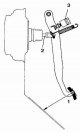
Brake light switch 1. Pedal height; 2. Pusher; 3. Brake light switch The brake light switch is mounted on a bracket near the top of the pedal. Removal and installation 1. Disconnect the battery from ground, disconnect...
Brake light switch 1. Pedal height; 2. Pusher; 3. Brake light switch The brake light switch is mounted on a bracket near the top of the pedal. Removal and installation 1. Disconnect the battery from ground, disconnect...

ABS: A Natural Choice for Your Car
The wheel speed sensor is located in the hub. The purpose of ABS is simple to formulate – it prevents the wheels from locking when braking. Is the brake pedal pressed too hard? No problem – the electronics, comparing...
The wheel speed sensor is located in the hub. The purpose of ABS is simple to formulate – it prevents the wheels from locking when braking. Is the brake pedal pressed too hard? No problem – the electronics, comparing...
Brake system malfunctions
Malfunction Cause Braking begins when the pedal is moved almost to the floor (increased pedal travel) Leak in the system Presence of air in the system Jamming of the rear brake automatic adjustment mechanism Damage to...
Malfunction Cause Braking begins when the pedal is moved almost to the floor (increased pedal travel) Leak in the system Presence of air in the system Jamming of the rear brake automatic adjustment mechanism Damage to...
This section is available on: russian, bulgarian, belarusian, ukrainian, serbian, croatian, romanian, polish, slovak, hungarian
Similar sections for other Toyota models
➥ Brake system Toyota 4Runner N120 (1989-1995)
➥ Brake system Toyota Highlander 1 (2000-2007, petrol)
➥ Brake system Toyota Cruiser 100 (1998-2007)
➥ Brake system Toyota RAV 4 XA20 (2000-2005)
➥ Brake system Toyota Corona T190 (1992-1997)
➥ Brake system Toyota Corolla E80 (1983-1990)
Link in different formats to this article
TEXTHTMLBB Code
- User manual
- Vehicle description
- Keys, locks and alarms
- Governing bodies
- Salon equipment
- Driving and operation
- Maintenance
- Power unit
- 4-cylinder engine
- Control system (I4)
- Engine overhaul (I4)
- 6-cylinder engine
- Control system (V6)
- Engine overhaul (V6)
- Transmission
- Clutch
- Mechanical gearbox
- Automatic gearbox
- Drive mechanism
- Chassis, running gear
- Wheels and tires
- Car suspension
- Steering
- Brake system
- Body and interior
- Exterior (external elements)
- Doors, locks and windows
- Air conditioning and heater
- Electrical equipment
- Equipment and devices
- Power devices
- Electrical circuits
- General information
- Controls and instruments
- Driving and operation
- Daily care
- Maintenance
- Power unit
- 4-cylinder engine
- 6-cylinder engine
- Engine overhaul
- Engine electrical equipment
- Cooling system
- Heating and ventilation
- Fuel system
- Exhaust system
- Transmission
- Mechanical gearbox
- Automatic gearbox
- Clutch
- Chassis, running gear
- Suspension and axle shafts
- Steering
- Brake system
- Body and interior
- Exterior (external elements)
- Interior (internal elements)
- Doors, locks and windows
- Electrical equipment
- Equipment and devices
- Electrical circuits
- General information
- User manual
- Maintenance
- Power unit
- 4-cylinder engine
- 6-cylinder engine
- Overhaul of engines
- Cooling and heating
- Fuel system
- Engine electrical equipment
- Control system
- Transmission
- Mechanical gearbox
- Automatic gearbox
- Clutch and drive shafts
- Chassis, running gear
- Brake system
- Car suspension
- Steering
- Body and interior
- Exterior (external elements)
- Interior (internal elements)
- Doors, locks and windows
- Electrical equipment
- Equipment and devices
- Headlights and lighting
- Electrical circuits
- General information
- User manual
- Maintenance
- Power unit
- Petrol engines
- Diesel engines
- Engine overhaul
- Cooling and lubrication system
- Fuel system (diesel)
- Fuel injection (petrol)
- Engine electrical equipment
- Transmission
- Clutch and cardan
- Automatic gearbox
- Chassis, running gear
- Front suspension
- Rear suspension
- Steering
- Brake system
- Body and interior
- Body elements
- Air conditioning and heater
- SRS security system
- Electrical equipment
- Equipment and devices
- Electrical circuits