



Location of the elements of the central locking system on the car
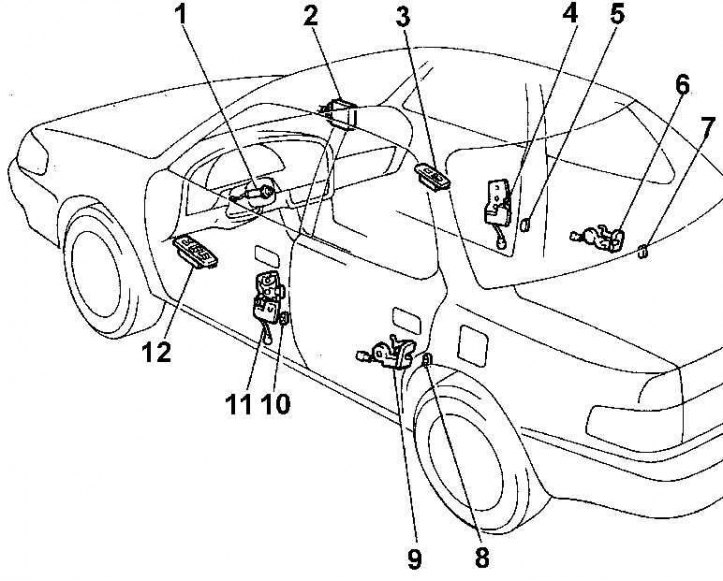
1 – ignition switch; 2 – lock control relay; 3 – switch on the passenger door; 4 – Door lock: door lock motor, door opening detection switch; 5 – interior light switch when door is opened; 6 – door lock; 7 – Interior light switch when door is opened; 8 – Interior light switch when door is opened; 9 – door lock; 10 – Interior light switch when door is opened; 11 – Door lock: lock motor, door opening detection switch; 12 – main switch
Main switch and switch contact status at different switch positions

Central locking switch and contact status at different switch positions

(View the original source on the website: www.toyotaman.ru)
The central locking system uses actuators installed in each door. The system consists of switches, actuators and electrical wiring (see fig. Location of elements of the central locking system on the car).
The door locks are controlled by bidirectional solenoids located in the doors. The lock switches have two operating positions: "closed" and "open". These switches control a relay, which in turn supplies voltage to the door lock solenoids.
To check the central locking system, move the door lock switch to both positions and check that the lock solenoids make a clicking sound when operating.
If there is no clicking sound from the solenoids, check that voltage is being supplied to the switch. If there is no voltage, check the electrical circuit between the fuses and the switches.
If voltage is supplied to the switch, but the solenoid does not click, check the switch contacts for closure in various switch positions (see Fig. Main switch and state of switch contacts at different switch positions and Fig. Central locking switch and state of contacts at different switch positions).